Line 5 Recommendations from the United Nations Permanent Forum on Indigenous Issues

In a Report from the Twenty-Second Session the United Nations Permanent Forum on Indigenous Issues, Economic and Social Council issued a recommendation on Line 5:

  1. The Permanent Forum calls upon Canada to re-examine its support for the
    Enbridge Line 5 oil pipeline, which jeopardizes the Great Lakes in the United States.
    The pipeline presents a real and credible threat to the treaty-protected fishing rights
    of Indigenous Peoples in the United States and Canada. The Permanent Forum
    recommends that Canada and the United States decommission Line 5.

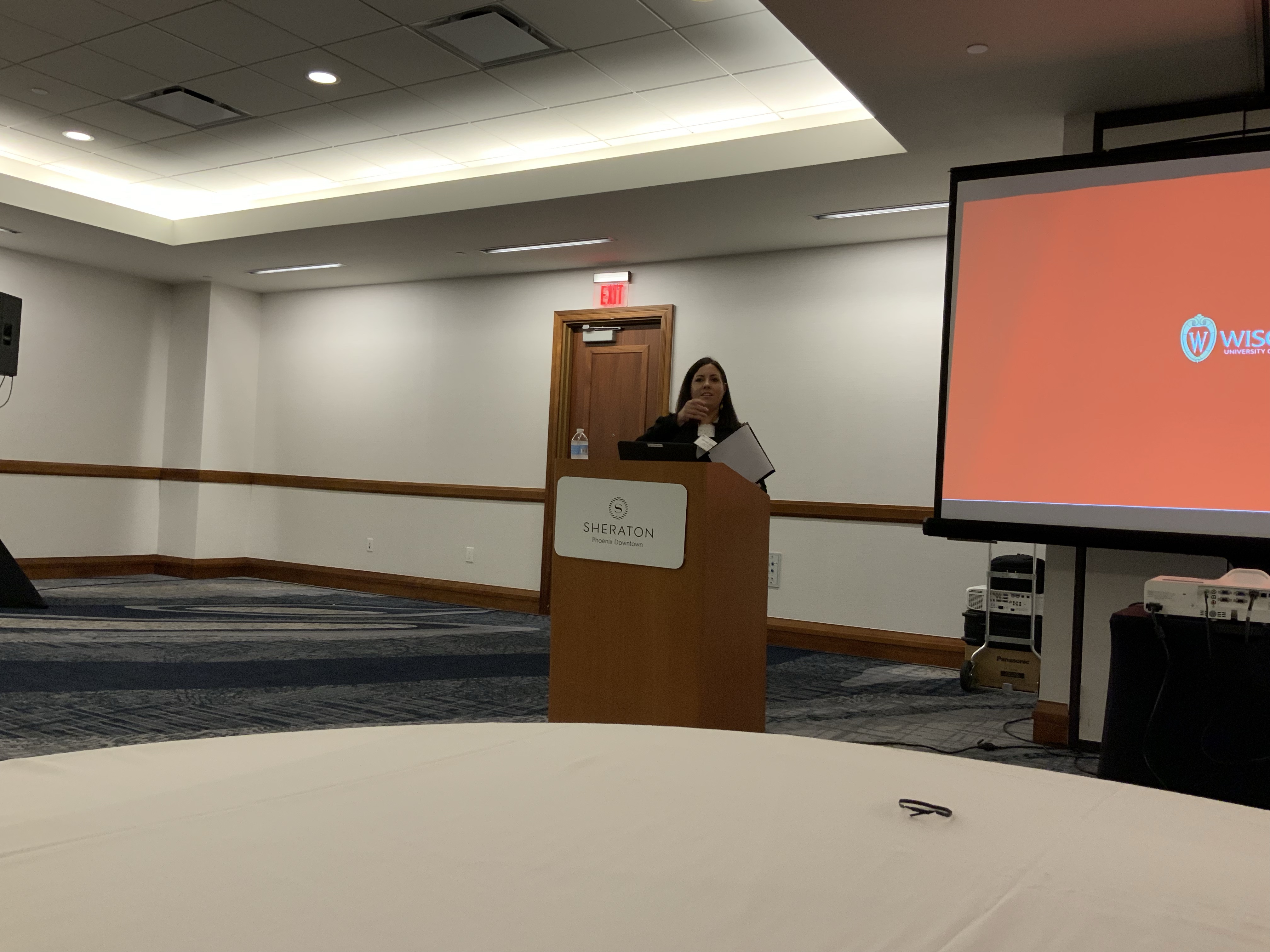
ASU-UCLA Gathering of Indigenous Legal Scholars Part 3

Forrest Tahdooahnippah
Heather Tanana
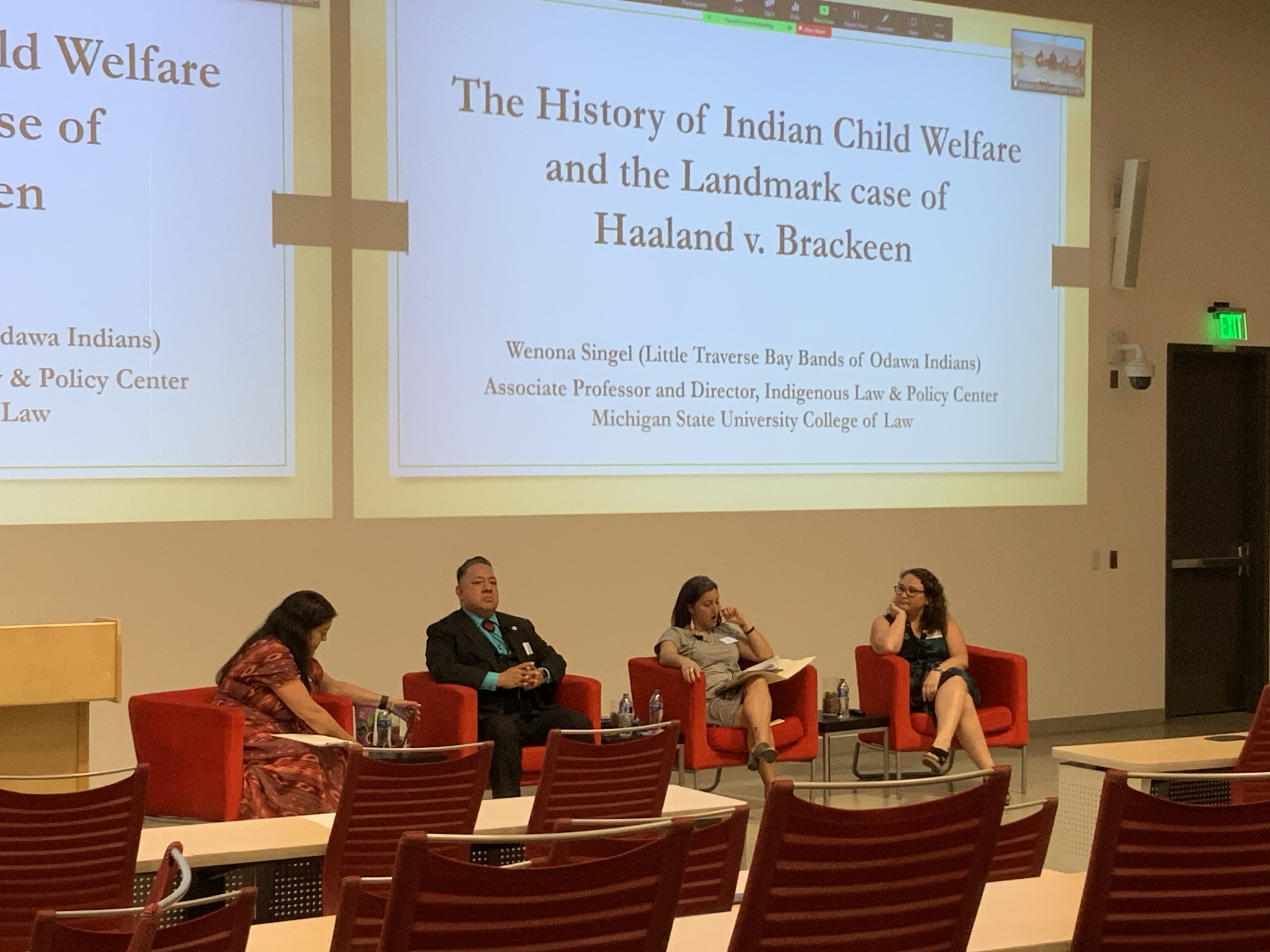
Angela Riley, Vanessa Racehorse, Lauren van Schilfgaarde, Kekek Stark

Connecticut Law Review Symposium on Brackeen, Oct. 6

Here.

Connecticut Law Review Symposium: 
Interrogating Haaland v. Brackeen

Family Regulation, Constitutional Power, and Tribal Resilience

Friday, October 6, 2023 | 12:00 pm-2:30 pm ET
Virtual

The Connecticut Law Review invites you to their 2023 symposium:
Interrogating Haaland v. Brackeen: Family Regulation, Constitutional Power, and Tribal Resilience

The litigation that led to Haaland v. Brackeen threatened to take down not only the Indian Child Welfare Act, but vast swaths of federal Indian policy and federal law. Instead, the Supreme Court’s decision left ICWA unscathed and affirmed the constitutional relationship between tribal nations and the United States. But threats to Native families and tribal sovereignty continue.

Native children continue to be removed from their communities by a well-funded market for adoptable children. A handful of states and interest groups continue to seek ways to undermine tribal authority and federal laws that support it. And because the Supreme Court held that the Brackeen plaintiffs lacked standing to raise their equal protection challenges to ICWA, those claims can be raised another day.

Leading scholars, attorneys, and tribal leaders, including Chairwoman Andrews-Maltais, Gregory Ablavsky, Laura Briggs, Seth Davis, Kate Fort, Ian Gershengorn, and Gerald Torres, will explore these and other issues raised by the decision in this symposium.

UNLV Law CLE on Brackeen, Sept. 20

Here

After Brackeen: Outcomes and Implications of the Supreme Court’s Decision Upholding the Indian Child Welfare Act

Approved for 2 Nevada MCLE Credit

September 20, 2023

Virtual
10:00 a.m. – 12:00 p.m (Pacific Time)

Registration is required

Click Here To Register for The Virtual Webinar

~~~~~~~~~

In Person UNLV Student Viewing and Discussion (Lunch Provided)

10:00 a.m. – 12:00 p.m (Webinar Viewing) / 12:00 p.m. – 1:00 pm (Discussion)

Boyd School of Law Room 203

In Person Registration is required

Click Here To Register For the Student Only In Person Discussion


In June, the Supreme Court issued its long-awaited decision in Brackeen v. Haaland upholding the federal Indian Child Welfare Act. Enacted in 1978, the ICWA affirms tribal jurisdiction over state child welfare matters and sets uniform standards for child welfare cases involving Indian children. As the Court recognized, the law was a necessary and largely successful action by Congress to reverse decades of federal and state campaigns to remove Native children from their homes and sever ties between tribes and their children. The Court rejected several challenges to the law that, if accepted, would have had devastating consequences for children, families, and tribal sovereignty. 

Brackeen was a major victory for tribes and Native children. The majority opinion by Justice Barrett, and concurring arguments by Justice Gorsuch, addressed questions about Congressional power over Indian affairs, tribal sovereignty, and equal protection. As a follow up to our November 2022 webinar, which explored the various arguments and the impact of a potential decision on tribal courts and jurisdiction, this webinar will bring together experts in the field to explain the decision, its practical and jurisprudential significance, and what it portends for future cases involving the ICWA and tribal sovereignty. 

Featured Panelists:

ASU-UCLA Gathering of Indigenous Legal Scholars — Part 2

Dean Stacy Leeds
Alex Fay
Trevor Reed, Angela Riley, Kristen Carpenter, and Dean Kevin Washburn

ASU-UCLA Gathering of Indigenous Legal Scholars — Part 1

Patty Ferguson
Trevor Reed
Angela Riley
Nazune Menka
Torey Dolan

Florida COA Orders Dismissal of Casino Patron Tort Claim brought under Gaming Compact

Here is the opinion in Seminole Tribe of Florida v. Webster:

Univ. of Arizona Tribal Leaders Forum Pics

Heather Whiteman Runs Him, Fred Urbina, April Olson, Wenona Singel
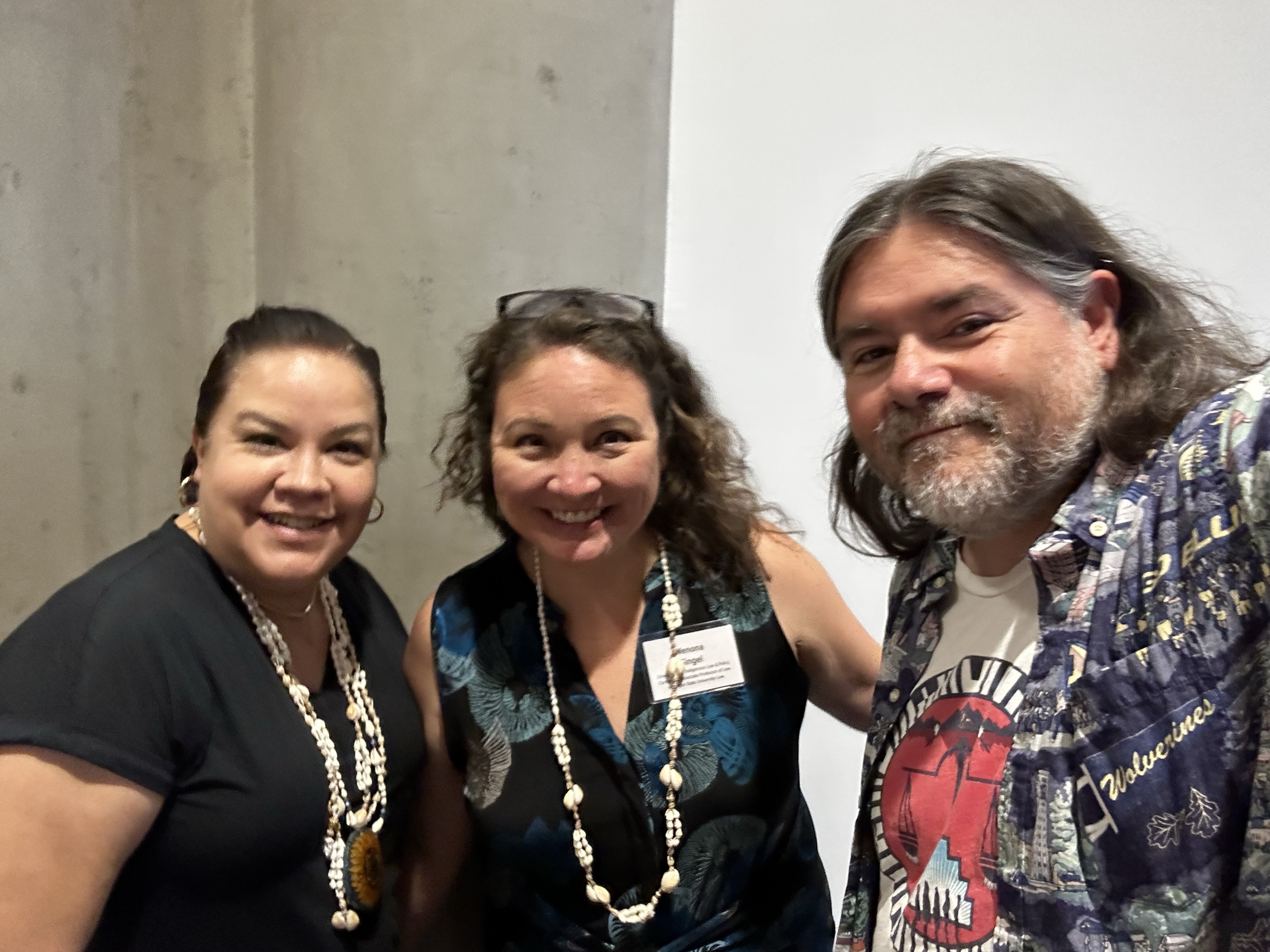
Christina Andrews, Singel, Fletcher

Fletcher on the 200th Anniversary of Johnson v. McIntosh [sorta]

Here is Bizindan Miinawa (Listen Again), available on SSRN and prepared for the Tribal Law Journal’s symposium on Johnson v. McIntosh.

An excerpt:

Are any United States Supreme Court cases real? Johnson v. McIntosh was fake as John Wayne’s teeth. That one was a property dispute, remember? Two wealthy, privileged, and powerful white people squared off over thousands of acres of land acquired from Indigenous nations who called the vast valley of Eagle River home. On one side, you had a former United States Supreme Court justice; on the other, you had a wealthy political benefactor/beneficiary — imagine if a case called Stephen Breyer v. Harlan Crow about Indian land ownership was pending in the Roberts Court’s 2023 Term. No tribal nations or Indigenous peoples to be seen or heard from, or in more modern practice were not allowed to participate. Both attorneys were secretly paid for by the same company — imagine if Stephen Breyer’s attorney (say, Neal Kaytal) was secretly retained by the Trammel Crow Company (or even better, by Club For Growth, his political action committee) to oppose Harlan Crow’s attorney, who would probably be Paul Clement or Ty Cobb. And of course, the property claims at issue barely overlapped, if at all, thanks to stipulations of the parties at the trial level that formed the basis of the factual dispute. It was a sham case.

Huy Report to UN Human Rights Committee Re: Religious Freedoms of Indigenous Persons Deprived of their Liberty

Here: