Update in KBIC Suit against Michigan Treasury Dept.
Here are the materials in Keweenaw Bay Indian Community v. Khouri (W.D. Mich.):
99 state motion re state prosecutions
115 kb motion for protective order
Missouri COA Rejects NARF Effort to Survey Donated Parcel for Sacred Sites
Here is the opinion in Wilkinson v. Native American Rights Fund:
Tribal Special Criminal Jurisdiction over Domestic Violence Statistics
Here:
The Following Tribes have implemented to date (as of last Friday):
1. Pascua Yaqui (51 investigations, 18 Convictions, 3 jury trials, 3 extradtions) *
2. Tulalip Tribes of WA. (23 cases, 14 Convictions) *
3. Sisseton Wahpeton Oyate (SD/ND) (7 cases, 4 Convictions) *
4. Confederated Tribes of Umatilla (OR)(10 Arrests, 10 Convictions) *
5. Assiniboine & Sioux Tribes of the Ft. Peck Reservation (MT) (16 Arrests) *
6. Little Traverse Bay Band of Odawa Indians (MI) (no arrests)
7. Alabama Coushatta Tribe of Texas (TX) (1 Arrest)
8. Choctaw Nation of Oklahoma (OK)(1 Arrest, 1 conviction)*
9. Seminole Nation of Oklahoma (OK)(No arrests)
10. Eastern Band of Cherokee Indians (NC)(25 Arrests 16 convictions) *
11. Sac and Fox Nation (KS)(No arrests) *
12. Kickapoo Tribe of Oklahoma (OK)(No arrests)
13. Nottawaseppi Huron Band of Potawatomi (MI) (No Arrests)
14. Muscogee Creek Nation (OK) (No arrests)
15. Standing Rock Sioux Tribe (ND) (1 Arrest) *
16. Sault St. Marie Tribe of Chippewa (MI) (4 arrests, 2 convictions, 1 Jury Trial)
17. Chitimacha Tribe of Louisiana (1 arrest)
18. Lower Elwha Klallam Tribe (No arrests)
* denotes DOJ TAP Tribe (NCIC Access)
Nationwide Statistics:
* 18 Implementing Tribes
* Over 138 Arrests
* 42 Convictions
* 36 Guilty pleas
* 8 federal referrals
* No federal Appeals
* 3 Jury acquittals
* 30 dismissals
Harvard Indian Law Conference Keynotes and Afternoon Panel
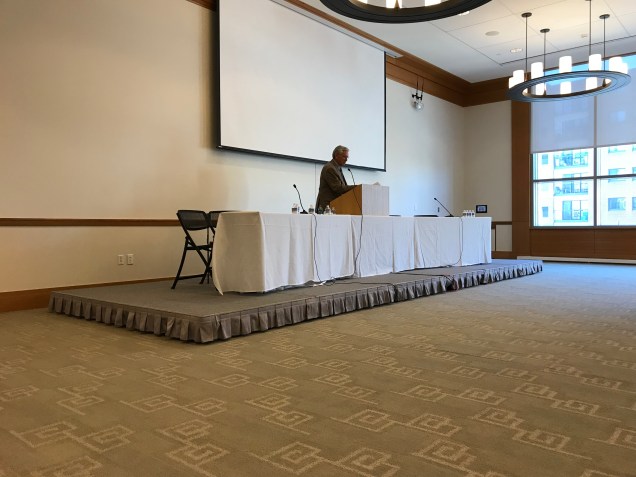
Kevin Gover
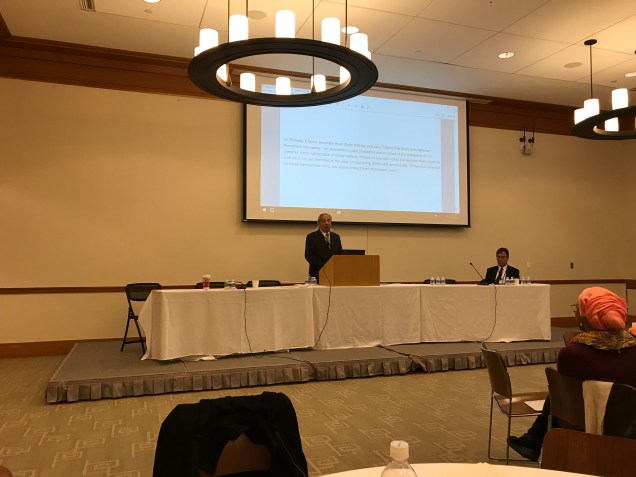
John Echohawk
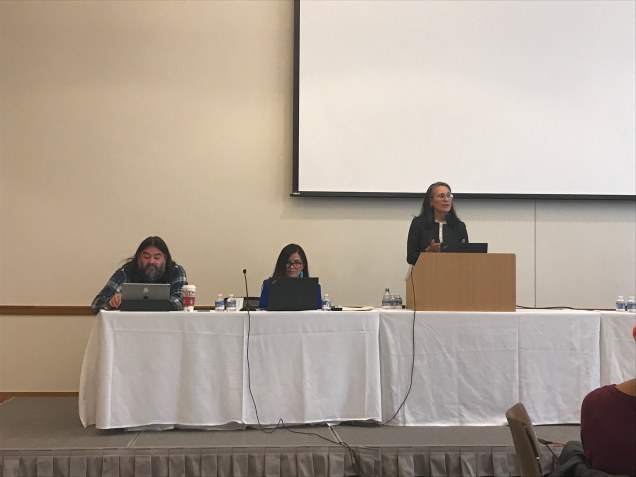
Matthew Fletcher, Ethel Branch, Arlinda Locklear
Friday Job Announcements
Job vacancies are posted on Friday. Some announcements might still appear throughout the week. If you would like your Indian law or leadership job posted on Turtle Talk, please email indigenous@law.msu.edu.
Regional Native Public Defense Corporation
Public Defender, White Earth Reservation, M.N. Candidates with criminal defense experience and knowledge of Indian law are preferred, but all are welcome to apply. Candidates must be currently licensed to practice law in the State of Minnesota. RNPDC seeks justice and fair treatment for Native Americans facing criminal charges in and around the White Earth and Leech Lake reservations in Northern Minnesota. We act to respond to historical mistreatment and the racial disparities prevalent for Native people in the criminal justice system today. Salary depends on qualifications. Health & dental insurance, annual Minnesota attorney registration fee and malpractice insurance are provided by the firm at no cost to the employee. To apply, email or mail a cover letter, references and resume to:
James Hughes
Executive Director
Regional Native Public Defense Corp.
P.O. Box 487
Cass Lake, MN 56633
James.Hughes@rnpdc.org
Fort Belknap Indian Community
Associate Judge, Child Welfare, Harlem, M.T. Serves as hearing judge for the Fort Belknap Indian Community tribal court, in accordance with the Fort Belknap Indian Community Tribal Law and Order Code and under the general supervision of the Chief Judge. Submit complete application and resume.
Intertribal Court of Southern California
Tribal Court Administrator, Valley Center, C.A. Responsible for the management of the non-judicial administration and day-to-day operations of the Intertribal Court. Interested applicants should submit cover letter and resume to Human Resources via email to jdixon@sciljc.org. Position is open until filled.
Little River Band of Ottawa Indians
2018 Summer Legal Intern, Manistee, M.I. Assists the Unified Legal Department in its role as in-house legal counsel to the Little River Band of Ottawa Indians. The Unified Legal Department provides legal services and representation to the Tribal Government and its Enterprises, including Elected Officials, Departments, Commissions, and the Little River Casino Resort. The position is paid at a rate of $15.00-$17.50 per hour, depending on experience. The position is temporary part-time and will last eight to twelve weeks. Applications must be received by March 30, 2018, 5:00 p.m. EST.
Wind River Inter-Tribal Council
Tribal Court Positions, Fort Washakie, W.Y. The Eastern Shoshone and Northern Arapaho Tribes for the Wind River Reservation located in Wyoming are re-establishing the Wind River Tribal Court.
Uniting Three Fires Against Violence
Training Coordinator, Sault Ste. Marie, M.I. Determines, develops, coordinates, and administers culturally sensitive anti-violence education services for Native American individuals and groups within the State of Michigan. Responsible for implementing specific Uniting Three Fires Against Violence (UTFAV) funded grant activities and projects, as defined by the specific goals and objectives.
Department of the Interior
Regional Solicitor, Northeast Region, Bloomington, M.N. Represents and acts for the Solicitor as the chief legal officer for the Department of the Interior for legal matters covered in the Northeast Region. Closes 12/18/2017.
Previous Friday Job Announcements: 11/10/2017
Harvard Indian Law Conference Panel #1A
Kevin Washburn, Sally Jewell, Natalie Landreth, and Sarah Krakoff
Harvard Indian Law Conference Panel #1
Bob Anderson, Natalie Landreth, Jeanne Whiteing, Sarah Krakoff
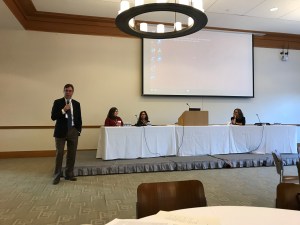
Harvard Indian Law Conference
Bob Anderson, Richard Lazarus, Jason Packineau, and agenda


Rick Collins on Tribal Immunity
Richard B. Collins posted “To Sue and Be Sued: Capacity and Immunity of American Indian Nations,” forthcoming in the Creighton Law Review.
Here is the abstract:
Can American Indian nations sue and be sued in federal and state courts? Specific issues are whether tribes have corporate capacity to sue, whether a Native group has recognized status as a tribe, and whether and to what extent tribes and their officers have governmental immunity from suit. Tribal capacity to sue is now well established, and federal law has well-defined procedures and rules for tribal recognition. But tribal sovereign immunity is actively disputed.
This paper reviews retained tribal sovereignty in general and summarizes past contests over tribal capacity to sue and their resolution into today’s settled rule. Next is a concise statement of the law on federal recognition of tribal entities. Most of the paper explains and analyzes ongoing issues about tribal immunity from suit. Tribal immunity has been continuously recognized from the first reported decision, but tribes’ commercial activities, modern attacks on immunity generally, and states rights proclivities of some justices jeopardize its existence. Much active litigation involves suits against tribal officers and possible application of the Ex parte Young doctrine. For many reasons, tribes are adopting carefully defined consents to suit, particularly in relation to tribal casinos. This paper’s essential purpose is to give tribes and their lawyers a full account of the law on tribal immunity and current disputes about it.


You must be logged in to post a comment.