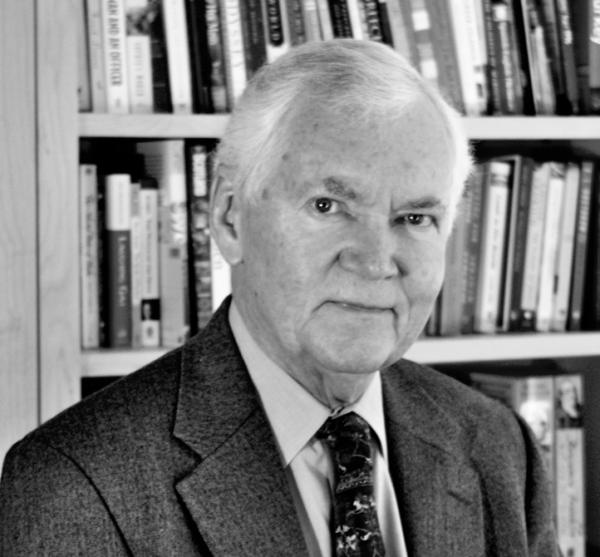
Interview with Laughlin McDonald on Indian Country Voting Rights

Here.

laughlin_mcdonald_-_courtesy_laughin_mcdonaldAn excerpt:

Your 1983 and 2013 voting-rights lawsuits have striking similarities. In other recent cases, jurisdictions you sued years ago are defendants once again. Are Native voting rights running in place?

There’s been progress—no doubt about that. Lawsuits have resulted in the creation of districts that allow Indian people to elect representatives of their choice. Tribal members have become aware of the value of participating in non-tribal elections. If you don’t vote, you’re not only denied the benefits of the government or school board, but you become its victim.

When we filed the 1983 lawsuit, no tribal member had ever been elected to Big Horn County’s commission. After we won, redistricting meant an Indian was elected. The Indian population has increased since then, and tribal members now hold several county positions. There’s been enormous change, here and elsewhere.


Read more at http://indiancountrytodaymedianetwork.com/2013/10/05/7-questions-aclus-laughlin-mcdonald-native-voting-rights-151545

Fremont County, Wyo. Ordered to Pay $960K in Attorney Fees to Indian Plaintiffs in Voting Rights Case

Here are the new materials in Large v. Fremont County (D. Wyo.):

180 Motion for Atty Fees

181 Response

182 Reply

183 DCT Order

News coverage here.

Lower court materials on the merits here. Appellate materials here.

Tenth Circuit Affirms Wyoming Indian Country Voting Rights Victory

Here are the materials in Large v. Fremont County (opinion here):

Fremont County Opening Brief

Large Brief

Fremont County Reply Brief

Here are the lower court materials.

ACLU Voting Rights Project Cert Petition in Cottier v. City of Martin

Here. Lower court materials here.

Questions presented:

1. Was the district court’s original finding that the plaintiffs had not established one of the threshold factors for a finding of vote dilution under Section 2 of the Voting Rights Act, 42 U.S.C. § 1973, properly before the Eighth Circuit upon review of a superseding final judgment in the plaintiffs’ favor after remand from a prior panel?
2. Is statistical evidence necessary to prove legally significant racially polarized voting under Thornburg v. Gingles, 478 U.S. 30 (1986)?
3. Do minority voters have an equal opportunityto elect aldermen and alderwomen of their choice when the evidence shows that minority voters have had some success in electing their preferred candidates—but only in nonmunicipal elections, when “minority” voters constitute a majority of the electorate, or when their preferred candidates are white?

Laughlin McDonald’s New Book on Voting Rights in Indian Country Now Available

Just in my mailbox….

American Indians and the Fight for Equal Voting Rights

By Laughlin McDonald

Recounting Indians’ progress in the voting booth

The struggle for voting rights was not limited to African Americans in the South. American Indians also faced discrimination at the polls and still do today. This book explores their fight for equal voting rights and carefully documents how non-Indian officials have tried to maintain dominance over Native peoples despite the rights they are guaranteed as American citizens.

Laughlin McDonald has participated in numerous lawsuits brought on behalf of Native Americans in Montana, Colorado, Nebraska, South Dakota, and Wyoming. This litigation challenged discriminatory election practices such as at-large elections, redistricting plans crafted to dilute voting strength, unfounded allegations of election fraud on reservations, burdensome identification and registration requirements, lack of language assistance, and noncompliance with the Voting Rights Act. McDonald devotes special attention to the VRA and its amendments, whose protections are central to realizing the goal of equal political participation.

McDonald describes past and present-day discrimination against Indians, including land seizures, destruction of bison herds, attempts to eradicate Native language and culture, and efforts to remove and in some cases even exterminate tribes. Because of such treatment, he argues, Indians suffer a severely depressed socioeconomic status, voting is sharply polarized along racial lines, and tribes are isolated and lack meaningful interaction with non-Indians in communities bordering reservations.

Continue reading

Large v. Fremont County — Big Voting Rights Act Win

Here are the materials (from the ACLU website).

And news coverage here.

State Of Alaska, NARF, Northern Justice Project And ACLU Reach Settlement In Yup’ik Language Voter Assistance Case

The settlement agreement in the case can be found online at: www.aclu.org/voting-rights/nick-et-al-v-bethel-et-al-settlement-agreement-state-alaska

FOR IMMEDIATE RELEASE

February 19, 2010

ANCHORAGE, Alaska – The Alaska Attorney General’s Office today joined the Native American Rights Fund (NARF), the American Civil Liberties Union, the Northern Justice Project, four Alaska Native elders and four tribal governments in announcing a settlement of litigation in Nick, et al. v. Bethel, et al. According to the settlement, the state of Alaska will make enhancements to language assistance for Yup’ik-speaking voters available at elections in the Bethel area.

The resolution of the case, originally filed in June 2007 on behalf of Alaska Native elders Anna Nick, Billy McCann, Arthur Nelson and David O. David and the tribal governments of Kasigluk, Kwigillingok, Tuluksak and Tuntutuliak, was welcomed by all parties involved.

“We are committed to equality under the law and fair voting practices and effective access to the voting booth for all Alaskans,” said Alaska Attorney General Dan Sullivan. “We will vigorously implement the terms of this settlement.”

The settlement recognizes improvements to language-assistance protocols implemented by the state during the 2008 and 2009 elections, while providing for enhancements designed to ensure that limited-English-proficient voters receive effective assistance. Continue reading

Montana Indian Country Voting Rights Case

An anti-tribal group called Citizens Equal Rights Alliance attempted to bring a Section 2 Voting Rights Act claim. This week, the federal district court dismissed this claim. [H/T to Indianz]

The complaint is here.

The State of Montana’s motion to dismiss is here: Motion to Dismiss

CERA’s response is here: Opposition to Motion to Dismiss

Montana’s reply brief is here: Reply in Support of Motion to Dismiss

Order Dismissing Action: Order

The ACLU Voting Rights Project attempted to intervene in the action, but the judge dismissed the case before ruling on the motion — Brief in Support of Motion to Intervene.

We at the ILPC are pleased to note that we will be hosting a mini-symposium on the Voting Rights Act in Indian Country next semester. We’ll have Laughlin McDonald of the Voting Rights Project, Ellen Katz of the University of Michigan Law School, and Daniel McCool and Susan Olson of the University of Utah. Profs. McCool and Olson are co-authors of the new book — Native Vote: American Indians, Voting Rights, and the Right to Vote (Cambridge).