Here is today’s opinion in Coalition for Responsible Regulation v. EPA:
climate change
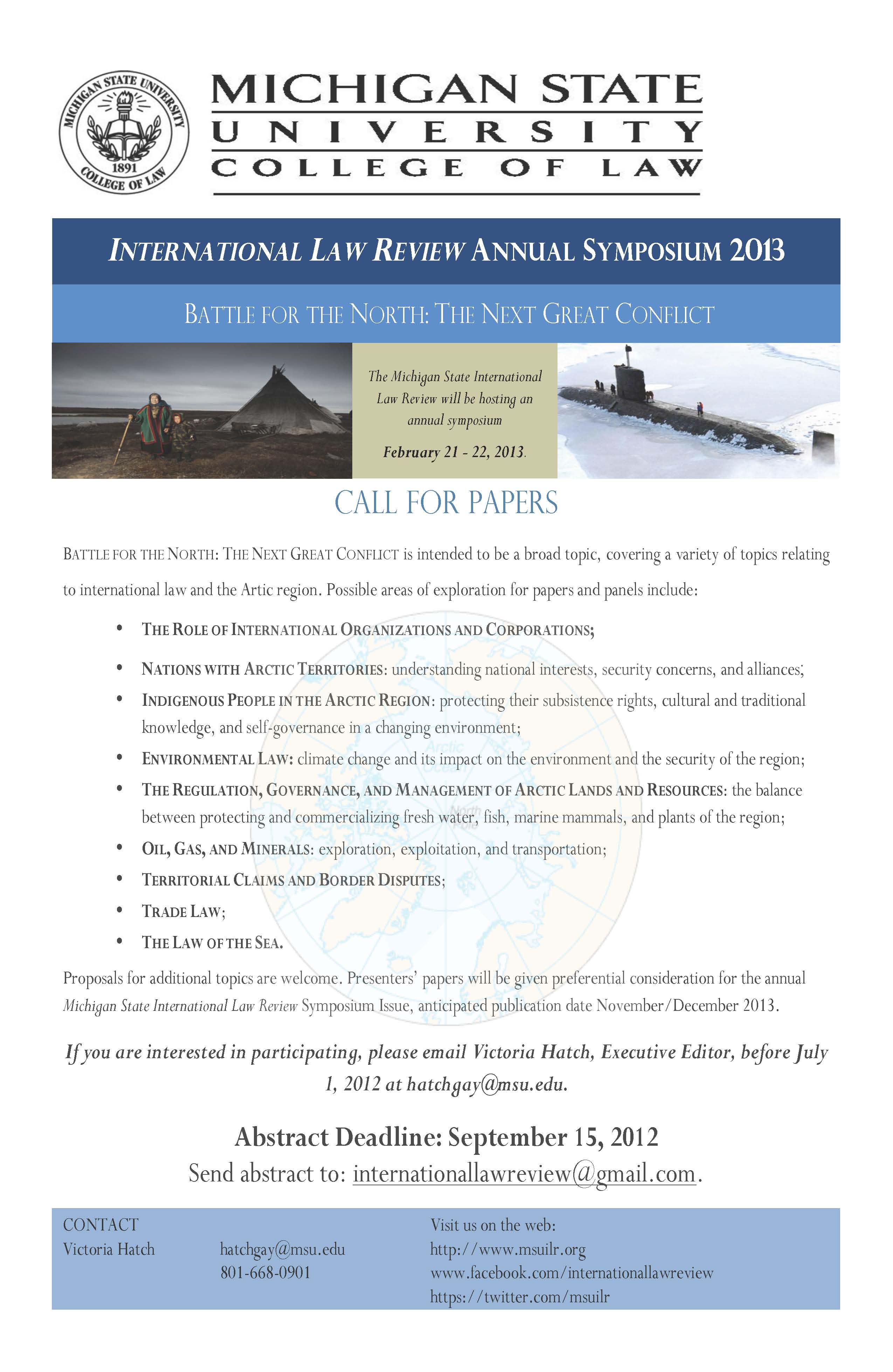
MSU International Law Review Call for Papers: Battle for the North — The Next Great Conflict
Kyle Whyte on Indigenous Peoples and Solar Radiation Management
Kyle Whyte has posted “Indigenous Peoples, Solar Radiation Management, and Consent,” available in REFLECTING SUNLIGHT: THE ETHICS OF SOLAR RADIATION MANAGEMENT (2012). Here is the abstract:
Funding research on solar radiation management (SRM) is now a policy option for responding to climate change due to the perception that international abatement efforts are creeping along too slowly. SRM research presents a range of problems concerning consent for Indigenous peoples. Indigenous peoples’ landscapes may risk rapid, unforeseen changes that will force communities either to respond under great hardship or migrate elsewhere. Since the science and engineering behind SRM are esoteric to non-experts, legitimate concerns arise about transparency and procedural justice. Indigenous peoples may also contest the very idea of human “control” of global temperatures. In this paper, I will examine what it would take for parties interested in funding, designing, and carrying out early SRM research to fairly respect members and leaders of Indigenous peoples in their current discourses. Ethical concern is warranted. Indigenous peoples have yet to be addressed responsibly about their possible consenting and dissenting views on early SRM research. There is little to no identifiable commitment to establish substantive fora or events for Indigenous peoples to engage with others about whether such research should be conducted in the first place and, if so, what to research and how to conduct empirical inquiries. Policy makers, experts, and private citizens of the developed world have a heavy moral burden to bear if they progress toward early SRM research without engaging in consent processes with Indigenous peoples. I begin in section 2 by claiming that the (arguably dominant) lesser of two evils argument for early SRM research can be construed as invaliding any potential dissenting views of Indigenous peoples. I deepen this claim in section 3 by showing how this argument resembles an argument that has been used throughout history to silence Indigenous peoples from meaningful consent or dissent. I then move on in section 4 to cover the scant literature that suggests possible consent processes for early SRM research. The common theme in this literature is that any fora or events for convening Indigenous peoples regarding SRM research should occur after research has been planned and even begun — thereby defeating the purpose of consent processes altogether. Consent or dissent after the fact is meaningless. In section 5, I argue that consent processes acceptable to Indigenous peoples must be based on partnership and include the following two requirements. First, Indigenous peoples should contribute actively to conversations about how to structure the consent processes in which they would participate. Second, in their interactions with Indigenous peoples, proponents of early SRM research are responsible for addressing them as sovereigns of their territories — despite the colonial conditions in many nations that frustrate Indigenous peoples’ political independence.
New Scholarship on Tribal Sovereignty, Climate Change, and Intergovernmental Cooperation
James Hopkins has posted his new paper, “Tribal Sovereignty and Climate Change: Moving Toward Intergovernmental Cooperation,” published in NAVIGATING CLIMATE CHANGE POLICY: THE OPPORTUNITIES OF FEDERALISM (2011).
Here is the abstract:
Climate-change impacts directly affect the resources, communities, and cultural identity of tribal governments, but defining the role of tribal governments in addressing these impacts calls into question who decides the scope and content of tribal jurisdiction. Historically, state governments and the federal government sought ownership of Indian lands, and Congress and the courts privatized Indian lands and limited tribal authority, treating tribes as dependent nations and providing little opportunity for them to manage their natural resources as autonomous actors. In the 1970s, US Environmental Protection Agency recognized tribal governments as the primary parties for making environmental decisions and managing environmental programs on Indian lands and successfully lobbied Congress to recognize tribes as states for purposes of environmental laws. Recently, tribes have accessed US courts and international bodies seeking relief from climate-change impacts on human rights grounds. Although tribes’ success in court has been limited to date, their efforts illustrate the proactive approach of tribal governments in addressing climate change.
Science Panel Discusses Direct Manipulation of Earth’s Climate
New Study Documents Disproportionate Impact of Climate Change on Indian Tribes
From the National Wildlife Federation (link here).
Here’s an excerpt:
In collaboration with the Tribal Lands Program, Institute for Tribal Environmental Professionals, National Congress of American Indians, Native American Fish & Wildlife Society, National Tribal Environmental Council, Native American Rights Fund, and University of Colorado Law School, the National Wildlife Federation released Indian Tribes, Climate-Induced Weather Extremes, and the Future for Indian Country. The report details how climate change is adversely and disproportionately affecting Indian Tribes in North America, people who rely on a healthy environment to sustain their economic, cultural and spiritual lives.
“The Indian Nations face profound challenges to their cultures, economies and livelihoods, because of climate change,” said Jose Aguto, policy advisor on Climate Change for the National Congress of American Indians. “Yet tribal peoples possess valuable knowledge and practices of their ecosystems that are resilient and cost-effective methods to address climate change impacts, for the benefit of all peoples. This study is a clear call for the Administration, Congress, state and local governments, and all peoples, to support and join tribal efforts to stem climate change.”
Here’s the report:
Could American Indian Nations “End Nature?” in Order to Save Themselves from Global Warming?
This paragraph appears in an article published the Summer 2011 edition of Radcliffe Magazine:
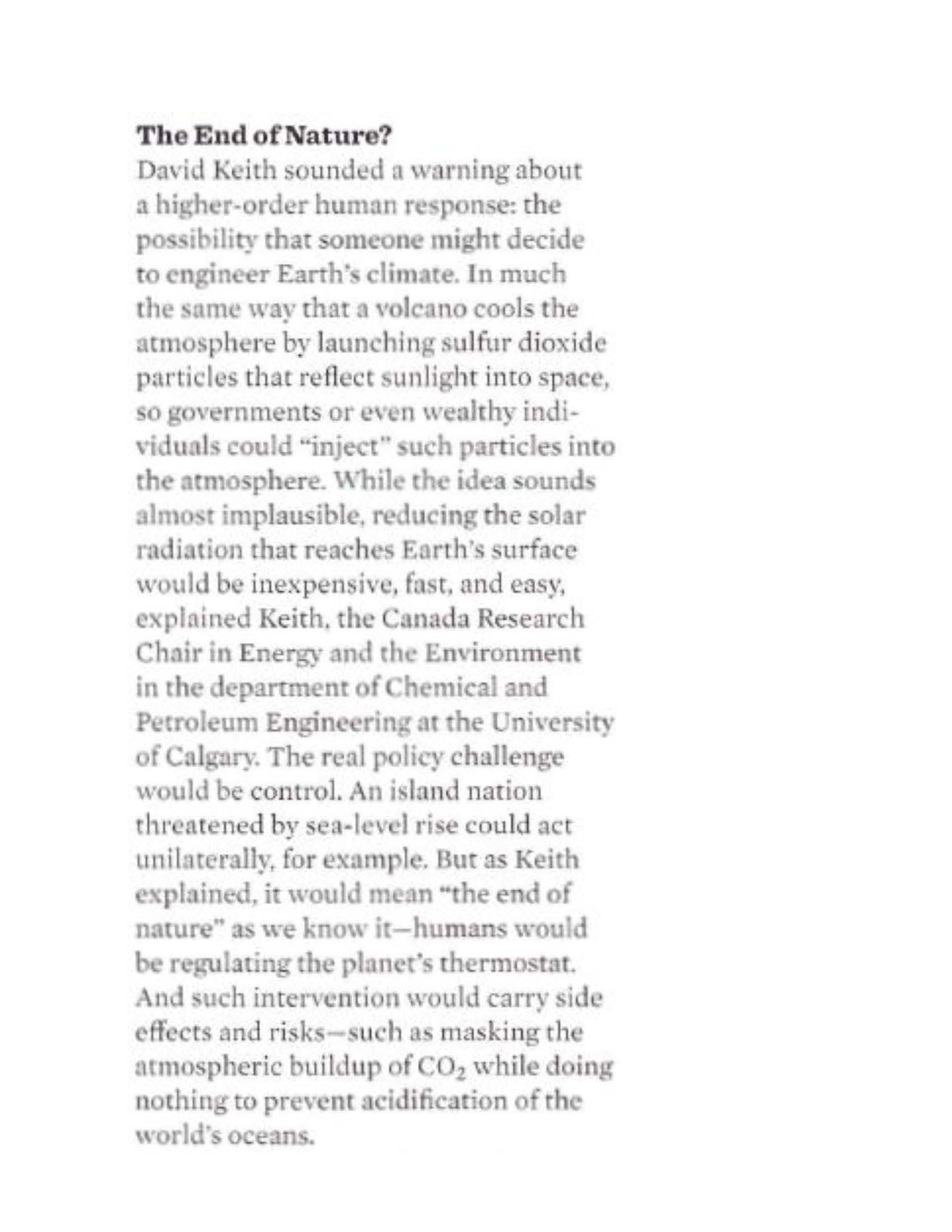
Assuming (and you know what they say about assumptions) Mr. Keith is right, this raises an interesting question relating to tribal sovereignty. If an Indian nation could do this, should they? And some Indian nations, say the Native Village of Kivalina for one example, have every motivation for doing this.
Native Village of Kivalina Opening Appellate Brief in Climate Change Case
Third Update in Native Village of Kivalina v. Exxon
The hearing on the motion to dismiss is tentatively set for May 19, 2009, at 1 PM, according to this filing: oil-companies-re-notice-of-motion-to-dismiss
The complaint and the relevant motions are here.
Second Update on Native Village of Kivalina v. Exxon
Here is the response brief to the motion to dismiss (here): opposition-to-motion-to-dismiss
And here is the main oil company reply brief: oil-company-reply-brief
And one from Shell Oil: shell-reply-brief
And, of course, here is the complaint that started it all.
 Turtle Talk
You must be logged in to post a comment.