Here is today’s opinion in Alltel v. DeJordy:
Here are the briefs:
Here is today’s opinion in Alltel v. DeJordy:
Here are the briefs:
Here are the materials in Brooks v. Gant (D. S.D.):
South Dakota Motion to Dismiss
DCT Order Dismissing Brooks v Gant
We posted the complaint and motion for PI here.
Here is the complaint in FTC v. Payday Financial LLC (D. S.D.).
Other docs are here at the FTC site:
Here. The text:
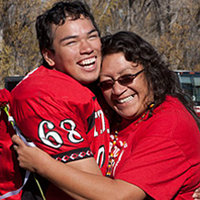 What’s new in voter suppression land today? South Dakota is trying to prevent Eileen Janis — and hundreds of other citizens — from voting.
Eileen grew up on the Pine Ridge Indian Reservation and does suicide prevention work. She registered to vote for the first time in 1984. “I always vote because my mom told me to,” she says.
But when she went to cast her ballot in the historic 2008 election, she found that she had been illegally removed from the voter rolls. Though she had been convicted of a felony, her sentence to probation meant that she had not lost the right to cast a ballot. “I went [to vote] with my son who had just turned 18. As soon as I tried to vote I was told no because I was a felon.”
The illegal denial of Eileen’s voting rights is part of South Dakota’s long and troubling history of violating the civil rights of Native Americans. Native Americans are highly over-represented in the criminal justice system, so denying voting rights to people on probation has an unfair and disproportionate impact on Native American voters.
The ACLU sued on behalf of Eileen and other Native Americans wrongfully purged from the rolls. We won, and South Dakota was ordered to make sure that people on probation were allowed to cast their ballots.
But the South Dakota legislature is now considering a bill that would strip Eileen and anyone else convicted of a felony of the right to vote, even if they never serve jail time and are living in their communities.
Measures designed to suppress the vote have been sweeping the nation, and South Dakota appears to be jumping on the bandwagon — but not if we can help it.
The Voting Rights Act gives the US Department of Justice (DOJ) the power to ensure that voting laws do not discriminate. Tell the DOJ to protect the right to vote in South Dakota and across the nation. And urge Congress to pass the Democracy Restoration Act, which would let Eileen — and all Americans with past convictions who are living in their communities — vote in federal elections.
Learn more about voter suppression: Sign up for breaking news alerts, follow us on Twitter, and like us on Facebook.
Here is the order granting the City $1000 from the plaintiffs:
DCT Order on Taxation of Costs
The City had asked for almost $20,000. An excerpt:
Under the unusual facts ofthis case, the Court in its discretion awards a portion of the costs to the Defendant in the amount of $1,000.00 against Plaintiff Pearl Cottier and awards no costs against Rebecca Three Stars as she is a poor person who brought an action on behalf of other Native American voters with no possibility ofmonetary gain for herself. Pearl Cottier may well have trouble paying her bills, but she is not a poor person. She, too, stood to gain nothing financially from this lawsuit brought in South Dakota on behalf of not only herself and other Native American voters in Martin, but also all Native Americans voters in South Dakota from a precedent point of view. Ms. Cottier is required to pay $1,000.00 in costs to the Defendants.
Here. An excerpt:
Native Americans have never had an easy time getting to vote in South Dakota. In 1977, the state attorney general dismissed the Voting Rights Act as an “absurdity” and advised state officials to ignore the federal law. The state didn’t allow Native Americans into polling places until the 1940s, though federal law had given them the right to vote in 1924. In 2004, a judge stopped poll watchers from following Native Americans out of voting places and taking down their license-plate numbers.
Through the years, Native Americans in South Dakota have filed more than 20 lawsuits over their right to vote.
This month, members of the Oglala Sioux Tribe went to court. In the upcoming presidential balloting, tribal members will have only six days of early voting, when the rest of the state has 46 days to cast early ballots in the primary and general elections.
Filed in federal court this month, the lawsuit contends the disparity is discriminatory, and amounts to “a denial of the right to vote.” One civic group has branded the state’s practice “a back door poll tax.”
The complaint in the suit is here.
Here is the order in Shillingstad v. United States (D. S.D.):
DCT Order Denying Shillingstad Motion
The appeal of the original conviction is here:
Here are the materials in the denial of Columbe’s motions for reconsideration and to hold a trial for a permanent injunction (prior post here, with opinion dismissing plaintiff’s claims):
Columbe Motion for Reconsideration
RST Opposition to Motion for Reconsideration
Columbe Motion for Permanent Injunction
RST Opposition to Motion for Permanent Injunction
DCT Order Denying Motion for Reconsideration
Earliest post here.
 Turtle Talk
You must be logged in to post a comment.