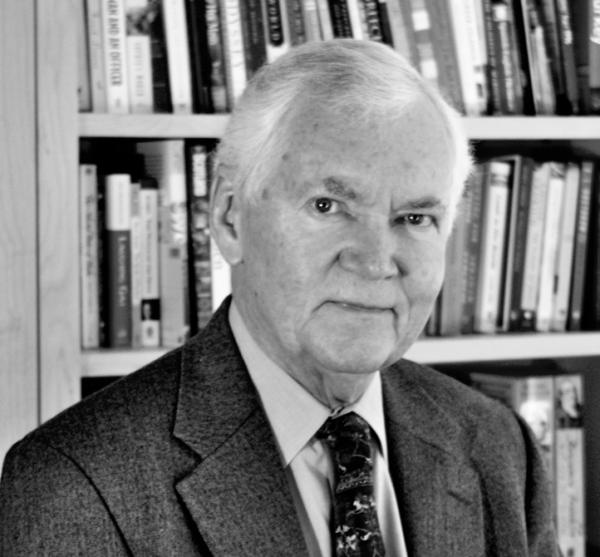
Interview with Laughlin McDonald on Indian Country Voting Rights

Here.

laughlin_mcdonald_-_courtesy_laughin_mcdonaldAn excerpt:

Your 1983 and 2013 voting-rights lawsuits have striking similarities. In other recent cases, jurisdictions you sued years ago are defendants once again. Are Native voting rights running in place?

There’s been progress—no doubt about that. Lawsuits have resulted in the creation of districts that allow Indian people to elect representatives of their choice. Tribal members have become aware of the value of participating in non-tribal elections. If you don’t vote, you’re not only denied the benefits of the government or school board, but you become its victim.

When we filed the 1983 lawsuit, no tribal member had ever been elected to Big Horn County’s commission. After we won, redistricting meant an Indian was elected. The Indian population has increased since then, and tribal members now hold several county positions. There’s been enormous change, here and elsewhere.


Read more at http://indiancountrytodaymedianetwork.com/2013/10/05/7-questions-aclus-laughlin-mcdonald-native-voting-rights-151545

BLT: Experts Debate Effects of Voting Rights Act Case on Indian Voting Rights

Here.

Excerpt:

During a February 22 media conference call with legal experts, Laughlin McDonald, director of the ACLU Voting Rights Project, said he thinks it is the Supreme Court’s duty to reject the challenge of constitutionality of Section 5. “The Section 5 objections enforcement actions…show that the extension of Section 5 in 2006 was more than justified,” McDonald said. In his report, “Voting Rights in Indian Country,” McDonald lays out several discriminatory decisions, such as redistricting in South Dakota, which diluted the Indian vote.

However, Section 5 is not permanent and jurisdictions may terminate or “bail out” from coverage if they have not discriminated for at least 10 years. Nine states are currently covered as a whole: Alabama, Alaska, Arizona, Georgia, Louisiana, Mississippi, South Carolina, Texas, and Virginia.

According to Patricia Ferguson-Bohnee, law professor at Arizona State University and author of an amicus brief filed by the Navajo Nation, Section 5 has improved American Indian’s voting rights in Arizona. However, she said, voters are still facing challenges, such as distant poll locations, linguistic barriers, and restrictive ID requirements.

James Tucker, a voting rights of counsel with Wilson Elser Moskowitz Edelman & Dicker and a primary author of the amicus brief filed by the Alaska Federation of Natives, said Section 5 remains an appropriate measure to prevent the ongoing voting discrimination against Alaska Natives. Section 203 of the Act requires that minorities in certain designated jurisdictions are to be given assistance in voting in their native language.

Yale Law Journal Publishes Pamela Karlan’s Review of Laughlin McDonald’s Voting Rights in Indian Country Study

Lightning in the Hand: Indians and Voting Rights

Written by Pamela S. Karlan, [View as PDF]
120 Yale L.J. 1420 (2011).

American Indians and the Fight for Equal Voting Rights

By Laughlin McDonald

Norman, OK: University of Oklahoma Press, 2010, pp. 347. $55.00.

Pamela Karlan Review of Laughlin McDonald’s Book to Be Published in Yale Law Journal

Pamela Karlan has posted the abstract of her forthcoming review of Laughlin McDonald’s book “American Indians and the Fight for Equal Voting Rights” on SSRN (link here). Here is the abstract:

This review essay discusses Laughlin McDonald’s book, American Indians and the Fight For Equal Voting Rights (2010), to explore questions of disenfranchisement, dilution, and constitutional design. McDonald examines the barriers to full political equality faced by Indians in communities in five Western states and describes litigation under the Voting Rights Act of 1965 attacking these barriers. In many ways, the Indian voting rights cases resemble the cases brought, often a generation earlier, by black citizens in the South and Latino citizens in the Southwest. But as McDonald explains, Indians occupy a distinctive status within the American political order. Indians are citizens not only of the United States and the state where they reside but often also (and particularly in those regions where they are most likely to bring voting rights claims) of a separate sovereign as well – their tribe. This fact has inflected both the history of Indian disenfranchisement and the course of litigation under the Voting Rights Act.

Part I describes the history of Indian disenfranchisement in light of their distinctive constitutional status. Indians’ exclusion from the political process reflected profound racism as pernicious and pervasive as the discrimination facing blacks in the South and Latinos in the Southwest. But it also involved complex constitutional and conceptual issues unique to Indians, who were excluded from citizenship, even after passage of the Fourteenth Amendment and who remained subject to distinct treatment even after citizenship was conferred. Part II then turns to the relatively recent vote dilution litigation that forms the heart of McDonald’s book. Indian voting rights cases have followed a clear path blazed by earlier cases involving blacks and Latinos. Nevertheless, themes related to Indians’ distinctive political status crop up within the litigation at various points. Finally, Part III looks beyond Indians’ claims under the Voting Rights Act to discuss issues related to internal tribal elections. Like other elections, these contests involve fundamental questions about enfranchisement and electoral design. Tribal answers to these questions sometimes depart dramatically from the rules governing federal, state, and local elections. I talk about two such departures, one related to voting by non-residents and the other related to nonequipopulous voting districts, to show how they that tie into ongoing debates extending far beyond Indian law.

Laughlin McDonald’s New Book on Voting Rights in Indian Country Now Available

Just in my mailbox….

American Indians and the Fight for Equal Voting Rights

By Laughlin McDonald

Recounting Indians’ progress in the voting booth

The struggle for voting rights was not limited to African Americans in the South. American Indians also faced discrimination at the polls and still do today. This book explores their fight for equal voting rights and carefully documents how non-Indian officials have tried to maintain dominance over Native peoples despite the rights they are guaranteed as American citizens.

Laughlin McDonald has participated in numerous lawsuits brought on behalf of Native Americans in Montana, Colorado, Nebraska, South Dakota, and Wyoming. This litigation challenged discriminatory election practices such as at-large elections, redistricting plans crafted to dilute voting strength, unfounded allegations of election fraud on reservations, burdensome identification and registration requirements, lack of language assistance, and noncompliance with the Voting Rights Act. McDonald devotes special attention to the VRA and its amendments, whose protections are central to realizing the goal of equal political participation.

McDonald describes past and present-day discrimination against Indians, including land seizures, destruction of bison herds, attempts to eradicate Native language and culture, and efforts to remove and in some cases even exterminate tribes. Because of such treatment, he argues, Indians suffer a severely depressed socioeconomic status, voting is sharply polarized along racial lines, and tribes are isolated and lack meaningful interaction with non-Indians in communities bordering reservations.

Continue reading

Montana Indian Country Voting Rights Case

An anti-tribal group called Citizens Equal Rights Alliance attempted to bring a Section 2 Voting Rights Act claim. This week, the federal district court dismissed this claim. [H/T to Indianz]

The complaint is here.

The State of Montana’s motion to dismiss is here: Motion to Dismiss

CERA’s response is here: Opposition to Motion to Dismiss

Montana’s reply brief is here: Reply in Support of Motion to Dismiss

Order Dismissing Action: Order

The ACLU Voting Rights Project attempted to intervene in the action, but the judge dismissed the case before ruling on the motion — Brief in Support of Motion to Intervene.

We at the ILPC are pleased to note that we will be hosting a mini-symposium on the Voting Rights Act in Indian Country next semester. We’ll have Laughlin McDonald of the Voting Rights Project, Ellen Katz of the University of Michigan Law School, and Daniel McCool and Susan Olson of the University of Utah. Profs. McCool and Olson are co-authors of the new book — Native Vote: American Indians, Voting Rights, and the Right to Vote (Cambridge).