Webinar: Protecting Victims and Communities from Firearms in Domestic Violence Cases

Protecting Victims and Communities from Firearms in Domestic Violence Cases: Collaborative Strategies

April 26, 2017 – 11:00am PT, 12:00pm MT, 1:00pm CT, 2:00pm ET

Is your community doing all it can to prevent firearms-related violence perpetrated by abusers in DV cases? Are you encountering challenges to implementing existing state, tribal, & federal firearms restrictions? Learn about strategies for effective implementation at all stages of civil & criminal DV cases, as well as a new national project, the Firearms Pilot Site Initiative, through which the NCJFCJ & other national experts will provide communities with in-depth TA, training, & other support.

Link to register for webinar: here

*A similar webinar with information specific for tribal communities will be held May 22, but people from all communities are encouraged to attend whichever one is most convenient.

Closed captioning will be provided. The webinar will be 60 minutes long and will be recorded and made available to individuals who cannot participate in the live webinar. If you have further questions regarding this event, please contact Alicia Lord at alord@ncjfcj.org.


Alaska Tribal Court Selected for Dependency Court Project

The Central Council Tlingit & Haida Indian Tribes of Alaska Child Dependency Court under the leadership of Judge Debra O’Gara been selected by the National Council of Juvenile and Family Court Judges (NCJFCJ) as one of six new courts to join their Implementation Sites Project, which helps to improve outcomes for abused and neglected children and their families.

Full press release available here alaska-implementation-pr-final-02232017.

From the release:

The NCJFCJ Implementation Sites Project, which is funded by the Office of Juvenile Justice and Delinquency Prevention, provides child abuse and neglect courts with training, technical assistance and support to guide program improvement, sustainability and performance. As part of their involvement in this project, Implementation Sites are expected to implement meaningful change, evaluate progress as well as share challenges and successes with other courts across the country.

“Tribal justice systems are growing and evolving to address to the needs and issues of tribal communities. It is vitally important that tribal courts continue to learn, benefit, and share information through the NCJFCJ’s Implementation Site Project,” said Nikki Borchardt Campbell, Executive Director of the National American Indian Judges Court Association.

The Central Council Tlingit & Haida Indian Tribes of Alaska Child Dependency Court, in Juneau, Alaska, began last year through an extensive partnership with the Tribal and Youth Services and the State of Alaska Office of Children Services. In the last decade, the Tribe’s court system has grown quickly beginning with child welfare including child support and paternity cases. Recently, the Tribal court has begun to hear domestic violence protection orders, custody, divorce, guardianship, and adoption cases. The Tribal court is also developing a juvenile wellness court, focused primarily on early intervention and prevention for youth whom are at risk of being involved in the criminal justice system.

“Being a part of the NCJFCJ’s Implementation Sites Project will not only help grow and expand our Tribal court in the child welfare area of services, but would greatly benefit our court’s needs for technical assistance, practical tools, and collaborative assessment,” said the Honorable Debra O’Gara, lead judge of the project.

“We look forward to collaborating with the NCJFCJ to strengthen the court’s infrastructure through data collection, forms and templates, staff training, and greater access to current research and trends in child and family needs to build up the infrastructure to handle the growing case load. I firmly believe that we have much to learn from the knowledge and experience of other judges and courts around the nation on how to best expand and improve the court’s outcomes for our children and families.”

NCJFCJ Opening for Site Manager with Tribal Experience, Open Until Feb. 20

The National Council of Juvenile and Family Court Judges (NCJFCJ) has posted an opening for a site manager with substantial experience working with tribes and tribal courts. Applications will be accepted until February 20.

For the complete job description click here

The Child Abuse and Neglect’s multi-disciplinary and highly dedicated team directs its work on helping judges improve court and systems’ handling of child abuse and neglect cases. The Site Manager position requires a unique blend of knowledge, skills, and abilities. This position will work primarily with tribes/tribal courts, but also can be tasked to work with other types of courts (e.g., dependency, delinquency, juvenile drug courts, dual status, etc.) as needed. The Site Manager will be required to build a substantial knowledge base around private and public funded projects that focus on improving court practice in child abuse and neglect cases; implement the principles of collaboration among court, agencies, and community; develop content expertise on issues common across system-involved children and families (e.g., trauma, substance abuse, etc.); and have experience and knowledge in the juvenile justice and dependency systems and especially in tribal court systems. This position will work as a member of the broader project court team, as well as perform collaborative planning and decision-making with other staff and projects across the organization.

Strong emphasis is placed on the following experience and abilities:
  • Providing public presentations and/or on-site technical assistance to tribal and state courts
  • Independent thinking and analytical skills, as well as a demonstrated ability to quickly synthesize complex information
  • Writing policy briefs and papers
  • Working collaboratively with partners and system representatives
  • Substantial experience working with tribes and tribal courts
  • Experience and knowledge of delinquency, or domestic violence systems; ICWA and VAWA highly desirable

The NCJFCJ is also hiring for the following positions:

Judge-in-Residence

Program Specialist

Details for all positions available here

Tribal Protection Order Webinar Series

The National Council of Juvenile and Family Court Judges, the Tribal Law and Policy Institute, and the National Congress of American Indians are hosting a webinar series on tribal protection orders. Each webinar will be 30 minutes with additional time for Question and Answer. Participants may attend one or more webinars, there are no prerequisites to attend any webinar. All webinars will be archived on tribalprotectionorder.org.

Please register for the topic(s), date and time that works best for you. The registration links are located below each topic description.

1) Issuing tribal protection orders – This webinar will discuss how to craft tribal protection orders, what language must be included in a tribal protection order, and how to meet the Violence Against Women Act (VAWA) full faith and credit provision.

Tue, Sep 13, 2016 11:00 AM – 12:00 PM PDT
Registration URL: https://attendee.gotowebinar.com/register/586317150921405955
Webinar ID: 144-585-971

2) Enforcing protection orders generally and for VAWA Special Domestic Violence Criminal Jurisdiction over non-Indian (SDVCJ) cases – This webinar will discuss how to enforce tribal protection orders through: criminal prosecution, criminal contempt, and civil contempt. Enforcing tribal protection order under the VAWA SDVCJ will also be addressed.

Tue, Sep 20, 2016 11:00 AM – 12:00 PM PDT
Registration URL: https://attendee.gotowebinar.com/register/2166778254430826243
Webinar ID: 118-977-555

3) Contempt and tribal protection orders – This webinar will discuss what powers judges have to maintain the safety, order and integrity of the court while issuing and enforcing tribal protection orders.

Tue, Sep 27, 2016 11:00 AM – 12:00 PM PDT
Registration URL: https://attendee.gotowebinar.com/register/6100405347613417219
Webinar ID: 121-647-987

Panelists: Honorable Steven D. Aycock, (Ret.), Judge-in-Residence, National Council of Juvenile and Family Court Judges, Honorable Kelly Gaines Stoner, Victim Advocacy Legal Specialist, Tribal Law and Policy Institute and Judge, Seminole Nation of Oklahoma

Facilitators: Virginia Davis, Senior Policy Advisor, National Congress of American Indians, Chia Halpern Beetso, Tribal Court Specialist, Tribal Law and Policy Institute

This webinar series is a part of a series of VAWA Special Domestic Violence Criminal Jurisdiction over non-Indians webinars. For past webinars please see: http://www.ncai.org/tribal-vawa. Past webinars include – Jury Pools and Selection, Defendant’s Rights, Victims’ Rights, Prosecution Skills, and Code Revision & Drafting. For further information on VAWA SDVCJ and protection orders, please visit: www.NCAI.org/tribal-vawa ; http://www.tribal-institute.org/lists/vawa_2013.htm ; www.TribalProtectionOrder.org.

After registering, you will receive a confirmation email containing information about joining the webinar.

View System Requirements

Judge Richard Blake Honored as Justice Innovator of the Year

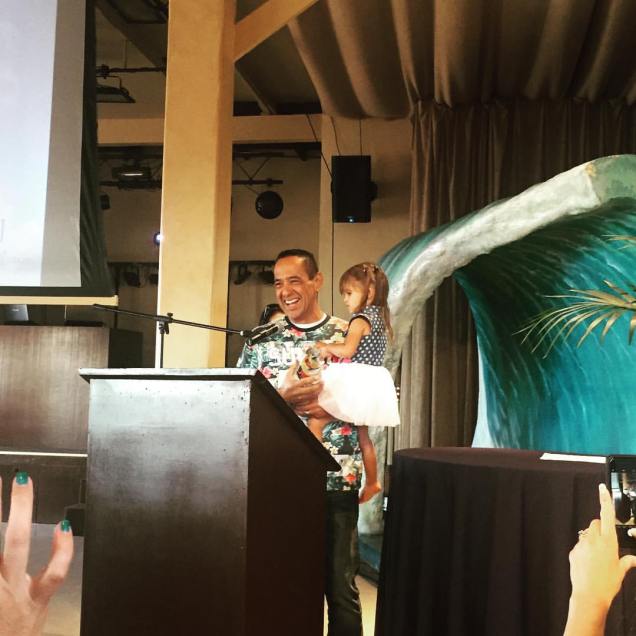
Judge Richard Blake, Chief Judge of Hoopa Valley Tribal Court and Board of Directors President of the National American Indian Court Judges Association, was honored at the NCJFCJ Annual Conference as Justice Innovator of the Year.

The Innovator of the Year Award honors someone who has inspired, sponsored, promoted, or led an innovation or accomplishment of national significance in juvenile justice, child abuse and neglect, family law, and/or domestic violence.

Judge Blake has been a tireless advocate for tribal court judges and has been involved in amazing work in his own Tribe, leading the way in innovative practices in all areas of the law. The work he has done and the sacrifices he has made have been inspirational to many. It is great to see him being recognized on a national level for his efforts.

Congratulations Judge Blake (and his gorgeous daughter who stole the show).

H/T to Nikki Campbell for the picture.

13701142_10106498427336421_6836082684401349210_o

Judge Ron Whitener and Kate Fort Presentations at NCJFCJ Annual Conference

Judge Ron Whitener, Chief Judge of the Tulalip Tribal Court, was the first ever Native plenary speaker at NCJFCJ’s Annual Conference. He gave a presentation entitled “How State and Tribal Court Judges Can Work Together to Improve Outcomes.” Judge Whitener’s presentation was very well-received by the judges, and he received a standing ovation from the audience.

In addition, Kate Fort presented a well-attended session entitled “What State Court Judges Need to Know About ICWA.” Kate gave a brief update on recent court activity around ICWA and then summarized some key provisions in the new ICWA regulations. The judges were thrilled to receive this brand new and important information.

Thanks to both of them for their contributions to the conference and to NCJFCJ for its continuing commitment to tribal courts, tribal issues, and tribal-state collaborations.

IMG_4492

Matthew Fletcher is First Native Plenary Speaker at National Conference

ncjfcj1
Click to enlarge

Here is Matthew with Robert Listenbee, Jr., at the National Council of Juvenile and Family Court Judges’ National Conference on Juvenile Justice in Las Vegas.  Listenbee, Administrator of the DOJ’s Office of Juvenile Justice and Delinquency Prevention, introduced Matthew and encouraged the group to work harder to bring justice for Native children and youth.  Matthew is the first Native plenary speaker that NCJFCJ has had at one of its national conference!  His presentation was “The Crisis in American Indian Juvenile Justice.”

February is Teen Dating Violence Awareness Month

One in three adolescents in the U.S. is a victim of physical, sexual, emotional or verbal abuse from a dating partner. One in five tweens knows a victim of dating violence. (For citations to these and more statistics see Break the Cycle’s Dating Violence research available here.)

The National Indigenous Women’s Resource Center has a project called Native Love, designed to educate Native teens on this very real problem.

Native Love is defined by our traditional ways of caring for each other and values as Native peoples of respect, honor, kindness, family and compassion. Our NativeLove project encourages youth to rethink what Native Love means to them, and empower them to define healthy relationships for themselves This is with the aim of promoting non-violent, respectful, safe relationships among Native youth, their families, communities, cultures, & Nations

A link to the project can be found here

In addition, the National Council of Juvenile and Family Court Judges has been publishing guest blogs by judges discussing a judicial perspective on the epidemic of violence among teens and the need for awareness of this problem from the bench. Judge Anne McKeig, White Earth member and state court judge, wrote about her observations of the impact of family violence on Native children and how some of these kids have eventually ended up in her court as victims of dating violence – unable to break out of the cycle of violence.

The need to address dating violence among Native teens is critical. Forty percent of suicides by Native Americans are committed by those between the ages of 15 and 24.[10] While the cause of suicide is complex, untreated trauma is a known factor. Addressing the problem is also not easy. The occurrence of violence among Native teens is complicated by many factors – lack of culturally appropriate resources, historical trauma, high rates of alcohol and drug abuse, poverty, and the normalization of violence within the culture, to name a few. The “system” is viewed by the Native community as untrustworthy and in many cases, has contributed to the historical trauma endured by Native American families. Courts must commit to building trust with the Native community; building relationships to engage in meaningful dialogue; and creating a welcoming and accessible presence for Native victims to obtain help. Without that commitment there will be no change.

Blog post available here

National Council of Juvenile and Family Court Judges (NCJFCJ) Announces Search for CEO

From the job announcement:

After five years of consistently strong stewardship under its current Chief Executive Officer (CEO), the National Council of Juvenile and Family Court Judges (NCJFCJ) is embarking on a transition to new leadership. To guide the organization through this transition and beyond, the NCJFCJ is seeking a dynamic, inspired leader to make an extraordinary impact. This experienced executive will lead the organization during a time of exciting growth and development. The right candidate is hands-on, ambitious, can demonstrate a track record of strategic leadership, can advocate passionately for healthy courts and their connection to healthy communities, and is inventive and creative in increasing and diversifying revenue streams to ensure long-term sustainability. The CEO will lead a dedicated staff in accelerating and enhancing the dynamic, innovative programming the NCJFCJ is known and respected for nationwide.

Interested candidates must apply by February 28, 2016.

Link to details here


The Judges’ Page Devotes Issue to the Topic of Tribal Issues in Dependency Court

The Judges’ Page, a newsletter published by the National CASA Association and the National Council of Juvenile and Family Court Judges, has just released the summer 2015 issue.  The entire issue is devoted to the theme Tribal Issues in Dependency Court.

The newsletter is available here.

From Judge Dean Lewis (ret):

The National Council of Juvenile and Family Court Judges (NCJFCJ) and the National CASA Association are partners in publishing The Judges’ Page. Both organizations are deeply committed to effective court advocacy for American Indian and Alaska Native children and families involved in dependency court proceedings. This issue of The Judges’ Page addresses the importance of compliance with the Indian Child Welfare Act of 1978 (ICWA) from the legal as well as the cultural perspective. The issue provides effective educational tools for ICWA implementation and offers examples of collaborations between state and tribal courts.

Readers should be aware that the Bureau of Indian Affairs (BIA) issued updated Guidelines for State Courts and Agencies in Indian Child Custody Proceeding effective February 25, 2015. The updated Guidelines are intended to promote compliance with ICWA’s stated goals and to provide best practices for ICWA compliance by state courts and child welfare agencies. In addition, on March 20, 2015, the Bureau of Indian Affairs proposed Regulations for State Courts and Agencies in Indian Child Custody Proceedings. Recently, Congress passed two bills to help protect Native American Children: The Native American Children’s Safety Act and the Alyce Spotted Bear and Walter Soboleff Commission on Native Children Act. The Executive branch and the Congress are to be commended for their efforts to clarify the original intent of the ICWA, and to promote the health, safety, and well-being of Native Children.

The NCJFCJ Tribal Caucus identified key topics of concern to be addressed in this issue of The Judges’ Page. Our thanks to Victoria Sweet, Program Attorney at NCJFCJ, for seeking input from the Caucus and securing numerous articles for this issue. Donna Goldsmith was tasked with developing a primer for judges and advocates on key issues for implementation of the ICWA, and we appreciate her undertaking that project. Our thanks also to Judge Len Edwards and Jennifer Walter of the Center for Families, Children & the Courts of the Judicial Council of California for securing and writing articles that exhibit the remarkable best practices instituted throughout that state. And, to all of the authors who volunteered their time to contribute to this issue, thank you.

Articles in This Issue

Judge William A. Thorne, Jr. (ret), describes the background that led to the adoption of the Indian Child Welfare Act and its relevance to treatment of all children impacted by the child welfare process.

Donna Goldsmith, JD, informs readers of the ICWA legal requirements and provides a primer of how to proceed in ICWA cases utilizing the provisions of the BIA updated Guidelines for State Courts and Agencies in Indian Child Custody.

Victoria Sweet, JD, gives an overview of the updated BIA Guidelines for State Courts and Agencies in Indian Child Custody Proceedings and proposed Regulations for State Courts and Agencies in Indian Child Custody Proceedings.

Mary Beth Jager, MSW, Rachel Rose Starks, MA, Adrian T. Smith, JD, MSW, and Miriam Jorgensen, PhD, collaborated to share the history of tribal child welfare systems and lawmaking which have been recognized by the ICWA as the governance
mechanism by which a tribe establishes and implements jurisdiction for the wellbeing of Indian children.

Judge Leonard Edwards (ret.) discusses the ICWA active efforts requirement and distinguishes active efforts from reasonable efforts.

Victoria Sweet, JD, describes the commitment of NCJFCJ to implementation of the ICWA. She introduces readers to NCJFCJ publications and includes the recommendation of NCJFCJ that state court judges apply the recently revised Bureau of Indian Affairs ICWA Guidelines.

Paige Beard, Director of Program Development at the National CASA Association, provides background on the National CASA Association’s commitment to training and supporting CASA volunteers who serve Indian
children through Tribal Courts and Dual State Court/Tribal Court Programs.

Judge Korey Wahwassuck reports on how the joint tribal-state jurisdiction in Itasca County, MN, has proven effective in promoting lifetime healing while protecting public safety, and how this model can be used as a tool for reducing the number of children in out-of-home placement, as well as speeding reunification.

The California Judicial Council established a Tribal/State Projects Unit in 2009 as part of the Center for Families, Children & the Courts. This unit staffs the California Tribal Court-State Court Forum (forum), which was formed in 2010. Judges and staff share their perspectives on their collaborative work locally and statewide through the forum.

Judge Leonard Edwards (ret.) discusses the ICWA active efforts requirement and distinguishes active efforts from reasonable efforts.

Justice Jill Elizabeth Tompkins reviews the provisions of the ICWA and the updated Guidelines for State Courts and Agencies in Indian Child Custody Proceedings provisions regarding transfer of an Indian child’s case from a state court to a tribal court from the perspective of the tribal court.

Jack Trope, JD, and Sarah L. Kastelic, PhD, set out the ICWA placement preferences. They explain the limitation on the “good cause” exception as established in the updated Guidelines for State Courts and Agencies in Indian Child Custody Proceedings.

Claire Chiamulera of the ABA Center on Children and the Law shares her recommendations in “Best Practice for Native American and All Families” reprinted from Child Law Practice.

Kathryn E. Fort, JD, offers insight and best practices on ICWA cases involving military families.

Jessica Jorgensen, JD, offers her perspective on the issue of “good cause” to deviate from ICWA placement preferences.
Web Resources is an article that provides readers with the websites of organizations that produce educational materials on the ICWA as well as resources and assistance in implementation of the ICWA.