A Quick Brackeen Opinion Post

The decision was written by Justice Barrett with all but Justice Thomas and Alito joining her opinion. Justices Gorsuch and Kavanaugh wrote (very different) concurrences. Justices Thomas and Alito dissented.

Essentially the Court held that ICWA is not beyond the power of Congress to effectuate, and does not violate commandeering concerns by making states follow federal law. Neither the foster parents or the state of Texas had standing to bring the equal protection arguments related to the third placement preferences. They did not rule on any merits regarding equal protection and ICWA. Gorsuch’s concurrence laying out the history of federal Indian Law and ICWA is veritable who’s who of Indian law professors. Kavanaugh’s concurrence wants us to make sure we understand there was no ruling on equal protection, only on standing to bring the claim. Justices Thomas and Alito did their usual thing.

This is, without question, a massive win. It’s a stunning victory upholding both the foundations of federal Indian law and the Indian Child Welfare Act. The original district court decision finding ICWA unconstitutional, as well as the parts of the Fifth Circuit decision finding the same, are no longer good law. There is, at this time, no major change in ICWA practice. We can talk details in the coming weeks. So for now I’ll leave you with the last sentence of the Gorsuch concurrence while we all breath a sigh of relief:

In adopting the Indian Child Welfare Act, Congress exercised that lawful authority to secure the right of Indian parents to raise their families as they please; the right of Indian children to
grow in their culture; and the right of Indian communities to resist fading into the twilight of history. All of that is in keeping with the Constitution’s original design.

SCOTUS Affirms Constitutionality of ICWA 7-2

Here is the opinion in Haaland v. Brackeen.

More stuff here.

SCOTUS Holds 8-1 Bankruptcy Act Abrogates Tribal Immunity

Here is the opinion in Lac du Flambeau Band of Lake Superior Chippewa Indians v. Coughlin.

Lower court materials here.

Skipped History Interview of Fletcher on ICWA and the Brackeen Case: “The “Surreal” SCOTUS Case on Indian Adoptions”

Here.

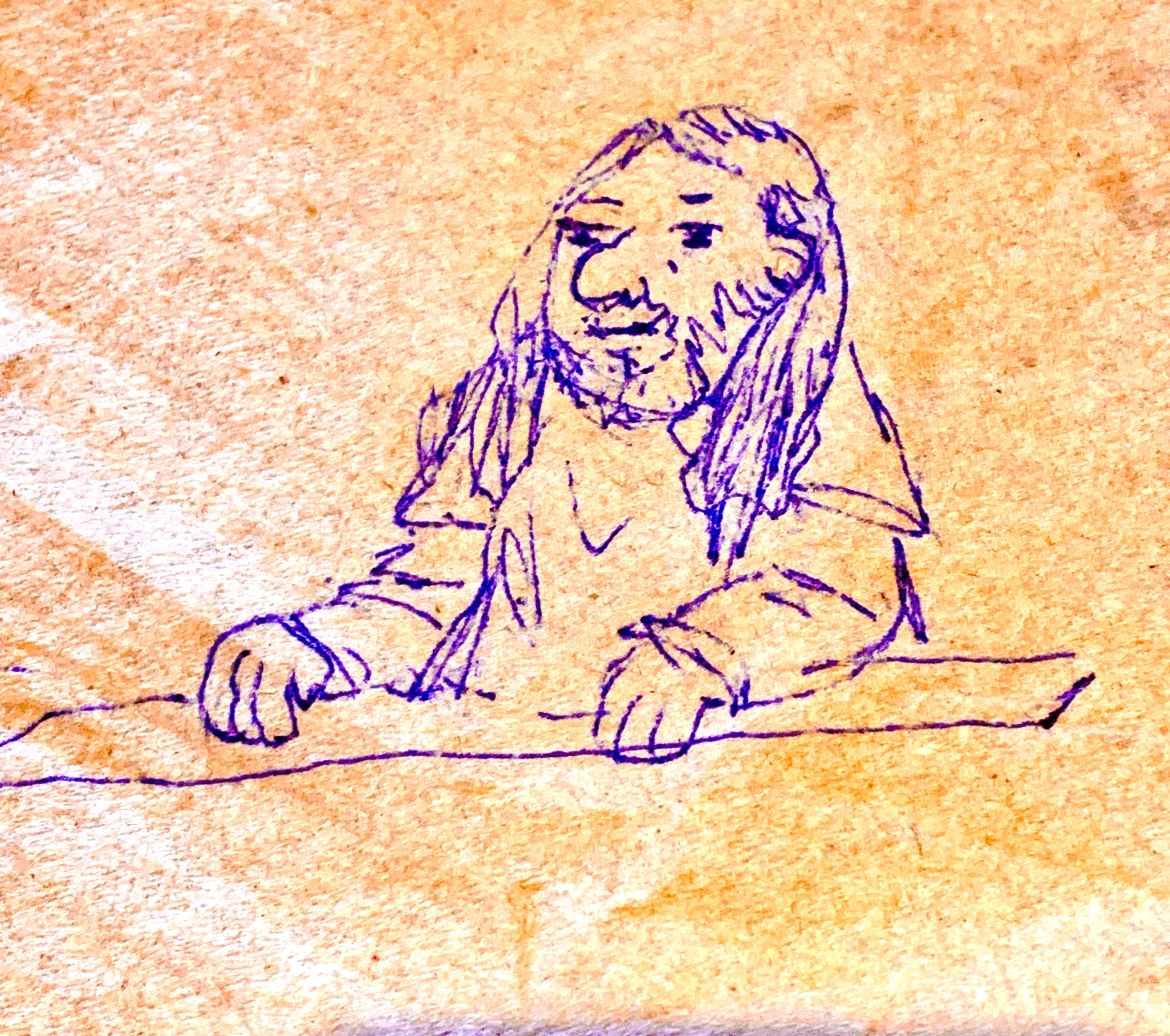
Apparently, I sometimes make this face when someone says “Yoda.”

More Perfect Podcast: The Supreme Court v. Peyote

No Brackeen Decision Today

Next opinion day is June 15.

Remember, no matter what someone tells you, the Court does not suddenly or randomly release opinions. If the Court’s website doesn’t say they are releasing opinions, they are not releasing opinions that day. The website also says what time (10am) they are convening to release opinions. We absolutely do not know which opinions they will release, or how many, just that they will release some.

This alert is definitely not based on phone calls I got last Sunday.

No Brackeen Decision Today

Next opinion release day from the Supreme Court will be June 1.

While not required by law, it is traditional for the Court to release all the opinions for the term by the end of June. No one receives advance notice of when an opinion will be released, no matter what they may say. Even in the extraordinary situation of the Dobbs opinion leak, no one knew when the official opinion would be released.

NPR Code Switch Episode on ICWA (feat. Rebecca Nagle)

Kirsten Carlson on the Democratic Difficulties of Castro-Huerta

Kirsten Matoy Carlson has published “The Democratic Difficulties of Oklahoma v. Castro-Huerta” in New Political Science. Here is the abstract:

The Supreme Court, some commentators argue, is at its most undemocratic since the Lochner Era in the 1930s. They point to the Supreme Court’s majority opinion in Dobbs v. Jackson Women’s Health Organization, which departs from public opinion on abortion and longstanding constitutional precedence. Dobbs, however, is not an outlier. The Supreme Court made a similar move in Oklahoma v. Castro-Huerta. The majority opinion questioned almost 200 years of constitutional interpretation and several decades of congressional policy to enable state governments to exercise criminal authority over non-Indians in Indian Country. This article compares the majority opinion in Castro-Huerta to congressional policy to explore the democratic and constitutional difficulties that can arise when the Supreme Court refuses to defer to Congress—the democratically elected and constitutionally appointed institution for making federal Indian policy. It reveals how the Court’s undemocratic turn extends beyond cases involving individual rights.

Oral Argument in LDF v. Coughlin

Audio here.

Transcript here.