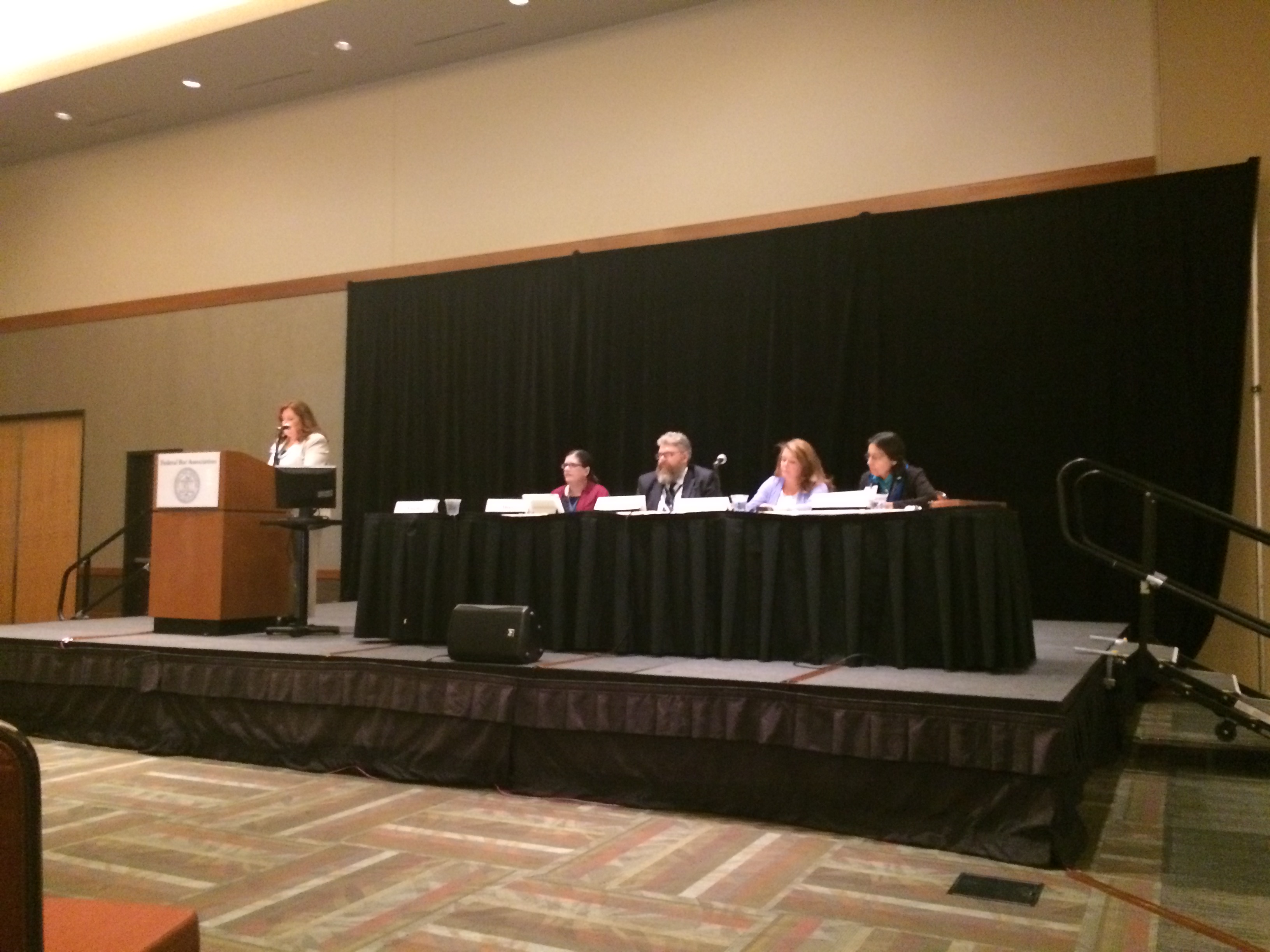
Moderator: Helen Padilla
Panelists: Sarah Deer (Geeeeenius), Brent Leonhard, Jill Tompkins, Gloria Valencia-Weber
Moderator: Helen Padilla
Panelists: Sarah Deer (Geeeeenius), Brent Leonhard, Jill Tompkins, Gloria Valencia-Weber
In the March 2015 edition of the Montana Lawyer (page 18).
Part 1 was here.
in this month’s edition of the Montana Lawyer (see page 14).
Here (PDF):
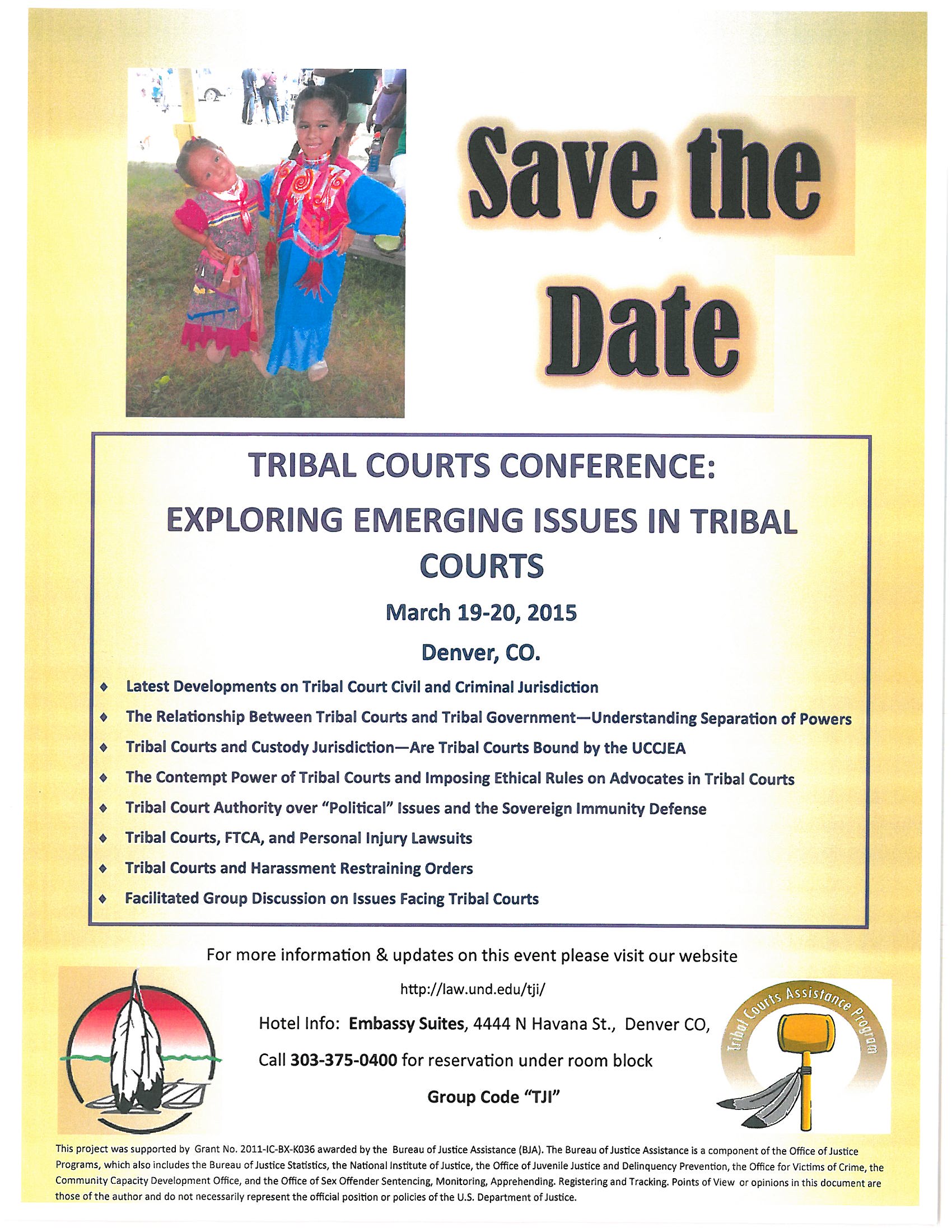
Application Deadline: April 20, 2015
Full details available here
Description |
|---|
| The Administration for Children and Families, Children’s Bureau announces the availability of awards to provide tribes and tribal consortia the opportunity to compete for grants to enable tribal courts to:
(1) Conduct assessments of how tribal courts handle child welfare proceedings and to make improvements to court processes; (2) Implement improvements to provide for the safety, permanency and well-being of children as set forth in the Adoption and Safe Families Act of 1997 (Pub. L. 105-89) and increase and improve engagement of the entire family in court processes relating to child welfare, family preservation, family reunification and adoption; (3) Ensure children’s safety, permanence, and well-being needs are met in a timely and complete manner (through better collection and analysis of data); and (4) Provide for training of judges, attorneys, and other legal personnel in child welfare cases. Grant funds may not be used to hire attorneys or judges, fill vacant court personnel positions, or otherwise supplant funding for tribal government positions. |
A panel of UNM Law Students presented the research they have compiled so far on Tribal Courts and Traditional Justice Systems at the NAICJA conference. The students are currently researching different approaches to implementing traditional justice in tribal courts and would appreciate ideas and recommendations for tribal constitutions, codes, court opinions or other sources of information on this topic. They are working with Professor Scott Taylor, and ideas can be sent to him at: taylor@law.unm.edu.
The UNM Law Students are:
Javiér Amaya, Erica Valdez, Christine Jordan, Concetta Tsosie, EJ John, April Wilkinson


Here:

Here is the opinion in Thlopthlocco Tribal Town v. Stidham. An excerpt:
The Thlopthlocco Tribal Town is a federally recognized Indian tribe in Oklahoma. An election dispute arose about which individuals were properly elected or appointed to govern the Thlopthlocco people. Seeking to resolve that dispute, the Tribal Town filed suit in the tribal court of the Muscogee (Creek) Nation and, accordingly, voluntarily submitted to that court’s jurisdiction.
The Tribal Town subsequently concluded it did not want to maintain its suit in tribal court and dismissed its claims. But the defendant in that suit had, by that time, filed cross-claims. Arguing that the Tribal Town’s sovereign immunity waiver did not cover proceedings on the cross-claims, the Tribal Town attempted to escape Muscogee court jurisdiction, but, in various decisions, several judges and justices of the Muscogee courts held that they may exercise jurisdiction over the Tribal Town without its consent.
The Tribal Town then filed a federal action in the Northern District of Oklahoma against those Muscogee judicial officers, seeking to enjoin the Muscogee courts’ exercise of jurisdiction. The district court dismissed the case, finding that the federal courts lacked subject matter jurisdiction, the defendants were entitled to sovereign immunity, the Tribal Town had failed to join indispensable parties, and the Tribal Town had failed to exhaust its remedies in tribal court. We conclude, however, that the Tribal Town has presented a federal question and that the other claims do not require dismissal. But we agree the Tribal Town should exhaust its remedies in tribal court while its federal court action is abated.
Here are the briefs:
Lower court materials here.
Joseph Thomas Flies-Away, Carrie Garrow, and Pat Sekaquaptewa have published the second edition of Tribal Healing to Wellness Courts: The Key Components (PDF).
 Turtle Talk
You must be logged in to post a comment.