From Nishnawbe News [NMU], Summer 1972:

From Nishnawbe News [NMU], Summer 1972:
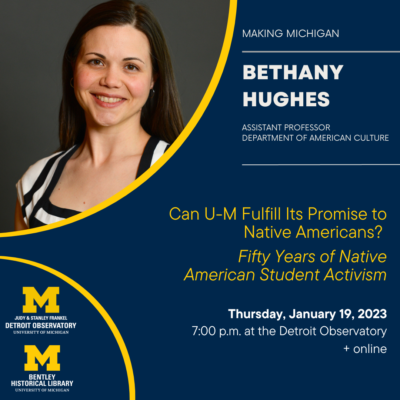
The University of Michigan has a complicated history with Native American communities, which were vital to its very existence. Join us for a discussion with Bethany Hughes, assistant professor of American Culture, on the historic and ongoing activism of Native American students.
Can U-M Fulfill Its Promise to Native Americans?
Fifty Years of Native American Student Activism
Thursday, January 19, 20237:00 – 9:00 P.M. Guests may attend in-person at the Judy and Stanley Frankel Detroit Observatory or attend virtually.
The talk will examine the founding of the Native American Student Association, the work to compel the University to recognize the promise of education made to Native Americans in the 1817 Treaty of Fort Meigs (including a critical lawsuit brought by a U-M football player), and the decades-long work to bring to light the racial stereotyping and misuse of Native American symbols by the Michigamua student organization.
>> REGISTER TO ATTEND IN PERSON <<
>> REGISTER TO ATTEND VIRTUALLY <<
ABOUT THE SPEAKER: Bethany Hughes is an Assistant Professor in the Department of American Culture and a core faculty member in the Native American Studies Program. A performance scholar and cultural historian, her research focuses on theatre and performance in America, Indigenous performance, and the possibilities for making and remaking culturally legible categories through live performance. She teaches classes on Native American Studies, Indigeneity and Performance, Authenticity and Representation, American Performance, and Broadway and American Culture. An enrolled member of the Choctaw Nation of Oklahoma, her writing can be found in Theatre Journal, Theatre Survey, Theatre Topics, Mobilities and on HowlRound.com. Her current book project is an investigation of redface in 19th and 20th century American theatre and its implications for Indigenous identity and sovereignty.
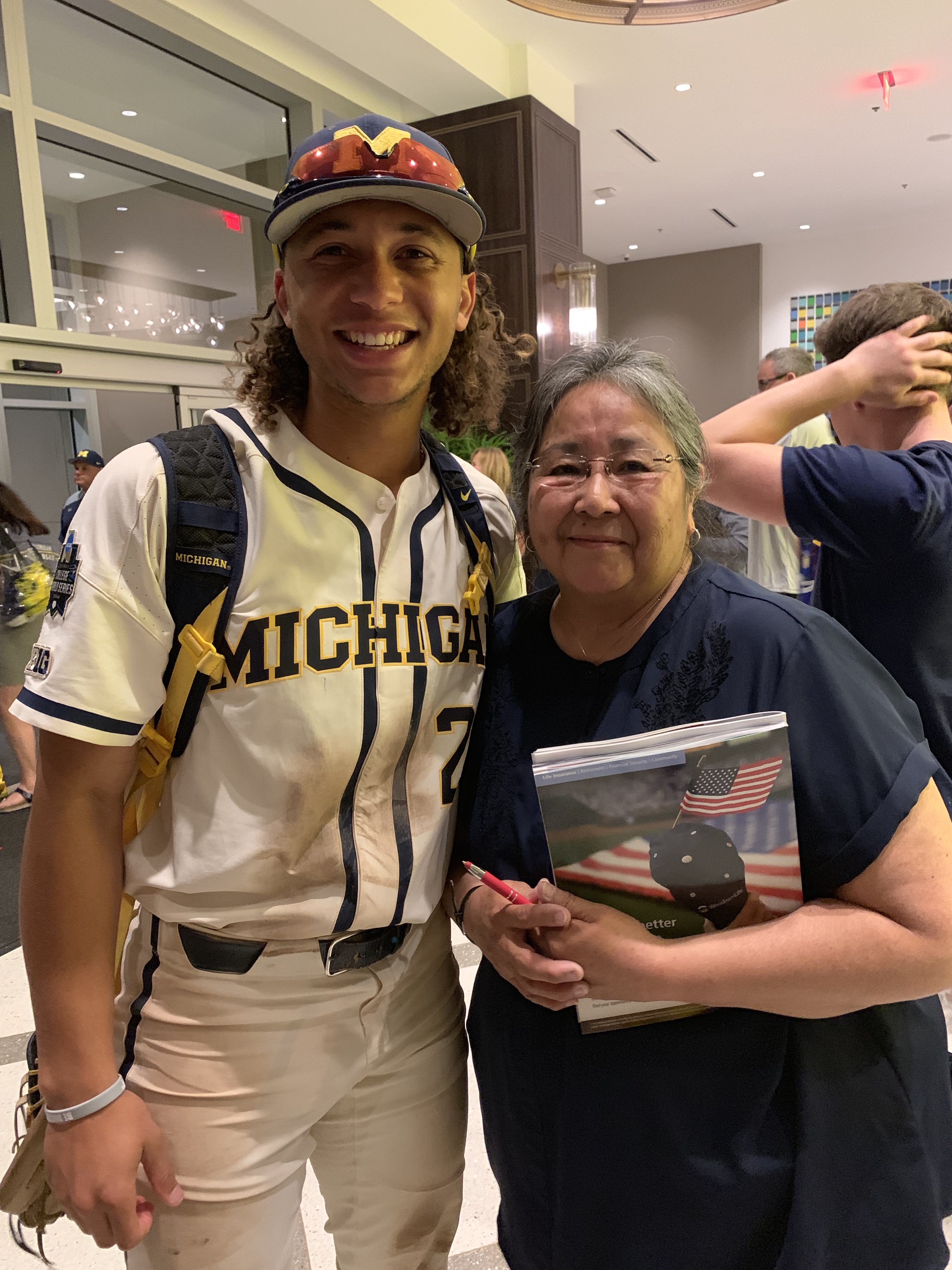
Here is “Brewer Discusses Whirlwind of Success This Season, Support of His Tribe.”
Here is the letter, along with the report:
This is a big deal. Chi-miigwetch to Joe Gone and John Petoskey for leading the way.
Izhaadaa Giizhigowaande!
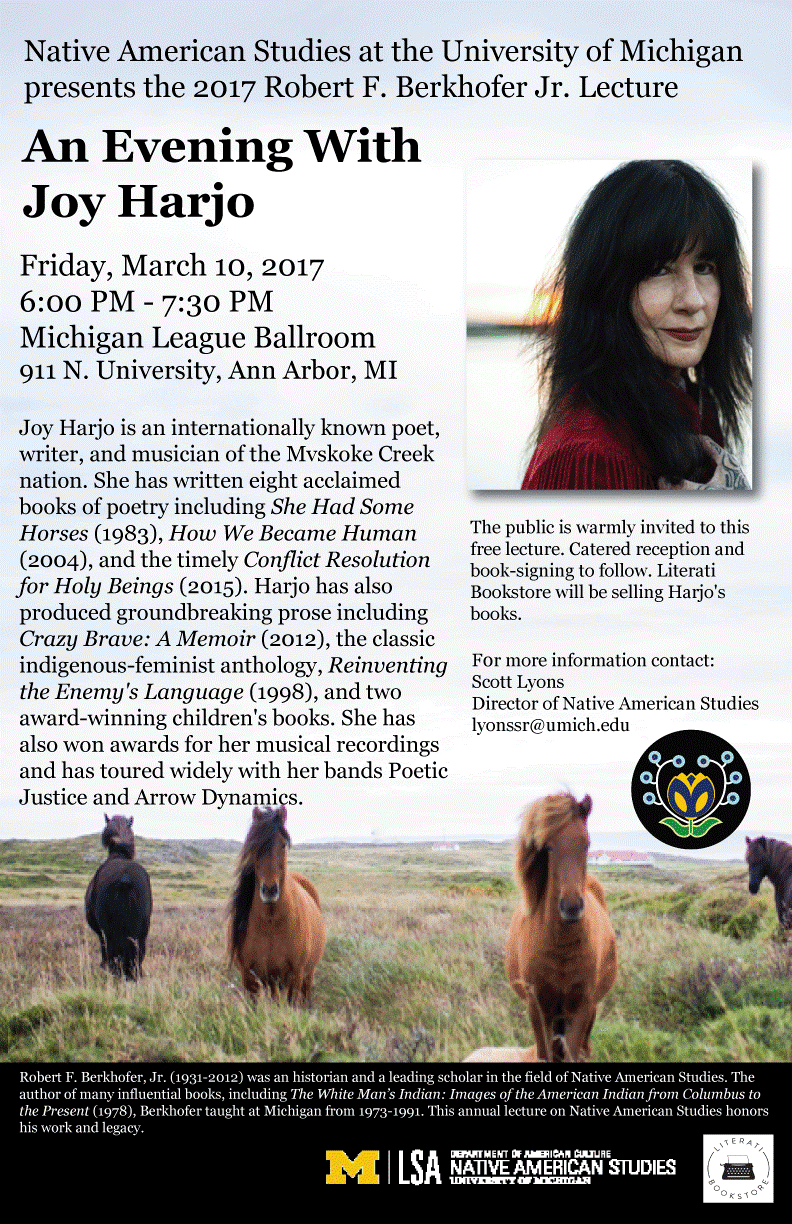
Pulitzer Prize-winning novelist, Native American scholar, and poet N. Scott Momaday has been hailed as “the dean of American Indian writers” by the New York Times. He crafts — in language and imagery — majestic landscapes of a sacred culture.
Named a UNESCO Artist for Peace and Oklahoma’s poet laureate, he was also a recipient of the 2007 National Medal of Arts, presented by President George W. Bush. Momaday was the first Native American to be awarded the Pulitzer Prize for his novel, House Made of Dawn, widely considered to be the start of the Native American Renaissance. His most recent volume, Again the Far Morning: New and Selected Poems, was released in 2011.
His other awards include a Guggenheim Fellowship and the “Mondello,” Italy’s highest literary honor. His works include The Way to Rainy Mountain, The Names: A Memoir, The Ancient Child, and a new collection, Three Plays, which celebrates Kiowa history and culture. He was featured in the Ken Burns documentary, The West, that showcased his masterful retelling of Kiowa history and mythology.
For more information, contact Scott Lyons, Director of Native
American Studies at U-M (lyonssr@umich.edu).
Robert F. Berkhofer, Jr. (1931-2012) was an historian and a leading scholar in the field of Native American studies. The author of many influential books, including The White Man’s Indian: Images of the American Indian from Columbus to the Present (1978), Berkhofer taught at Michigan from 1973-1991. This annual lecture on Native American Studies honors his work and legacy.
Here.
Tiya is one of our favorite scholars.
An excerpt:
Miles is best known for her study of the relationship between African and Cherokee peoples in American history, and her two books on the topic: Ties That Bind: The Story of an Afro-Cherokee Family in Slavery and Freedom and The House on Diamond Hill: A Cherokee Plantation Story. Her newest research project is leading her on an interesting journey through the history of early Detroit: “I’m finding that Native Americans were slaves in the Detroit area and also participated in the captivity and trade of [black and Native] slaves in Detroit,” she says.
Indian Law Day 2012:
Full schedule here. (pdf)
Friday, March 30, 2012
12:00pm-3:00pm
Speakers:
Armstrong Wiggins, Indian Law Resource Director, Washington Office
Frank Ettawageshik, Executive Director of United Tribes of Michigan
Kirsten Carlson, Assistant Professor of Law at Wayne State University

 Turtle Talk
You must be logged in to post a comment.