Here:
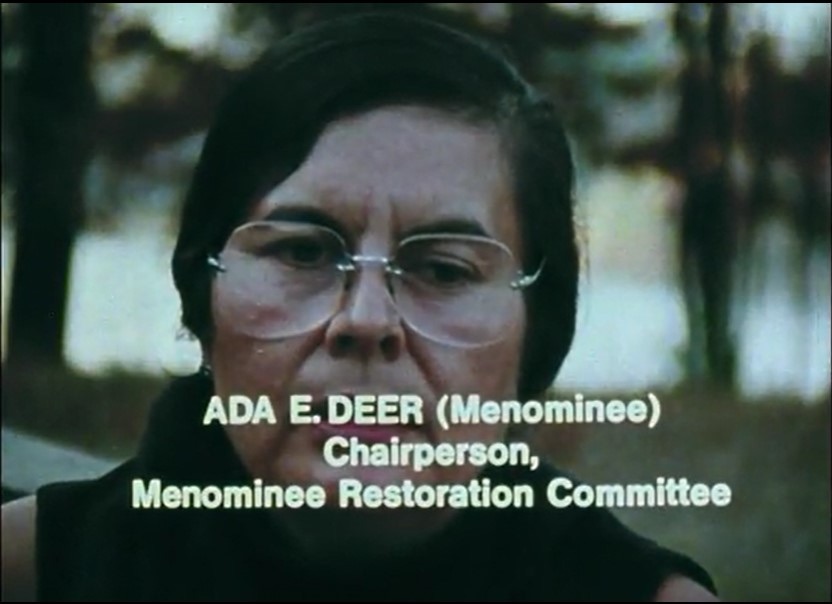
Prior post here (with related complaint).
Here:
ho-chunk nation response brief
state historical society brief
News coverage of oral argument here.
Lower court materials here.
Here are the materials in Oneida Seven Generations Corp. v. City of Green Bay:
Oneida Seven Gen v Green Bay WI SCt Opinion
An excerpt:
Like the court of appeals we conclude that the City’s decision to rescind the conditional use permit was not based on substantial evidence. In conducting a certiorari review to determine whether there was substantial evidence to support a decision, we consider the evidence in context. Considering the context, we determine that based on the evidence presented, the City could not reasonably conclude that the statements by Oneida Seven’s representative to the City government regarding the proposed facility’s emissions and hazardous materials, its stacks, and its technology were misrepresentations. Accordingly, we affirm the court of appeals.
The collected documents from the Kroner decision:
Kroner Opening Brief
OSGC response brief
Kroner Reply Brief
Kroner Opinion
The Wisconsin Supreme Court had long been a leader, perhaps reluctantly, in developing excellent tribal-state court relationships dating back to its important Teague decision nearly ten years ago. The Teague decision led to the Teague protocol, which authorizes state court judges to transfer certain cases arising in Indian country. The last review of the protocol resulted in a 4-3 split amongst the Wisconsin justices, reaffirming the protocol, even for some nonconsenting nonmembers, but with very skeptical dissenters arguing that Tribal jurisdiction over nonmembers was simply untenable on its face for a host of reasons apparently inspired by Justice Souter’s concurrence in Nevada v. Hicks. Even so, for a PL 280 state to voluntarily recognize concurrent tribal court jurisdiction was an important development.
Yesterday’s Kroner’s decision undercut the Teague protocol without eliminating it. Four Justices in the split decision would hold that Kroner, a nonmember suing the corporation for wrongful discharge, has what amounts to an absolute veto when it comes to tribal jurisdiction. The fact that Kroner was a former employee with the tribe who had voluntarily (if implicitly) acquiesced to tribal jurisdiction in a contractual arrangement wasn’t important. The fact that Kroner probably (though we don’t know for sure) worked from Indian country also wasn’t important. What seems to be important is the possibility that the tribal court wouldn’t provide adequate due process to a nonmember. There doesn’t appear to be an evidence that Oneida courts have a history of railroading nonmembers (nor is there evidence they have not). In most other courts, this was an easy case in favor of at least concurrent tribal court jurisdiction.
None of this is new, but it is unfortunate, I think, for future nonmember litigants in Wisconsin Indian country. No tribe will allow a nonmember to ever sue a tribe in Wisconsin courts, not with immunity kicking around. The Kroner decision sends a bad message to Wisconsin tribes, who are incredibly successful business partners with the state of Wisconsin — even with American due process protections in Wisconsin courts (that are absent in tribal courts, supplemented by tribal protections deemed inadequate), tribal interests will not be respected in state courts, either. Kroner reads like a policy brief — it is a policy choice by a majority of the court — but that is no different than if the case came up in the US Supreme Court. Surely, the outcome would be the same. Of course, the Wisconsin SCT will soon decide an immunity case as well. Depending on that outcome, battle lines could be drawn, which is bad for business in Wisconsin.
Wisconsin tribal interests and their friends in the policymakers branches of Wisconsin government may have to go back to the drawing board. Maybe that’s not possible. This case may be a harbinger of bad news for many parts of Indian country that may have thought they solved their intergovernmental disputes through negotiation, only to have that arrangement undercut by court decisions. There is a case pending in Washington (the AUTO case) that might have a similar outcome but with far more disastrous consequences.
(ETA–this issue also arises in tribal-state negotiated ICWA laws and agreements, where some courts treat the negotiated law or agreement with hostility, undercutting their effectiveness. See Minnesota, Iowa, and California).
Here. Lower court materials here. From the SCT’s website:
2011AP364 Koscielak v. Stockbridge-Munsee Community
This case examines whether tribal sovereign immunity bars a state law tort claim arising from a slip-and-fall incident and the proper legal standard involved in guiding that analysis.Some background: On Feb. 22, 2008, Robert Koscielak sustained injuries when he slipped and fell on ice in the Pine Hills Golf and Supper Club parking lot in Gresham, Wis. He and his wife, Mary Koscielak, filed suit against the Stockbridge-Munsee Band of Mohicans under the tribe’s business name, Pine Hills, on June 1, 2010, alleging a variety of tort claims.
Pine Hills moved to dismiss the lawsuit and its motion was converted to a motion for summary judgment. The Tribe argued that Pine Hills was a subordinate economic entity of the Tribe such that Pine Hills was entitled to the sovereign immunity conferred upon the Tribe by federal law. The circuit court agreed. The court also ruled that because the Koscielaks’ claims against the tribe were barred, their claims against the tribe’s insurer, First Americans Insurance, were barred, too.
The Koscielaks appealed, arguing, among other things, the circuit court erred in applying the doctrine of tribal immunity under the specific facts presented. The Court of Appeals affirmed.
The Court of Appeals ultimately concluded that Wisconsin law has never before distinguished between tort and contract claims for tribal immunity purposes. The court thus declined to draw such a distinction here, stating that the “matter is best left to the Wisconsin Supreme Court or the federal courts.” The Koscielaks do not directly challenge tribal immunity, per se. Rather, they argue that Pine Hills is not entitled to tribal sovereign immunity because its business activities are too attenuated from the Tribe.
More specifically, they state the issues as follows:
- Does a federally recognized Indian tribe enjoy sovereign immunity from suit on a state law tort claim not arising out of a contract with the tribe, of a Wisconsin citizen who is not a member of any Indian tribe, for personal injuries sustained at an off-reservation tribally owned for profit supper club open to the general public, to extend to a true “arm of the tribe” business?
- Is the multi-factor “arm of the tribe” analysis set forth in McNally CPA’s & Consultants, S.C. v. DJ Hosts, Inc., 2004 WI App 221, ¶8, 277 Wis. 2d 801, 692 N.W.2d 247, which the Court of Appeals discredited and failed to apply to the business at issue, the controlling legal test for Wisconsin courts to apply to determine when any sovereign immunity enjoyed by a tribe may properly extend to a tribally-owned business entity?
- Based on a de novo review with proper application of that test, or other “arm of the tribe” test that this court may establish, is Pine Hills Golf Course and Supper Club an “arm of the tribe”?
- Under an “occurrence” type insurance policy, are the Koscielaks entitled to the benefit of mandated non-immune liability insurance coverage based on the tribe’s legal position at the time of the “occurrence” in an unrelated federal case that Pine Hills was a gaming entity under its Gaming Compact?
The tribe and First American frame the issues as follows:
- Does this court have any reason or authority to create an exception to the established rule of tribal sovereign immunity?
- Do the facts of this case, which involve a unit of the tribe itself, present any occasion for clarifying or modifying factors developed by other courts for determining whether a tribe’s immunity extends to a separately-incorporated organization?
- May an ordinary commercial general liability carrier be held directly liable to an injured party if its insured is immune?
From Shawano County.
Here.
 Turtle Talk
You must be logged in to post a comment.