From Seneca Nation President J. Conrad Seneca:
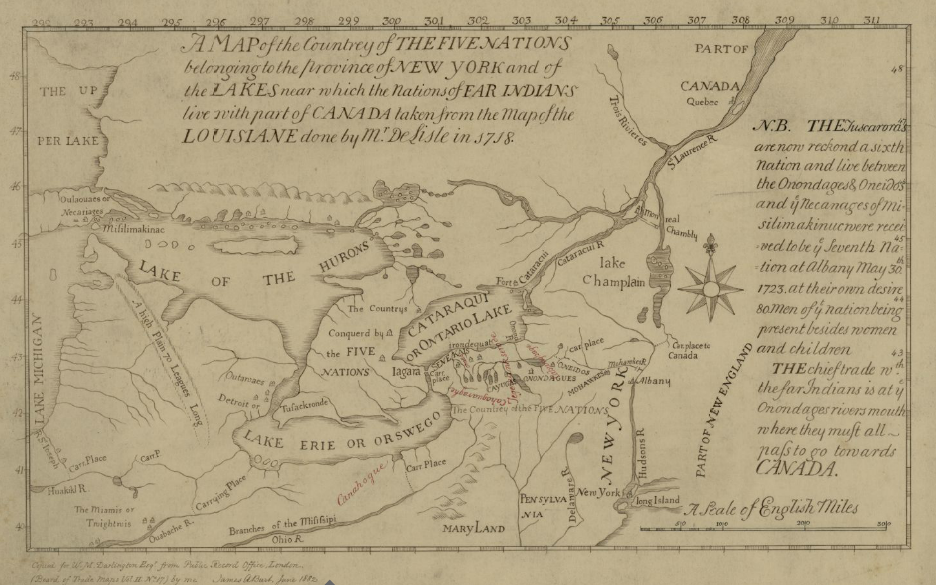
Lake Ontario derives its name from Indigenous roots. In our traditional Seneca language, its name is sga:nyodai:yoh, meaning ‘beautiful lake.’ Long before the United States existed, and before settlers brought the English language to our lands, our Seneca and Haudenosaunee ancestors traveled Lake Ontario and surrounding waterways for many reasons, including diplomacy among our nations. Now, we are seeing the exact opposite of diplomacy.
The action that President Trump is taking is starkly un-presidential and demeaning to his office and his standing as the leader of the free world. His blatant disrespect toward the Seneca people, other Haudenosaunee nations, and all Indigenous people is unacceptable.
The President cannot assert ownership over our culture or erase it through irresponsible political action. His order should be rescinded, and the name Lake Ontario should be left as it is, reflective of the Seneca people, other Haudenosaunee nations and all Indigenous people surrounding the lake.
To us, Lake Ontario is not a political pawn. It does not separate the countries of the United States and Canada. It is all Indigenous land, which has been occupied by Indigenous people since time immemorial.
In 1794, President George Washington and the Seneca and other Haudenosaunee nations signed the Treaty of Canandaigua, promising to live in peace and friendship with one another. The United States also promised our people the free use and enjoyment of our lands forever. President Trump’s aggression toward our culture with his Executive Order violates that peace, friendship and commitments of the Canandaigua treaty. This is the latest in a long history of willful attempts to disregard the United States’ commitments to the Seneca and other Haudenosaunee nations. President Trump needs to be reminded of those commitments.
I would also remind the President of the tenets of the United States Constitution, where Article 6 clearly states that treaties are the ‘supreme Law of the Land,’ and need to always be honored as such.
We will always call Lake Ontario by the name derived from the language of our ancestors – the name that, like the strength and influence of the Seneca people, will live on forever, long after the intrusive political tirades of individual men.
All Native Nations need to stand united to vocally and forcefully reject this change. We are also calling on all federal, state and local representatives – regardless of political party – to stand with the Seneca Nation and oppose the President’s Executive Order.
Scholars of critical toponymy have long observed that naming geographic features is an exercise of political power as colonial and imperial governments use renaming to inscribe their authority onto Indigenous landscapes, to legitimate their territorial claims, and to displace Indigenous relationships to place. Trump’s Executive Order is explicit about doing just that. It states that the lake “has long been an integral asset to American exploration, settlement, commerce, and defense” and it notes that the US “claims most of the Lake’s volume.”
Additional Resources
The Haudenosaunee Environmental Task Force Position on the Great Lakes (Sept. 9, 2005)
Resources on critical toponymy, which treats geographic naming as an exercise of political power rather than a neutral labeling practice
- From Place to Territories and Back Again by Mishuana Goeman (Tonawanda Band of Seneca)
- Name It and Its Yours: Toponym Disputes Between Native and Settler Colonials in North America by Richard Stoffle et al. It draws on six US/North American Indigenous case studies, including Bears Ears.
- Historical Geographies of Place Naming: Colonial Practices and Beyond by Beth Williamson. (“Naming or renaming was fundamental to the extension of imperial control over physical and human environments,” inscribing imperial authority onto landscapes, legitimizes colonial occupation, and weakens Indigenous claims by removing Indigenous traces from the visible geography.)
 Turtle Talk
You must be logged in to post a comment.