
Click Here To Listen: National Native News on VAWA

Click Here To Listen: National Native News on VAWA
The Indian Law Resource Center has launched a petition asking Congress to stand with Indian nations to stop the epidemic of violence against Native women. Join the petition and urge Congress to pass a better, stronger VAWA now that will protect Native women and ALL women!
The Indian Law Resource Center released a new short video this week urging lawmakers to reauthorize a stronger version of the Violence Against Women Act (VAWA) to protect Native women from violence.
In the video, Native women raise awareness about statistics that show one in three of them will be raped in their lifetime and six in ten will be physically assaulted. Even worse, on some reservations, the murder rate for Native women is ten times the national average.
“I want the rights afforded other women in this country. I want to be safe and when my safety is violated, I want justice,” says a young Native woman in the video.
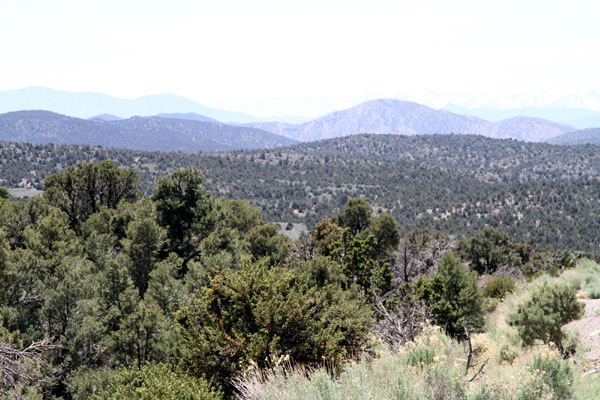
Washington, D.C. — The Federal Court of Appeals for the District of Columbia Circuit dismissed on May 15, 2012 the efforts of the Timbisha Shoshone Tribe to stop the federal government from taking millions of dollars belonging to the Tribe. The fund had been awarded as compensation to the Timbisha Shoshone Tribe and other Western Shoshone Tribes for the supposed loss of the Tribes’ lands in Nevada and California. In 1994, Congress passed an act taking all the money from the tribes and ordering the money to be distributed to thousands of Indians, whether they are members of any of the Western Shoshone Tribes or not. Continue reading
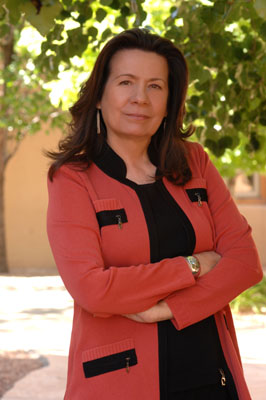
Commentary by Karla E. General

The UN Declaration on the Rights of Indigenous Peoples presents a new opportunity and a new kind of legal authority that could help Native peoples to secure rights to sacred places, and to preserve and protect cultural, religious, and spiritual practices.
The Declaration recognizes and affirms the rights of indigenous peoples to their cultural, religious, and spiritual practices, to have private access to sacred sites (Arts. 12(1), 11(1)), as well as to maintain and strengthen their spiritual relationship with their traditionally held lands, territories, waters and coastal seas and other resources (Art. 25). With the Declaration, Native peoples have rights acknowledged by the international community of nations, including rights to sacred places both within existing reservation or territorial boundaries and beyond. Continue reading
On May 8th, the House Judiciary Committee marked up and passed H.R. 4970, a stripped-down Violence Against Women Reauthorization Act (VAWA) that excludes a number of key provisions found in the Senate bill, including those bearing on the safety of Native women and communities. Get informed! Visit www.indianlaw.org for more information on how to get involved.
The full House of Representatives is expected to vote on its VAWA reauthorization bill soon — as early as mid week.
 The Indian Law Resource Center is proud to release the longer, uncut version of the Center’s powerful “To The Indigenous Woman” video poem, written and produced by Ryan Red Corn. The video is raising awareness about violence against Native women as Congress considers the reauthorization of VAWA. Visit http://www.indianlaw.org and Do Something!
The UN Declaration on the Rights of Indigenous Peoples signals a new means to change federal law and policy to restore safety to Native women, to strengthen Indian nations and advance their jurisdiction over crimes within their territories, and to end the cycle of violence in Native communities.
The right to be safe and live free from violence is one of the most fundamental and important human rights recognized internationally. Continue reading
It has been just a year since President Obama announced the Administration’s support for the UN Declaration on the Rights of Indigenous Peoples and promised action to implement at least some of those rights. Across the country, tribal governments are seizing the Declaration and using it creatively to protect their lands and resources, and especially their rights to cultural and sacred sites.
For example, the Navajo Nation has used the Declaration in its efforts to protect the San Francisco Peaks, and the Seneca Nation has pointed out Article 37 (“Indigenous peoples have the right to the recognition, observance and enforcement of treaties”) in its efforts to resolve a 60-year occupation of Seneca territory by the New York State Thruway that violates the 1794 Treaty of Canandaigua. Continue reading

On November 10, 2011, at 2:15 p.m. (EST), the United States Senate Committee on Indian Affairs will hold a legislative hearing on S. 1763, the Stand Against Violence and Empower (SAVE) Native Women Act.
 Turtle Talk
You must be logged in to post a comment.