New: ICWA Guide for Tribal Governments and Leaders

New from the Capacity Building Center for Tribes: ICWA Guide for Tribal Governments and Leaders. Available here, pdf here.

Our Children, Our Sovereignty, Our Culture, Our Choice

A word from the authors: Our tribes are threatened by the removal of our youngest and most vulnerable members, our children. As leaders we want to make informed decisions to protect the future of our tribe, our culture, our children and families. Historically, we have seen state and federal programs compromise our dignity and culture by breaking up our families and tribes. Even today we hear of unwarranted removal of our Indian children and the attempts to keep them separated from their culture and tribal identity. The Indian Child Welfare Act (ICWA), when complied with, can help prevent these unwarranted removals and ensure Indian children are kept safe while remaining with their families. The purpose of this Guide is to recommend actions that tribal leadership can take towards ensuring compliance with ICWA.

The recommendations that appear in this guide were made by Tribal Court judges, Tribal attorneys, Tribal educators who train on ICWA, Tribal legislators, a former Tribal Governor/Social Services Director, Counsel for the County (who was also a Tribal member), and Directors of Social Services for Tribal child welfare programs. It is important to note that these are recommendations, not mandates, made by individuals who work in various arenas in child welfare.

Larry Roberts’ Final Letter to Tribal Leaders as Assistant Secretary

Download(PDF): Signed Dear Tribal Leader Letter – January 18 2017

News Release: Roberts Announces Inclusion of Updated CSC Policy into DOI Indian Affairs Manual

Download(PDF): Press Release

Excerpt:

Lawrence S. Roberts today issued an updated Contract Support Costs (CSC) Policy for the Indian Affairs Manual (IAM). The updated Policy reflects extensive tribal consultation and the work of the Bureau of Indian Affairs’ (BIA) CSC Workgroup, which is comprised of tribal and federal experts.

The updated Policy provides for the full payment of CSC and helps ensure that the payment of CSC is accurate, timely, and meets 100 percent of a tribe’s CSC need as calculated under the Policy. The Policy also simplifies and streamlines CSC calculation to expedite payment.

Writing Wills for Tribal Clients Conference and Book Launch @ U of A (1/30/2017)

Here (PDF):

conference-book-launch-save-the-date

On Monday, January 30, 2017, Arizona Law will host a conference and book launch, featuring presentations by IPLP graduates Marren Sanders and Mary Guss, followed by a reception and book signing, with free copies available of the new publication “AIPRA — Writing Wills for Tribal Clients.”

Spokane County Bar Association Indian Law Conference and Bar Prep Scholarship

Downloads(PDF): 8th Annual Indian Law Conference FlyerSCBA ILS bar prep scholarship flyer

The Spokane County Bar Association (SCBA) Indian Law Section will be holding its 8th Annual Indian Law Conference on Friday, February 24, 2017, at Gonzaga Law School.  The SCBA has applied for 6.5 CLE credits in WA and ID, including 1.5 ethics credits.  Those who attend in person will receive a continental breakfast and lunch, and are invited to the post-Conference reception.  We are also happy to offer a webcast option to participants.  Please see the attached flyer for agenda information and registration form.

Proceeds from our annual Indian Law Conference will be used to fund the SCBA Indian Law Section’s Bar Preparation Scholarship (see attached).  Please forward this information to bar-takers who may be interested!  Deadline for applications is February 1, 2017. 

PRESS RELEASE: Native American Employee of the Department of Energy Sues Agency for Race/National Origin Discrimination and Retaliation

FOR IMMEDIATE RELEASE
January 6, 2017

CONTACT:
Matthew Handley, matthew_handley@washlaw.org
(202) 319-1000

NATIVE AMERICAN EMPLOYEE OF THE DEPARTMENT OF ENERGY SUES AGENCY FOR RACE/NATIONAL ORIGIN DISCRIMINATION AND RETALIATION

WASHINGTON, D.C. – Jody TallBear, a well-respected Native American employee of the Department of Energy, brought suit yesterday to challenge retaliation she experienced when she sought to address a work environment hostile to Native Americans. The lawsuit was filed in the United States District Court for the District of Columbia against the U.S. Department of Energy (DOE) and raises claims of race and national origin discrimination, a hostile work environment, and retaliation.

Ms. TallBear began working for DOE in May 2011. She was hired to advance tribal and Native American engagement, programming and policy initiatives. Throughout her employment, Ms. TallBear was subjected to pervasive racially offensive imagery and language, including the frequent use of derogatory language regarding Native people and the posting of “redskins” images in her workplace.

Beginning in 2012, Ms. TallBear continually notified DOE leadership of the offensive language and imagery but DOE refused to take actions to address her concerns. In October 2015, DOE banned Ms. TallBear from educating DOE employees on Native American sensitivities related to Indian representations and retaliated against her. Despite years of exemplary performance, DOE leadership has ostracized and isolated her, stripped her of her title, job responsibilities, and derailed her career path. With nowhere else to turn, Ms. TallBear brings this action against DOE for hostile work environment and retaliation for advancing the civil rights of Native American employees to not be subjected to racial slurs and offensive images in their workplace.

“Our society frequently forgets the incredible violence that makes up our country’s history with Native Americans, but we cannot forget that Native Americans deserve the same workplace protections as everyone else,” said Dennis Corkery, Senior Staff Attorney. “We want to hold DOE accountable for how Ms. TallBear was treated and see them move forward with more inclusive and sensitive practices.”

Venus McGhee Prince, co-counsel for Ms. TallBear adds, “as a senior policy advisor to the highest ranking diversity and civil rights official within DOE, Ms. TallBear has been leading positive change within DOE over the past four years by raising an awareness of the harmful impact that the ‘redskins’ language and imagery has on many Native Americans. All can agree that there is no harm to Ms. TallBear’s efforts to educate federal employees and build a more sensitive work environment for herself and others, especially when it is part of her job duties. We hope that Ms. TallBear can ultimately resume this necessary and influential work.”

Ms. TallBear is represented by the Washington Lawyers’ Committee and Kilpatrick Townsend & Stockton LLP.

You can read a copy of the complaint here.

ABOUT THE WASHINGTON LAWYERS’ COMMITTEE: For more than 45 years, the Washington Lawyers’ Committee for Civil Rights and Urban Affairs has handled thousands of cases representing individuals and groups seeking to vindicate their civil rights in the areas of employment, housing, public accommodations and other aspects of urban life. It represents people with claims of discrimination based on race, gender, national origin, disability, age, religion, sexual orientation, and military service and status. For more information, visit http://www.washlaw.org; or phone (202) 319-1000.

ABOUT KILPATRICK TOWNSEND & STOCKTON LLP: Founded 155 years ago, Kilpatrick Townsend is a leading international AmLaw 100 firm with 18 offices extending into the four corners of the continental United States; Asia; and Europe, including: Atlanta, GA; Augusta, GA; Charlotte, NC; Dallas, TX; Denver, CO; Los Angeles, CA; Menlo Park, CA; New York, NY; Raleigh, NC; San Diego, CA; San Francisco, CA; Seattle, WA; Walnut Creek, CA; Washington, DC; Winston-Salem, NC; Shanghai; Stockholm; and Tokyo. For more information, please visit: http://www.kilpatricktownsend.com.

Grand Ronde Tribe Adopts Independent Press Ordinance

The Confederated Tribes of Grand Ronde to create independent editorial board and adopt press protections

Media Release

GRAND RONDE, Ore. – The Confederated Tribes of Grand Ronde has joined an increasing number of other Native American Tribes nationwide in adopting an Independent Press Ordinance that will codify that the Tribal news publication has the independence to report Grand Ronde news objectively and free from undue political influence by Tribal elected officials.

The ordinance was adopted by the Grand Ronde Tribal Council at its Wednesday, Dec. 28, meeting and goes into effect in mid-January.

Although the Grand Ronde Tribal Constitution, adopted in 1984, states that “Tribal Council shall not deny … freedom of speech, press, or religion,” the Tribal publication, Smoke Signals, has for many years been supervised by a manager who reports directly to Tribal Council. The government structure created concerns among newspaper staff members, Tribal employees and Tribal members about the newspaper’s ability to report news objectively without undue influence.

The new ordinance was shepherded through the ordinance process by Tribal Council member Chris Mercier, who previously worked as a reporter for Smoke Signals before being first elected to Tribal Council in 2004.

“Freedom of the press was guaranteed in the U.S. Constitution when this country was founded,” Mercier said. “It has always been a fundamental right of American citizens. I think that when people approved our Tribal Constitution in 1984 they included language for freedom of the press for a reason. I do believe that this is what they had in mind.”

The ordinance will create an Editorial Board of between three and five members with a majority being Grand Ronde Tribal members. The board, which will be appointed by Tribal Council, will supervise the editor of Smoke Signals. Board members will serve for three-year terms and adhere to accepted ethics of journalism as defined by the Society of Professional Journalists and endorsed by the Native American Journalists Association. “The Editorial Board members shall serve their terms of office free from any undue influence or any political interest,” the ordinance states.

The ordinance also requires the editor to adhere to accepted ethics of journalism and to serve free from undue influence and any political interest. The ordinance also provides Smoke Signals staff members with protection from disclosing their sources.

Smoke Signals has been published by the Grand Ronde Tribe since 1984 and is currently published on the first and 15th of each month. The newspaper consistently wins awards from the Oregon Newspaper Publishers Association and Native American Journalists Association.

About the Tribe

The Confederated Tribes of Grand Ronde Community of Oregon includes more than 27 Tribes and Bands from western Oregon, southwestern Washington and northern California that were relocated to the Grand Ronde Reservation between 1855-1875.

These Tribes and Bands include the Rogue River, Umpqua, Chasta, Kalapuya, Molalla, Salmon River, Tillamook and Nestucca Indians.

The Tribes’ ceded lands in Oregon extend from the California border to southwestern Washington, and reach from the Cascade Mountains to the Pacific Ocean.

For more information about the Tribe, visit http://www.grandronde.org.

President Obama Signs Executive Order on Northern Bering Sea Climate Resilience

Downloads: Executive OrderBering EO – Map

THE WHITE HOUSE
Office of the Press Secretary

FOR IMMEDIATE RELEASE
December 9, 2016

FACT SHEET: White House Announces Actions to Protect Natural and Cultural Resources in Alaskan Arctic Ocean

Since taking office, President Obama has worked to protect the Arctic’s natural and cultural resources and the communities that rely upon them through the use of science-based decision making, enhanced coordination of Federal Arctic management, efforts to combat illegal fishing, and revitalization of the process for establishing new marine sanctuaries.  Building on this effort, today, President Obama is announcing new steps to enhance the resilience of the Alaskan Arctic environment and the sustainability of Alaskan native communities with the creation of the Northern Bering Sea Climate Resilience Area.

In addition to today’s protections, the Obama Administration is announcing approximately $30 million in philanthropic commitments for projects in rural northern Alaska and Canada.  These projects include investments over the next three years related to shipping, ecosystem science, community and ecological resilience, and tribal engagement.  Earlier this week, the Department of Commerce deployed an Economic Development Assessment Team to Nome, Alaska to help the region diversify, grow its economy, and address challenges related to climate change and community resilience.

Today’s actions are also supportive of the March 2016 U.S.-Canada Joint Statement on Climate, Energy, and Arctic Leadership and make substantial progress on its objectives of  conserving Arctic biodiversity through science-based decision-making, incorporating indigenous science and traditional knowledge into decision-making, and supporting strong Arctic communities. These actions employ science-based leadership to improve marine and coastal resilience and sustain our Nation’s precious natural resources.

Executive Order Creating the Northern Bering Sea Climate Resilience Area

Native villages in the northern Bering Sea region of Alaska largely practice a subsistence-based lifestyle that is inextricably tied to the rich marine ecosystem of the Bering Sea.  Warming ocean temperatures, sea ice loss, and increasing ship traffic all threaten the subsistence practices and food security of these communities.  The coastal tribes along the northern Bering Sea and the Bering Strait have requested that the Federal Government take action to protect the health of the marine ecosystems of the Northern Bering Sea and Bering Strait while maintaining opportunities for sustainable fishing and sustainable economic development.

In direct response to these requests, the President signed an Executive Order creating the Northern Bering Sea Climate Resilience Area.  This area, encompassing 112,300 square miles, represents a hugely productive, high-latitude ocean ecosystem and supports one of the largest seasonal marine mammal migrations in the world, including thousands of bowhead and beluga whales, hundreds of thousands of walruses and ice seals, and millions of migratory birds.  It is home to more than 40 tribes of coastal Yup’ik and Inupiaq peoples whose way of life has been linked with the marine environment for thousands of years.

The Northern Bering Sea Climate Resilience Area is delineated for the purpose of focusing a locally-tailored collection of protections related to oil and gas, shipping, and fishing. The order also establishes a Task Force charged with coordinating Federal activities in this area to enhance ecosystem and community resilience, conserve natural resources, and protect the cultural and subsistence values this ecosystem provides for Alaskan native communities. Further, agencies are directed to consider traditional knowledge in decision making and establish a formal consultative mechanism for engaging with regional tribal governments to seek their input on Federal activities.This action advances science-based decision-making and engagement with Alaska Native peoples in addressing the changing Arctic consistent with the Joint Statement signed at the White House Arctic Science Ministerial and consultation with Alaska Natives in preparation for the Ministerial.

Shipping

In recognition of the increase in shipping through the Bering Strait, the Coast Guard is nearing completion of a Port Access Route Study (PARS) for the region.  A PARS is the first step in assessing the need for vessel traffic control measures and developing a set of recommendations. Any recommended international routing measures would be submitted to the International Maritime Organization (IMO) which sets international rules for maritime commerce.    The Executive Order directs the Coast Guard to give careful consideration to community recommendations regarding environmentally sensitive Areas to Be Avoided (ATBAs) and to publish its initial findings by the end of 2016 and to move its conclusions to the International Maritime Organization for action by 2018.

Fishing

Sea bottom habitat is extremely important to the ecosystem in the Northern Bering Sea and helps to support the incredible abundance of marine mammals and sea birds in the region, including critical subsistence resources.  In recognition of these connections, bottom trawling is already banned in the region to protect the sea floor.  The Executive Order makes it Federal policy to support the continued prohibition on bottom trawling, which destroys sensitive benthic ecosystems.

Oil and Gas

Under the Outer Continental Shelf Lands Act, the President has withdrawn Norton Basin planning area and portions of the St. Matthew-Hall planning area from future oil and gas leasing to further protect the regional ecosystem and coastal communities.  The five year leasing plans issued by the Department of the Interior do not include plans for leasing in the withdrawn areas, so there will not need to be changes to those plans to reflect the withdrawal.  The total area withdrawn from leasing through this Executive Order is 40,300 square miles.

Coordination and Consultation

This Order also advances the Administration’s priorities of elevating traditional knowledge in decision making and coordinating Federal efforts in the Arctic.  Today’s actions establish a Federal Task Force on the Northern Bering Sea Climate Resilience Area (Bering Task Force), under the Arctic Executive Steering Committee (AESC) established by Executive Order 13689. The Bering Task Force will coordinate Federal activity and consider additional mechanisms to reduce impacts to subsistence and cultural activities within the Northern Bering Sea Climate Resilience Area.  The Executive Order also formally elevates the voice of Alaskan native tribes and the role of indigenous knowledge in decision-making within the region by mandating that the Task Force establish and engage in regular consultation with a Bering Intergovernmental Tribal Advisory Council, which will consist primarily of tribal government representatives with participation from Federal, state, and local officials for coordination purposes. Together, these two groups will guide the incorporation of valuable traditional knowledge and science into Federal resource management in the northern Bering Sea region, thus preserving this unique ecosystem and the indigenous peoples who rely upon it.

Commitments to Rural Northern Alaska and Canada

Today, in support of the U.S.-Canada commitments to a Shared Arctic Leadership model, the philanthropic community is pledging approximately $30 million for projects in rural northern Alaska and Canada.

  • The Arctic Funders Collaborative (AFC), a group of eleven U.S., Canadian and international philanthropic foundations, is announcing that a subset of its members will coordinate and mobilize resources through grant programs across the Arctic at a projected $27 million over the next three years in the following areas:
    • Community-led planning and monitoring initiatives that foster adaptation and resilience to a changing Arctic climate
    • Low-impact shipping corridors in Arctic Alaska and Canada,  including routing and mitigation measures to help improve maritime safety and spill prevention
    • Northern-led policy development informed by indigenous knowledge and science
    • Fostering connections between Northern priorities and social finance institutions in ways that support culture, community resilience and sustainable economic opportunities
    • Building in-region capacity of indigenous-led organizations and emerging leaders across the Arctic

Priority geographic areas for marine stewardship support include the northern Bering Sea and the Bering Strait, the Chukchi and Beaufort Seas, the Northwest Passage, Lancaster Sound, Baffin Bay, the Davis Strait, and Hudson Bay.

  • Today, the Gordon and Betty Moore Foundation is announcing a $3.7 million grant to support research that couples state-of-the-art geophysical observations from unmanned aerial systems with a community-engaged research approach to bridge scientific and indigenous understanding of sea ice change in the Alaskan Arctic. Led by the University of Alaska Fairbanks, Columbia University, and Kotzebue residents, the project will research changing patterns of Arctic ice and other physical characteristics in Kotzebue Sound and the Chukchi Sea, using a combination of traditional knowledge and sensing technologies in modules carried by drones. From the beginning of the work – including development of the research design – the project will involve local experts who have sea ice experience and other environmental knowledge.

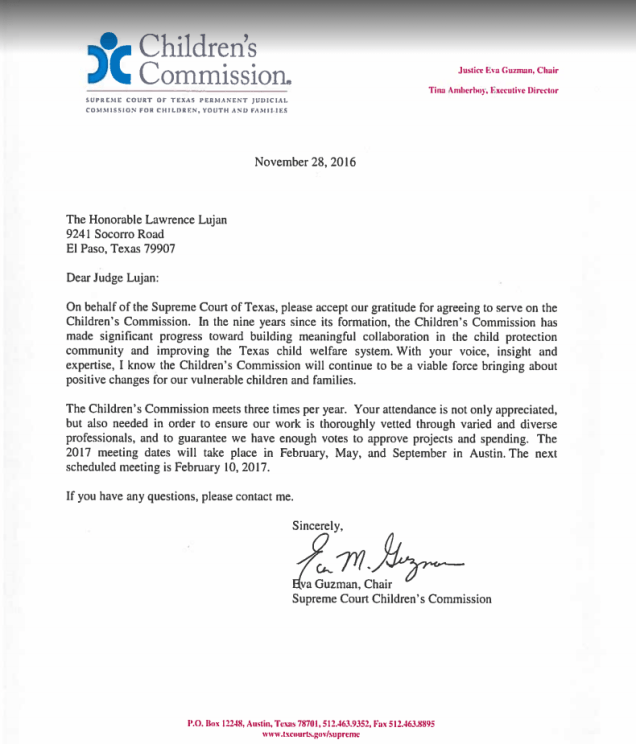
Ysleta del Sur Chief Judge Lawrence Lujan Appointed Commissioner to Texas Supreme Court’s Permanent Judicial Commission for Children, Youth and Families

From the National American Indian Court Judges Association (NAICJA) Facebook Page:

NAICJA Vice President Appointed Commissioner to the Texas Supreme Court’s Permanent Judicial Commission for Children, Youth and Families

Our Tribal Courts not only serve our sovereign communities but also seek partnerships at the state and federal level. These partnerships enhance Indian Country legal services and most importantly put our tribal nations in key leadership positions that promote the welfare of our community members and the sovereignty of all Tribal Courts.

Congratulations on your new appointment Chief Judge Lawrence Lujan of the Ysleta del Sur Pubelo!


image-1image

Senator John McCoy introduces legislation in Washington State reforming use of deadly force laws

Links:

Download(PDF):

Senator McCoy (Tulalip Tribes) recently was elected to a leadership position in the Senate, where he will chair the Senate Democratic Caucus.