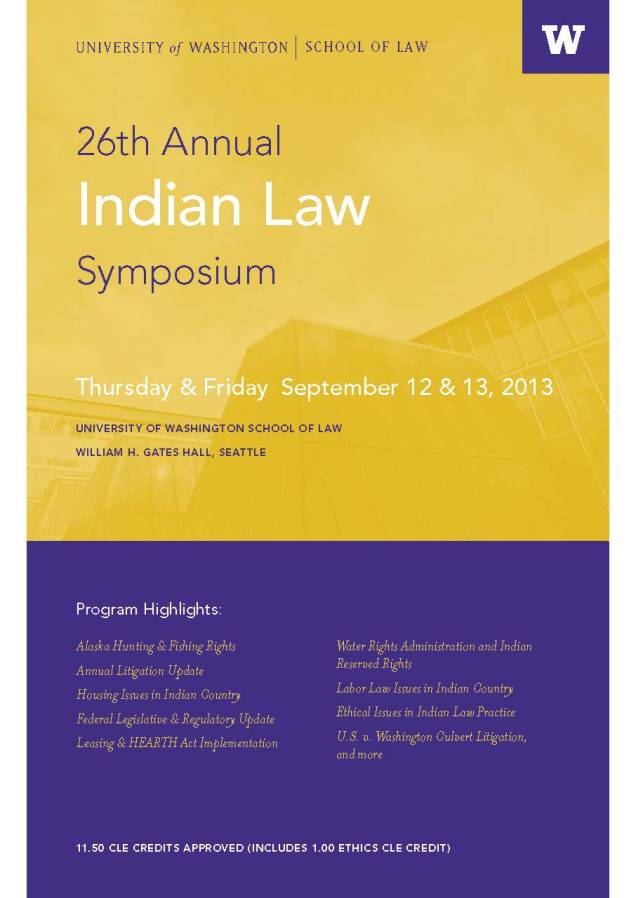
Here:
2013 Indian Law Symposium Brochure
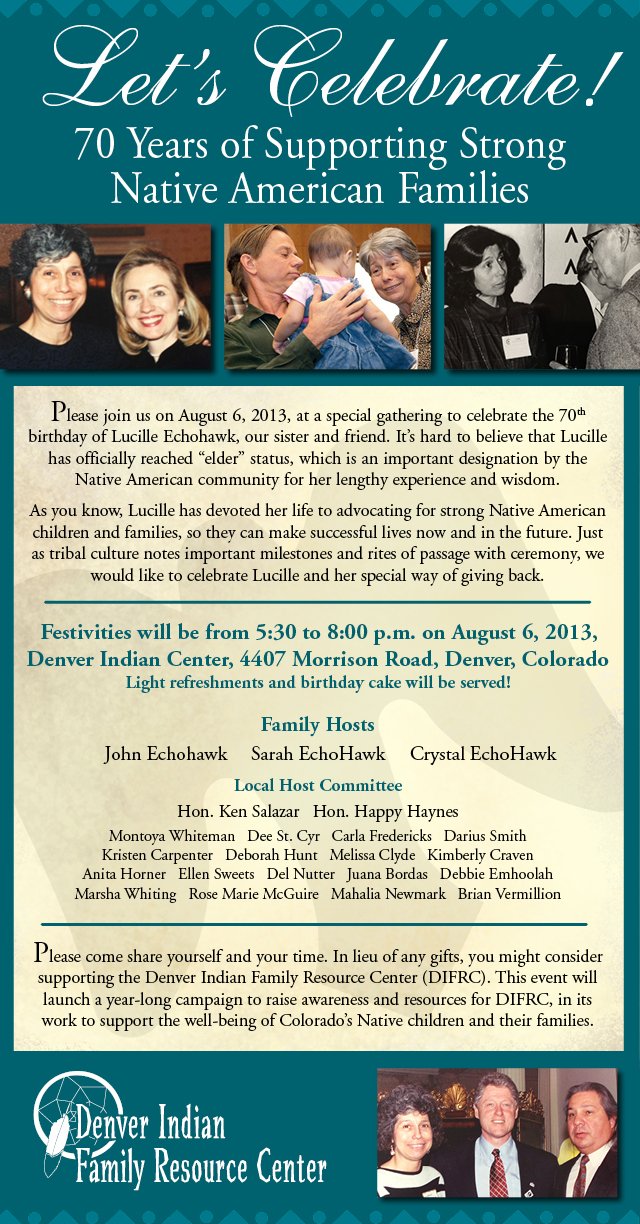
For details on the posting, which is for Director — Indian Child Welfare, see here.
“We must ensure the participation of indigenous peoples – women and men – in decision-making at all levels. This includes discussions on accelerating action towards achieving theMillennium Development Goals and defining the post-2015 development agenda. ”
Secretary-General Ban Ki-moon
Link to the UN announcement and New York events here.
Article from NNN with James Anaya speaking about broken treaties here.
In honor of the day, Cultural Survival, First Peoples Worldwide, and International Indian Treaty Council (IITC) are coming together for an online panel discussion to talk about Free, Prior, and Informed Consent (FPIC) from 11:00 AM to 1:00 PM EST. To be a part of it register here.
Environmental threats are not the only threats associated with the oil pipeline that is expected to run through and near numerous Native communities in both the US and Canada. With large numbers of outsiders who have no accountability to the local communities coming along to work on that pipeline, it was only a matter of time before Native communities felt the impact.
It was just a matter of time before “man camps” would pose a threat to sacred native lands and bring sexual violence, prostitution, and increased drug traffic into the heartland of Native culture in North and South Dakota. As the proposed TransCanada Corporation oil pipeline that will run from Canada, North Dakota, eastern South Dakota, and Nebraska slouches towards reality, vulnerable populations of the Yankton, Rosebud and Cheyenne River reservations will bear the brunt of increased assaults and predation. This is not a theoretical threat. On a visit to the Bakken oil fields and Williston in North Dakota last summer, it was clear that man camps, temporary housing for oil pipeline workers, were bringing an influx of male population growth and not all of the men were nice guys.
Article here.
Announcement for upcoming conference: Aug 16 & 17 at the Fort Randall Casino to educate on these “man camps” and the impact they are having on Native families. Here.
Here (PDF):
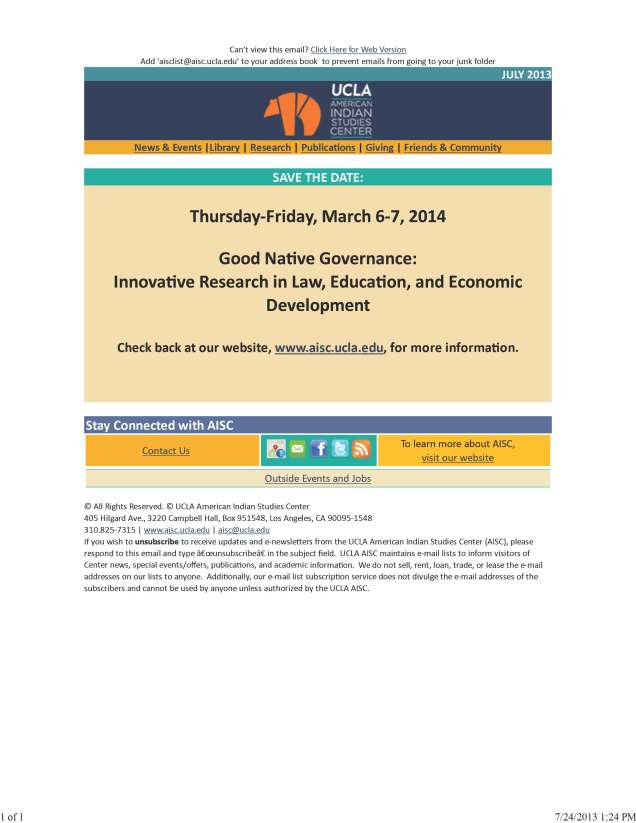
Here:
From Carolina Academic Press comes Mastering American Indian Law by Angelique Townsend EagleWoman and Stacy L. Leeds.
The description:
Mastering American Indian Law is a text designed to provide readers with an overview of the field. By framing the important eras of U.S. Indian policy in the Introductory Chapter, the text flows through historical up to contemporary developments in American Indian Law. This book will serve as a useful supplement to classroom instruction covering tribal law, federal Indian law and tribal-state relations. In ten chapters, the book has full discussions of a wide range of topics, such as: Chapter 2 – American Indian Property Law; Chapter 3 – Criminal Jurisdiction in Indian Country; Chapter 4 – Tribal Government, Civil Jurisdiction and Regulation; Chapter 8 – Tribal-State Relations; and Chapter 9 – Sacred Sites and Cultural Property Protection. Throughout the text, explanations of the relevant interaction between tribal governments, the federal government and state governments are included in the various subject areas. In Chapter 10 – International Indigenous Issues and Tribal Nations, the significant evolution of collective rights in international documents is focused upon as these documents may be relevant for tribal governments in relations with the United States. For Indian law courses, law school seminars on topics in American Indian Law, undergraduate and graduate level American Indian Studies classes, and those interested in the field, this book will provide an easy-to-read text meant to guide the reader through the historical to the contemporary on the major aspects of American Indian law and policy.
A draft of chapter three, Criminal Jurisdiction in Indian Country, is available on SSRN.
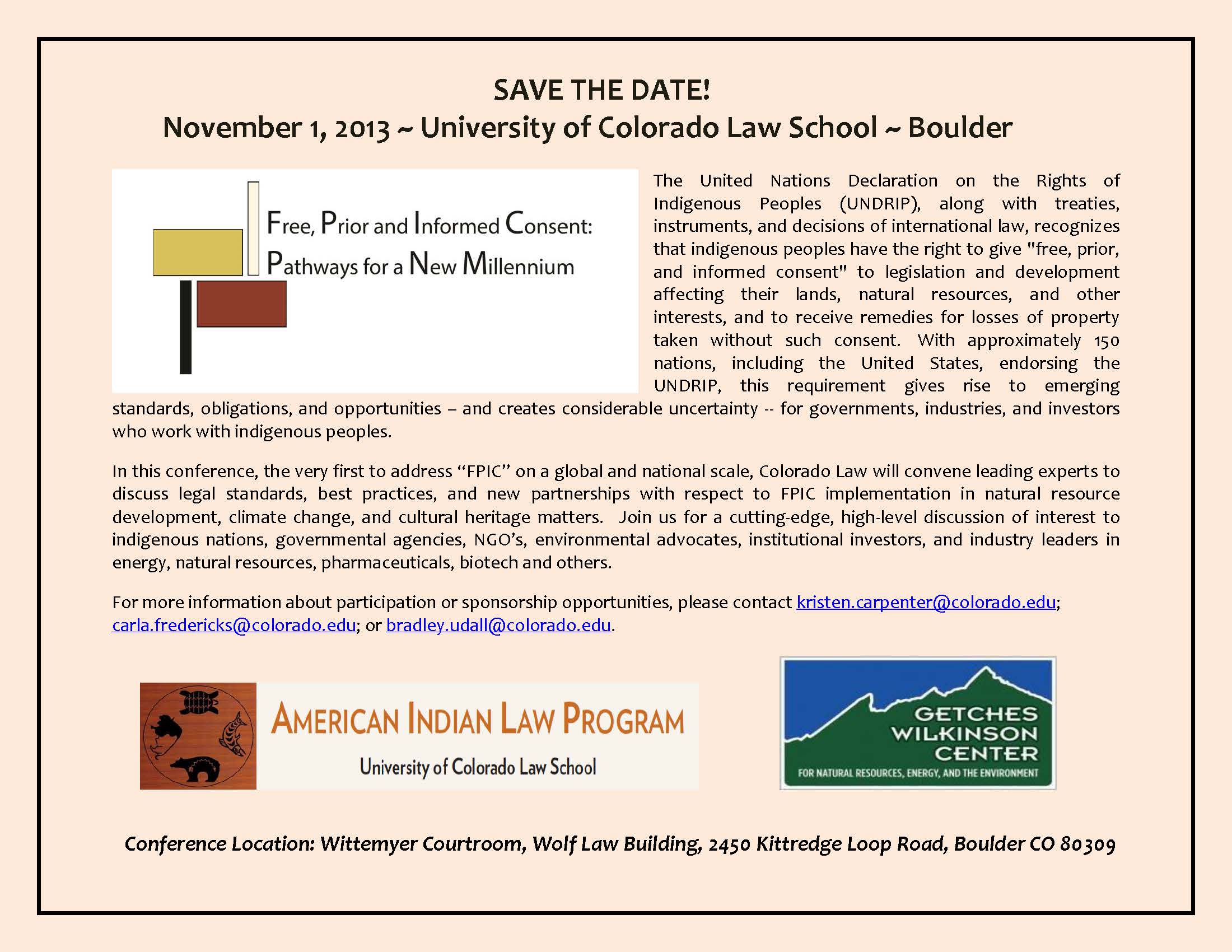
Here is the notice:
UNM symposium on United States v Sandoval
The description:
On October 20, 1913, the United States Supreme Court issued its decision in United States v. Sandoval, a case that addressed whether Congress could prohibit the introduction of intoxicating liquor into Santa Clara Pueblo lands notwithstanding the admission of New Mexico to statehood. The Court validated Congress’s power by virtue of the “Indian” status of the Pueblo people and their homelands, establishing an immensely important precedent asserting broad federal authority in Indian affairs generally. This symposium highlights three themes tied to Sandoval ’s legacy: Federal Authority in Indian Country, Indian Identity and Status, and the Rights of Defendants in Tribal Court. An additional related theme, Liquor in Indian Country, will be explored in the associated conference for tribal public defenders and Indian law clinicians, which will interweave with the symposium. This symposium is the third in a series of anniversary symposia commemorating landmark Indian law cases and legislation.

 Turtle Talk
You must be logged in to post a comment.