From the MSU Press Website:
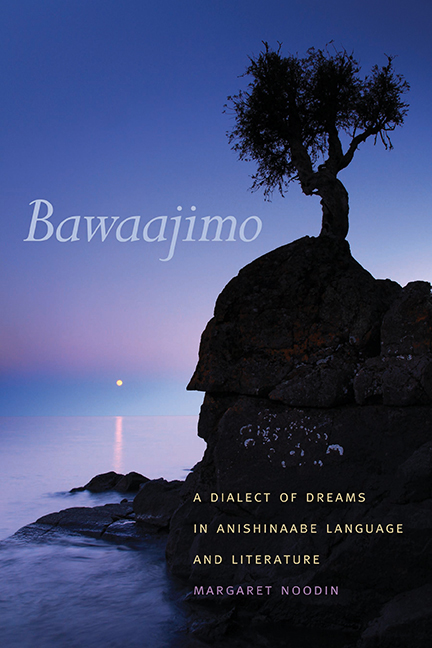
Bawaajimo: A Dialect of Dreams in Anishinaabe Language and Literature combines literary criticism, sociolinguistics, native studies, and poetics to introduce an Anishinaabe way of reading.  Although nationally specific, the book speaks to a broad audience by demonstrating an indigenous literary methodology. Investigating the language itself, its place of origin, its sound and structure, and its current usage provides new critical connections between North American fiction, Native American literatures, and Anishinaabe narrative. The four Anishinaabe authors discussed in the book, Louise Erdrich, Jim Northrup, Basil Johnston, and Gerald Vizenor, share an ethnic heritage but are connected more clearly by a culture of tales, songs, and beliefs. Each of them has heard, studied, and written in Anishinaabemowin, making their heritage language a part of the backdrop and sometimes the medium, of their work. All of them reference the power and influence of the Great Lakes region and the Anishinaabeakiing, and they connect the landscape to the original language. As they reconstruct and deconstruct the aadizookaan, the traditional tales of Nanabozho and other mythic figures, they grapple with the legacy of cultural genocide and write toward a future that places ancient beliefs in the center of the cultural horizon.
 Turtle Talk
You must be logged in to post a comment.