Article Recognizing the Contribution of Choctaw Code Talkers in WWI

Full Article Here

In the autumn of 1918, US troops were involved in the Meuse-Argonne Offensive on the Western Front. It was one of the largest frontline commitments of American soldiers in WW1, but communications in the field were compromised. The Germans had successfully tapped telephone lines, were deciphering codes and repeatedly capturing runners sent out to deliver messages directly.

“It was a huge problem and they couldn’t figure out a way around it,” says Matt Reed, curator of American Indian Collections at the Oklahoma History Center, the headquarters of the Oklahoma Historical Society.

The solution was stumbled upon by chance, an overheard conversation between two Choctaw soldiers in the 142nd Infantry Regiment. The pair were chatting in camp when a captain walked by and asked what language they were speaking. Realising the potential for communication, he then asked if there were other speakers among the troops. The men knew of Choctaw soldiers at company headquarters. Using a field telephone the captain got the men to deliver a message in their native tongue which their colleagues quickly translated back into English. The Choctaw Telephone Squad was born and so was code talking. . . .

But at the same time,the Choctaw language was under pressure back in the US. It was a time of cultural assimilation. Government attempts to “civilise” American Indians involved putting their children in state-run boarding schools, where they were often severely punished for speaking in their native tongue.

“You had this crazy situation where the Choctaw language was being used as a formidable weapon of war, yet back home children were being beaten at school for using it,” says Judy Allen, senior executive officer of tribal relations with the Choctaw Nation of Oklahoma. “The two soldiers who were overheard by the officer probably thought they were in trouble rather than about to provide the answer to the army’s communication problems.”
Anishinabe and English Road Signs in St. Louis County, MN

Bilingual road signs, to be paid for by the Fond du Lac Tribe, have been granted preliminary approval by St. Louis County. The signs will be posted on county roads within the reservation. More here.

Alaska Native Languages Now Recognized as Official Languages of State

Here, from Alaska Indigenous Blog. Links to several news outlets on this story are on the blog.

An excerpt:

Every Alaska Native language will now be recognized as official languages of the State of Alaska in addition to English.  The lone precedent is Hawai’i, which recognizes Hawai’ian as official in addition to English via constitutional convention in 1987.  Many, many people worked very hard to get this bill through the 28th Alaska State Legislature, which will adjourn today or very early tomorrow morning.

How “Yooper” made it into Merriam Webster

Okay, so this story has a legal angle but not an Indian law angle (that I know of), but I couldn’t resist posting it anyway. As I found out from reading the Merriam Webster blog (here), the word “Yooper” was added to the dictionary after a lengthy campaign by a prosecuting attorney in Delta County, Michigan. Personally, I have yet to make it to the U.P., but it’s on my list.

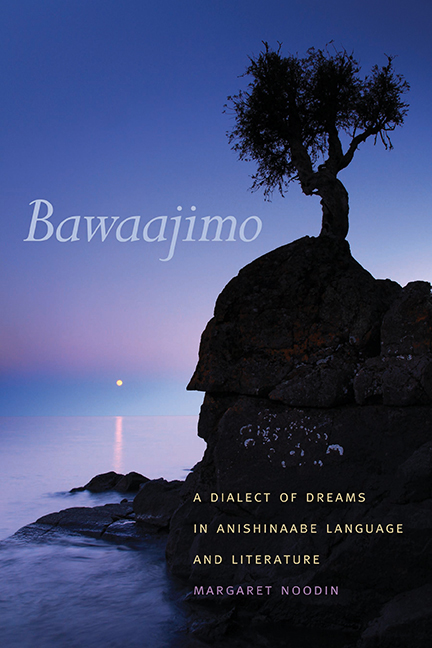
New Book: Meg Noodin’s “Bawaajimo: A Dialect of Dreams in Anishinaabe Language and Literature”

From the MSU Press Website:

Bawaajimo: A Dialect of Dreams in Anishinaabe Language and Literature combines literary criticism, sociolinguistics, native studies, and poetics to introduce an Anishinaabe way of reading. NooriCompF3.inddAlthough nationally specific, the book speaks to a broad audience by demonstrating an indigenous literary methodology. Investigating the language itself, its place of origin, its sound and structure, and its current usage provides new critical connections between North American fiction, Native American literatures, and Anishinaabe narrative. The four Anishinaabe authors discussed in the book, Louise Erdrich, Jim Northrup, Basil Johnston, and Gerald Vizenor, share an ethnic heritage but are connected more clearly by a culture of tales, songs, and beliefs. Each of them has heard, studied, and written in Anishinaabemowin, making their heritage language a part of the backdrop and sometimes the medium, of their work. All of them reference the power and influence of the Great Lakes region and the Anishinaabeakiing, and they connect the landscape to the original language. As they reconstruct and deconstruct the aadizookaan, the traditional tales of Nanabozho and other mythic figures, they grapple with the legacy of cultural genocide and write toward a future that places ancient beliefs in the center of the cultural horizon.

Portland Bridge to be Named Tilikum Crossing

Two news articles here:

Portland Transit Bridge Will Be Called ‘Tilikum Crossing’

Tilikum Crossing or TilixƏm Crossing? Why Portland’s new bridge name doesn’t have traditional native spelling (video)

NPR on Star Wars’ New Translation into Navajo

Here.

LATimes on the Revivial of the Yurok Language

Here.

Gmail Supports Cherokee Language Usage

Here.

This an interesting sidenote, from the website:

Interestingly, Apple‘s iPhone and iPad have supported Cherokee since December 2010. At the time, Cherokee Chief Chad Smith persuaded Apple to include support for the language. Similarly, Gmail’s latest update came about after Vance Blackfox, a member of the Cherokee Nation, carpooled with a Google engineer from an event, according to its official blog.