Justice Breyer and “The Yale Lectures”

Available here, drawing from his book Making Democracy Work.

Here is an excerpt:

After the decision [in Worcester], Justice Joseph Story wrote to his wife: “Thanks be to God, the Court can wash their hands clean of the iniquity of oppressing the Indians and disregarding their rights.” A few days later, he wrote to another
correspondent: “The Court has done its duty. Let the Nation now do theirs.” Story added: “Georgia is full of anger and violence. . . . Probably she will resist . . . , and if she does, I do not believe the President will interfere . . . .”

And that is just what happened. Georgia said it would resist the decision as a “usurpation” of power. And this is the case about which President Andrew Jackson supposedly said, “John Marshall has made his decision, now let him enforce it.”
The President considered he had as good a right as the Court to decide what the Constitution meant and how it should be enforced. Worcester stayed in jail. John Marshall wrote to Story: “I yield slowly and reluctantly to the conviction that our Constitution cannot last.”

What was wrong with Jackson’s position? The President soon found out. South Carolina, noticing what Georgia could do, decided it would follow suit— but in respect to federal taxes. It passed a law prohibiting the payment of federal customs duties. And Jackson then began to realize the threat to the Union inherent in the principle. He quickly obtained a “force bill” from Congress, authorizing him to send troops to South Carolina. And South Carolina withdrew its law. The press began to write about Georgia and the Cherokees: how did Georgia and Worcester differ from South Carolina and taxes? And Georgia began to back down. It reached an agreement with Worcester, releasing him from jail. And so the Court’s order was ultimately enforced. Or was it?

There is no happy ending here. Jackson sent troops to Georgia, but not to enforce the Court’s decision or to secure the Indians their lands. To the contrary, he sent federal troops to evict the Indians. He found a handful of Cherokees willing to sign a treaty requiring departure; he ignored 17,000 other Cherokees who protested that they would die rather than agree to go; and he forced the tribe to move to Oklahoma, walking there along the Trail of Tears, so-called because so many Cherokees died along the way. Their descendants live in Oklahoma to this day.

This episode suggests a negative answer to Hotspur’s question. The Court may follow the law—even in an unpopular matter. But that does not matter very much. Force, not law, will prevail. The summoned “spirits” will not come.

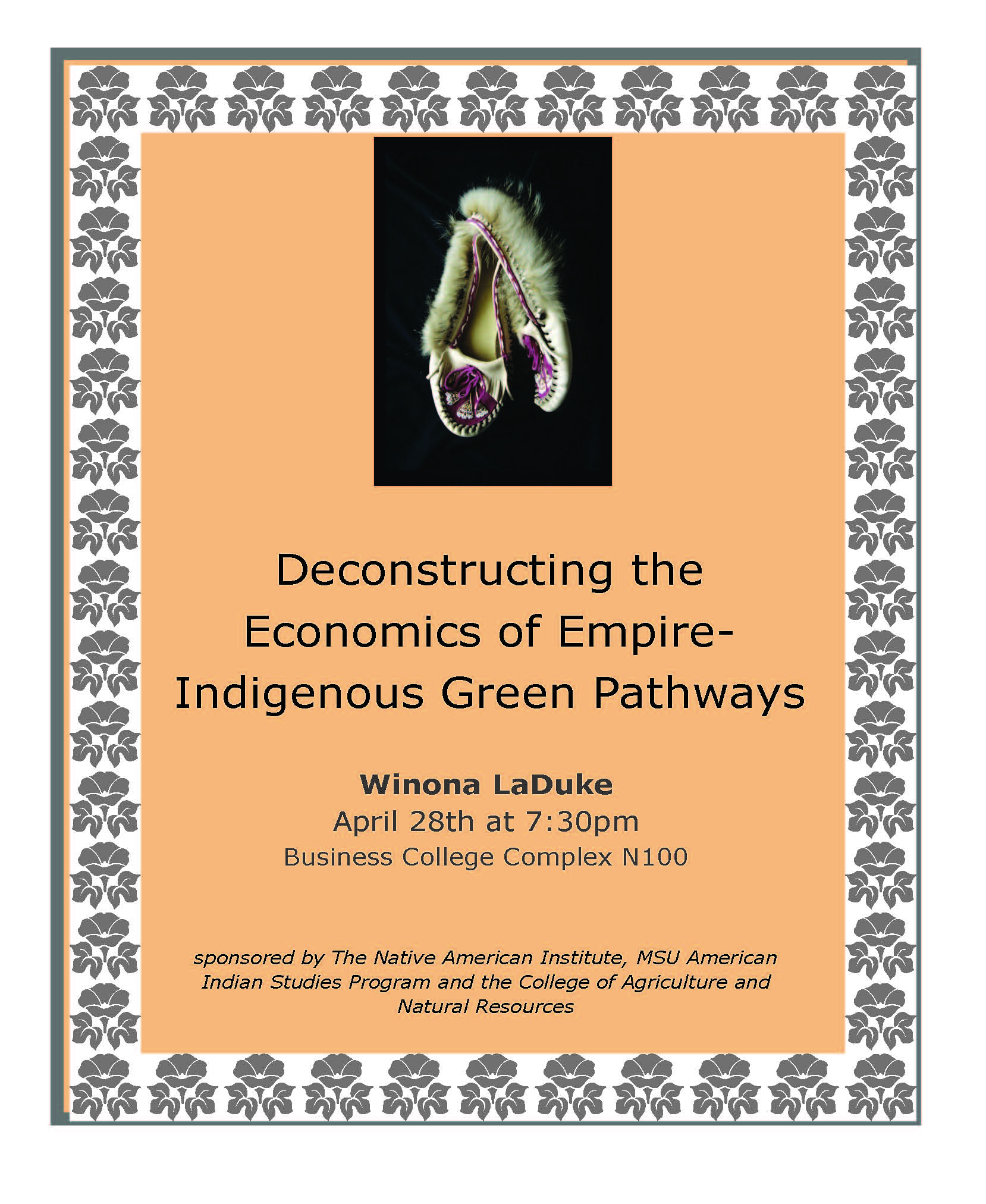
Winona LaDuke Talk at MSU on April 28

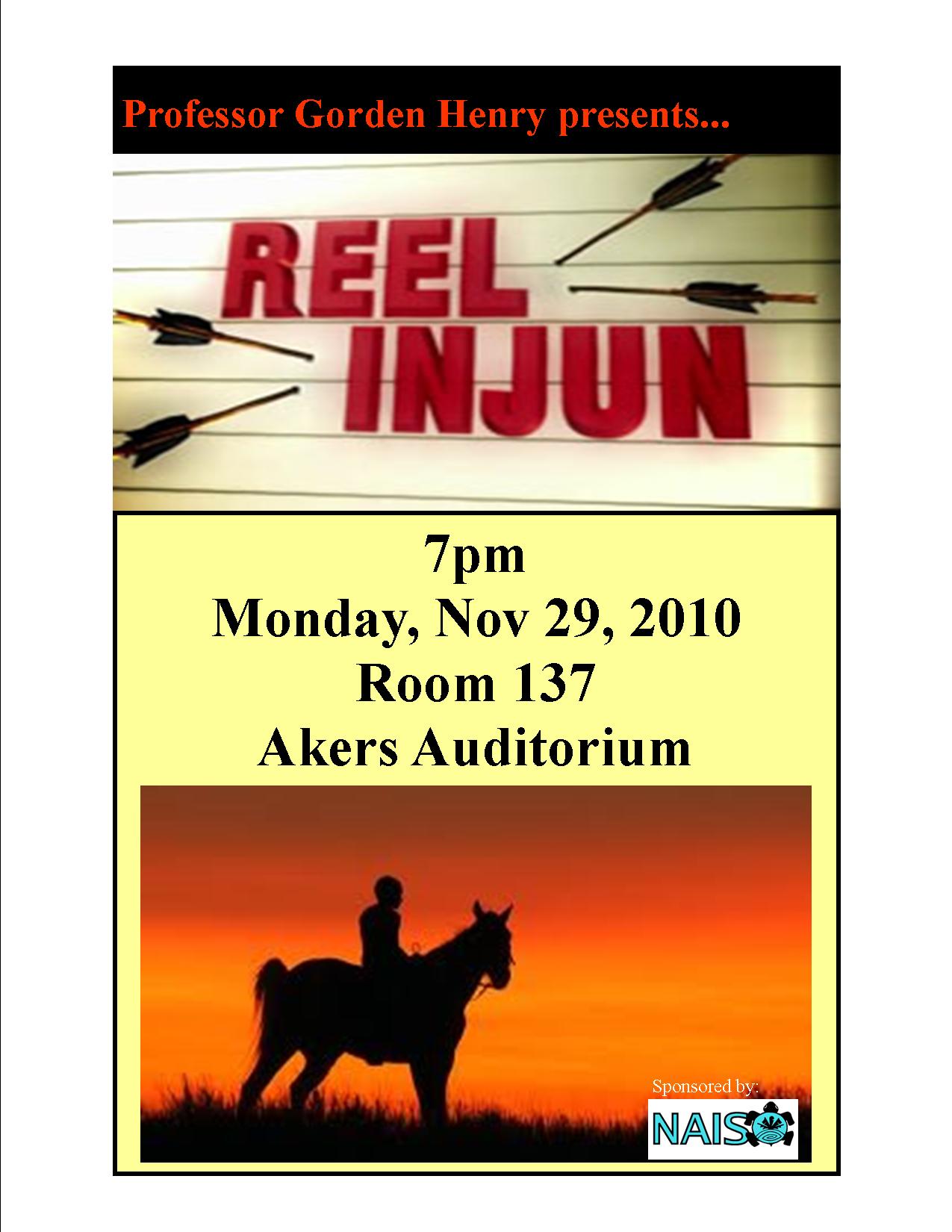
Gordon Henry Presentation — “Reel Injun” — TONIGHT!!!!

MSU NAISO Talk — Prof. Fletcher on Michigan Indian Treaty Rights — TONIGHT 7:00 PM

MSU NAISO will host a talk on Michigan Anishinaabek treaty rights tonight at 7 PM. The talk will be held at the MSU College of Law in Room 325.

Dennis Banks Master’s Tea at Yale and Film Showing

This was put together by Ned Blackhawk. My part is the discussion on the second day.

Walter Echo-Hawk book Talk at OKC Oklahoma Heritage Museum: Sept. 21

Oklahoma City, OK – Acclaimed Pawnee attorney, activist, and author Walter R. Echo-Hawk will present his book In the Courts of the Conqueror:  The 10 Worst Indian Law Cases Ever Decided, at a book talk on Tuesday, September 21, 6:00 pm, at the Oklahoma Heritage Association Museum, 1400 Classen Boulevard, Oklahoma City.  The program is co-sponsored by the Association of Tribal Archives, Libraries, and Museums, Crowe & Dunlevy, the Oklahoma Department of Libraries, the Oklahoma Museums Association, and the Oklahoma Heritage Association.

Continue reading

2010 Bellwood Lecture @ Idaho Law

Here is the webcast of Idaho’s Bellwood Lecture featuring Larry Echohawk, Lawrence Baca, and Rebecca Tsosie.

Vodpod videos no longer available.

MSU Indigenous Law and Policy Center Alumni Reunion Event — April 21 @ 3PM

Saginaw Valley St. Univ. Barstow Lecture on Indian Law — April 1

Here (the paper is here):

Barstow Lecturer to Explain History of Indian Land Law

Saginaw Valley State University will host a lecture by American Indian legal expert Matthew Fletcher Thursday, April 1 at 7:30 p.m. in the Rhea Miller Recital Hall. In his talk, he will explain how a 2007 decree finally ended a 170-year-old dispute regarding Michigan Indians’ land rights. The lecture is part of SVSU’s Barstow Humanities Seminar series.

Fletcher says the delay owes its origins to miscommunication. In 1836, five Michigan Indian tribes entered into a treaty with the state and federal governments over “inland rights” – a treaty in which the Indians ceded their land in exchange for defined areas where they could fish, hunt and gather. The problem was that two of the treaty’s key words – “occupancy” and “settlement” – had vastly different meanings in the local Indian language. Relying on their understanding, the Indians agreed to the treaty.

Continue reading

Prof. Fletcher to Deliver USD Dillon Lecture

From the Sioux City Journal:

USD Dillon Lecture to Address Indian Law

By Nick Hytrek Journal staff writer | Posted: Wednesday, February 10, 2010 10:00 am |

VERMILLION, S.D. — Michigan State University law professor Matthew L.M. Fletcher will present the University of South Dakota’s annual Dillon Lecture, “Rebooting Indian Law in the Supreme Court.”

Fletcher’s lecture is set for 7 p.m. Feb. 18 in the law school courtroom.

In addition to teaching courses on Indian law, Fletcher sits as an appellate judge for various tribes.

The Dillon Lecture is being presented in conjunction with the South Dakota Law Review Symposium, scheduled for 10 a.m. Feb. 18 in the law school courtroom. In addition to the symposium, USD’s Native American Law Students Association is hosting the 2010 National NALSA Moot Court Competition Feb. 19-20.

The Dillon Lecture is named for Charles Hall Dillon, a pioneer South Dakota lawyer and South Dakota Supreme Court justice who died in 1928.