New Complaint against Feds from Tribal Attorney over Attorney Fees

Here is the complaint in Corrales v. Newland (S.D. Cal.):

Materials in the other suit mentioned in the complaint are here. And yet another suit by the same plaintiff against the State of California is here.

California COA Sustains Rejection of Fraud & Malpractice Claims against Tribal Attorney

Here is the unpublished opinion in Fernandez v. Marston:

California Federal Court Dismisses Effort by Former Tribal Lawyer to Make BIA Tell Tribe to Pay Legal Bills

Here are the materials in Corrales v. Dutschke (S.D. Cal.):

Wyoming SCT Issues Mixed Opinion in Northern Arapaho Tribe v. Baldwin, Crocker, and Rudd

Here.

An excerpt:

BCR did not comply with the procedural requirements of Rule 11, and the district court erred when it imposed Rule 11 sanctions on the Tribe. The district court’s order imposing Rule 11 sanctions is reversed, and this matter is remanded to the district court with direction that the order imposing sanctions be vacated. We affirm the district court’s order granting summary judgment on the accounting claim because the Tribe could not bring a cause of action for an accounting under W.R.P.C. 1.15(e), and the Tribe failed to show its conversion and civil theft claim was not an adequate remedy at law. We affirm the jury’s verdict after finding the Tribe failed to show the verdict would have been more favorable to the Tribe if the racially charged evidence and argument had not been admitted.
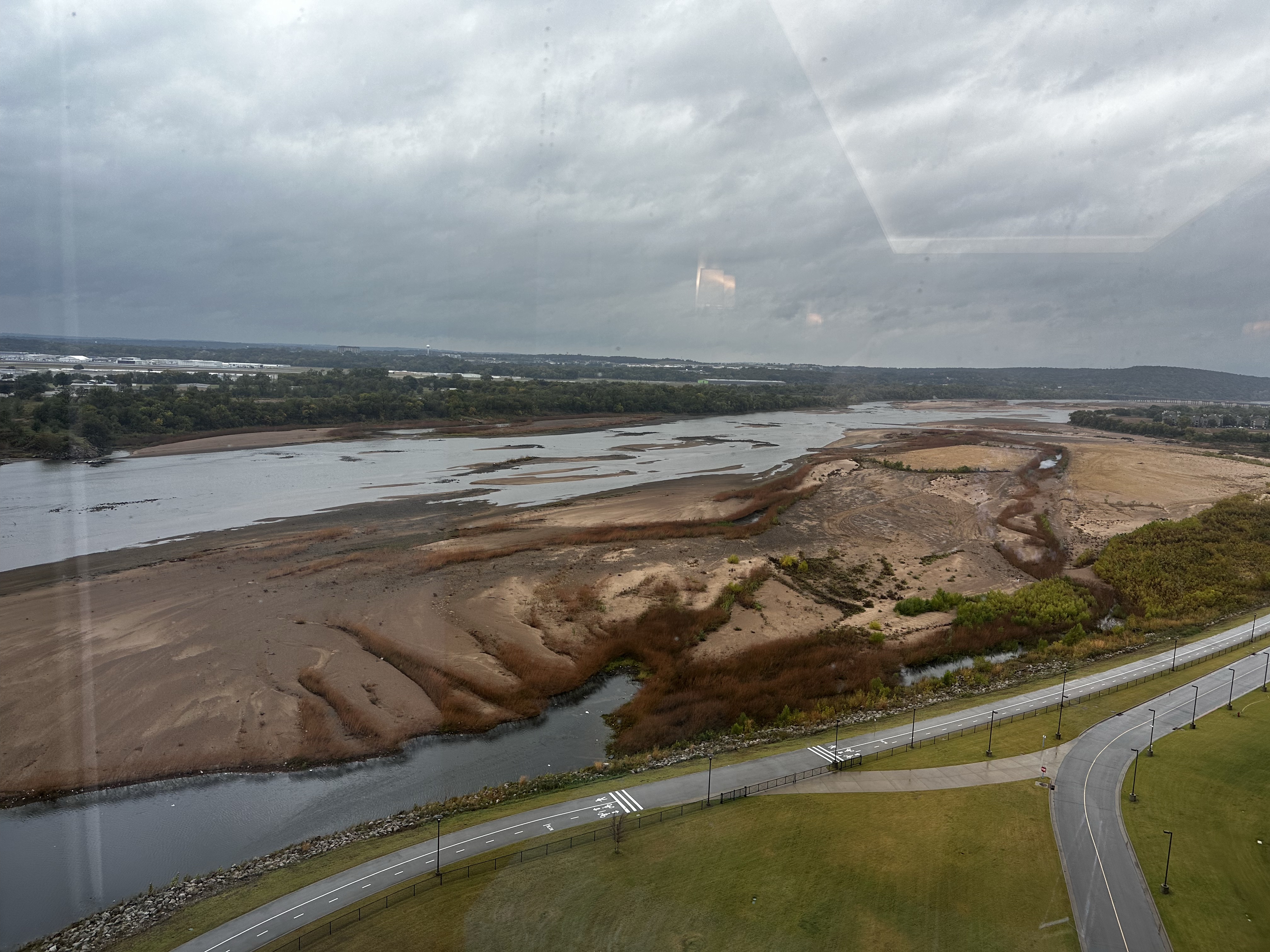
Not Wind River . . . Creek Nation.

Briefs here.

Wyoming SCT Briefs in Northern Arapaho Tribe v. Baldwin Crocker & Rudd

Here:

Reply

Highlights of a related suit, Baldwin v. Harper (D. Wyo.):

DALL-E’s version of “lawyers yelling at lawyers in the style of Van Gogh” but looks like they’re all in a chorus line.

Fletcher Reflections on Professionalism in Tribal Jurisdictions

Fletcher has posted “Reflections on Professionalism in Tribal Jurisdictions,” a short paper prepared for a special issue of the Michigan Bar Journal.

The abstract:

In this article, I will canvass several themes of professionalism in tribal practice, drawing my tribal law experience. Many lawyers to undervalue — even disrespect — tribal governance. This lack of professionalism has significant costs to tribal governments, tribal business, and their business partners.
Another irrelevant image.

Northern Arapaho Tribe Set for Trial in Law Firm Overbilling Suit

Here is the complaint in Northern Arapaho v. Baldwin Crocker & Rudd (Wyo. Dist. Ct.):

Judge Bradley Letts on the Cherokee Court System

Judge Bradley Letts has published “The Cherokee Tribal Court: Its Origins and Its Place in the
American Judicial System
” in the Campbell Law Review.

Highly recommended.

D.C. Circuit Briefs in Law Firm’s Effort to Intervene in Yankton Sioux Tribe’s Trust Breach Claim against Interior

Here are the materials in Yankton Sioux Tribe v. Bernhardt:

herman-law’s-opening-brief.pdf

yankton-answer-brief.pdf

federal-answer-brief.pdf

Lower court materials here.

Chicago Employee Retirement Fund Sues “Fly-By-Night Tribal Financiers” + Law Firms over “Issuance of $43 million in Worthless Bonds” [case involves Oglala Sioux Tribal Subdivision] — Updated with Federal Court Materials

Update — the case has been removed to federal court, the Northern District of Illinois:

1 Notice of Removal

1-1 Complaint Exhibits

Additional update (3/17/2020):

18 Greenberg Traurig Motion to Dismiss

23 Dilsworth MTD

32 Plaintiff Opposition to Dilsworth MTD

33 Plaintiff Opposition to GT MTD

Here is the complaint in Chicago Transit Authority Retiree Health Care Trust v. Dilworth Paxon LLP (Cook County Circuit Ct.):

Complaint

An excerpt:

1. This lawsuit arises from the Defendants’ participation in, and assistance with, the issuance of $43 million in worthless bonds (the “Bonds”) to unwitting public pension funds, including RHCT. The Bonds were not part of a legitimate public finance project, but rather a criminal scheme to enrich several individuals connected to the Defendants, including well-known fraudster, John Galanis, his son, Jason Galanis (collectively, the “Galanises”), and fly-by-night tribal financiers, Steven Haynes and Raycen Raines, the latter of whom was romantically involved with the Greenberg partner representing the issuer during the transaction.
2. The fraud, which was concealed from the bondholders until May of 2016, involved the use of bond proceeds to purchase an annuity contract with a fictious offshore entity, which is unheard of in legitimate municipal finance transactions. Only a fraction of the bond proceeds were paid to the issuer, while the majority of funds were instead wired to the offshore annuity. Not surprisingly, the annuity company turned out to be fake, allowing the Galanises and their friends to steal almost $40 million in retirement funds from a variety of public pension funds, including those serving public school teachers, sanitary workers, and in RHCT’s case, retired CTA employees and their dependents.
3. The Bonds have been the subject of criminal, SEC and civil litigation in various jurisdictions throughout the country. In its wake, several individuals have pleaded or been found guilty of criminal charges, and multiple investment companies have been forced out of business.
4. None of this would have occurred without the Defendants’ assistance. As more fully alleged herein, the Defendants–national law firms with supposedly sophisticated municipal finance practices–both served as bond counsel in the transaction, assisting not only their “clients,” but several other parties in carrying out what reasonably prudent lawyers would have recognized to be an obvious financial crime.
5. In addition to preparing transaction documents and supervising the bond issuance. the Defendants authored misleading opinion letters containing statements inconsistent with facts of which they were aware, and which failed to disclose material facts that would have prevented the transaction from closing. Through their opinion letters, the Defendants gave the transaction the appearance of legitimacy necessary for the Bonds to issue. Defendants received hundreds of thousands of dollars in stolen retirement funds as payment for their assistance with the issuance.
6. Through their conduct, and in disregard of the duties they owed foreseeable victims like the bondholders, the Defendants directly and proximately caused RHCT in excess of $6,000,000 in losses, which RHCT seeks to recover in this case.
Another excerpt detailing what appears to be efforts by the tribe to stop the alleged scheme:
64. However, instead, on June 24, 2014, the OST’s Tribal Council passed a resolution stripping Raines of authority to act with respect to tribal economic development matters, including “Tribal Economic Development (TED) Bonds,” but also “any other economic development projects.” (Exhibit C, June 24, 2014 OST Resolution.) The resolution specifically noted that Raines had exerted undue influence over OST’s then-president to gain support for economic development projects.
65. Raines served as WLCC’s primary business representative and contact for the Wakpamni bond transaction. However, the tribal resolution stripping Raines of authority over tribal economic development matters was never disclosed to the bondholders or the Indenture trustee, U.S. Bank, by Greenberg or Dilworth during the transaction.