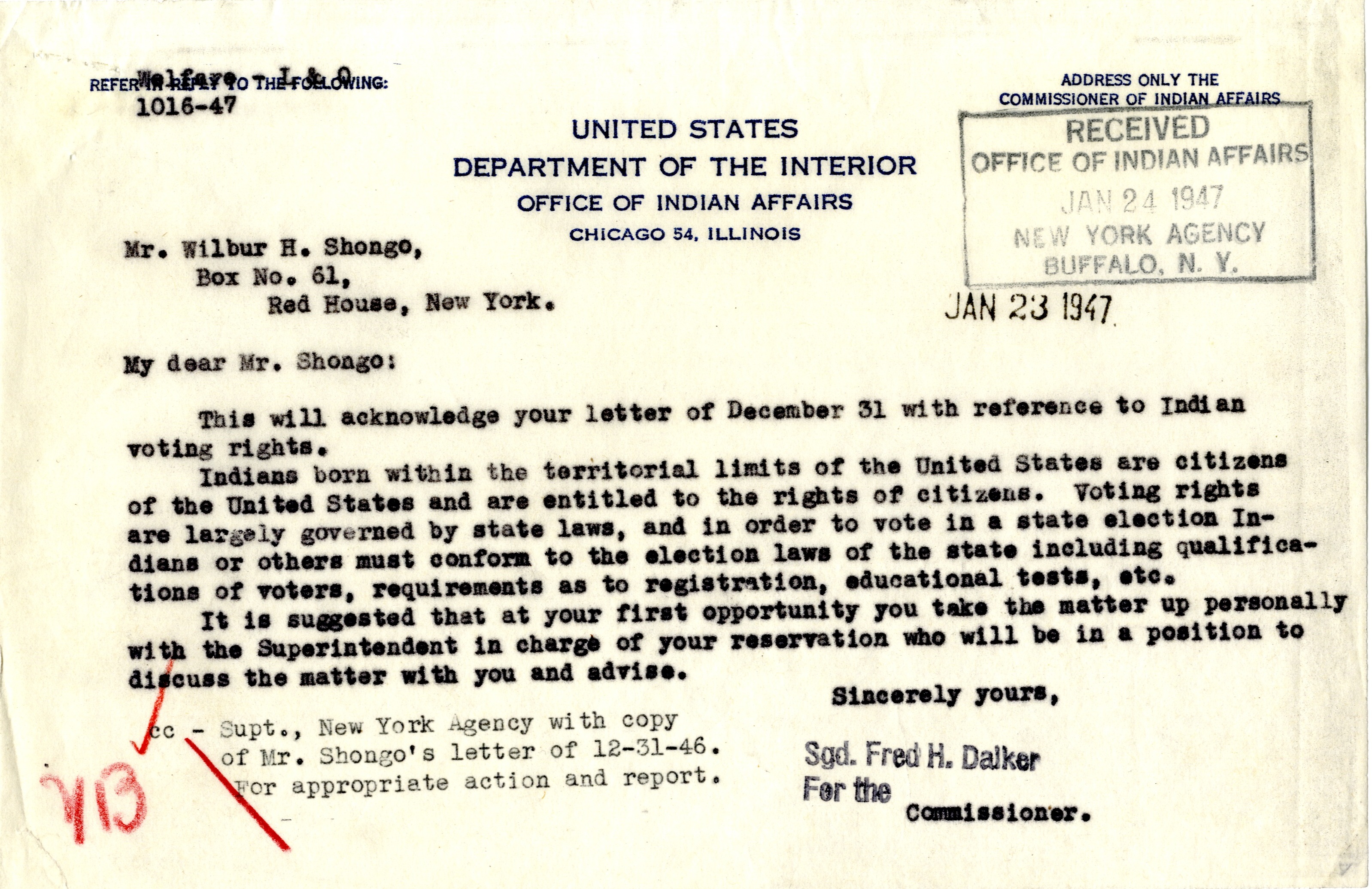
Blast from the Past: Hank Adams’ Polemic, “The Lonely Crowd and the Organization IRA Man Revisited”

New Scholarship on the Morrill Act and Native Lands Dispossession

Teresa M. Miguel-Stearns, Samantha Ginsberg, and Kristen Cook have posted “More Than Morrill: The Intertwined History of Indian Land Dispossession, Arizona Statehood, and University Enrichment,” published by the Arizona Journal of Environmental Law and Policy, on SSRN.

Here is the abstract:

Through the federal government’s university land-grant programs, which began with the Morrill Act in 1862 and continue today, Congress has systematically allocated millions of acres of land in the western United States to states to create endowments to support the public higher education of its citizens. In Arizona, land was taken from Indigenous peoples, communities, tribes, and nations by treaty, act of congress, executive order, and force to accomplish this. As a result, by the time of statehood in 1912, the state of Arizona had accumulated approximately 850,000 acres of land around the state on behalf of higher education, including the University of Arizona, then the state’s only university and its designated land-grant institution. Today, the Arizona State Land Department still holds and manages 688,706 acres of land in trust for the benefit of public higher education. All three of Arizona’s public universities receive distributions from the revenue generated by these trust lands. The goal of this paper is to explore and analyze the University of Arizona’s historical and ongoing enrichment from land taken from Indigenous peoples by the federal government and transferred to the territory and, later, the state of Arizona in the nineteenth and early twentieth centuries for the benefit of institutions of higher education. A comprehensive understanding of Arizona’s history and the state’s current holdings and financial benefits is required to examine the policy implications and moral and legal obligations that Arizona and its universities have to Indigenous peoples in Arizona. 

Christian McMillen on Forced Fee Patents

Christian McMillen has published “I Didn’t Know That a Patent Was a Dangerous Thing”: Forced Fee Patents, Native Resistance, and Consent” in the Western Historical Quarterly.

Here is the abstract:

Between 1906 and 1920 the Bureau of Indian Affairs (BIA) issued more than 32,000 fee patents, covering 4.2 million acres of land. More than half of the patents were issued between 1917 and 1920. The BIA forced many of these patents upon Native people without their consent. When individually allotted land went from trust to fee, the land was taxed and could be sold. The consequences were devastating. Was this legal? Many Native people protested their fee patents, but others did not. Indeed, protesting dispossession was an act of courage and defiance. Native protest led to a legal precedent that had an impact across Indian country: consent was required. But was compliance synonymous with consent? Must one resist a policy found to be illegal in order for it not to apply? For a time, the answer was yes. Ideas about consent began to change leading to another series of legal challenges to the Bureau’s forced fee patent policy.

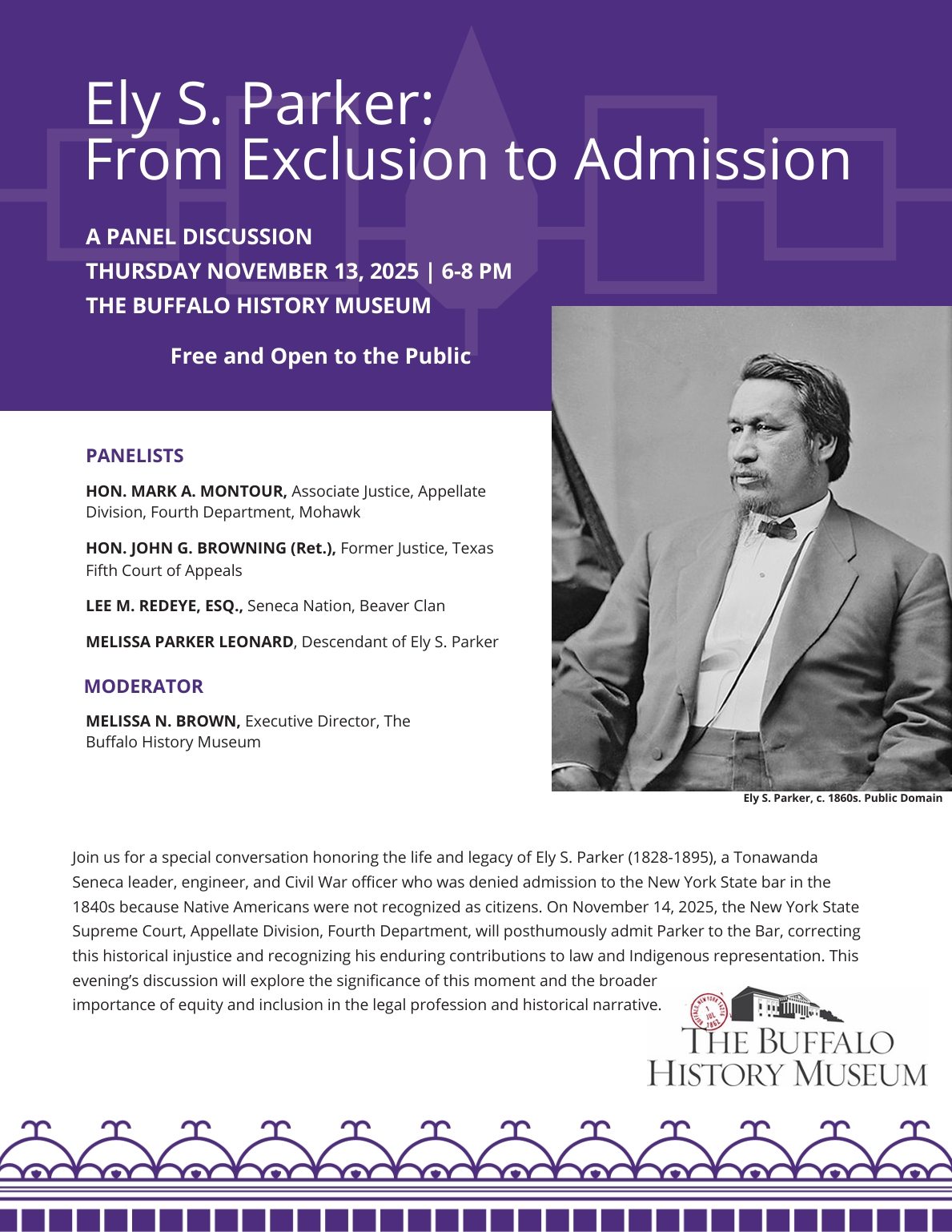
Posthumous Bar Admission of Ely S. Parker

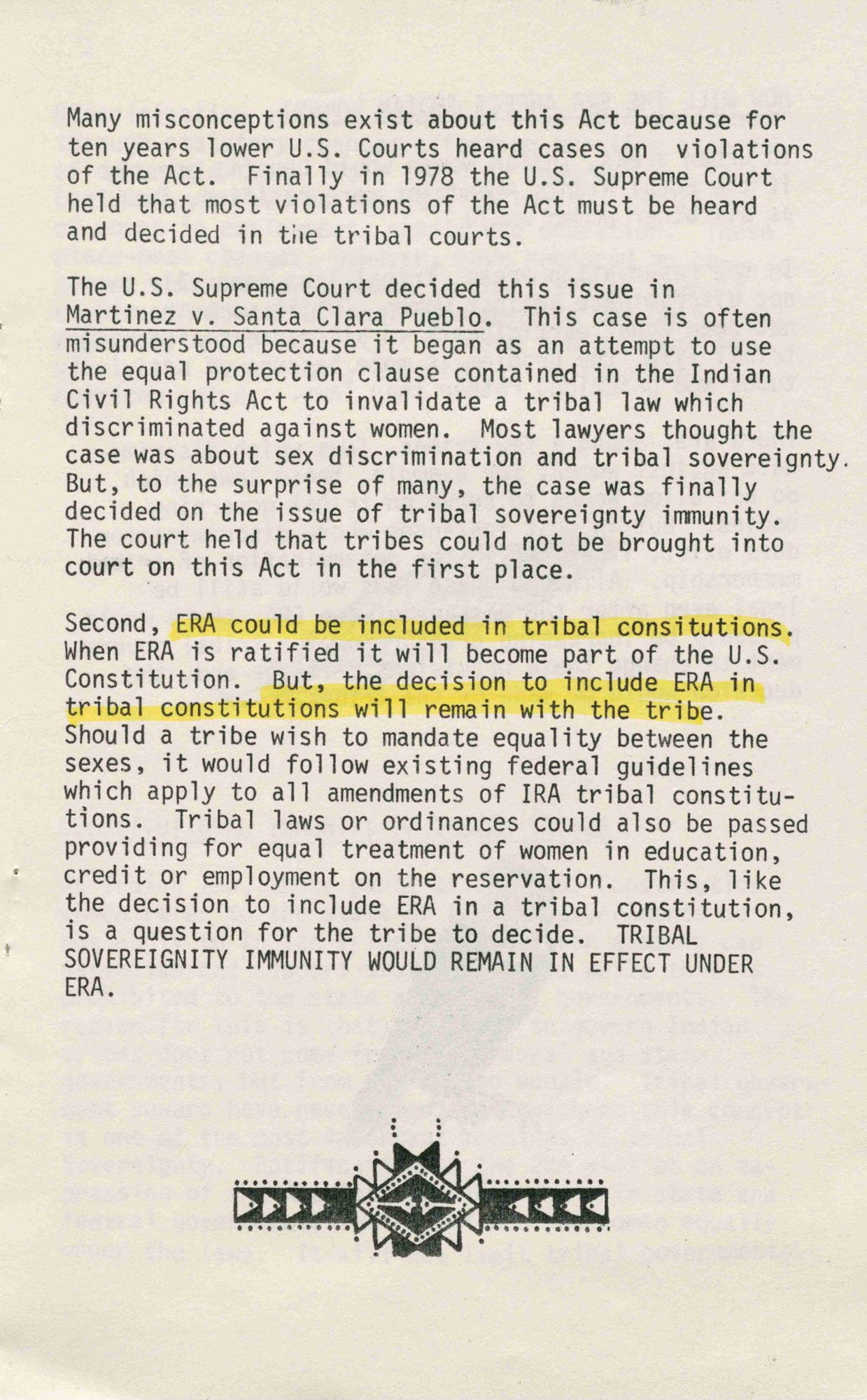
Blast from the Past: Brochure Advocating for Equal Rights Amendment to be Adopted by Tribal Nations [Victoria Santana]

Excerpts:

Blast from the Past Addendum: Melody McCoy’s Letter to the Rolling Stone Editor [Go Blue]

There was an error in that Rolling Stone article that led Melody McCoy to write a correction in 1987:

Blast from the Past: Marvin Sonosky’s Efforts to Stop or Modify the Indian Land Consolidation Act Bill

As students of Indian law know, not many Indian affairs statutes have been struck down, but this one was (twice).

John LaVelle on the Uses and Abuses of Johnson v. McIntosh by the Supreme Court

John LaVelle has published “Uses and Abuses of Johnson v. M’Intosh in Native American Land Rights Cases: Investigative Insights from the Indian Law Justice Files” in the Montana Law Review.

Here is the abstract:

The 200th anniversary of the foundational Indian law decision Johnson v. M’Intosh has come and gone, with many scholars contributing criticism and commentary. The dominant focus has been the case’s notorious embrace of the so-called “doctrine of discovery,” an odious theory for rationalizing European nations’ claims of superior rights to lands occupied by Indigenous Native American peoples. Commanding less attention, however, is the Johnson decision’s core protective legal feature, i.e., its reinforcing the United States government’s duty to guard against the alienation of Indian lands through private, unauthorized acquisitions.

This Article offers a somewhat different appraisal of Johnson v. M’Intosh in the context of controversies over Indigenous rights. Notwithstanding the case’s offensive dicta, the unanimous Johnson opinion retains efficacy in safeguarding Native American land rights, provided certain infamous abuses of the decision as precedent can be identified and rectified. Accordingly, this Article examines instances of the modern Supreme Court’s distorting and misusing Johnson v. M’Intosh to damage, weaken, or deny Indian land rights. In centering attention on this abuse, the Article draws on eye‑opening, seldom‑viewed documents found among the papers of Supreme Court Justices archived at the Library of Congress and various universities across the country. The Article also discusses a series of modern‑era opinions by Supreme Court Justices that exemplify instructive conformity to and reliance upon Johnson’s protective features. Moreover, as a response to the joint call for papers issued by the Montana Law Review and the Public Land & Resources Law Review, the Article does not take merely a rear‑view‑mirror look at Johnson v. M’Intosh. Rather, this Article aspires to cast light on judicial distortions and misrepresentations of Johnson to help illuminate a “Vision for the Future” in legal battles over Indigenous property rights.

An accompanying Compendium of Exhibits from the Papers of Supreme Court Justices is available here.

“The Indian’s Militance Breeds a Backlash”

Tell us which Indian!

Phila. Inquirer, July 25, 1978

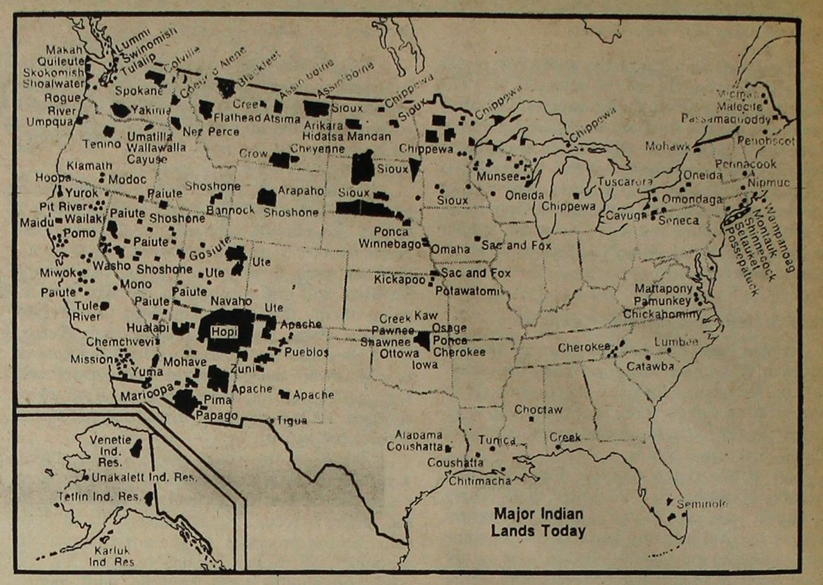
Blast from the Past: Mohawk Occupation of Lands at Eagle Bay

In honor of the land claims settlement at Akwesasne: