Yesterday evening. . . .


Conference details here.
Yesterday evening. . . .


Conference details here.
On April 1, 2026, the four Wabanaki Nations — the Houlton Band of Maliseet Indians, the Mi’kmaq Nation, the Passamaquoddy Tribe, and the Penobscot Nation — represented by the Native American Rights Fund and co-counsel filed an unopposed motion to intervene in Oxford Casino Hotel, et al. v. Champion in the U.S. District Court for the District of Maine. On April 2, 2026, the district court granted the Nations’ motion. The Nations’ intervention ensures their voices are represented in a lawsuit challenging Maine’s new internet gaming law, An Act to Create Economic Opportunity for the Wabanaki Nations Through Internet Gaming, a statute that is important to unique Tribal economic and sovereign interests.
Previous post on this matter is here.
The law, enacted earlier this year, establishes a regulatory framework allowing the Wabanaki Nations to seek licenses to operate internet gaming in Maine. The statute is designed to support Tribal self-determination and create economic opportunities that strengthen the Wabanaki governments and their ability to provide for their communities. The Nations are the direct beneficiaries of the law and have significant sovereign, economic, and constitutional interests at stake in the litigation.
The lawsuit, brought by Oxford Casino Hotel and others, seeks to invalidate the law on constitutional grounds. By granting the Wabanaki Nations’ motion to intervene, the court has allowed the Nations to participate as party defendants to defend the law and protect their unique sovereign right as governments to pursue economic development in order to fund essential government programs, services and infrastructure.
Leaders of the Wabanaki Nations emphasized the importance of intervening to safeguard economic sovereignty and shared prosperity across Maine.
Chief Francis, Penobscot Nation: “Our intervention in Oxford v. Champion is about the future — for our people and for all of rural Maine. This law gives the Penobscot Nation a fair chance to build jobs, fund essential services, and partner across communities to heal long-standing economic disparities, while recognizing our unique politic status as a Tribal Nation. We look forward to the opportunity to defend this law and our right to economic self-determination.”
Chief Sabattis, Houlton Band of Maliseet: “This law is crucial to advancing the Houlton Band’s efforts to develop independent, long-term revenue sources that are not dependent on federal funding and will enable us to support and expand governmental services for Maliseet families and other community members. It is a result of collaboration between the Wabanaki Nations and state government under our unique jurisdictional relationship to create opportunities that will enable the Nations to share in the economic benefits of gaming.”
Chief McCormack, Mi’kmaq Nation: “Rural Maine and our Nations are interconnected. When Tribal economies grow, local businesses, workers, and towns grow too. The Mi’kmaq Nation is proud to stand in court with the other Wabanaki Nations to defend a law that makes that shared prosperity possible.”
Chief Bassett, Passamaquoddy Tribe (Pleasant Point): “The Wabanaki Nations face steeper barriers to prosperity than other Tribes around the country, and we have been historically blocked out of Maine’s casino gaming industry as our peers across Indian country rebuilt their economies and the economies around them using those same economic tools we were deprived of. Defending this law is defending our right to pursue self-determination. We are fighting for a brighter economic future for our future generations.”
Chief Nicholas, Passamaquoddy Tribe (Indian Township): “The Passamaquoddy Tribe has been steadfast in its support of economic sovereignty as its number one priority the past two years in the Maine legislature. We are ready to stand in court to defend a law we were proud to fight for over the past years in the state house. Maine’s new internet gaming law is intended to promote a better economic future for Wabanaki communities and for rural Maine. By protecting this law, we protect our future.”
Native American Rights Fund Staff Attorney Lenny Powell: “The Native American Rights Fund is proud to jointly represent the Wabanaki Nations in efforts to defend ‘An Act to Create Economic Opportunity for the Wabanaki Nations Through Internet Gaming.’ This attack represents an unfortunate effort to undermine Tribal-state partnerships. It seeks to undermine the legal basis for constructive government-to-government policy collaboration, despite decades of data showing that Tribal and non-Tribal communities alike are stronger when Tribal nations are empowered in their pursuit of self-determination.”

On April 1, 2026, the Ninth Circuit Court of Appeals threw out the Arizona Legislature’s challenge to Baaj Nwaavjo I’tah Kukveni-Ancestral Footprints of the Grand Canyon National Monument. The decision leaves the monument in place and fully protected. You can see the decision here:
In September of 2024, the District Court denied, without prejudice, the Tribes’ motion to intervene in this case, finding the United States adequately represented the Tribes’ interests at that time. Here is that order:
The Ninth Circuit’s April 1 decision affirms the District Court decision dismissing the two consolidated cases filed against the Monument designation.
The National Monument protects thousands of historic and scientific objects, sacred places, vital water sources, and the ancestral homelands of many Indigenous Peoples. Baaj Nwaavjo I’tah Kukveni lands include cultural and sacred places of the Havasupai Tribe, Hopi Tribe, Hualapai Tribe, Kaibab Band of Paiute Indians, Las Vegas Paiute Tribe, Moapa Band of Paiutes, Paiute Indian Tribe of Utah, Navajo Nation, San Juan Southern Paiute Tribe, Yavapai-Apache Nation, Pueblo of Zuni, and the Colorado River Indian Tribes. The Monument receives its name from the Indigenous names given to the area by the Havasupai and Hopi. Baaj nwaavjo (BAAHJ – NUH-WAAHV-JOH) means “where Indigenous peoples roam” in the Havasupai language, and i’tah kukveni (EE-TAH – KOOK-VENNY) means “our ancestral footprints” in the Hopi language.
Learn More: Arizona Legislature v. Biden
Shunhe Wang has published “Oh Deer: The Elk Court’s Misunderstanding of the Citizenship Clause” in the University of Richmond Law Review.
Here is the abstract:
This Article examines the enduring legacy of Elk v. Wilkins, 112 U.S. 94 (1884), a Supreme Court decision that interpreted the Fourteenth Amendment’s Citizenship Clause to exclude Native Americans from birthright citizenship. By relegating Native citizenship status to a statutory privilege rather than a constitutional right, Elk created a framework that has since been weaponized to challenge birthright citizenship for the children of undocumented immigrants. This Article demonstrates how Elk’s flawed reasoning—particularly its narrow reading of “subject to the jurisdiction thereof”—continues to shape legal and political efforts to erode the Fourteenth Amendment’s guarantees.
Drawing on Justice Harlan’s dissent in Elk, the legislative history of the Fourteenth Amendment, and the text of the Citizenship Clause, this Article argues that Elk was wrongly decided and that the jurisdictional requirement was never intended as a tool for exclusion. The Reconstruction Framers designed the Citizenship Clause to ensure equal citizenship for all persons born on U.S. soil, regardless of ancestry or parental status. Justice Harlan’s dissent provides a blueprint for this inclusive reading, rejecting the notion that allegiance at birth determines jurisdiction.
This Article calls for the explicit repudiation of Elk and its continued misuse in modern birthright citizenship debates. The Fourteenth Amendment’s promise is clear: for anyone born in the United States who subjects themselves to its jurisdiction, birthright citizenship is a constitutional right, not a congressional privilege.

Recommended. I agree that Elk v. Wilkins wrongly decided. The opinion is filthy with rank bigotry and deserves no serious consideration, the reality of which is proven in the horrific, bigoted manner in which the Department of Justice is defending Trump’s birthright citizenship order by relying on Elk‘s application of a racial caste system. And wouldn’t it be nice if Indigenous Peoples, like all people, have the right to consent to or reject American citizenship?
Tana Fitpatrick published “Federal Gatekeeping and Hollow Sovereignty: A Historical
Statutory Analysis of Tribal Access to Legal Representation” in the Sovereignty Symposium XXXVII (2025). It seems like a really good paper. Wish I knew about it earlier.
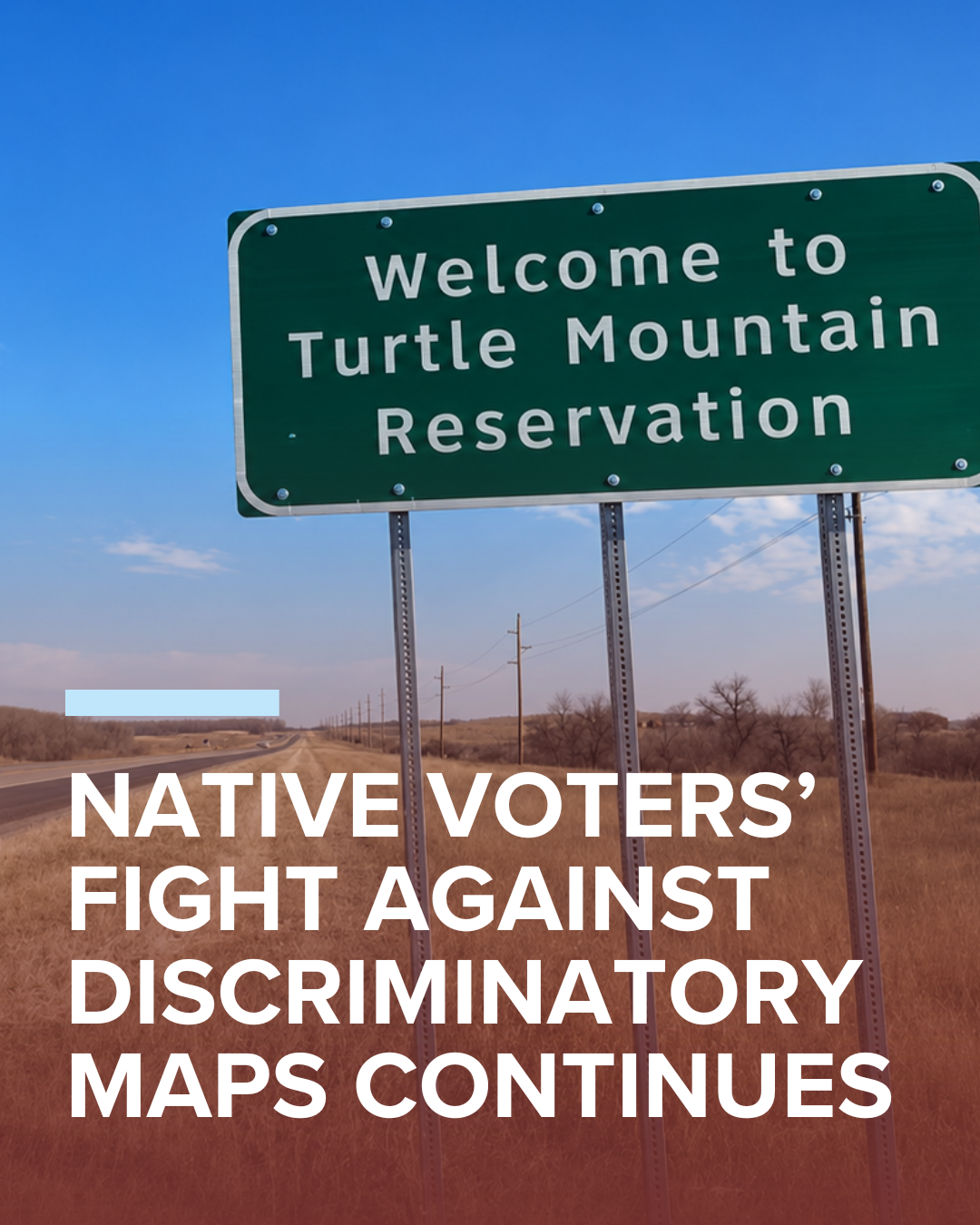
On December 15, 2025, the U.S. District Court for the District of Montana approved a settlement reached in Chippewa Cree Indians of the Rocky Boy’s Reservation v. Chouteau County, Montana that will provide Tribal citizens the opportunity to elect a representative of their choice to the Chouteau County Board of County Commissioners.
Under the terms of the settlement, the Tribal Nation’s reservation will be part of Chouteau County’s District 1, which will elect a representative to the Board of County Commissioner through a single-member district election.
“We’re pleased that the county did the right thing in giving the Chippewa Cree Tribe a chance to elect a representative to the Board of Commissioners,” said Chippewa Cree Tribe Chairman Harlan Gopher Baker. “It has been more than a decade since we have had a Native voice in county politics. We look forward to being a part of this conversation.”
“This case was about our community finally having a representative and a voice like other voters in the county,” said plaintiff and voter Tanya Schmockel, a citizen of the Chippewa Cree Tribe. “I am excited about finally having the chance to have our voices heard and our concerns addressed.”
Most of Chouteau County’s Native population lives on or near the Rocky Boy’s Reservation, and many critical local issues — such as infrastructure, road maintenance, and emergency services — require coordination between the county and Tribal governments.
“In order for our county to include all of us, we needed a fair election system. With the new district, we have a chance for our voters to elect a commissioner who understands Native issues,” said plaintiff and voter Ken Morsette, a citizen of the Chippewa Cree Tribe. “This is a huge step forward for our Tribe.”
Native American Rights Fund (NARF), American Civil Liberties Union Foundation Voting Rights Project (ACLU), and ACLU of Montana (ACLU-MT), represent the plaintiffs in this case.
Read more about the Tribe’s successful fight for fair voting in Chouteau County.
Teresa M. Miguel-Stearns, Samantha Ginsberg, and Kristen Cook have posted “More Than Morrill: The Intertwined History of Indian Land Dispossession, Arizona Statehood, and University Enrichment,” published by the Arizona Journal of Environmental Law and Policy, on SSRN.
Here is the abstract:

Through the federal government’s university land-grant programs, which began with the Morrill Act in 1862 and continue today, Congress has systematically allocated millions of acres of land in the western United States to states to create endowments to support the public higher education of its citizens. In Arizona, land was taken from Indigenous peoples, communities, tribes, and nations by treaty, act of congress, executive order, and force to accomplish this. As a result, by the time of statehood in 1912, the state of Arizona had accumulated approximately 850,000 acres of land around the state on behalf of higher education, including the University of Arizona, then the state’s only university and its designated land-grant institution. Today, the Arizona State Land Department still holds and manages 688,706 acres of land in trust for the benefit of public higher education. All three of Arizona’s public universities receive distributions from the revenue generated by these trust lands. The goal of this paper is to explore and analyze the University of Arizona’s historical and ongoing enrichment from land taken from Indigenous peoples by the federal government and transferred to the territory and, later, the state of Arizona in the nineteenth and early twentieth centuries for the benefit of institutions of higher education. A comprehensive understanding of Arizona’s history and the state’s current holdings and financial benefits is required to examine the policy implications and moral and legal obligations that Arizona and its universities have to Indigenous peoples in Arizona.
You must be logged in to post a comment.