




Excerpts:
On the book’s title: “I didn’t really understand what my mother was talking about when she referred to stick houses. It’s just an architectural term. And when she said it, literally I thought it meant that we had houses made out of little like tiny sticks, but she meant houses that are just like regular houses now, made out of lumber. And that’s sort of the story. Indian people for the last 150 years in Michigan didn’t live in wigwams or teepees or lodges. We lived in houses. And my grandmother in 1921 was born in Allegan County, Michigan, in a stick house, and she wasn’t the first generation to be like that. It was more 19th century stuff. Graduate students probably at Grand Valley State or Western or something, insisted, and wanted to hear about how she her generation, or maybe her mother’s generation was born in a wigwam and that just wasn’t the case.”
“We’re a bunch of different things, like all people are, and I wanted to show some different sides to Native people that are not typically shown.”
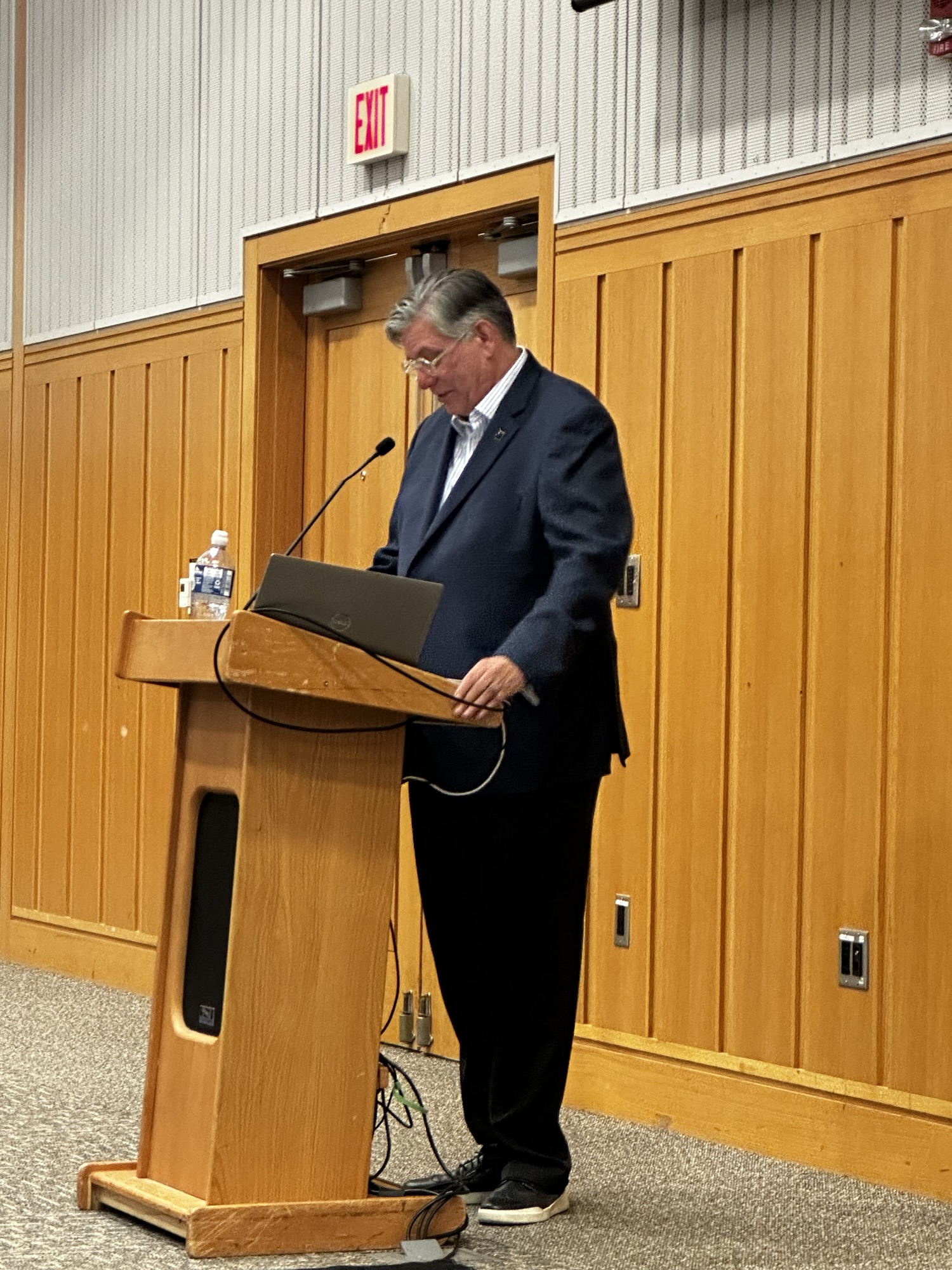
Matthew Fletcher
author, “Stick Houses”
On themes of short stories: “‘Truck Stop’ is a parable about the Indian Child Welfare removals of the middle part of the 20th century. The Indian Child Welfare Act of 1978 is near and dear to my heart. And when you work on those cases, or you study them as a professor like I do, they kind of lose their emotional core. I mean, all you hear is surface level stories about the trauma of how Indian people went through this. But I wanted to kind of point out how Native people survived it as well. The trauma is there and it’s quite terrifying and can be really horrible, but sometimes there is a rekindling, a reconnection of culture and individuals to each other, and I wanted to drill into that a little bit.”
On what he hopes readers take away from his book: “I’ve been listening to this brand new punk rock band that’s fronted by an Indigenous poet. The band is called ‘Dead Pioneers,’ which is awesome and hilarious. … And he has this great line. He says, you don’t realize it that even though we’re Native and Indigenous and have a tribal existence, we’re also having an American experience, and that’s what this is about, right? Like everybody, we shade ourselves in different contexts and shade our personalities to address the context in a given social situation. That’s true professionally and in our educational lives as well. So we’re a bunch of different things, like all people are, and I wanted to show some different sides to Native people that are not typically shown.”

Featured Events:
Welcome Protocol
Forum Hall 1:00-1:30 PM
Panel 1 The Past and Future of Indigenous Politics
with Bryan Newland and Jeff Irwin,
Forum Hall 1:30 – 3:00 PM
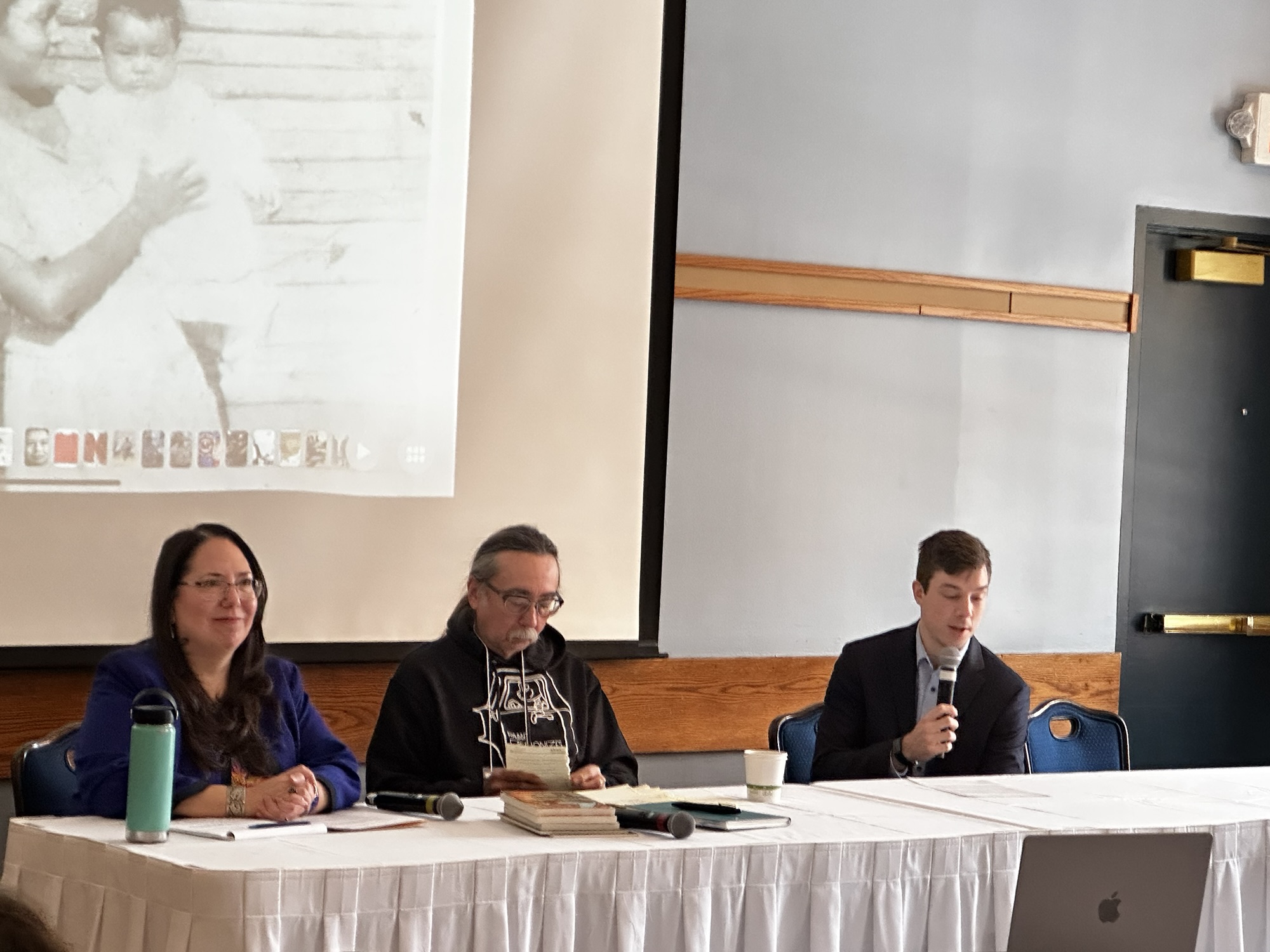
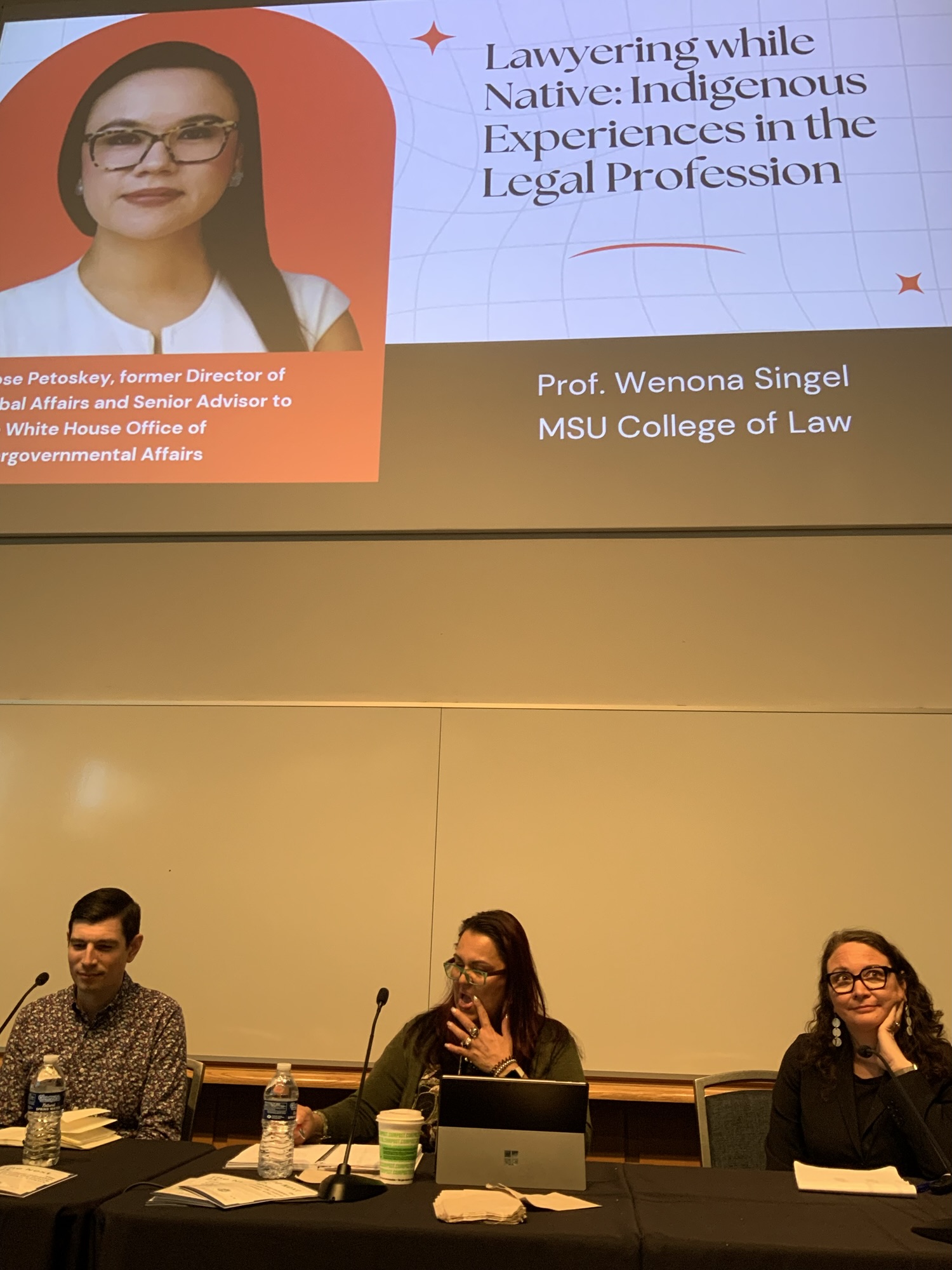
Panel 2: Lawyering Tribal Self-Determination
with Wenona T. Singel, Doreen Nanibaa McPaul, and Mitchell Forbes,
Forum Hall 3:15 – 4:45 PM
Dinner for symposium participants.
Great Lakes Room 5:00 – 6:30 PM
Great Lakes Room 7:00 – 9:30 PM
An Evening with Mark Trahant,
The 2025 Robert F. Berkhofer Jr. lecture on Native American Studies
Followed by reception
Guest Arrival,
Anderson ABCD 8:00 – 9:00 AM
Breakfast
Anderson ABCD 9:00 – 10:00 AM
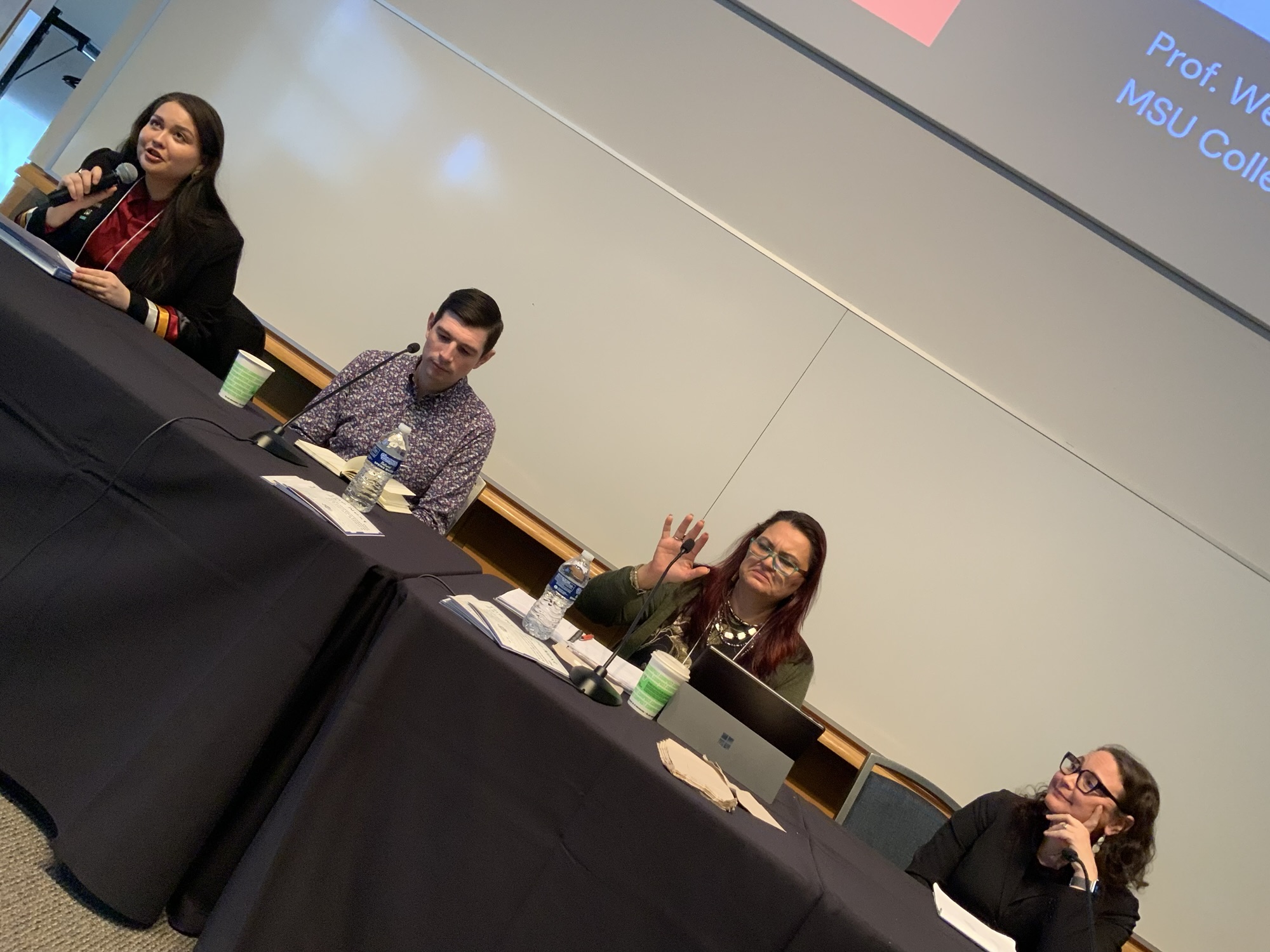
Panel 3: Indigenous Judging in Tribal and State Courts
with Gregory H. Bigler and Allie Greenleaf Maldonado,
Anderson ABCD 10:00 – 11:30 AM
Lunch
Anderson ABCD 11:30 AM – 12:30 PM
Keynote Address by Justice Raquel Montoya-Lewis,
Pendleton Room 12:30 – 1:45 PM
Panel 4: International Indigenous Leadership
with Kyle Powys Whyte, Kristen Carpenter, and Mark Trahant
Pendleton Room 2:00 – 3:30 PM
The Next 25: The Self-Determination Era and the Future of Indian Affairs
A symposium on the 50th anniversary of the Indian Self-Determination and Education Assistance Act
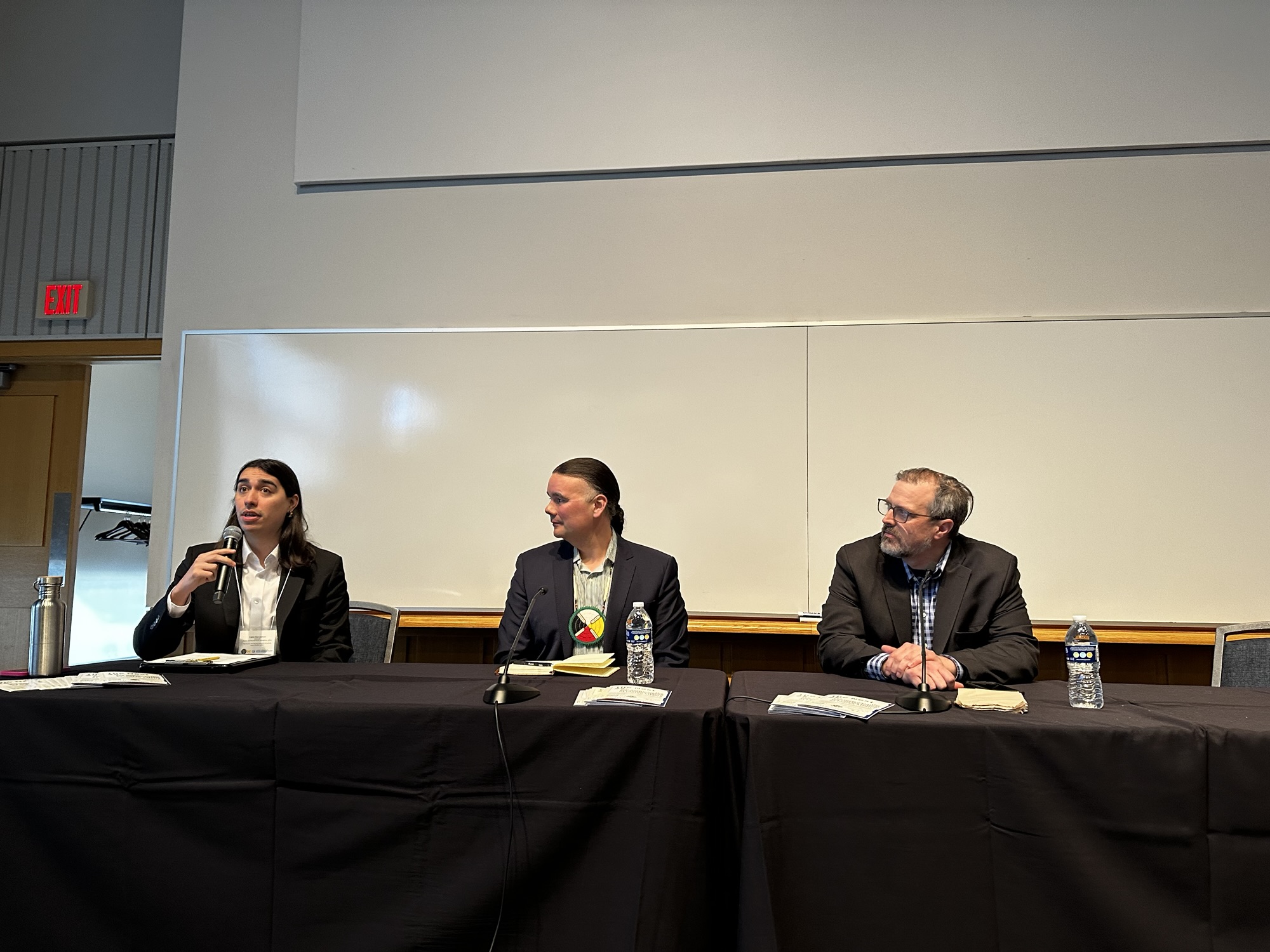
Our symposium is inspired by the 50th anniversary of the Indian Self-Determination and Education Assistance Act of 1975, the cornerstone statute establishing the tribal self-determination era. The first quarter century of the self-determination era featured many great successes but mostly great frustrations often caused by federal reluctance to empower tribal nations. The second quarter century featured the rise of tribal political and economic power, but many of the same frustrations, this time more often caused by judicial decisions. As always, Indigenous leaders look to both the past and the future in consequential decisions for their nations. This symposium brings together many of today’s most influential Indigenous leaders to assess the last fifty years and imagine what the next quarter century brings. Panelists include Indigenous elected officials, judges, and lawyers at the federal, state, and Tribal levels.
Washington Supreme Court Justice Raquel Montoya-Lewis, a citizen of the Pueblo of Isleta and a descendant of the Pueblo of Laguna, will deliver a keynote address on Saturday.
Here.
Abstract:
For too long, tribal judiciaries have been an afterthought in the story of tribal self-determination. Until the last half-century, many tribal nations relied on federally administered courts or had no court systems at all. As tribal nations continue to develop their law-enforcement and police powers, tribal justice systems now play a critical role in tribal self-determination. But because tribal codes and constitutions tend to borrow extensively from federal and state law, tribal judges find themselves forced to apply and enforce laws that are poor cultural fits for Indian communities—an unfortunate reality that hampers tribal judges’ ability to regulate and improve tribal governance.
Even where tribal legislatures leave room for tribal judges to apply tribal customary law, the results are haphazard at best. This Article surveys a sample of tribal-court decisions that have used customary law to regulate tribal governance. Tribal judges have interpreted customary law when it is expressly incorporated into tribal positive law, they have looked to customary law to provide substantive rules of decision, and they have relied on customary law as an interpretive tool. Reliance on customary law is ascendant, but still rare, in tribal courts.
Recognizing that Indian country will continue to rely on borrowed laws, and aiming to empower tribal courts to advance tribal governance, this Article proposes that tribal judges adopt an Indigenous canon of construction of tribal laws. Elevating a thirty-year-old taxonomy first articulated by Chief Justice Irvin in Stepetin v. Nisqually Indian Community, this Article recommends that tribal judges seek out and apply tribal customary law in cases where (1) the relevant doctrine arose in federal or state statutes or common law; (2) the tribal nation has not explicitly adopted federal or state law on a given issue in writing; (3) written tribal law was adopted or shifted as a result of the colonizer’s pressure and interests; and (4) tribal custom is inconsistent with the written tribal law, most especially if the law violates the relational philosophies of that tribal nation. Tribal judiciaries experienced at applying tribal customary law will be better positioned to do justice in Indian country.

Here.


 Turtle Talk
You must be logged in to post a comment.