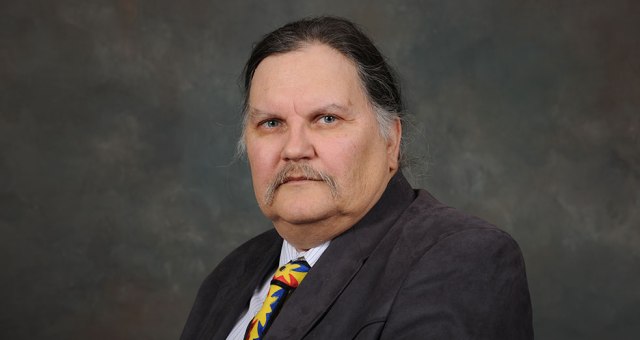
Rep. Pearce (R-NM) Introduces PROTECT to Congress

Link to concurrent resolution here.

The summary of the resolution upon introduction:

By Mr. PEARCE (for himself, Mr. COLE, and Ms. MCCOLLUM):

Con. Res. 122. Concurrent resolution supporting efforts to stop the theft, illegal possession or sale, transfer, and export of tribal cultural items of American Indians, Alaska Natives, and Native Hawaiians in the United States and internationally; to the Committee on the Judiciary, and in addition to the Committees on Foreign Affairs, and Natural Resources, for a period to be subsequently determined by the Speaker, in each case for consideration of such provisions as fall within the jurisdiction of the committee concerned

The press release from Pearce’s office: https://pearce.house.gov/press-release/pearce-introduces-resolution-protect-tribal-artifacts.

The press release from the Association on American Indian Affairs, which puts this issue in its international human rights context: https://internationalrepatriation.wordpress.com/2016/03/02/breaking-pearce-introduces-protect-patrimony-resolution/.

The Honorable Allie Greenleaf Maldonado and Prof. Angela Riley Honored in International Women’s Day Portrait Exhibit at Harvard Law School

Cambridge, Mass, March 3, 2016 – The Honorable Allie Greenleaf Maldonado and Prof. Angela Riley are among 25 inspiring women who will be honored during Harvard Law School’s third Annual International Women’s Day Celebration, organized by the Harvard Women’s Law Association (WLA) and Harvard Law and International Development Society (LIDS). Judge Maldonado is the Chief Judge of the Little Traverse Bay Bands of Odawa Indians (LTBB). Judge Maldonado is a Co-Chair of the first Tribal State Federal Judicial Forum, and a nationally recognized expert on the Indian Child Welfare Act (ICWA) and the Michigan Indian Family Preservation Act (MIFPA).

Honorees were selected from nominations submitted by Harvard Law School students, faculty and staff.

As part of the celebrations, Judge Maldonado will be featured in a portrait exhibit, which will be displayed in the halls of the law school from February 29th- March 11th.

In addition to the portrait exhibit, the WLA and LIDS will be hosting a lunch event recognizing the honorees.  The event will take place at the law school on Tuesday, March 8th from 12:00-2:00pm.

Speakers at the March 8 event include Elizabeth Warren, U.S. Senator from Massachusetts; Mindy J. Roseman, Director of International Programs and Gruber Program on Global Justice and Women’s Rights at Yale Law School; and Roxanne Conlin, one of the first women ever to be named U.S. Attorney, and the first female president of the Association of Trial Lawyers of America.

More information about the event is available at https://orgs.law.harvard.edu/womeninspiringchange/

The website includes portraits of all this year’s honorees, as well as honorees in previous years.

For more information, contact: Anna Andreeva (aandreeva@jd17.law.harvard.edu) and Alice Prinsley (aprinsley@jd17.law.harvard.edu).

Sonosky Press Release Regarding Federal Court Grants Final Approval to $940M Class Action Settlement with Indian Tribes

Download press release here.

Siletz Tribe Raises Minimum Wage

Here (PDF):

Siletz Tribe Raises Minimum Wage

The Siletz Tribal Council has raised the hourly minimum wage for employees of all tribal entities from $9.25 to $11 an hour.

The new minimum wage applies to Chinook Winds Casino Resort, including the hotel, golf course and fitness center. It also applies to all employees of the Tribal government and tribally owned entities, including the Siletz Tribal Business Corporation, Internal Audit Department and the Siletz Tribal Gaming Commission.

Tribal Council approved the raise effective Jan. 1, 2016, which will result in a small retroactive payment for employees currently making the tribal minimum wage. Annually, the increase means an extra $2,704 for a minimum wage employee working 30 hours a week. This additional income will help with the rising costs of groceries, gas, heath care, utilities, rent and recreation, which also benefits the local economy.

According to Tribal Chairman Delores Pigsley, “The Tribal Council sees the new tribal minimum wage as one way to help employees and their families to make ends meet.”

Nottawaseppi Band Working Group Visits Sault Ste. Marie Tribal DV Court

Notawaseppi WG
The Notawaseppi Huron Band of the Potawatomi tribal working group touring the Sault Ste. Marie tribal domestic violence court. The NHBP working group thanks the Court and staff for hosting us. (click to enlarge)

University of Tulsa College of Law’s Tribute to Bill Rice

Rice

G. William Rice (1951-2016)

Professor Bill Rice passed away on February 14, 2016 after an extraordinary career in practice and as an academic focusing on issues and rights of American Indians and indigenous people around the world. Professor Rice, a member of the United Keetoowah Band of Cherokee Indians in Oklahoma, served as the Attorney General for the Sac and Fox Nation, Chief Justice for the Citizen Potawatomi Nation, Assistant Chief and Chief Judge for the United Keetoowah Band of Cherokee Indians in Oklahoma, and Associate Justice for the Kickapoo Nation of Indians in Kansas.  He was a tireless advocate for Indian tribes and Indian peoples, successfully arguing on behalf of the Sac and Fox Nation in the United States Supreme Court in Oklahoma Tax Commission v. Sac and Fox Nation, 508 U.S. 114 (1993). He played an active role in the United Nations Working Group on the Rights of Indigenous Peoples, which led to the U.N. General Assembly’s Declaration on the Rights of Indigenous Peoples. When he began this work, Bill would frequently say “indigenous people — that’s ME!” with a twinkle in his eye.  Clearly, his impact reaches from central Oklahoma to Geneva, Switzerland.  His passing is a great loss to many.

Professor Rice joined The University of Tulsa College of Law in 1995 teaching Constitutional Law, Jurisprudence, International Indigenous Law, Native American and Indigenous Rights, Tribal Government, and Tribal Gaming Law.  He treated his students with great compassion and kindness while challenging them to achieve at the highest levels.  In addition to TU Law, Professor Rice taught at Cornell Law School, University of North Dakota School of Law, University of Oklahoma, University of New Mexico, and at Antioch School of Law’s Indian Paralegal program.

Professor Rice’s book, Tribal Governmental Gaming Law (Carolina Academic Press, 2006) is the first law school casebook for use in Indian gaming law classes. He contributed to the two latest revisions of Felix Cohen’s classic Indian law treatise, the Handbook of Federal Indian Law, and wrote extensively in the field of Indian law. Regularly called upon to speak at scholarly and governmental meetings, his speaking engagements included presentations to the United Nations’ Workshop on Indigenous Children and Youth, the University of Paris VII – Denis Diderot, The Federal Bar Association’s Indian Law Conference, the Oklahoma Supreme Court’s Sovereignty Symposium, and numerous appearances at functions sponsored by government agencies, major university law schools, and Indian Tribes.

Professor Rice’s great passions were the implementation of the UN Declaration on the Rights of Indigenous Peoples and the revitalization of the legal and political systems of Indian Tribes. He was the founding Director of the LL.M. Degree in American Indian and Indigenous Law and the Master of Jurisprudence in Indian Law, and served as Co-Director of the Native American Law Center at The University of Tulsa College of Law.

Professor Rice was a teacher and mentor to generations of Indian lawyers. He had enormous influence on the field of Indian law. John LaVelle, his colleague from the University of New Mexico, best expressed what Professor Rice meant to those who knew him: “Bill was a champion for Indian people in heart, mind, and soul. I am honored to have known and worked with him.”

On a personal note, Bill was one of the best. He was a man of towering intellect and vision, and a generous, kind, down-to-earth friend and colleague. He was a consummate story-teller, who loved a good joke. His joy was infectious.

Professor Rice is survived by his wife Annette, his children, grandchildren, and extended family. He will be greatly missed by the TU Law community.

National Native American Bar Assn. on Bill Rice

NATIONAL NATIVE AMERICAN BAR ASSOCIATION MOURNS THE PASSING OF PROFESSOR WILLIAM RICE

Phoenix, AZ—Today, the National Native American Bar Association (NNABA) pays homage to one of our greatest members, Professor G. William Rice, who walked on early yesterday morning.

Professor Rice was a member of the United Keetoowah Band of Cherokee Indians, and tenured Associate Professor at the University of Tulsa College of Law, where he taught Indian law for 21 years and co-directed the Native American Law Center since 2004.

“Professor Rice was one of the greatest Indian lawyers ever,” said NNABA President Linda Benally. “We have all stood on his shoulders for decades. We will stand on them forever.”

His accolades and honors are too numerous to mention; they include:

  • Arguing Oklahoma Tax Commission v. Sac and Fox Nation before the U.S. Supreme Court (as one of only 13 Indian lawyers to ever do so), and winning that seminal Indian tax case;
  • Being elected to serve his people as Assistant Chief for the United Keetoowah Band of Cherokee Indians;
  • Serving as the Chief Justice of the Citizen Band of Potawatomi Nation Supreme Court for 30 years; and
  • Contributing to the two latest revisions of Felix Cohen’s “Handbook of Federal Indian Law.”

“Bill helped lay the foundation in the late 1970’s for the resurrection of tribal courts in Oklahoma. He helped implement modern tribal codes that have been utilized and copied throughout Oklahoma and elsewhere,” said Greg Bigler (Muscogee (Creek) Nation), Professor Rice’s former law partner and close friend. “He was also a caring mentor to countless Indian lawyers and students, and tribal leaders.”

Professor Rice held teaching positions at Cornell Law School, University of North Dakota School of Law, University of Oklahoma, and Antioch School of Law’s Indian Paralegal Program. While at North Dakota, he was the founding Director of the Northern Plains Tribal Judicial Training Institute.

Professor Rice received his J.D. from the University of Oklahoma College of Law in 1978, and B.A. in Chemistry from Phillips University in 1973. He attended the M.S. Program for Radiological Safety and Control from Lowell Technological Institute in Massachusetts, from 1973 to 1975.

“His was a wonderful adventure of life,” continued Bigler. “I do not believe he regretted any of the paths that he took.”

Oregonian Examines Burns Paiute Tribe’s Right to Malheur Refuge

Link to article here.

ABA Resolution #117 Adopted by House of Delegates

Link to final resolution and report here.

Michigan Tribes Oppose Net Pen Aquaculture

Here.