Here is the opinion in In the Matter of the Application of Enbridge Energy.
Research
National Indian Law Library Bulletin (6/9/2021)
Here:
We have scoured the web. Here are some of the latest materials related to Indian Law. Find all of the latest updates at https://narf.org/nill/bulletins/
U.S. Supreme Court Bulletin
http://www.narf.org/nill/bulletins/sct/2020-2021update.html
A petition for certiorari was filed in one case on 5/28/21:
- Phillips, et al. v. Oneida Indian Nation (Indian Taxation)
A petition for certiorari was denied in one case on 6/7/21:
- Seneca County v. Cayuga Indian Nation of New York (Indian Taxation; Tribal Sovereign Immunity)
Federal Courts Bulletin
https://www.narf.org/nill/bulletins/federal/2021.html
- Ohlsen v. United States (FTCA)
- Paskenta Band of Nomlaki Indians v. Crosby (RICO Act)
State Courts Bulletin
https://www.narf.org/nill/bulletins/state/2021.html
- In re N.R. (Indian Child Welfare Act)
Law Review & Bar Journal Bulletin (contact us if you need help finding a copy of an article)
https://www.narf.org/nill/bulletins/lawreviews/2021.html
- In defense of the Indian Commerce Clause.
- The time is now for the IACHR to address climate action as a human right: Indigenous communities can lead (again).
- Unqualified? Investing in qualified opportunity zones on reservations.
- Beyond a sliver of a full moon: Acknowledging and abolishing white bias to restore safety and sovereignty to Indian Country.
News Bulletin
https://www.narf.org/nill/bulletins/news/currentnews.html
This week, in brief:
- Lakota victory: Cheyenne River Sioux Tribe celebrates denial of Noem’s fireworks fiasco
- Cherokee Nation files 1,000th case in tribal court since McGirt ruling
- ND activists: Lack of tribal inclusion in redistricting runs deep
- Tackling tribal connectivity: NAU scientist Vigil-Hayes developing broadband solutions for rural areas
- NCAI weighs in on discovery of remains of 215 children at Indian residential school in Canada
- Pipeline workers are scaring Indigenous elders away from their own lands
- Native American mascots could be banned from Colorado schools by October
- IU works with Native American tribes on new measures to strengthen partnership
- Wyoming tribes take over full ownership of oil and gas field
- Native Americans most likely to die from police shootings, families who lost loved ones weigh in
- Two-spirit pride stories
NCAI Amicus Brief Supporting Standing Rock Protester Shot in Face by Police with Lead Bean Bag
Here is the brief in Mitchell v. Kirchmeier (8th Cir.):
Little Traverse Odawa En Banc Petition in Reservation Boundaries Case
Native American Law Library Bulletin (6/3/2021)
Here:
We have scoured the web. Here are some of the latest materials related to Indian Law. Find all of the latest updates at https://narf.org/nill/bulletins/
U.S. Supreme Court Bulletin
http://www.narf.org/nill/bulletins/sct/2020-2021update.html
One case was decided this week on 6/1/21:
- United States v. Cooley (Indian Civil Rights Act; Tribal Police; Exclusionary Rule)
Federal Courts Bulletin
https://www.narf.org/nill/bulletins/federal/2021.html
- Kalispel Tribe of Indians v. Department of the Interior (Trust Responsibilities; IGRA)
- Chemehuevi Indian Tribe v. United States (Bureau of Indian Affairs; 638 Contract)
State Courts Bulletin
https://www.narf.org/nill/bulletins/state/2021.html
- Makah Indian Tribe v. Commissioner of Public Lands (Treaty Rights)
U.S. Legislation – 117th Congress Bulletin
https://narf.org/nill/bulletins/legislation/117_uslegislation.html
- S.1868 – A bill to amend the Child Abuse Prevention and Treatment Act to require that equitable distribution of assistance include equitable distribution to Indian Tribes and Tribal organizations, to increase amounts reserved for allotment to Indian Tribes and Tribal organizations under certain circumstances, and to reserve amounts for migrant programs under certain circumstances, and to provide for a Government Accountability Office report on child abuse and neglect in American Indian Tribal communities.
- S.1880/S.1897 – A bill to direct the Federal Trade Commission to submit to Congress a report on unfair or deceptive acts or practices targeted at Indian Tribes or members of Indian Tribes, and for other purposes.
- S.1895 – A bill to require the Secretary of Health and Human Services to award additional funding through the Sanitation Facilities Construction Program of the Indian Health Service, and for other purposes.
- S.1901 – A bill to amend the Act of June 18, 1934, to reaffirm the authority of the Secretary of the Interior to take land into trust for Indian Tribes, and for other purposes.
- S.1911 – A bill to provide for the settlement of the water rights claims of the Fort Belknap Indian Community, and for other purposes.
- S.1951 – A bill to make additional Federal public land available for selection under the Alaska Native Vietnam era veterans land allotment program, and for other purposes.
- S.1957 – A bill to establish digital services in State, county, local, and Tribal governments, and for other purposes.
- H.R.3587 – To prescribe procedures for effective consultation and coordination by Federal agencies with federally recognized Tribal Governments regarding Federal Government actions that impact Tribal lands and interests to ensure that meaningful Tribal input is an integral part of the Federal decision-making process.
- H.R.3649 – To extend Federal recognition to the Mono Lake Kutzadikaa Tribe, and for other purposes.
Law Review & Bar Journal Bulletin (contact us if you need help finding a copy of an article)
https://www.narf.org/nill/bulletins/lawreviews/2021.html
- Cultural competency and the law: Productive justice for American Indians.
- Mitigating disparities in access to healthcare among Native American communities through telehealth.
- The reasonable Indigenous youth standard.
- Indiana’s Indian laws: Indigenous erasure and racism in the land of the Indians.
News Bulletin
https://www.narf.org/nill/bulletins/news/currentnews.html
This week, in brief:
- Court unanimously holds that Indian tribes retain the inherent power to police non-Indians
- President’s 2022 budget includes increases in funding for Indian Country, including a 36% increase for Indian Health Service
- Choctaw Nation taking first steps to grant citizenship to Freedmen
- San Carlos Apache Tribe nearly halts spread of coronavirus
- Treaties offer new aid in environmental fights
- Vaccine information available in Native languages
- Chair Grijalva introduces RESPECT Act to establish and require government-to-government consultation between federal agencies, tribal leaders
- The Karuk used fire to manage the forest for centuries. Now they want to do that again
- Freedmen’s effect on Black Wall Street
- Diné historian strengthens history of traditional matriarchal leadership
NYTs: “The Promise and Pressures of Deb Haaland, the First Native American Cabinet Secretary”
Here.
Save the date! ILPC/TICA 18th Annual Indigenous Law Conference
Join us November 4-5, 2021 with November 3 pre-conference activities. PDF save the date flyer here.
Registration is coming soon, you can check www.indigenouslawconference.com for updates.
None of us are quite sure what the remainder of 2021 will bring, or whether we will be able to host an in-person conference, remain virtual, or do some other hybrid; but please mark your calendars for the annual Fall Conference.

National Writers Series: Robin Wall Kimmerer — June 10, 2021
Details here.
ROBIN WALL KIMMERER
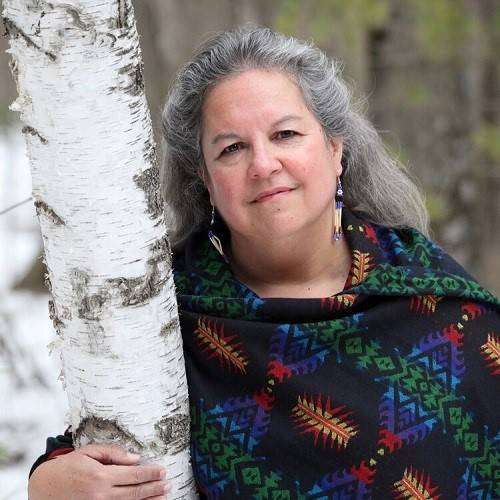
Robin Wall Kimmerer is a mother, scientist, decorated professor, and enrolled member of the Citizen Potawatomi Nation. She is the author of Braiding Sweetgrass: Indigenous Wisdom, Scientific Knowledge and the Teaching of Plants, which has earned Kimmerer wide acclaim. Her first book, Gathering Moss: A Natural and Cultural History of Mosses, was awarded the John Burroughs Medal for outstanding nature writing.
As a writer and a scientist, her interests in restoration include not only restoration of ecological communities, but restoration of our relationships to land. She holds a BS in Botany from SUNY ESF, an MS and PhD in Botany from the University of Wisconsin and is the author of numerous scientific papers on plant ecology, bryophyte ecology, traditional knowledge and restoration ecology.
EVENT AND BOOK
This special TICKETED virtual event is presented in partnership with For Love of Water (FLOW), a nonprofit dedicated to protecting and preserving the extraordinary and essential natural resources of the Great Lakes. Half of the proceeds from our ticket sales will go to FLOW to support their mission. We are also honored to welcome Chairman David M. Arroyo of the Grand Traverse Band of Ottawa and Chippewa Indians for a blessing at the beginning of our event, and the Botanic Garden at Historic Barns Park as a community partner.
As a botanist, Robin Wall Kimmerer has been trained to ask questions of nature with the tools of science. As a member of the Citizen Potawatomi Nation, she embraces the notion that plants and animals are our oldest teachers. In Braiding Sweetgrass: Indigenous Wisdom, Scientific Knowledge and the Teachings of Plants, Kimmerer brings these two lenses of knowledge together to take us on “a journey that is every bit as mythic as it is scientific, as sacred as it is historical, as clever as it is wise” (Elizabeth Gilbert).
Braiding Sweetgrass weaves together a central argument: that the awakening of a wider ecological consciousness requires the acknowledgment and celebration of our reciprocal relationship with the rest of the living world.
This event is made possible in part by a grant from the Michigan Humanities, an affiliate of the National Endowment for the Humanities.
GUEST HOST | MATTHEW L.M. FLETCHER

Matthew L.M. Fletcher is Foundation Professor of Law at Michigan State University College of Law and Director of the Indigenous Law and Policy Center. He has been a visiting professor at the University of Arizona Rogers College of Law, the University of Michigan Law School, the University of Montana Blewett School of Law, and Stanford Law School. He is a frequent instructor at the Pre-Law Summer Institute for American Indian students. He sits as the Chief Justice of the Poarch Band of Creek Indians Supreme Court and also sits as an appellate judge for the Colorado River Indian Tribes, the Hoopa Valley Tribe, the Mashpee Wampanoag Tribe, the Match-E-Be-Nash-She-Wish Band of Pottawatomi Indians, the Pokagon Band of Potawatomi Indians, the Nottawaseppi Huron Band of Potawatomi Indians, the Rincon Band of Luiseño Indians, the Santee Sioux Tribe of Nebraska, and the Tulalip Tribes. He is a member of the Grand Traverse Band of Ottawa and Chippewa Indians.
Indian Country DV Training @ Tule River

New Issue of the American Indian Law Journal, Vol. 9, No. 2
Here:
Current Issue: Volume 9, Issue 2 (2021)
Articles
In Defense of the Indian Commerce Clause
Stephen Andrews
The Time Is Now For The IACHR To Address Climate Action As A Human Right: Indigenous Communities Can Lead (Again)
Lara C. Diaconu
Unqualified? Investing In Qualified Opportunity Zones On Reservations
Ben Gibson
Beyond A Sliver Of A Full Moon: Acknowledging And Abolishing White Bias To Restore Safety & Sovereignty To Indian Country
Mary T. Hannon
Inuit Nunangat Regional Overlaps: Reciprocal Harvesting & Wildlife Management Agreements
Christopher M. Macneill
Rebalancing Bracker Forty Years Later
William McClure and Thomas E. McClure
Native Nations’ Land Ownership And Our Disservice To Their People And Culture A Proposed Legislative Solution And A Lesson To Be Learned
David E. Missirian
The Blind Eye: Jus Soli, And The “Pretended” Treaty Of New Echota
Christopher Robert Rossi
Case Law On American Indians
Thomas P. Schlosser
 Turtle Talk
You must be logged in to post a comment.