Columbia Law School Conference Honoring Prof. Derrick Bell This Saturday

via Constitutional Law Prof Blog (link includes schedule of events):

“A Living, Working Faith”:

Remembering Our Colleague
Derrick A. Bell, Jr.

602487050

at COLUMBIA LAW SCHOOL, NY, NY  on Saturday December 10th, 2011

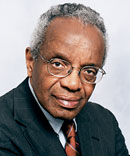
This one day conference organized by Professors Kendall Thomas and Penelope Andrews will honor the work of the late ConLawProf Derrick Bell.

This looks to be an excellent conference.

New Scholarship on U.S. v. Tohono O’odham Nation

Craig A. Schwartz has published Footloose: How to Tame the Tucker Act Shuffle After United States v. Tohono O’odham Nation in the UCLA Law Review Discourse.

The article has very little to do with Indian law, but demonstrates (if you read between the lines a bit) how the United States probably used all of the Indian claims cases now being dismissed en masse to also wipe out a class of claims based on regulatory takings. If the CFC “shuffle” case had arisen in the regulatory takings context, imagine how Scalia, J. would have reacted.

Recommended New Scholarship: Audrey MacFarland’s “The Properties of Instability”

We don’t usually recommend new scholarship that doesn’t really touch on American Indian Law in some way, but this paper struck a chord.

Audrey MacFarland has posted her paper, “The Properties of Instability: Markets, Predation, Racialized Geography, and Property Law,” which is forthcoming in the Wisconsin Law Review.

Here is the abstract:

A central, symbolic image supporting property ownership is the image of stability. This symbol motivates most because it allows for settled expectations, promotes investment, and fulfills a psychological need for predictability. Despite the symbolic image, property is home to principles that promote instability, albeit a stable instability. This Article considers an overlooked but fundamental issue: the recurring instability experienced by minority property owners in ownership of their homes. This is not an instability one might attribute solely to insufficient financial resources to retain ownership, but instead reflects an ongoing pattern, exemplified throughout the twentieth century, of purposeful involuntary divestment of land owned by members of racial minorities, particularly Black Americans. The subprime mortgage crisis, the most current manifestation of this involuntary land loss, can be attributed to property doctrine’s policy embrace of markets and importation of contract principles such as the “freedom of contract.” This embrace of markets and contracts ignores the reality that real estate markets are racially segregated, and due to the nature of those disparate markets, easily exploitable. The current racially concentrated subprime mortgage crisis has torn the stable property image apart by revealing longstanding truths: that fraud, exploitation, and desperation are not anomalous. These truths present a disquieting reality: that the persistent and enduring experience for minorities is instability. They also present an overlooked insight that there is a dark side of property ownership: that fraud, exploitation, and desperation are the bad that enables the good of property markets. Because this “bad” is both ubiquitous and geographically situated, it suggests that stability for some within the system of property ownership is provided at the expense of instability for others. This Article argues that we should begin to pay attention to an under-theorized stick in the bundle of property rights: “the right to keep.”

Recommended Garret Epps’ Paper on Employment Division v. Smith

Garrett Epps has posted his 1998 Arizona State Law Journal paper, “To an Unknown God: The Hidden History of Employment Division v. Smith.” He later expanded it into a powerful book, To an Unknown God: Religious Freedom on Trial. Both are highly recommended.

Here is the abstract:

The Supreme Court’s decision in Employment Division v. Smith, is once again the law of the land-and once again, “neutral, generally applicable laws may be applied to religious practices even when not supported by a compelling governmental interest.”

In City of Boerne v. Flores, the Court invalidated, at least as applied to State governments, the Religious Freedom Restoration Act (RFRA). RFRA was passed by Congress with the explicit aim of voiding Smith’s holding that “the right of free exercise does not relieve an individual of the obligation to comply with a ‘valid and neutral law of general applicability on the ground that the law proscribes (or prescribes) conduct that his religion prescribes (or proscribes).’ ”

The Smith doctrine was at least implicitly upheld by the six-Justice majority in Flores. The opinion not only restated the Smith rule, it further repeated the controversial “hybrid case” doctrine enunciated for the first time by Justice Scalia in Smith II: “The only instances where a neutral, generally applicable law had failed to pass constitutional muster, the Smith Court noted, were cases in which other constitutional protections were at stake.”

The Flores Court’s implied reaffirmation of Smith is remarkable because Smith was one of the most unpopular decisions in the Court’s recent history. Learned commentators have almost unanimously excoriated the Court’s result and rationale.” Journalistic commentators have been scathing. The United States Congress expressed its opinion of the decision in unmistakable terms by its passage of not one but two statutes purporting to void the result. Besides RFRA, which mentions Smith II by name, Congress in 1994 also passed amendments to the American Indian Religious Freedom Act that mandate an exemption from state and federal drug laws for religious use of peyote by Native Americans. Despite this repudiation, the Court has seemingly embraced Smith II once again. The time is more than ripe, therefore, for an examination of the case that has brought us to this point.

In 1994, I set out to find and document the actual people and decisions that created the case. The technique I used is familiar to historians – oral interviews designed to supplement and illuminate the written record.’ The use of “oral history” is designed to elicit the kind of information often omitted by those who prepare written documents.

Part II of this Article is a summary of Al Smith’s remarkable life, much of it in his own words; a brief profile of Galen Black, his Anglo co-claimant; and an account of the career of Smith’s tenacious adversary, Dave Frohnmayer. Part III provides an introduction to the legal and constitutional background in Oregon at the time the case arose, with emphasis on the violent encounter between the State and the religious commune in eastern Oregon known as Rajneeshpuram. Part IV details the dispute that led to the dismissal of Black and Smith. Parts V-VII consider the case in its first iteration through state courts and the U.S. Supreme Court. Part VIII details the extraordinary efforts at settlement of the case that took place shortly before oral argument in Smith II. Part IX describes oral argument from the point of view of the participants. Part X analyzes the response to Smith II, in Oregon and across the nation. In my Conclusion, I argue that the difficulties our legal system has had in dealing with Smith II are but a foretaste of coming religion cases, as our courts grapple with the Free Exercise Clause-our Constitution’s altar to an unknown god.

Univ. of Michigan Native Heritage Month Events (Including Talks by Fletcher & Singel, 11/21)

Click to make it bigger.

Continue reading

Call for Papers: Seattle Journal of American Indian Law

A new on-line publication has been approved for provisional status at the Seattle University School of Law, called the Seattle Journal of American Indian Law (“Journal”). To earn full accreditation, an internal trial issue will be published and circulated within the Law School. The trial issue will show the faculty and administration the caliber of substance and high level of scholarship the Journal would provide.

The editorial Board of the Journal is currently seeking articles for the trial issue. Because it is still a trial issue, they will not seek rights to any submitted content. They are looking for shorter articles, and the due date for submitting confirmation of interest and an abstract is November 20, 2011.

If interested, or if you have any questions about the Journal, please contact Stacy DeMass at demasss@seattleu.edu.

Indigenous Law Journal 2012 Call for Papers

Here.

Call for Submissions Winter 2012

Elizabeth Kronk on Tribal Energy Resource Agreements

Elizabeth Kronk has posted her paper, “Tribal Energy Resource Agreements: ‘[A] Great Mischief for Indian Energy Development’ and the Resulting Need for Reform,” on SSRN.

Here is the abstract:

Today, despite political acrimony on many domestic issues, both political parties and the majority of the American public seem to agree that the country should find new, domestic sources of energy. When looking for potential domestic energy resources, Indian country stands out as ideal territory for various types of energy development, as “[t]he Bureau of Indian Affairs estimates that while Indian land comprises only five percent of the land area in the United States, it contains an estimated ten percent of all energy resources in the United States.” In addition to traditional energy resources, Indian country also has substantial potential to provide alternative energy resources. Recognizing the potential key role that tribes will play in the development of the country’s domestic energy resources, Congress and federal agencies recognize that tribes should be included in future plans to develop energy resources. Moreover, many tribes are also interested in energy development to potentially promote tribal sovereignty and self-determination when it can be done in a manner that is consistent with tribal customs and traditions.

Recognizing the many potential benefits of increased energy development in Indian country, the Energy Policy Act of 2005 includes a provision designed to spur energy development in Indian country, Tribal Energy Resource Agreements (TERAs). Assuming a federally-recognized tribe can meet the numerous established criteria, the tribe may enter into a TERA with the Secretary of Interior. Once a TERA exists, the tribe is responsible for managing energy development within its territory. Additionally, TERAs allow tribes to avoid some federal requirements, such as project compliance with the National Environmental Policy Act (although the tribe must put an environmental assessment program into place before a TERA will be approved). Despite these incentives, no tribe to date has entered into a TERA.

The article explores the reasons for the lack of tribal interest in TERAs. In particular, the article focuses on the provision that waives federal liability once a tribe has entered into a TERA. The article concludes that this waiver of federal liability is a significant contributor to the lack of tribal interest in TERA provisions. Because the article assumes that energy development in Indian country is beneficial to both tribal governments and the federal government and the TERA provisions should, therefore, be reformed to spur tribal interest, the article proposes potential solutions or TERA reforms that would likely lead to increased tribal interest. The proposed reforms include re-establishing federal liability under TERA agreements, or, in the alternative, removing all federal requirements placed upon the tribes through the TERA provisions in order to allow tribes to exercise true sovereignty. The article ultimately concludes that any one of the proposed revisions should spur tribal interest in the TERA provisions.

M. Brent Leonhard on an Oliphant Fix

M. Brent Leonhard has posted his paper, “Closing a Gap in Indian Country Justice: Oliphant, Lara, and DOJ’s Proposed Fix,” on SSRN.

Here is the abstract:

This paper analyzes whether DOJ’s proposed legislative fix to allow tribes to prosecute limited non-Indian domestic violence crimes is legally permissible by closely analyzing the decisions in Oliphant and Lara. Given the closely circumscribed requirements for the exercise of such power, and past decisions of various justices, this article concludes that it is within Congress’ power to recognize the inherent power of tribes to prosecute non-Indians for domestic violence crimes against Indians.

Brent Leonhard on PL 280 Retrocession in Washington State

M. Brent Leonhard has posted his paper, “Returning Washington PL 280 Jurisdiction to its Original Consent-Based Grounds,” on SSRN . It is forthcoming in the Gonzaga Law Review.

Here is the abstract:

When enacted in 1953, President Eisenhower expressed “grave doubts” about provisions of Public Law 83-280 (PL 280) that allowed a state to assert jurisdiction over Indian country without tribal consent. Consistent with President Eisenhower’s doubts, the State of Washington enacted legislation in 1957 to assert PL 280 jurisdiction over Indian country provided a tribe requested the State exercise such power. However, in 1963 the State amended its law and baldly asserted limited PL 280 jurisdiction over all of Indian country regardless of tribal consent. Five years later, recognizing the inappropriateness of non-consensual assertions of state authority over tribes, the federal government amended PL 280 in 1968 to require tribal consent and to create a path for retrocession of state authority. Despite changes in federal law, the State of Washington has never acted to rectify its assertion non-consensual authority over tribal nations.

In the 2011 Washington legislative session a joint executive-legislative workgroup on tribal retrocession was formed to study the desirability of enacting a law that would require the State to retrocede PL 280 jurisdiction back to the federal government when specifically requested by an affected tribe. This paper advocates for such changes in Washington’s law, which would effectively return the law to its original consent-based grounds. In doing so, it explains how Indian country criminal jurisdiction would work with such changes, how it currently works under PL 280 generally and Washington specifically, and why a mandatory retrocession provision ought to be adopted for both moral and pragmatic reasons.