Literary Scholarship on the White Earth Revised Constitution Ostensibly Drafted by Gerald Vizenor

Here are a pair of articles about a constitution drafted at White Earth by a team headed by Gerald Vizenor.

Lisa Brooks article

David Carlson article

These are from the most recent issue of Studies in American Indian Literatures. I have a book review in the same issue of Vizenor’s Native Liberty:

Fletcher review


“The Eagle Returns” Noted in Indian Country Today’s Books Recommended for 2012 New Year

Here. An excerpt:

A new year has begun, and with it comes a crop of intriguing new books. From the first indigenous science fiction anthology, to studies of American Indian history, to a memoir or two, here is a sampling of what’s in store for the first few months of 2012.

Readers interested in the law awoke to a new find on January 1: erstwhile attorney and Turtle Talk blogger Matthew L.M. Fletcher’s The Eagle Returns: The Legal History of the Grand Traverse Band of Ottawa and Chippewa Indians (Michigan State University Press). It may sound a tad scholarly for a post-holiday-torpor read, but the book itself covers beginnings, as it recounts the struggle of a group bound by kinship, geography and language to become self-governing again. It’s a handy reference for people who need to know more about how the Grand Traverse Band held its own to preserve its culture, language and other existential corner­stones in the face of legal and other intangible attempts to eradicate same.

Read more:http://indiancountrytodaymedianetwork.com/2012/01/15/whetting-the-literary-appetite-books-to-jump-start-your-reading-year-70480 http://indiancountrytodaymedianetwork.com/2012/01/15/whetting-the-literary-appetite-books-to-jump-start-your-reading-year-70480#ixzz1jjsJFbZE

Announcing the 2012 ILPC Spring Speaker Series

Each spring, we host a series of events to celebrate and discuss selected new books involving American Indian law and policy. Here is our Spring 2012 schedule:

January 23rd, 2012, 2:00 pm

This event will be held in Room 474 of the Law School as part of a first year class in Property

Author:

Kali Murray

Integrating Spaces: Property Law and Race

Commentator:

Prof. Kristi Bowman (MSU Law)

February 21, 2012, 2:00 pm (Castle Board Room)

Authors:

Kaighn Smith Jr.

Labor and Employment Law in Indian Country

David Kamper

The Work of Sovereignty: Tribal-Labor Relations and Self-Determination at the Navajo Nation

Commentators:

Prof. Wenona T. Singel (MSU Law)

Continue reading

Cheyanna Jaffke on the Existing Indian Family Exception in the Age of Obama

Cheyanna Jaffke has posted her paper, “Judicial Indifference: How Does the ‘Existing Indian Family’ Exception to the Indian Child Welfare Act Continue to Endure in the Age of Obama?”on SSRN. Here is the abstract:

Even though Congress created the Indian Child Welfare Act (ICWA) over thirty years ago to preserve the relationship between tribes and their members, courts created, and some continue to use, the “existing Indian family” exception to avoid application of the ICWA to children and/or parents that the courts do not believe are Indian-enough for the ICWA. The continued use of the “existing Indian family” exception shows that there is either judicial laziness, indifference, or intolerance fueling the application of the “existing Indian family” exception and blemishes those states that choose to continue to apply it.

This article first discusses the need for the ICWA after a long period between the 1800s and the 1970s wherein United States policy was to attempt to assimilate American Indian children by removing 25-35% of all American Indian children from their American Indian homes and tribes and place them with non-American Indian families.

Next, the article sets forth the pertinent provisions and application of the ICWA and argues that the ICWA is still necessary because courts are seeking to remove American Indian children from their homes and place them with non-American Indian families.

The article next sets forth the “existing Indian family” exception, phoenix-like birth, death, and subsequent resurrection into United States law.

This article discusses the need to reject the “existing Indian family” exception because it ignores the plain language of the ICWA, perpetuates stereotypes and the assimilation of American Indians, ignores tribal interests, and provides inconsistency in the application of the ICWA.

New Mexico Bar Journal Article on Navajo Nation Preference Laws and the EEOC

Here.

Yale Law Journal Comment on the OSG’s Certiorari Decisionmaking

Here.

National NALSA Indian Law Writing Competition

11th Annual NNALSA Writing Competition

Hosted by Lewis and Clark Law School NALSA Chapter

 Submission Deadline: 5:00 pm PST, January 15, 2012.

All submissions must be electronically submitted to nalsacomp@lclark.edu.

The purpose of the competition is to recognize excellence in legal research and writing related to Indian law,  actively encourage the development of writing skills of NNALSA members, and enhance substantive knowledge in the fields of Federal Indian Law, Tribal Law and traditional forms of governance. The competition is open to matriculated law students at any point in their law school career and regardless of race or tribal membership status. Eligible topics are Federal Indian law and policyTribal law and policy,International law and policy concerning indigenous peoples, and Comparative Law (i.e intertribal or government-to-government studies). Existing work is welcomed.

  • First Prize – $1000.00 – Sponsored by Hobbs, Straus, Dean & Walker
  • Second Prize –  $500.00 – Sponsored by SNR Denton
  • Third Prize – $250.00 – Sponsored by Sonosky, Chambers, Sachse, Endreson & Perry

All awardees will also be recognized at the National NALSA yearly conference.

Writing Competition general information

Registration Form (please email nalsacomp@lclark.edu for the .doc version)

Writing Competition Rules

Special Issue of Environmental Justice (“Environmental Justice in Native America”) Now Available

Edited by MSU prof Kyle Whyte.

Table of contents here.

Articles by Jim Grijalva, Sarah Krakoff, and several others.

Charles Cleland’s New Book: “Faith in Paper: The Ethnohistory and Litigation of Upper Great Lakes Indian Treaties”

Charles Cleland’s heavily anticipated new book (Univ. of Michigan Press website here) is now available! I’ve read the first few chapters and it’s wonderful.

Here is the book blurb:

Faith in Paper examines the reinstitution of Indian treaty rights in the upper Great Lakes region during the last quarter of the twentieth century, focusing on the treaties and legal cases that together have awakened a new day in Native American sovereignty and established the place of Indian tribes in the modern political landscape. The book discusses the development of Indian treaties in historic time and their social and legal context; specific treaties regarding hunting, fishing, and gathering rights as well as reservation issues; and the impact of treaty litigation on the modern Indian and non-Indian communities of the Great Lakes region. The book is both an important contribution to the scholarship of Indian legal matters and a rich resource for Indians themselves as they strive to retain or regain rights that have eroded over the years.

And here is the Traverse City Record-Eagle news coverage of the release of the book. An excerpt:

Written over the last five years, this 390-page book is the first comprehensive examination of 18 primary and 21 secondary treaty court cases in Michigan, Wisconsin and Minnesota. Cleland was the only person to be involved in all of the cases.

The decisions significantly changed perceptions of Native American tribes and their fishing, hunting and gathering rights, Cleland said.

The treaties gave Native Americans a different status under the law than other Americans, he said. Native Americans had always had fishing, hunting and gathering rights. The rights were not granted by the state or federal government.

“The string of court victories gave today’s Indians a legitimacy in the eyes of the larger population,” Cleland said. “It gave them a newfound political sovereignty, real clout and power.”

State governments claimed the treaties were “dead” and irrelevant at the time the cases were filed.

The Michigan Department of Natural Resources argued that the state had a right to regulate tribal fishermen who used gill nets because Michigan had banned the nets in the 1960s.

State attorneys also claimed that the nets were not native technology but introduced by the French in the early 17th century.

But Cleland’s 1966 dissertation, “The Prehistoric Animal Ecology and Ethnozoology of the Upper Great Lakes Region,” noted that Michigan’s earliest Native Americans had been using the nets at least 1,000 years before European contact.

U.S. District Judge Noel Fox reaffirmed treaty rights for Michigan’s federally recognized Ottawa and Chippewa tribes in a landmark 1979 ruling.

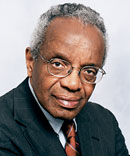
Columbia Law School Conference Honoring Prof. Derrick Bell This Saturday

via Constitutional Law Prof Blog (link includes schedule of events):

“A Living, Working Faith”:

Remembering Our Colleague
Derrick A. Bell, Jr.

602487050

at COLUMBIA LAW SCHOOL, NY, NY  on Saturday December 10th, 2011

This one day conference organized by Professors Kendall Thomas and Penelope Andrews will honor the work of the late ConLawProf Derrick Bell.

This looks to be an excellent conference.