MSU Press Publishes New Work on Tribal Administration

Rebecca M. Webster and Joseph Bauerkemper have published their edited collection “Tribal Administration Handbook: A Guide for Native Nations in the United States.”

Blurb:

A direct response to the needs and ambitions articulated by tribal administrators and leaders, this handbook seeks to serve practitioners, students, researchers, and community members alike. It grew out of an ongoing collaboration among scholars and practitioners from tribal nations, universities, tribal colleges, and nonprofit organizations who are developing practical and teaching resources in the field of tribal administration and governance. Designed as a readable, accessible volume, it focuses on three key areas: tribal management, funding and delivering core services, and sovereign tribes engaging settler governments. While the chapters complement one another by presenting a coherent and unified constellation of voices that illuminates a shared terrain of practical Indigenous governance, each chapter ultimately stands alone to accommodate a variety of needs and interests with specific best practices, quick-reference executive summaries, and practitioner notes to aid lesson applications. This humble collection of remarkable voices initiates a conversation about tribal administration that will hopefully continue to grow in service to Native nations.

American Indian Law Journal, Volume 10, Issue 2

Here:

Current Issue: Volume 10, Issue 2 (2022)

Articles

PDF

Extraction of Personal Data: A New Form of Colonialism or Continuation of a Colonial Practice? Adult Native American Adoptees Resist Assimilation and Rebuild Erased Identities
Leonard Mukosi

PDF

Crossing the Dark and Fearful River: Monsanto, PCBs, and Emerging Tort Theories
Keith Dornan and Jamie Hearn

PDF

Case Law on American Indians
Thomas P. Schlosser

PDF

The Rule Against Hearsay, Indigenous Claims and Story-Telling as Testimony in Canadian Courts
Zia Akhtar

PDF

A Watershed Moment: The Health and Economic Impact of Water Sustainability in the Navajo Nation Post Pandemic
Onnaedo Nwankwo

Hinton and Giles on Native Reflections on Dawnland

Michael-Corey F. Hinton and Erick J. Giles have published “Eli-Tpitahatomek Tpaskuwakonol Waponahkik (How We, Native People, Reflect on the Law in the Dawnland)” in the Maine Law Review.

The abstract:

Multiple nations within the Wabanaki Confederacy, including the Maliseet Nation, Mi’kmaq Nation, Passamaquoddy Tribe, and Penobscot Nation, were signatories to the July 19, 1776 Treaty of Watertown, which was the first ever treaty entered into by the United States of America following the Declaration of Independence. Following the Treaty of Watertown, Wabanaki warriors served directly under General George Washington and made critical contributions in support of the Americans’ Revolutionary War. Such contributions were made based on the Americans’ promise that the Wabanaki Nations’ lands, natural resources, and traditional ways of life would be forever protected by the fledgling United States. Unfortunately for the Wabanaki Nations, their Revolutionary War-era promises were largely disregarded as the Commonwealth of Massachusetts and then the State of Maine systematically oppressed their indigenous inhabitants by ignoring an emerging body of federal law, based on the Doctrine of Discovery, which was intended to protect those very indigenous people. This Article delves into this complex history by exploring the Doctrine of Discovery, historical dealings between the Wabanaki and the Americans, and the events and court cases leading up to the enactment of the Maine Indian Claims Settlement Act (MICSA), which resolved Wabanaki land claims against the State of Maine for the illegal taking of tribal lands. This Article then analyzes the legislative history and text of the MICSA and juxtaposes this record with federal common law interpreting the rights of federally recognized Tribal nations. Finally, this Article argues that federal common law interpreting the rights of Tribal nations should be relied upon when interpreting the scope of specific Wabanaki rights that were never ceded or relinquished in treaties or in the MICSA.

Roger Williams Law Review Symposium: An Uncomfortable Truth, Indigenous Communities and Law in New England

Here:

Roger Williams would have been the keynote speaker at this event.

PDF

Mohegan Women, the Mohegan Church, and the Lasting of the Mohegan Nation
Bethany R. Berger and Chloe Scherpa

PDF

An Uncomfortable Truth: Law as a Weapon of Oppression of the Indigenous Peoples of Southern New England
James D. Diamond

PDF

Uncomfortable Truths About Sovereignty and Wealth
Matthew L.M. Fletcher

PDF

Returning Home and Restoring Trust: A Legal Framework for Federally Non- Recognized Tribal Nations to Acquire Ancestral Lands in Fee Simple
Taino J. Palermo

PDF

The Continued Impact of Carcieri on the Restoration of Tribal Homelands: In New England and Beyond
Bethany Sullivan and Jennifer Turner

PDF

Colonial Legislation Affecting Indigenous Peoples of Southern New England as Organized by State
James D. Diamond

Masthead

PDF

Vol 27: No. 2 (Spring 2022)

Notes and Comments

PDF

Resisting Indigenous Erasure in Rhode Island: The Need for Compulsory Native American History in Rhode Island Schools
Whitney Saunders

High Country News on SCOTUS and Indian Law Post-Castro-Huerta Featuring Leeds, Reese, Fletcher, Berger

Here is “The Supreme Court’s attack on tribal sovereignty, explained” by Nick Martin.

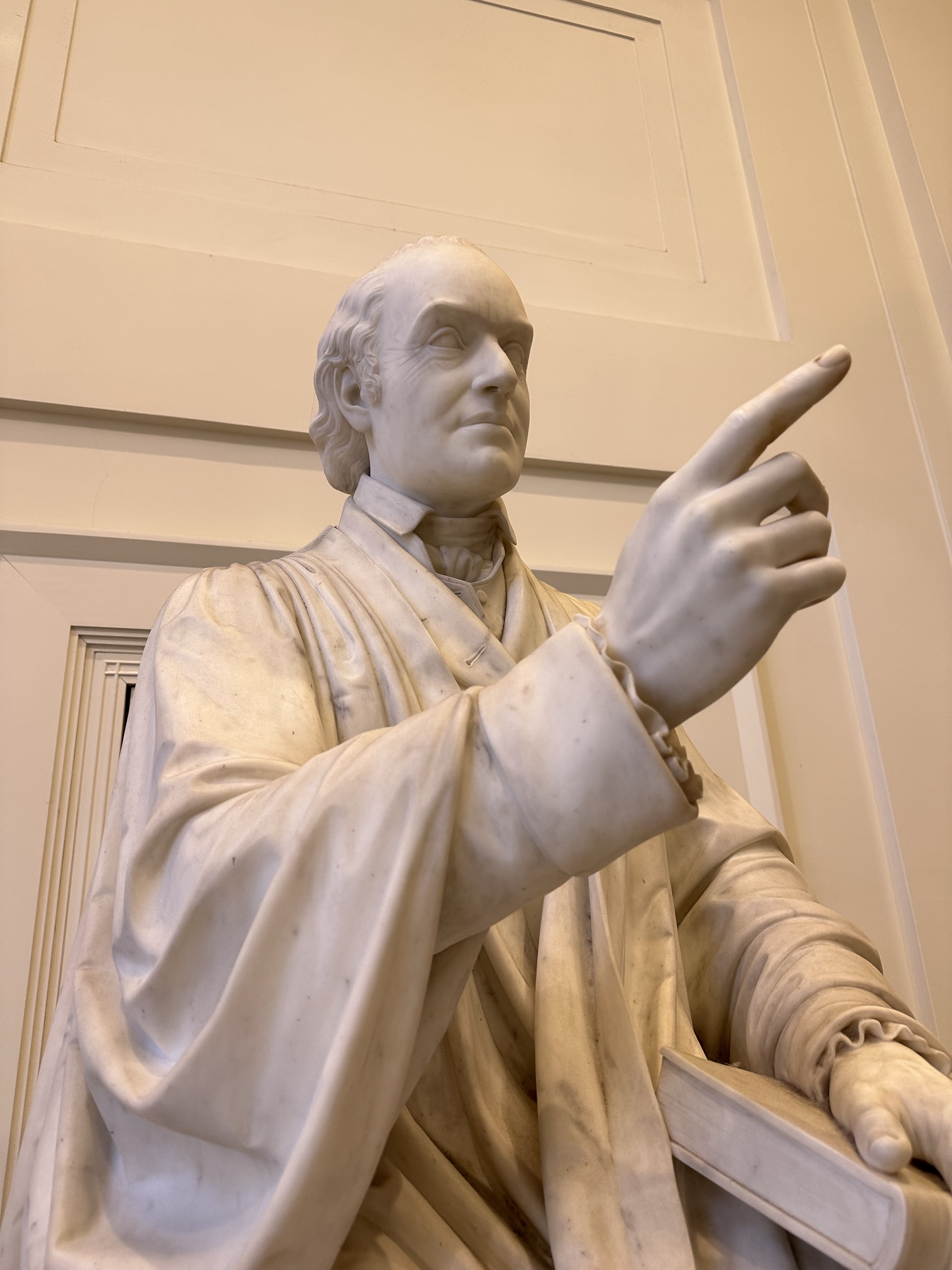
Thurgood Marshall

Student Scholarship on McGirt and Aboriginal Title

Clare Blumenthal published “‘We Hold the Government to Its Word’: How McGirt v. Oklahoma Revives Aboriginal Title” in the Yale Law Journal.

Here is the abstract:

This Note analyzes for the first time how McGirt v. Oklahoma could revive aboriginal-title land claims against the United States and create an opening for Land Back litigation. It argues that McGirt directs lower courts to enforce aboriginal title’s congressional-intent requirement strictly and renews the relevance of an overlooked case from 2015, Pueblo of Jemez v. United States. In Pueblo of Jemez, the Tenth Circuit unknowingly demonstrated how insisting on clearer proof of congressional intent to extinguish title would implement McGirt’s holding and remove the jurisdictional bars—sovereign immunity and preclusion—that have prevented aboriginal-title litigation.

New Scholarship on the Persistence of Tribal Sovereignty

Seth Davis, Eric Biber & Elena Kempf have published “Persistent Sovereignties” in the University of Pennsylvania Law Review. Here is the abstract:

From the first days of the United States, the story of sovereignty has not been one of a simple division between the federal government and the states of the Union. Then, as today, American Indian tribes persisted as self-governing peoples with ongoing and important political relationships with the United States. And then, as today, there was debate about the proper legal characterization of those relationships.
The United States Supreme Court confronted that debate in McGirt v. Oklahoma when, in an opinion by Justice Neil Gorsuch, it held that the reservation of the Muscogee (Creek) Nation “persists today.” The Court’s recognition of the persistence of Tribal sovereignty triggered a flurry of critical commentary, including from federal lawmakers who share Justice Gorsuch’s commitment to originalism. But the early history of federal Indian law supports the persistence of tribal sovereignty.

Tulsa Law Review Indian Law Symposium Issue

Here are the Indian law articles:

Article

PDF

Restoring Oklahoma: Justice and the Rule of Law Post-McGirt
Sara E. Hill

PDF

Digital Economic Zones: A Program for Comprehensive Tribal Economic Sovereignty
W. Gregory Guedel and Philip H. Viles Jr.

PDF

Lessons Learned, Lessons Forgotten: A Tribal Practitioner’s Reading of McGirt and Thoughts on the Road Ahead
Stephen H. Greetham

Blast from the distant past (2018), Sara and Stephen on the left prepping for a TICA panel on what was then known as Murphy v. Carpenter.

New Scholarship on Linguistic Methods for Revitalizing Indigenous Laws

Naiomi Metallic has posted “Five Linguistic Methods for Revitalizing Indigenous Laws,” forthcoming in the McGill Law Journal, on SSRN. Here is the abstract:

Building on the ground-breaking work on the revitalization of Indigenous laws ongoing over the past decade, this article seeks to contribute to our understanding of how Indigenous languages can be used to recover Indigenous laws. It posits that there is not one single linguistic method, but at least five: 1) the ‘Meta-principle’ method; 2) the ‘Grammar as revealing worldview’ method; 3) the ‘Word-part’ method; 4) the ‘Word-clusters’ method; and 5) the ‘Place names’ method. Using the Mìgmaq language to illustrate, the article explains each method and provides examples of how they can be used to inform Indigenous law revitalization. The article also shows that one does not have to be a fluent, first-language speaker to engage with linguistic methods for Indigenous law revitalization, by highlighting the various published resources like dictionaries and lexicons, reference and teaching texts, atlases, and more, that can be harnessed to engage in this work. This makes engaging with the linguistic methods accessible to the many Indigenous peoples who, because of the impacts of colonialism, are only starting to re-learn their Indigenous language. This revelation should give greater confidence to the non-fluent that they too can play a role in the revitalization of both their language and laws.

Highly recommended.

American Indian Law Review, Volume 46, Issue 1

Here:

Current Issue: Volume 46, Number 1 (2022)

PDF

Front Pages

Article

PDF

Belated Justice: The Failures and Promise of the Hawaiian Homes Commission Act
Troy J.H. Andrade

Comments

PDF

Learning from Hobby Lobby’s Misdeeds: Crafting New International Due Diligence Standards for Human Rights and Cultural Heritage
Taryn Chubb

PDF

Missing and Murdered: Finding a Solution to Address the Epidemic of Missing and Murdered Indigenous Women in Canada and Classifying It as a “Canadian Genocide”
Melanie McGruder

Notes

PDF

The Mess That Has Become Indian Gaming in Oklahoma
Lucas Meacham

PDF

A Case for Deference in American Indian Health Law
Ashley Murphy

Special Feature

PDF

Meeting the McGirt Moment: The Five Tribes, Sovereignty & Criminal Jurisdiction in Oklahoma’s New Indian Country
Adam Goodrum