Bailey Ulbricht on Indigenous Data Sovereignty

Bailey Ulbricht has published “Actualizing Indigenous Data Sovereignty Through Tribal Self-Governance” in the New Mexico Law Review.

Here is the abstract:

Data, as described by a Yurok Tribe council member, is “the original theft”—the first thing stolen from Native peoples in the United States. Indigenous data sovereignty seeks to redress this and prevent future data infractions by placing Indigenous communities in charge of decision-making about their own data. Yet with no established body of federal case law on tribal data authority, it is not immediately clear how Indigenous data sovereignty would fit within the complex and contradictory web of federal caselaw that confines tribes’ inherent sovereignty. This Article seeks to address this gap. First, as a policy matter, it argues that tribes are best suited to govern their own data. To illustrate this claim, this Article relies on interviews conducted with members and employees of the Yurok Tribe, the largest tribe in California, to explain what data sovereignty means to them and why it matters for tribal self-governance, economic security, cultural preservation, and the Tribe’s health and welfare. Second, as a legal matter, this Article lays out the favorable case for tribal authority to enforce tribal data sovereignty laws and policies against non-tribal members under each exception within the Montana framework. In anticipation of concerns about how to locate transient data or placeless activity, this Article proposes that federal and tribal courts use the Calder effects test, which assesses intentional forum-targeting in non-tribal cases. Finally, this Article concludes with a set of recommendations for tribes seeking to actualize their data sovereignty and for federal courts that may review future cases involving data sovereignty.

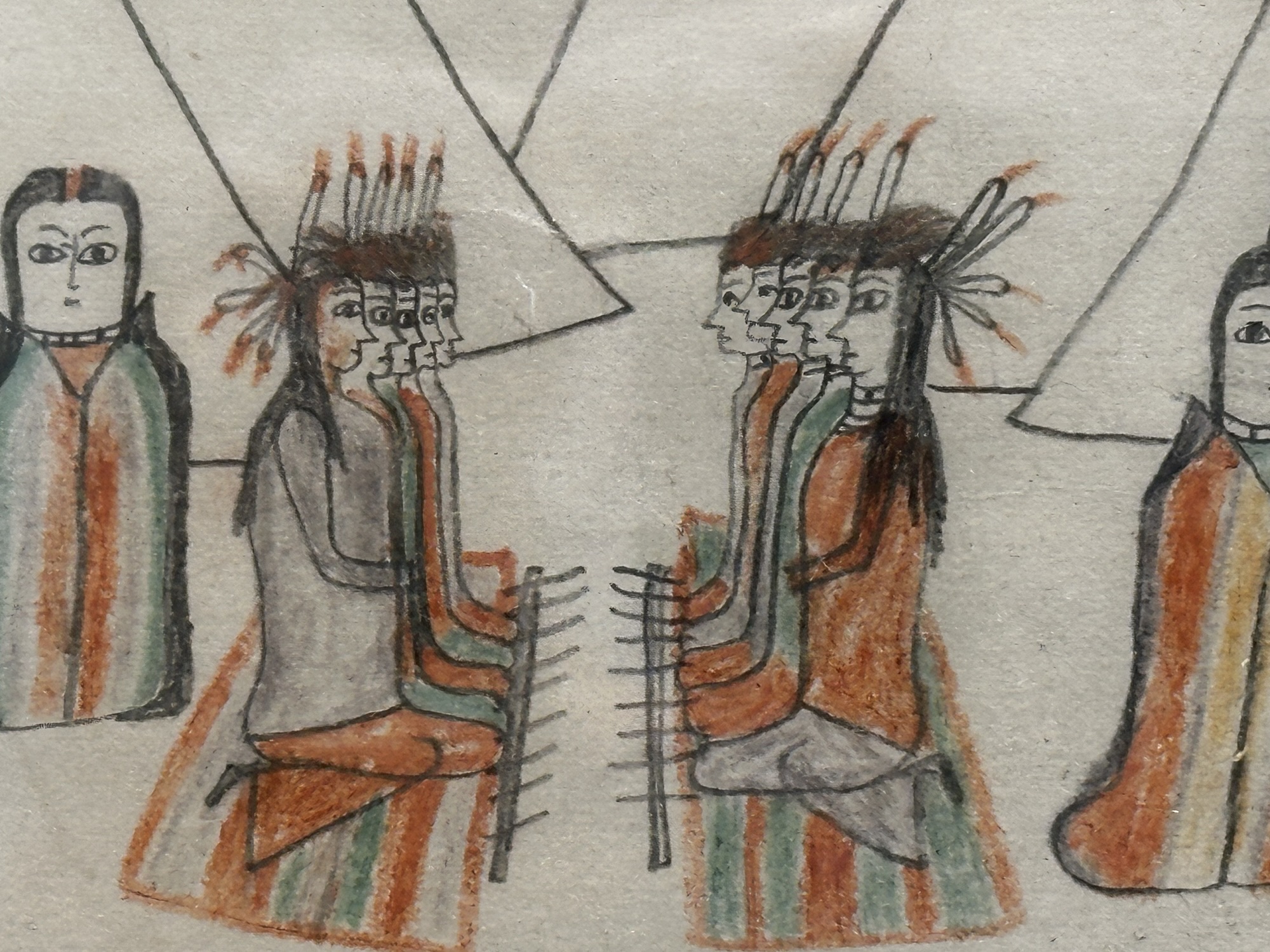
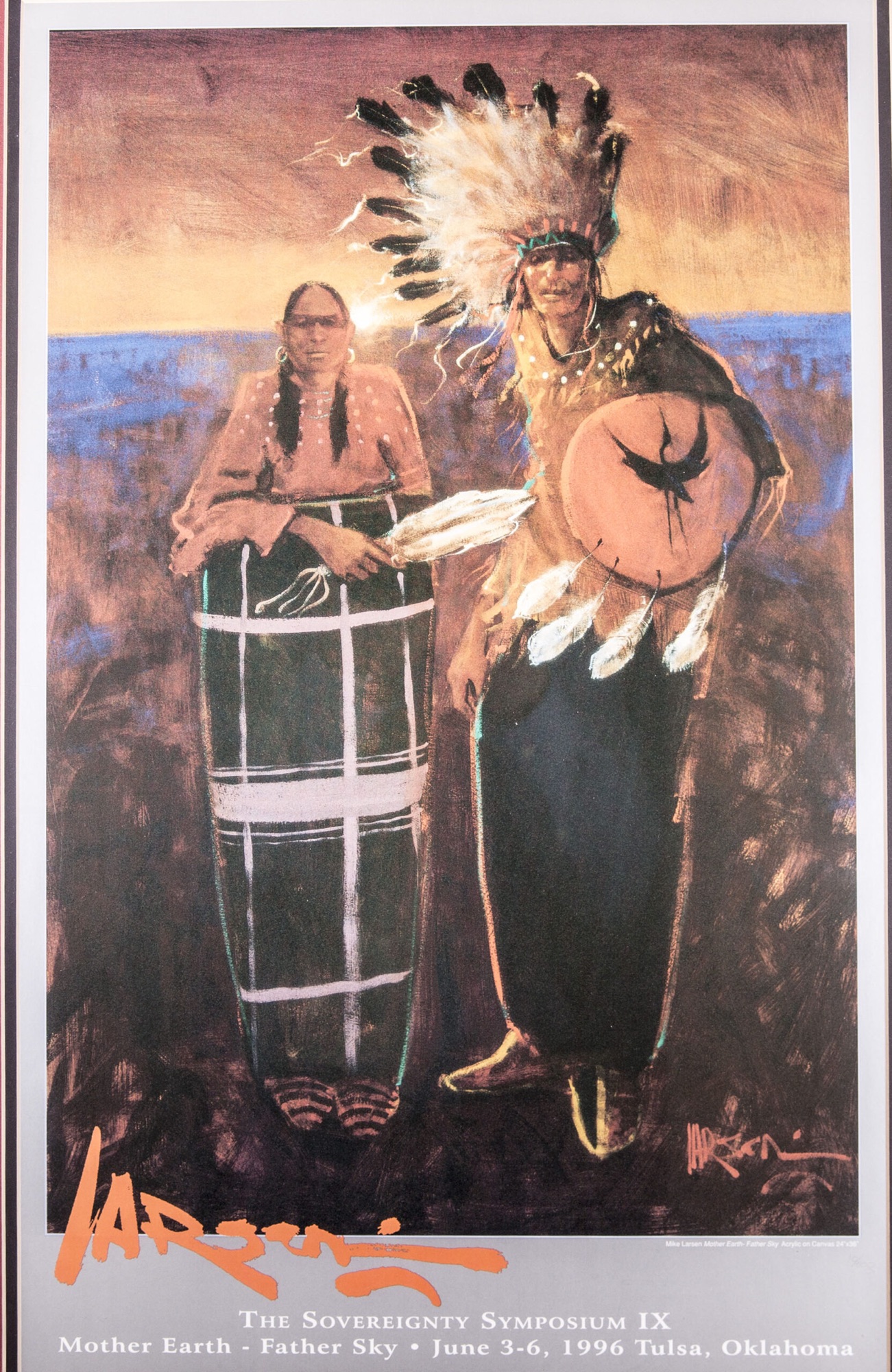
This is Hoopa, not Yurok, ICYW.

John Beaty on Tribal Eminent Domain

John Beaty has published “Tribal Eminent Domain: Sovereignty Gaps and Policy Solutions” in the New Mexico Law Review.

Here is the abstract:

This Article addresses the existence and scope of the tribal power of eminent domain. American Indian Tribes are sovereign entities within the United States and can exercise many traditional government powers. However, centuries of actions by the United States’ executive, legislative, and judicial branches have eaten away at the fabric of tribal sovereign powers. Currently, the scope of tribal sovereign authority is unclear with regards to eminent domain, the practice of a sovereign taking private property for public use. Eminent domain is important to many tribal governmental interests, including infrastructure development and fighting the fractionation of land interests. Although eminent domain is considered a quintessential sovereign power, scholars, courts, and tribes are unsure of the existence and scope of inherent eminent domain. This Article uses first principles, statutory enactments, tribal practice, and case law to argue that tribes retain some form of eminent domain. However, that power has limited application to nonmembers living on tribal land, hampering its effectiveness as both a practical tool and sovereign power. To fill the gaps, this Article proposes two statutes Congress can adopt, one reaffirming the existence of tribal eminent domain power and one delegating federal eminent domain power. By addressing the limits of tribal eminent domain, Congress can support tribes in their sovereign capacity as governments and allow tribes to fulfill their important policy priorities.

Manuel Lewis (UMLS) on Tribal Sovereignty and the Decline of the Administrative State

Manuel Lewis has posted “The Decline of the Administrative State and its Potential Effects on Tribal Sovereignty” on the Michigan Journal of Environmental and Administrative Law’s blog.

An excerpt:

The federal government of the United States, including federal agencies, owes a trust responsibility to Tribes. The contemporary federal administrative state has given greater authority over agency decisions to the federal judiciary while simultaneously reducing government funding for various agencies’ operations. As a result, it is unclear that the federal government will continue to adhere to its trust responsibility in agency actions. Failure to account for Tribal governments in the current administrative state is a violation of the United States’ duty to Tribes and calls for greater advocacy to ensure the protection of Tribal interests—both in federal agencies and in federal courts.

This bullshit AI art is no reflection on Manny’s great work. (Look at those cheeks!)

New Student Scholarship on Anishinaabe Treaty Rights and Bad River’s Suit against Enbridge Line 5

Delaney Kelly has published ““We Stand With the Water”: Ojibwe Treaty Rights, the Walleye Wars, and the Imminent Threat of Enbridge’s Line 5” in the Drake Journal of Agricultural Law.

Here is the abstract:

Enbridge Energy’s crude oil pipeline, known as Line 5, currently poses a serious threat to the vitality of the Bad River in Wisconsin and the Great Lakes more broadly. Its construction threatens centuries old treaty rights of Ojibwe nations. Line 5 has been the subject of protest and extensive legal action over the past decade. This Note analyzes the legal claims leveraged by various Ojibwe nations against Enbridge. First, it considers the history of the Ojibwe people in the Midwest region and the treaties forged between the United States and Ojibwe leaders, which enshrined rights to hunt, fish, and gather on both reservation and ceded territory. Then, it analyzes the attempted forced removal of the Ojibwe by the federal government, despite these treaties. Next, it details early twentieth century criminalization of the exercise of the right to hunt, fish, and gather, and the legal battle to exercise those reserved rights. Then, it discusses the Walleye Wars of the late twentieth century. Finally, this Note describes how the contemporary legal battle against Enbridge’s Line 5 builds upon this legacy, arguing that the environmental threat posed by the pipeline inhibits the ability to exercise reserved treaty rights, and threatens the vitality of the land.

Ablavsky and Berger on Birthright Citizenship and Elk v. Wilkins

Gregory Ablavsky and Bethany Berger have posted “Subject to the Jurisdiction Thereof: The Indian Law Context,” forthcoming in the NYU Law Review Online, on SSRN.

Here is the abstract:

Section 1 of the Fourteenth Amendment provides that “All persons born or naturalized in the United States, and subject to the jurisdiction thereof, are citizens of the United States and of the State wherein they reside.”  Much of the debate over the meaning of this provision in the nineteenth century, especially what it meant to be “subject to the jurisdiction” of the United States, concerned the distinctive status of Native peoples—who were largely not birthright citizens even though born within the borders of United States.  

It is unsurprising, then, that the Trump Administration and others have seized on these precedents in their attempt to unsettle black-letter law on birthright citizenship. But their arguments that this history demonstrates that jurisdiction meant something other than its ordinary meaning at the time—roughly, the power to make, decide, and enforce law—are anachronistic and wrong. They ignore the history of federal Indian law.

For most of the first century of the United States, the unique status of Native nations as quasi-foreign entities was understood to place these nations’ internal affairs beyond Congress’s legislative jurisdiction. By the 1860s, this understanding endured within federal law, but it confronted increasingly vocal challenges. The arguments over the Fourteenth Amendment, then, recapitulated this near century of debate over Native status. In crafting the citizenship clause, members of Congress largely agreed that jurisdiction meant the power to impose laws; where they heatedly disagreed was whether Native nations were, in fact, subject to that authority. Most concluded they were not, and in 1884, in Elk v. Wilkins, the Supreme Court affirmed the conclusion that Native nations’ quasi-foreign status excluded tribal citizens from birthright citizenship. 

But the “anomalous” and “peculiar” status of Native nations, in the words of the nineteenth-century Supreme Court, means that the law governing tribal citizens cannot and should not be analogized to the position of other communities—or at least any communities who lack a quasi-foreign sovereignty and territory outside most federal and state law but within the borders of the United States. Indeed, the Court in Wong Kim Ark expressly rejected the attempt to invoke Elk v. Wilkins to deny birthright citizenship to a Chinese man born in the U.S. to non-citizen parents, ruling that the decision “concerned only members of the Indian tribes within the United States.” The analogy has no more validity today than it did then, and the current Court should continue to reject it.

Boston U. Law Review Symposium on Carla Pratt’s “Indianness as Property”

Carla D. Pratt has published “Indianness as Property” in the B.U. Law Review.

Abstract:

This Article expands upon the seminal work by Cheryl Harris entitled Whiteness as Property by exploring the intersection of race and property through Indianness. Indianness has been constructed as a form of property
conferring rights and privileges to its holders which this Article examines through the inertial relationship between race and legal status. Tracing the historical evolution of Indianness from the slavery era to the modern era demonstrates the complex relationship between tribal sovereignty, citizenship and Indian identity. This legal history contextualizes contemporary disputes over who can enjoy tribal citizenship and be Indian. This Article advocates for a reevaluation of Indianness that it is not grounded in notions of race and property, but rather sovereignty, history and culture, asserting that broadening the conception of Indianness will strengthen tribal sovereignty.

There are three responses (one forthcoming) to this paper:

Rejecting the Racialization of Indianness
Andrea J. Martin

Nanaboozhoo and Derrick Bell Go for a Walk
Matthew L.M. Fletcher

Matthew Villaneuve on Habeas Petitions to Free Indian Children from Boarding Schools

Matthew Villaneuve has published “Habeas Corpus and American Indian Boarding Schools: Indigenous Self-Determination in Body and Mind, 1880–1900” in the Western Historical Quarterly.

Abstract:

This article examines the history of Native people’s use of habeas corpus to resist family separation employed in the United States’ system of Indian boarding schools. It highlights three cases brought by Native petitioners from Alaska, New Mexico, and Iowa between 1885 and 1900. These cases show how Native parents, husbands, and cousins challenged the federal agents responsible for boarding schools by appealing to federal courts for intervention on behalf of their kin confined in such schools. Moving beyond legal interpretations, however, this article further argues that Native people used these petitions to assert their capacity to make their own decisions about the proper education of their young people and to convey Indigenous values of teaching and learning. Consequently, these cases illustrate an important but understudied means by which Native people used the legal tools available to them to assert self-determination in education. These habeas corpus cases are therefore a crucial part of boarding school history, American Indian and Indigenous history, and the history of U.S. education.

Harvard Law Review Feature on Lexington Insurance Co. v. Smith

Here, authored by Kieran Murphy. PDF

An exceprt:

First, tribal courts are not, as Judge Bumatay suggested, “subordinate to the political branches of tribal governments.”68 For support, Judge Bumatay cited to Duro v. Reina,69 which cites to the 1982 edition of Cohen’s Handbook of Federal Indian Law.70 But tribal courts have changed since 1982: The 2024 edition of Cohen’s Handbook states that “[t]he structure of tribal courts is often similar to that of state courts” and “[p]rinciples of judicial independence have strong and growing roots in tribal courts.”71 Increasingly, tribes are “professionaliz[ing] the[ir] judiciar[ies]” in ways that “insulate them from tribal political pressure.”72

The Suquamish Tribe itself is illustrative. Judges are appointed by the Suquamish Tribal Council, which may alter judges’ powers or set salaries only at the time of judicial appointment.73 And judges are removable by a two-thirds vote of the Tribal Council, but only for “misfeasance in office, neglect of duty,” “incapacity,” or “convict[ion] of a criminal offense.”74 Judicial independence is thus a central feature of the Suquamish judiciary, as it is in many tribal courts.

Next, contra Judge Bumatay’s assertion that “tribal courts don’t rely on well-defined statutory or common law” but on values “expressed in [their] customs, traditions, and practices,”75 tribal law is “written, knowable, and publicly available.”76 Tribal constitutions, codes, and judicial opinions, including those of the Suquamish Tribe, are available from tribal governments, often online.77 While it is true that some tribal courts use traditional, nonadversarial practices to resolve internal disputes,78 those courts do not typically apply them to nonmembers, but instead use common law from the Anglo-American tradition.79 And tribes have little incentive to apply unknown or unfair tribal law to nonmembers given the Supreme Court’s anxiety about that possibility.80

Finally, Judge Bumatay misunderstood tribal law when he wrote that “because the tribes lie ‘outside the basic structure of the Constitution,’ the Bill of Rights, including the rights of due process and equal protection, doesn’t apply in tribal courts.”81 As Judge Smith noted in her Suquamish Tribal Court opinion, the “Indian Civil Rights Act . . . guarantees the right of due process under the law.”82 Furthermore, “[t]he test for due process in tribal courts is no different than for state or federal courts.”83 Federal courts ensure that a tribal court’s exercise of personal jurisdiction over nonmembers complies with the Fourteenth Amendment.84 And the criminal procedure protections of the Bill of Rights are inapplicable, as tribal courts may not exercise criminal jurisdiction over non-Indians.85

Judge Bumatay specified only one constitutional concern: “[W]ithout any constitutional backstop, tribal suits are almost exclusively tried before tribe-member judges and all-tribe-member juries.”86 For support, he cited to a footnote in Oliphant v. Suquamish Indian Tribe,87 which states that tribes are “not explicitly prohibited from excluding non-Indians from the jury” and that the Suquamish tribal code provides “that only Suquamish tribal members shall serve as jurors in tribal court.”88 But Oliphant does not say that tribal courts employ “almost exclusively . . . tribe-member judges and . . . juries.”89 To the contrary, many tribal juries do include nonmembers,90 while some do not rely on juries for civil cases at all.91 And tribes, including the Suquamish Tribe, regularly hire judges who are nonmembers or non-Indian altogether.92

Fletcher on AI and Tribal Court Practice

Here is “AI and Tribal Court Practice,” soon to be published in the American Journal of Trial Advocacy.

Here is an excerpt:

American Indian tribal court practice resides at the intersection of two difficult legal problems. First, because tribal justice systems are usually very young and dynamic, awareness and analysis of tribal law is underdeveloped. Second, because tribal nations are not governed by state or federal law, tribal law is culturally unique. Tribal court practitioners often find that even routine legal matters will involve questions of first impression in the jurisdiction. All of this is to say tribal court jurisprudence is intensely jurisgenerative.

Because tribal law is often unsettled or indeterminate, the costs of discovering and applying this law are occasionally high. Most tribal law involves tribal constitutional or statutory interpretation or the application of federal and state court precedents, which is not terribly costly to perform. But applying tribal customary or traditional law, also known as tribal common law, can be much more difficult. Today, legal practice is knee-deep in reliance on artificial intelligence (AI). More practitioners are using AI to conduct legal research and even to draft pleadings. Assuming a practitioner reasonably utilizes AI generators, the use of AI can be beneficial. One assumes that the larger the corpus of law (statutes, cases, regulations, etc.), the greater value AI can provide in cutting out the relevant legal wheat from the irrelevant legal chaff.

This Article offers preliminary thoughts on how tribal court practitioners can use AI to research and apply tribal law using a common legal issue—tribal sovereign immunity. This Article analyzes written research memoranda and pleadings generated by AI. As a result, this Article concludes there is great potential for the use of AI in tribal court practice, but there are definite and indefinite pitfalls.

Aila Hoss on Indigeneity, Data Genocide, and Public Health

Aila Hoss has posted “Indigeneity, Data Genocide, and Public Health” in the Iowa Law Review. PDF

Here is the abstract:

Public health datasets will often tell us nothing about Indigenous people. This type of data suppression has been described as data genocide and data terrorism, because it demonstrates the effort to erase Indigenous people. Even when data is available, Tribes and their partners are regularly denied access to public health data from other jurisdictions. The seemingly simple call for more accurate, comprehensive public health data regarding Indigenous communities butts up against complicated issues. Who is considered Native and thus captured in Indigenous data? Why is Indigenous data regularly excluded from datasets? Who gets access to Indigenous data? These questions implicate federal Indian law, colonization, and Tribal sovereignty. So, while better quality data and improved data access are important goals, there is no way to bifurcate the need for public health data with the systematic racism embedded into the laws that impact the analyzing, collecting, and disseminating of this data. This Article aims to outline how Indigeneity interfaces with public health surveillance systems, in the context of both the collection of accurate data and the access to such data. It summarizes existing law and policy that define “Indian” under various frameworks and explores the challenges and limitations of defining Indian, particularly for the purposes of public health surveillance. This Article ends with a series of considerations regarding public health surveillance reform to better support Indian country.