Here.
Here.
Here:
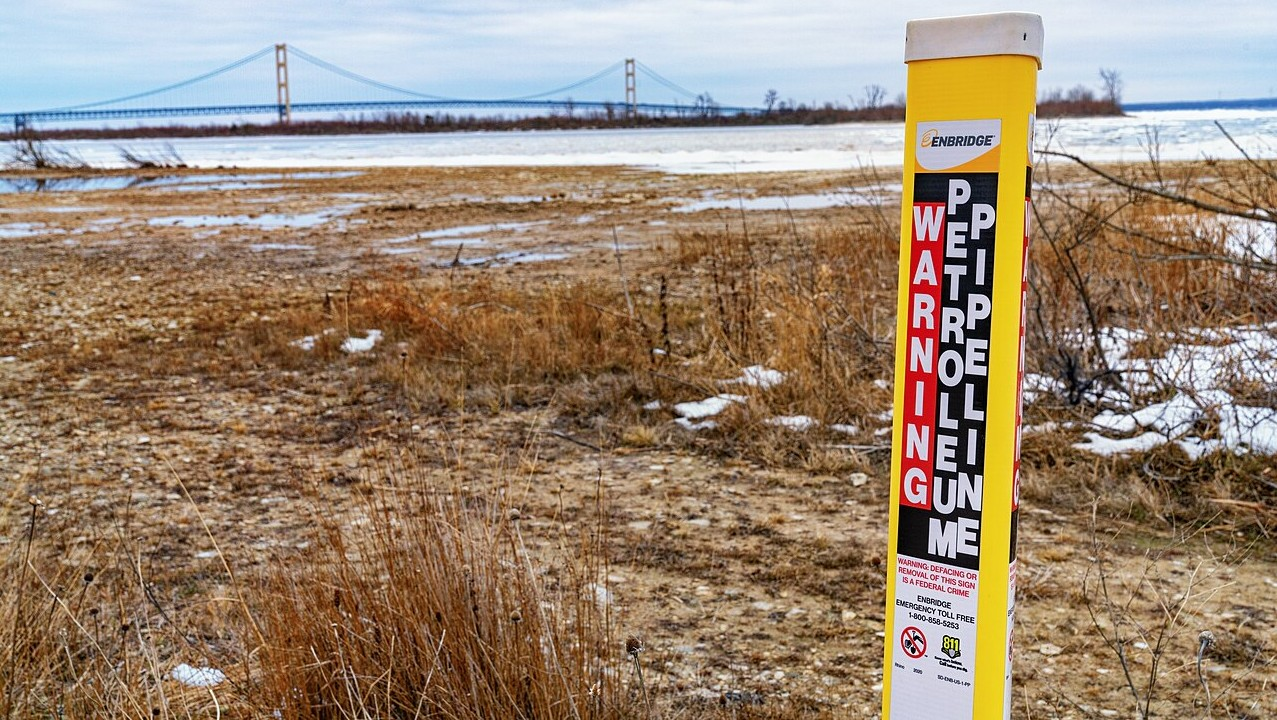
Tribes in Michigan oppose Enbridge the Line 5 oil pipeline replacement plan, arguing the environmental risks to their traditional waters far outweigh any benefits. The proposal to replace the 70-year-old pipeline that currently runs through Michigan and Wisconsin has faced many legal challenges over the years. Now, the U.S. Supreme Court will decide whether the state or federal government should have say over how the project proceeds. The decision could set a precedent on how much power tribes and states have in regulating fossil fuel development. We’ll speak with tribal leaders, Native legal scholars, and others about what’s next for the ongoing Line 5 pipeline legal battle.
GUESTS
Wenona Singel (Little Traverse Bay Bands of Odawa), associate professor of law at Michigan State University College of Law and associate director of the Indigenous Law and Policy Center
Elizabeth Arbuckle (Bad River), chairwoman of the Bad River Tribe
Melissa Kay, Tribal Water Institute fellow at the Native American Rights Fund
Here.
Blurb:
The Gila River Indian Community in Arizona is considering a new law to banish tribal members convicted of violent crimes. A bill awaits a signature from the New York governor that aims to strengthen the Seneca Nation’s ability to enforce tribal laws, which includes removing people convicted of drug trafficking and other crimes. Those are among efforts by tribes to formalize the traditional practice of banishment as tool to combat crime, but such efforts sometimes conflict with modern legal systems. In Alaska, the Native Village of Togiak faces a legal challenge after tribal members forced a man suspected of illicit alcohol sales onto an airplane to another city. We’ll get insights from tribal leaders and Native legal experts on how banishment fits in with modern justice.

Here:
David A. Robertson (Norway House Cree Nation) gives us 52 practical suggestions—one for each week of the year—to support and connect with Indigenous people. 52 Ways to Reconcilelists tasks as simple and enjoyable as making Bannock, to as challenging as taking personal action toward reconciliation.
Matthew Fletcher (Grand Traverse Band of Ottawa and Chippewa Indians) has devoted himself to the legal profession, becoming one of the most respected experts in Indian Law. In his spare time he has written and published a collection of fictional short stories, Stick Houses. He draws from his own observations and stories from his family to illustrate the lives of modern Native Americans.
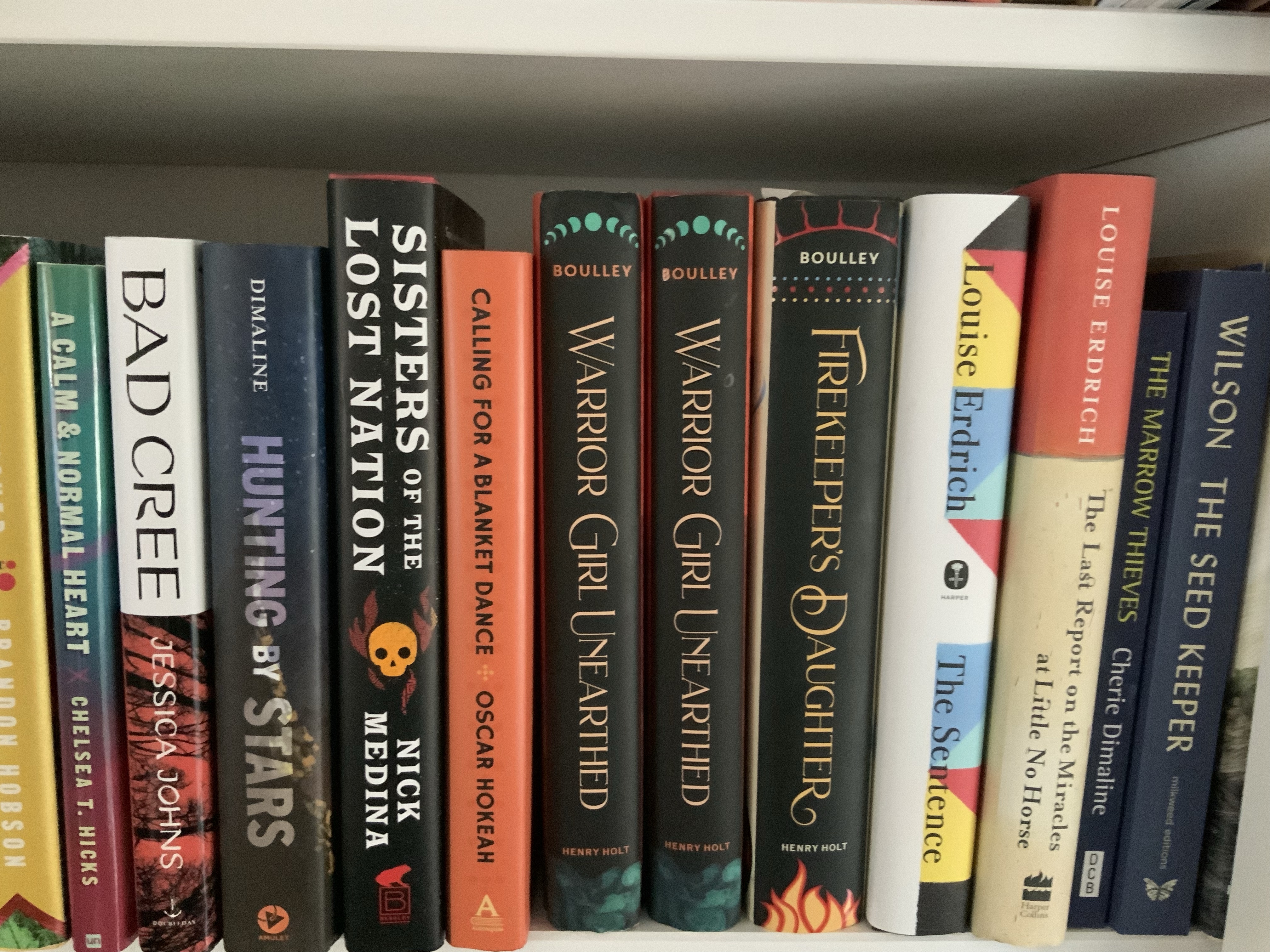
We’ll add Matthew Fletcher’s Stick Houses, and David A. Robertson’s 52 Ways to Reconcile to the Native Bookshelf.


Here. Description:
A non-Native woman in Alaska refuses to abide by a tribal court order to turn an Alaska Native foster child over to the girl’s family members. It’s a blatant disregard of tribal sovereignty even after a notable re-affirmation of the Indian Child Welfare Act by the U.S. Supreme Court. The woman took custody of the child, named Chanel, at the request of the girl’s father, right before he was convicted of murdering Chanel’s mother during a domestic dispute. We’ll look at that case, as well as efforts to bolster ICWA compliance elsewhere.
Case materials here.
Here.
Here.

Here.
Here.
Each side presented their oral arguments Wednesday to the U.S. Supreme Court for the most serious challenge to the Indian Child Welfare Act in recent memory. The decision in Haaland v. Brackeen will be a major force in the future of ICWA and the scope of tribal sovereignty. Today on Native America Calling, Shawn Spruceanalyzes the legal debate from a Native perspective with Matthew Fletcher (Grand Traverse Band of Ottawa and Chippewa Indians), law professor at the University of Michigan Law School and author of the Turtle Talk blog; independent journalist Suzette Brewer (citizen of the Cherokee Nation); and Dr. Sarah Kastelic (Alutiiq), director of the National Indian Child Welfare Association.
Here.

 Turtle Talk
You must be logged in to post a comment.