Kitras v. Town of Aquinnah Cert Petition

Here:

Kitras Cert Petition

Questions presented:

1. Whether an assumed tribal custom can survive the extinguishment of aboriginal rights by Congress and undermine conveyances of land that were transferred in fee simple absolute?
2. Whether the legal presumption of an “easement by necessity” is protected against contradiction by the parol evidence rule, and whether the relaxation of the rule amounts to a taking of property under the Due Process Clause?
3. Whether the judicial elimination of a well-established common law right to private property, absolutely necessary for the enjoyment of property, constitutes a judicial taking under the Fifth and Fourteenth Amendments?
Lower court materials here.
U.S. Supreme Court Grants Cert in Lee v. Tam

Here.

This case addresses the same issue brought up by Pro-Football v. Blackhorse (section 2(a) of the Lanham Act), which is currently in the 4th Circuit. Pro-Football, Inc. petitioned the Court to skip the 4th Circuit and be joined to the Tam v. Lee case if it was granted here. There is no decision on that at this time.

Pro-Football v. Blackhorse coverage here.

Tam v. Lee coverage here.

Story from Law360 here.

Thanks to SD for the heads up.

U.S. Supreme Court Grants Cert in Lewis v. Clarke

Order list here.

Question Presented: Whether the sovereign immunity of an Indian tribe bars individual-capacity damages actions against tribal employees for torts committed within the scope of their employment.

Previous coverage here.

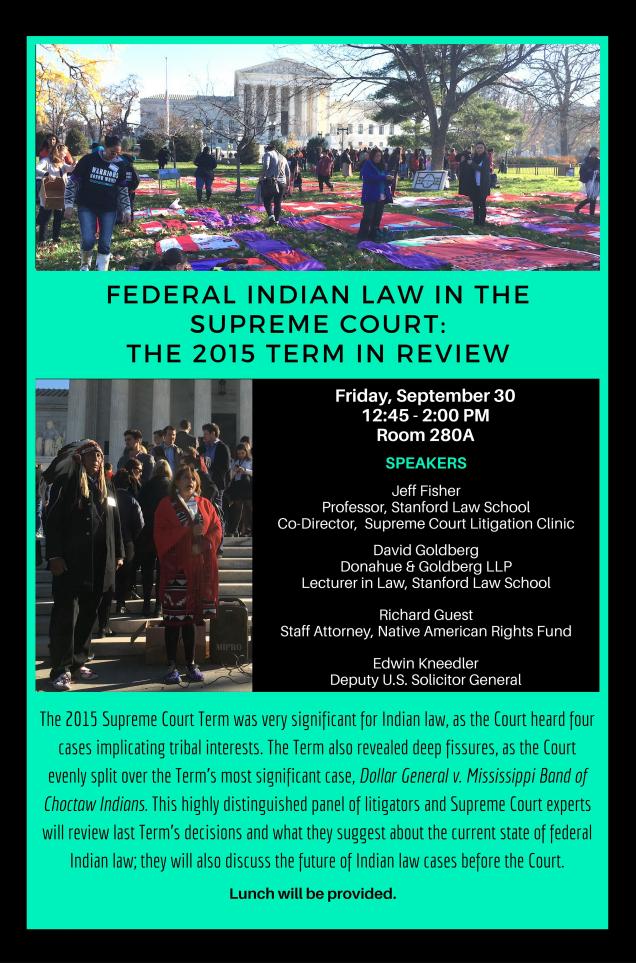
Stanford Law School Panel on Indian Law at the Supreme Court (9/30/2016)

Here:

stanford-event

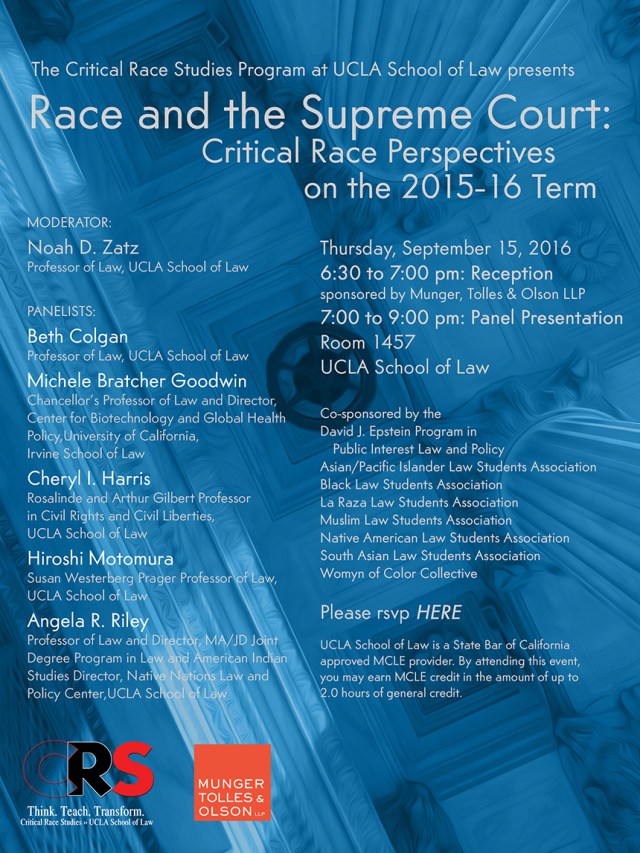
Race and the Supreme Court: Critical Race Perspectives on the 2015-16 Term

race perspectives

538: “Clinton And Trump Are Both Promising An Extreme Supreme Court”

Here.

Justice Ginsburg Corrected Minor Error in Bryant Decision

Here is the NYTs article discussing post-decision amendments and corrections in Supreme Court opinions more generally.

An excerpt:

On the last day of June, for instance, a deputy solicitor general Michael R. Dreeben, wrote a letter to the court saying there had been a mistake in a decision issued a few weeks before. He asked the court to fix the error, and, a week later, it did.

Writing for the majority in a case about domestic assault on Indian reservations, Justice Ruth Bader Ginsburg had said a federal law applied to some serious crimes “when both perpetrator and victim are Indians.” But what the law itself actually said, quite clearly, was that it applied to all victims, Indians or not.
 

When Mr. Dreeben’s letter arrived, the court promptly sent it to reporters. When the court amended the decision to adopt the revised language Mr. Dreeben had suggested, its website noted the change.

Updated Supreme Court Stats

Back by request, here’s the updated report card that ILPC Fellow Peter Vicaire started in 2011.

Link to Vicaire’s post here.

US Civil Rights Commission Applauds SCOTUS Outcome in Dollar General

Here.