Here:
Tribal Court Probation Officer
Here are the materials in Anderson v. Duran (N.D. Cal.):
160 Anderson Motion for Summary J
191 Duran Motion for Judgment on the Pleadings
An excerpt:
Plaintiff John Anderson is the Sheriff of Madera County, located outside of Fresno in the Eastern District of California. The specific dispute at issue in this case is but a piece of a larger struggle which began in 2011 for control and direction of the Picayune Rancheria of the Chukchansi Indians (“the Tribe”), a federally recognized tribe. The territory of the Tribe rests wholly within Madera County. At its core, this action represents a reaction by the plaintiff Sherriff to orders he has received from certain tribal factions directing him to intercede against their opponents. While the entirety of the case rests on actions taken within the Central District of California, the parties do not dispute venue in this district as will become apparent below.
In August 2013, individuals purporting to represent the tribal council filed suit in tribal court against Anderson and others seeking damages and injunctive relief. The tribal court issued a temporary restraining order directing Anderson, who is not a member of the Tribe, to take certain steps in execution of his official duties as Sheriff. Shortly thereafter, Anderson filed suit in this Court, seeking a temporary restraining order (“TRO”) and preliminary injunction against the Tribe, affiliated tribal entities, [5] individual members of a group purporting to comprise the legitimate tribal council (the “Lewis Faction”), and the judge and clerk of the purported tribal court (the “Lewis Tribunal”). Anderson sought to prevent any of the individuals or entities from enforcing the TRO issued by the Lewis Tribunal and to stay further proceedings against him in that court. This Court conducted a hearing that same day at which representatives for the Lewis Faction as well as from a competing group, the Ayala Faction, participated. These two groups, along with a third contingent known as the Reid Faction, each purport to represent the Tribal entities in this action. At the conclusion of the hearing, Anderson’s TRO was granted and an order to show cause issued as to his application for a preliminary injunction. The terms of the TRO were later incorporated into a preliminary injunction, which remains in effect.
Anderson now moves for summary judgment, seeking declaratory and injunctive relief against the Tribal entities and the individual defendants. The Lewis/Reid Faction, on behalf of the Tribal entities and individual defendants, opposes that motion and simultaneously moves for judgment on the pleadings [6] or, in the alternative, summary judgment. The Tribal Court defendants, Jack Duran and Donna Howard, join the Lewis/Reid Faction’s opposition and motion. The Ayala Faction, on behalf of the Tribal entities, joins Anderson’s motion and opposes the Lewis/Reid Faction’s counter-motion.
For the reasons set forth below, Anderson’s motion is granted as to the individual defendants. His motion is denied, and the case is dismissed, as to the Tribal entities on the basis of sovereign immunity. The Lewis/Reid Faction’s motion is denied.
We posted previously on this matter here.
Here is the opinion in United States v. Bryant.
From the court’s syllabus:
The panel reversed the district court’s denial of a motion to dismiss an indictment charging the defendant, an Indian, with two counts of domestic assault by a habitual offender, in
violation of 18 U.S.C. § 117(a).Applying United States v. Ant, 882 F.2d 1389 (9th Cir. 1989), the panel held that, subject to the narrow exception recognized in case law for statutes that serve merely as enforcement mechanisms for civil disabilities, tribal court convictions may be used in subsequent prosecutions only if the tribal court guarantees a right to counsel that is, at minimum, coextensive with the Sixth Amendment right. Because the defendant’s tribal court domestic abuse convictions would have violated the Sixth Amendment had they been obtained in federal or state court, the panel concluded that it is constitutionally impermissible to use them to establish an element of the offense in a subsequent prosecution under § 117(a), which is an ordinary recidivist statute and not a criminal enforcement scheme for a civil disability.
Concurring, Judge Watford wrote separately to highlight
why Ant warrants reexamination.
Judge Watford correctly notes that a circuit split on this issue has arisen with the Eighth and Tenth Circuits:
It’s perhaps unsurprising that our decision in this case conflicts with decisions from two of our sister circuits. Faced with almost identical scenarios—prior, uncounseled tribal court convictions that would have violated the Sixth Amendment in state or federal court and that were used as predicate offenses under 18 U.S.C. § 117—the Eighth and Tenth Circuits pointedly disagreed with us. See United States v. Cavanaugh, 643 F.3d 592, 595, 604 (8th Cir. 2011); United States v. Shavanaux, 647 F.3d 993, 995–98 (10th Cir. 2011). As our colleagues on the Eighth Circuit noted, “Supreme Court authority in this area is unclear; reasonable decisionmakers may differ in their conclusions as to whether the Sixth Amendment precludes a federal court’s subsequent use of convictions that are valid because and only because they arose in a court where the Sixth Amendment did not apply.” Cavanaugh, 643 F.3d at 605. Given this circuit split and the lack of clarity in this area of Sixth Amendment law, the Supreme Court’s intervention seems warranted.
If nothing else, the case at least may generate support for en banc review. We posted materials on these two cases here (the Supreme Court denied cert). I wrote about this issue a few years ago in a paper titled “Sovereign Comity.“
Here are the briefs:
Here is the opinion in Tsosie v. Deschene:
We posted on this issue here.
Position Title: District Court Judge (Repost)
Location: Judicial Branch
Reports to: Chief Justice
Opening Date: August 14, 2014
Closing Date: “Until Filled”
*** Any individual who receives an offer of employment or will receive a payroll check are required to submit to a drug and alcohol test as a condition of obtaining employment.***
****Mille Lacs Band Member/American Indian preference applies****
Here.
Here are the materials in Gustafson v. Poitra (D. N.D.):
An excerpt:
The Court notes the equities clearly favor the Gustafsons, and the Court is sympathetic to the jurisdictional dilemma they find themselves in. The juvenile behavior and attitude of the Poitras that triggered the need for the issuance of the TRO in October 2012 is difficult for any reasonable person to understand. However, the plaintiffs cannot use the Declaratory Judgment Act as a vehicle to resolve a multitude of long-standing disputes which neither raise a federal question nor bear any relationship to a lawsuit over which the Court would have jurisdiction.
We have posted on the multiple suits in this long-running dispute here, here, and here.
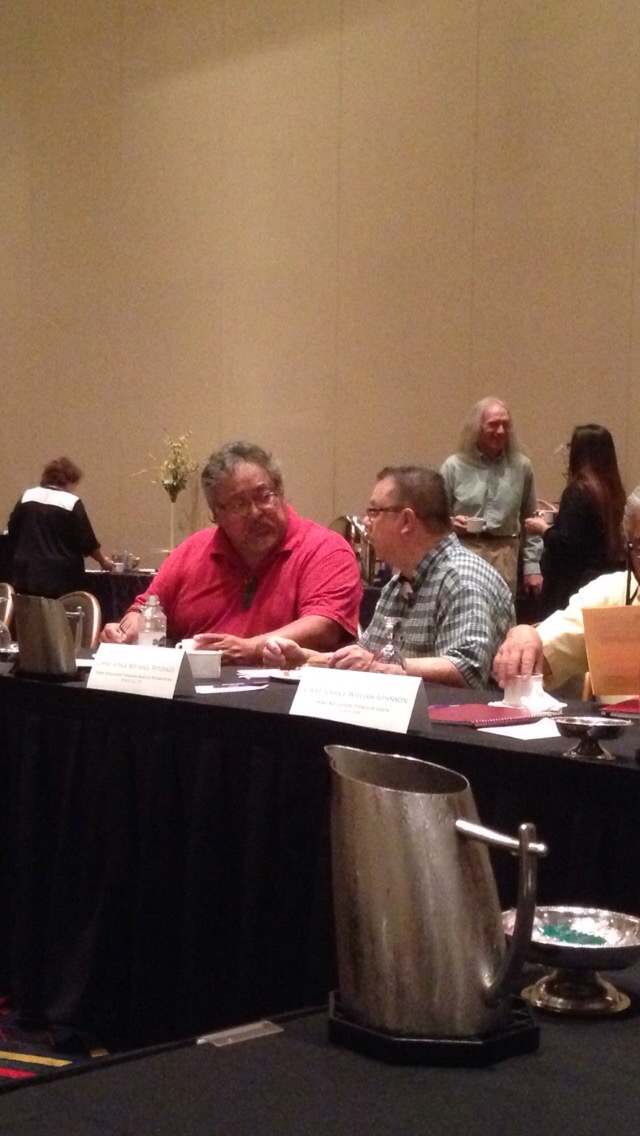
Judges Mike Jackson and Mike Petoskey
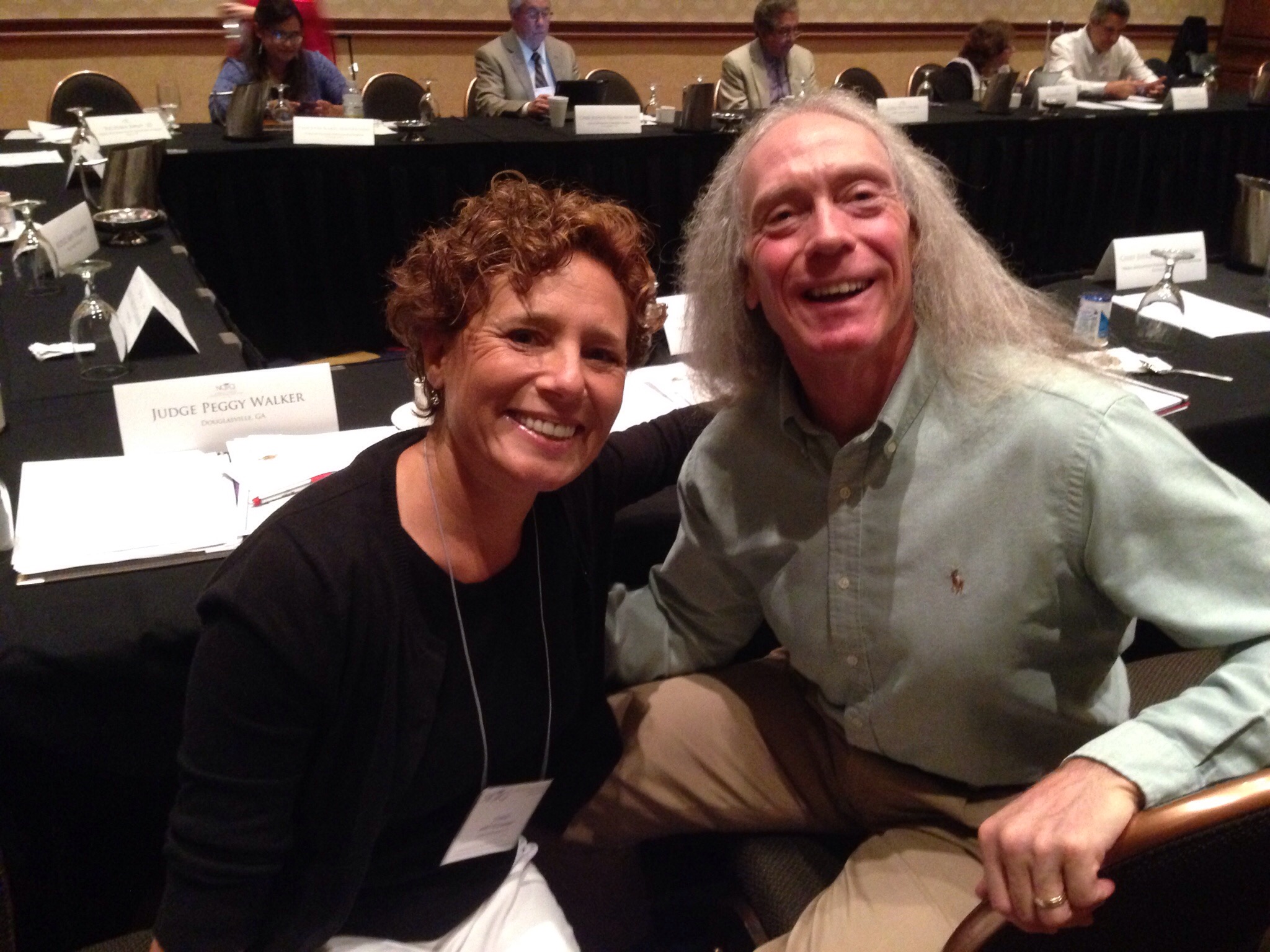
Judges Amy Pellman and Joe Plumer
The brilliant Anishinaabekwe Victoria Sweet, and Judges Raquel Montoya-Lewis and Darrell Dowty

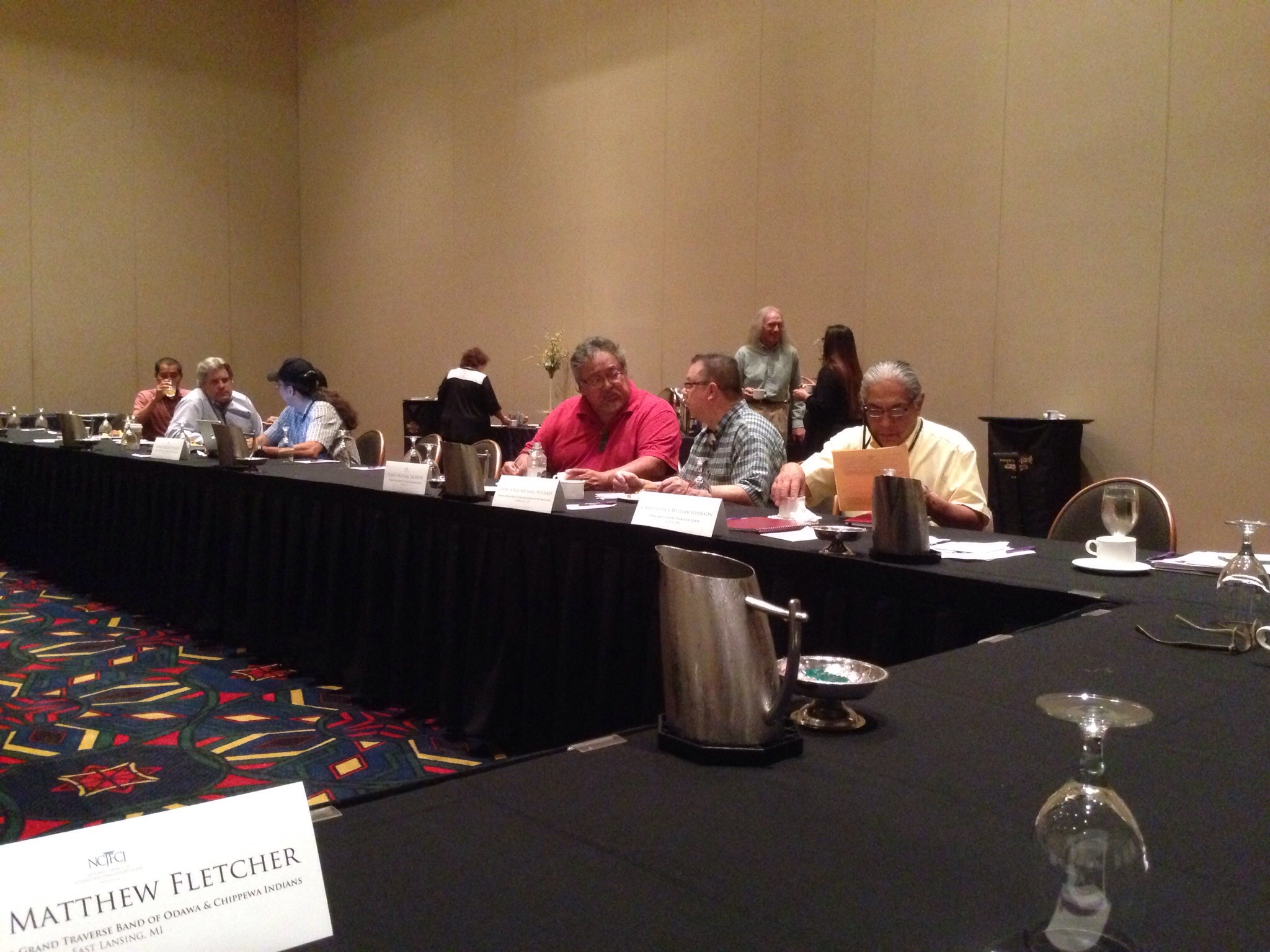
Judges Mike Petoskey and Willie Johnson

And many more!


 Turtle Talk
You must be logged in to post a comment.