Uncategorized
This Is Just a Test
We are attempting to allow our posts to show up on our Facebook feed as well as Twitter. This is a test of the system.
HEARTH ACT CLE
New Mexico Indian Law Section CLE: An Introduction to the Helping Expedite and Advance Responsible Tribal Homeownership Act (HEARTH Act)
State Bar Center, Albuquerque
Thursday, November 1, 2012
8:15 a.m.
3.2 General CLE Credits
Followed by lunch and the N.M. State Bar Indian Law Section Annual Meeting
Description: This program provides an introduction to the Helping Expedite and Advance Responsible Tribal Homeownership Act, which was signed into law on July 30, 2012. The Act will give tribal governments the discretion to lease restricted lands for residential, business, agricultural, public, religious, educational, or recreational purposes without needing the approval of the Secretary of the Interior if the tribal governments develop and implement their own leasing regulations. This program will look at the future of leasing tribal lands and discuss whether the Act will encourage economic growth, promote community development in Indian country, and support tribal self-determination.
The agenda and registration information can be found here.
If you would like to watch a webcast of the CLE, which took place today, you can do so here.
Opportunities for Internships at Indian Law Resource Center
The Indian Law Resource Center, a non-profit legal advocacy organization dedicated to providing legal advice, assistance, and representation to Indian tribes and indigenous communities throughout the Americas, has posted several internship opportunities for spring and summer 2013. More information can be found at
VAWA – Violence Against Native Women Gaining Global Attention—Will Congress Do Something?
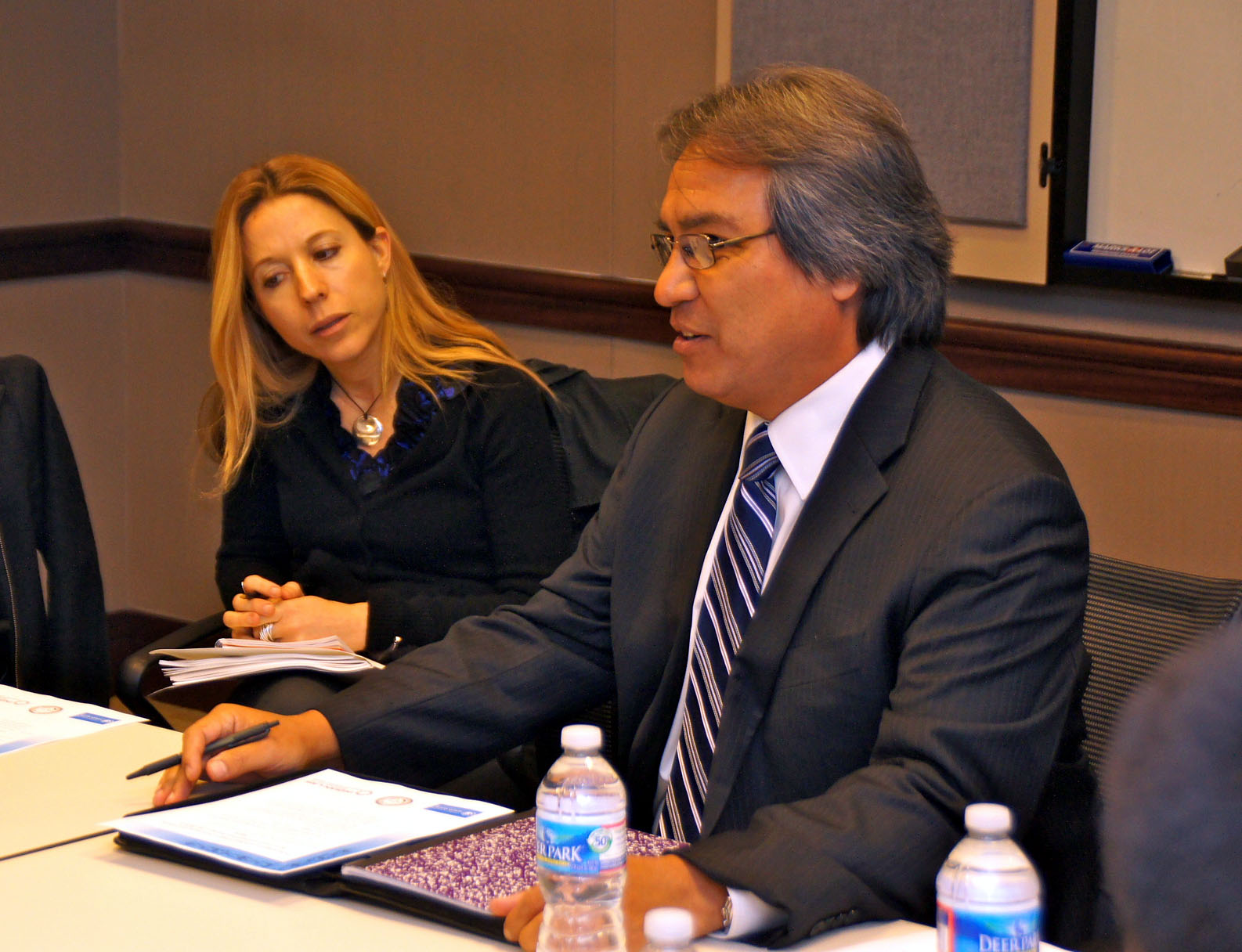
Recent Report by U.N. Special Rapporteur on the Rights of Indigenous Peoples says legislation protecting Native women should be an “immediate priority” in U.S.
(Helena, Montana) – According to the U.N. Special Rapporteur on the Rights of Indigenous Peoples, James Anaya, the U.S. Congress should make legislation protecting Native women an “immediate priority.” Following a month long tour to hear from indigenous peoples and tribal Nations within the United States, the Special Rapporteur presented his report in September on the situation of indigenous peoples in the United States to the UN Human Rights Council in Geneva. The report recommended that the United States immediately address violence against women through legislation. Continue reading
Online pledge launched urging lawmakers to reauthorize stronger Violence Against Women Act

Click Here To Listen: National Native News on VAWA

Petitioning Congress: Pass a Better Violence Against Woman Act (VAWA) Now!
The Indian Law Resource Center has launched a petition asking Congress to stand with Indian nations to stop the epidemic of violence against Native women. Join the petition and urge Congress to pass a better, stronger VAWA now that will protect Native women and ALL women!
On Steve Russell and English Common Law
Steve Russell’s short commentary on the English common law of tort and tribal governance was a delight to read.
Two points in somewhat in response and largely in agreement. First, I really do think more tribes should reconsider what Anglo-American tort law does to their governance culture. Tribes should do this for all of the law that they borrow deriving from English common law. Many tribes (most) already have rejected the formality and formalism of civil procedure and evidence rules, rules the derive from rules designed to exclude the lower classes from the judicial system. That said, many tribes politically and economically need to integrate seamlessly with surrounding communities and have chosen to borrow and adapt the law of their neighbors. It would be helpful if tribes actually made a choice, after legislative consideration. A clear determination in cases such as Plains Commerce Bank and the Crazy Horse Malt Liquor case could have precluded the obfuscation on traditional tribal law that defendants (and some judges) used to complicate those cases. Nonmember defendants have a legitimate beef that they don’t know the law applied to them.
Second, I’ve argued before that tribal courts should continue to assert jurisdiction over nonconsenting nonmembers. It’s baffling to me that federal courts can issue orders enjoining tribal courts from engaging in their own business (though the court in a recent case out of Navajo got around that by enjoining the tribal court plaintiffs). Steve raises an excellent point about using tort law as a means of excluding what they used to call “bad men.” Tribal judgments can be sufficient to keep undesireables away. Not always, see the Lara case, and some tribes might not want to effectively exclude a particular defendant.
Newly Released Video Urges Immediate Action to Protect Native Women
The Indian Law Resource Center released a new short video this week urging lawmakers to reauthorize a stronger version of the Violence Against Women Act (VAWA) to protect Native women from violence.
In the video, Native women raise awareness about statistics that show one in three of them will be raped in their lifetime and six in ten will be physically assaulted. Even worse, on some reservations, the murder rate for Native women is ten times the national average.
“I want the rights afforded other women in this country. I want to be safe and when my safety is violated, I want justice,” says a young Native woman in the video.
Minn. Public Radio on Leech Lake/Cass County Wellness Court
An excerpt:
Some Leech Lake tribal leaders were suspicious when asked to help create the wellness court back in 2006. The tribe is sometimes at odds with the state, and band leaders are protective of their sovereignty.
But the tribe came to realize that participating in the program gave tribal judges the chance — for the first time ever — to sit in a courtroom with county judges as equals. It gave the tribe a direct say in the outcome of cases involving band members.
The Leech Lake tribe has a lot at stake. By some estimates, as many as 60 percent of the reservation’s tribal residents struggle with drug and alcohol addictions. It’s a problem that touches nearly every family.
In Cass County, Ojibwe people make up about 12 percent of the population, but they typically account for close to half of the county jail population. They’re over-represented in the state corrections system, too, and they’re more likely to reoffend and get sent back to prison.
Korey Wahwassuck is an associate judge for the Leech Lake Band. In wellness court, she shares the bench with her counterparts from Itasca and Cass counties. Wahwassuck says the program is a way to heal people rather than lock them up.


You must be logged in to post a comment.