The official announcement can be found here.
BIA to hold Sacred Sites Listening Sessions.
The official announcement can be found here.
The official announcement can be found here.
Here are the materials in Muwekma Ohlone Tribe v. Salazar:
Lower court materials are here.
Please ignore–attempting to prevent all of the recent double tweets.
Here are the materials in Donato v. Pereyma (Cal. App.):
from the opening brief:
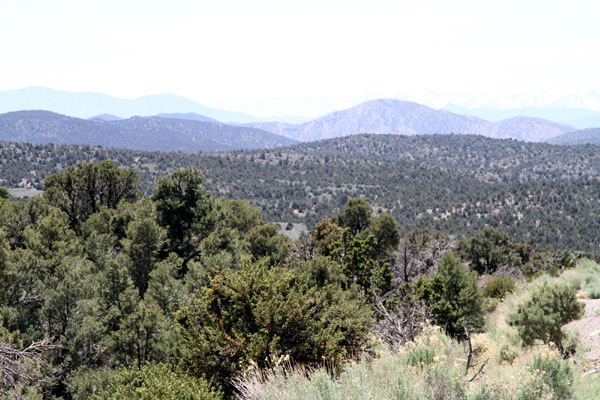
Washington, D.C. — The Federal Court of Appeals for the District of Columbia Circuit dismissed on May 15, 2012 the efforts of the Timbisha Shoshone Tribe to stop the federal government from taking millions of dollars belonging to the Tribe. The fund had been awarded as compensation to the Timbisha Shoshone Tribe and other Western Shoshone Tribes for the supposed loss of the Tribes’ lands in Nevada and California. In 1994, Congress passed an act taking all the money from the tribes and ordering the money to be distributed to thousands of Indians, whether they are members of any of the Western Shoshone Tribes or not. Continue reading
Commentary by Karla E. General

The UN Declaration on the Rights of Indigenous Peoples presents a new opportunity and a new kind of legal authority that could help Native peoples to secure rights to sacred places, and to preserve and protect cultural, religious, and spiritual practices.
The Declaration recognizes and affirms the rights of indigenous peoples to their cultural, religious, and spiritual practices, to have private access to sacred sites (Arts. 12(1), 11(1)), as well as to maintain and strengthen their spiritual relationship with their traditionally held lands, territories, waters and coastal seas and other resources (Art. 25). With the Declaration, Native peoples have rights acknowledged by the international community of nations, including rights to sacred places both within existing reservation or territorial boundaries and beyond. Continue reading
On May 8th, the House Judiciary Committee marked up and passed H.R. 4970, a stripped-down Violence Against Women Reauthorization Act (VAWA) that excludes a number of key provisions found in the Senate bill, including those bearing on the safety of Native women and communities. Get informed! Visit www.indianlaw.org for more information on how to get involved.
The full House of Representatives is expected to vote on its VAWA reauthorization bill soon — as early as mid week.
The Spokane Tribe aims to aid native trout species restoration efforts by reduce the population of smaller sized walleye that prey on young hatchery-reared trout. See The Spokesman-Review report on the Tribe’s plan and regional responses.


You must be logged in to post a comment.