Here is the opinion in State of New Mexico ex rel. State Engineer v. United States:
water rights
Federal Circuit Rejects Trust Breach Claim for Water by Crow Creek Sioux Tribe
Tenth Circuit Dismisses Objectors’ Appeal of Pojoaque Valley Water Settlement
Here is the opinion in State of New Mexico v. Aamodt.
Briefs:
Answering Brief for the United States of America
Appellant’s Consolidated Reply Brief to Appellees’ and Appellees in Intervention’s Briefs
Appellant’s Supplemental Brief Pursuant to the Court’s April 5, 2018 Order
Joint Answer Brief of Defendants-Appellees Santa Fe County and City of Santa Fe
Response Brief of Appellee the Rio De Tesuque Association, Inc.
Commentator in Salt Lake Tribune Calls for Criminal Prosecution of San Juan County Clerk
New Scholarship on Indian Water Rights [Science Magazine]
Here is “Indigenous communities, groundwater opportunities,” published in Science:
Ninth Circuit Issues Trio of Decisions on Walker River
Here is the opinion in United States v. Walker River Irrigation District. From the court’s syllabus:
The panel first held that the district court was correct that it retained jurisdiction to litigate additional rights in the Walker River Basin and to modify the 1936 Decree. On the merits, the panel held that the district court erred in characterizing the counterclaims as part of a new action. The panel concluded that based on the procedural history and the fact that the Tribe and the United States brought their counterclaims under the same caption as the 1924 action, the counterclaims did not constitute a new action. The panel further held that the district court erred by dismissing the claims sua sponte on the basis of res judicata without first giving the parties an opportunity to be heard on the issue. Moreover, the panel held that because the counterclaims were not a new action, traditional claim preclusion and issue preclusion did not apply.
The panel directed that on remand, the case should be randomly reassigned to a different district judge. The panel reluctantly concluded that reassignment was appropriate because it believed (1) that Judge Jones would have substantial difficulty putting out of his mind previously expressed views about the federal government and its attorneys, and (2) that reassignment will preserve the appearance of justice.
Here is the opinion in United States v. United States Board of Water Commissioners.
Here is the opinion in Mono County v. Walker River Irrigation District. From the court’s syllabus:
In an appeal raising issues pertaining to Nevada state water law, the panel certified to the Supreme Court of Nevada the following question:
Does the public trust doctrine apply to rights already adjudicated and settled under the doctrine of prior appropriation and, if so, to what extent?
Idaho SCT Briefs in Coeur d’Alene Water Rights Case
Here are the briefs (so far) in Coeur d’Alene Tribe v. State of Idaho:
Stephen Greetham on Tribal-State Water Planning
Update in Navajo Nation v. Dept. of the Interior (water rights case on remand)
Here:
2018-04-13 Doc 335 NN Mot Leave Intervene
2018-04-13 Doc 335-1 NN Memo in Support of Mot for Leave to Amend
2018-04-13 Doc 335-2 EX 1 – NN Proposed Third Amended Complaint
On remand from the Ninth Circuit, the Nation moves the district court for leave to file its third amended complaint, which restates the Nation’s claims for breach of trust (dismissal of the Nation’s NEPA claims was upheld). The appeals court gave short shrift to the argument by the US, adopted by the district court, that sovereign immunity barred the breach of trust claim, clarifying (consistent with the majority of circuits) that section 702 of the APA, as amended, is a broad waiver of that immunity for claims not seeking money damages.
While continuing to assert that the Secretary as water master for the mainstream of the Colorado River in the Lower Basin breached his fiduciary duties, including the duty of protection explicitly undertaken in the 1849 Treaty of Peace, in management decisions that failed to account for the needs and unquantified rights of the Navajo Nation for homeland purposes, the proposed amended complaint now focuses more particularly on the federal defendants’ historic failure to correct an omission in the Decree in Arizona v. California, omitting lands above Lake Mead, and inducing reliance on limited water supplies by others with rights junior to the Navajo Nation to the detriment of the Nation.
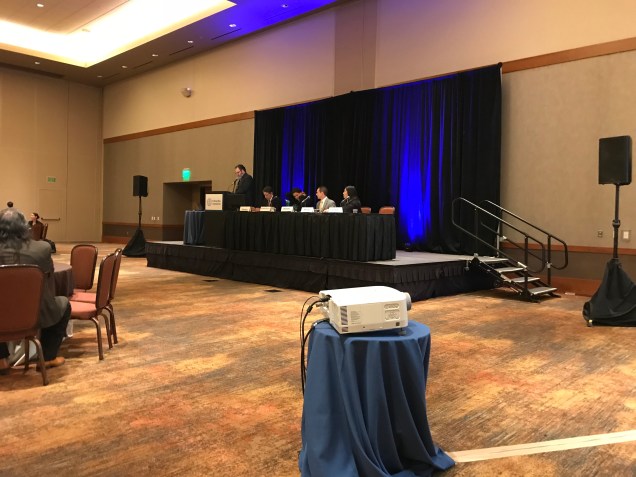
FBA Indian Law Conference Panel on Winters Rights
Trent Crable, Daron Carreiro, Heather Whiteman Runs Him, Joel Williams, Jeanette Wolfley
 Turtle Talk
You must be logged in to post a comment.