Press Release here.
Model code here.
One of the things that is particularly useful in this model code is how it is annotated with information on why the drafters made certain choices, and links to other resources with additional information.
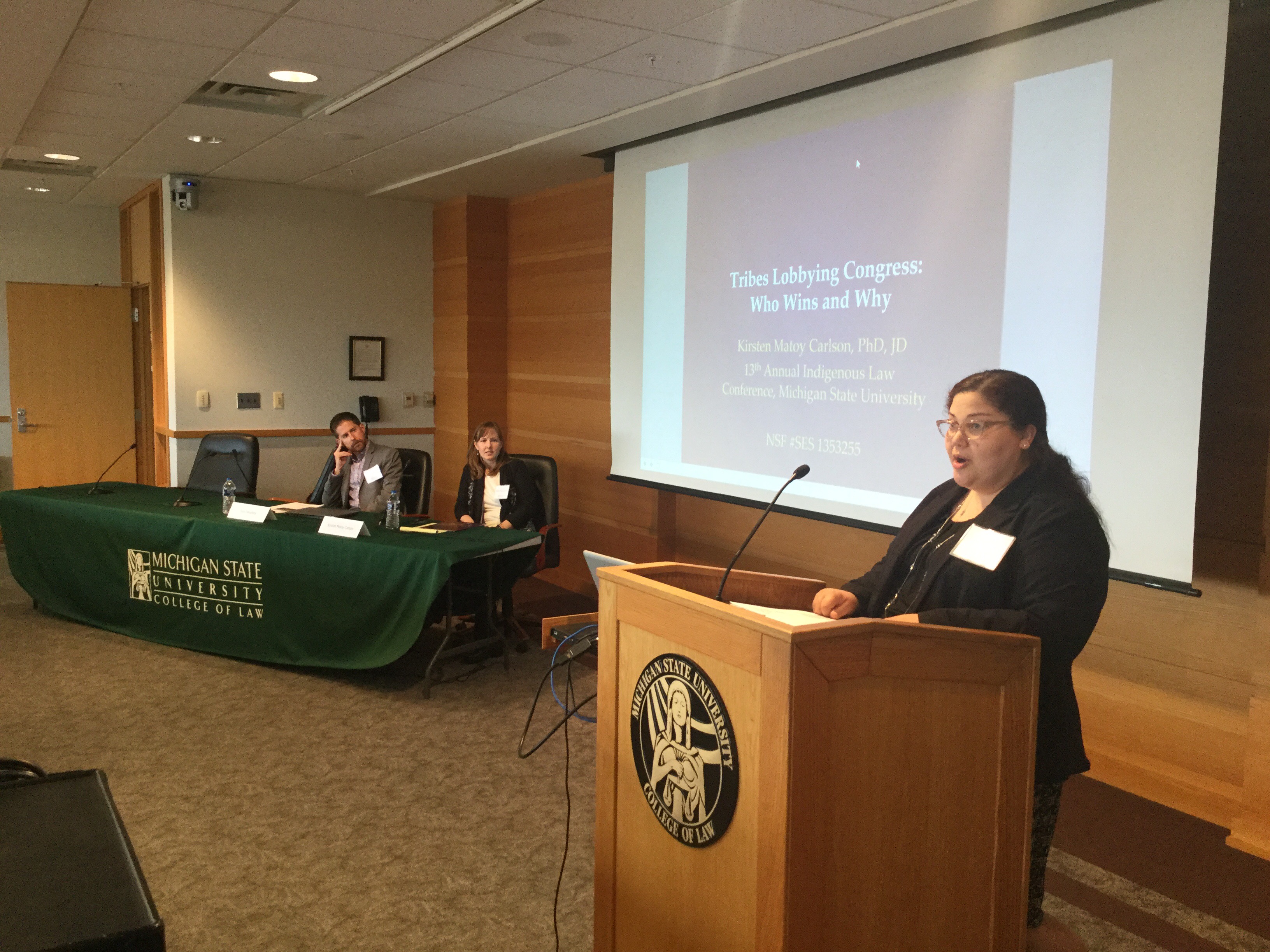



Here.
Here are the materials in Finn v. Great Plains Lending LLC (W.D. Okla.):
Here.
The First District of California seems to be trying a new way to deal with notice violations in ICWA cases by detailing the mistakes in the notice in the opinion. The first time we saw it was in September (here). In this case, a different division in the same District did a similar analysis.
As to the Chippewa Cree tribe, the notice for G.B.-C. was sent to Chippewa Cree Indians, Brenda Gardiner, ICWA Rep, RR1, P.O. Box 544, Box Elder, Montana 59521. According to the Department’s proof of service, the notice for M.B.-C. was sent to the same address. The address specified for the tribe in the Federal Register was Chippewa Cree Tribe of the Rocky Boy’s Reservation of Montana, Christina Trottier, ICWA Director, 31 Agency Square, Box Elder, MT 59521. (79 Fed.Reg. 3225 (January 17, 2014).) Although the city, state and zip code were the same, the addresses were completely different.The Department asserts the notice was nevertheless adequate because the P.O. Box address it used to provide notice to the Chippewa Cree tribe was the one that was listed on the State Department of Social Services’s (CDSS) website.4The Department relies on In re N.M., supra, 161 Cal.App.4th at page 268, in which the court held the child welfare agency did not err in using the names and addresses provided by CDSS in notifying the relevant tribes, stating: “The Department should not be hamstrung by limitation to only the names and addresses provided for the tribes in the Federal Register if a more current or accurate listing is available and is reasonably calculated to provide prompt and actual notice to the tribes.While requiring the Department to adhere to an address listed in the federal register when other, more accurate information is available elsewhere “would exalt form over substance,” (In re N.M., supra, 161 Cal.App.4th at p. 268), we must still respect the Department of Interior’s primary authority in administering ICWA (In re S.B. (2005) 130 Cal.App.4th 1148, 1157 [the federal regulations implementing ICWA “are binding in all federal and state courts by virtue of the supremacy clause”] ). ICWA notice may depart from the addresses listed in the federal register, but only when the alternative address is “more current or accurate.” (In re N.M., supra, 161 Cal.App.4th at p. 268.)Here, there is nothing in the record indicating the CDSS address the Department used was more current or accurate than the address listed in the Federal Register. Thus, while the return receipt received for the notice sent for G.B.-C. shows that someone at the CDSS address received the notice, there is no basis to conclude the notice was received by someone at the Chippewa Cree tribe who was “trained and authorized to make the necessary ICWA determinations, including whether the minors are members or eligible for membership and whether the tribe will elect to participate in the proceedings.” (In re J.T., supra, 154 Cal.App.4th at p. 994.)”
Here is the opinion in South Point Energy Center LLC v. Arizona Dept. of Revenue.
An excerpt:
South Point Energy Center, LLC (“South Point”) appeals the tax court’s entry of summary judgment in favor of the Arizona Department of Revenue and Mohave County (collectively, “Defendants”) on South Point’s actions challenging the assessment of property taxes. The tax court concluded that South Point was collaterally estopped from challenging the legality of the taxes and that relief was not available under the error-correction statutes. We disagree. First, issue preclusion did not apply because South Point’s challenges were based on an issue not raised in previous litigation. Second, the alleged error falls within the broad category of mistakes for which relief is available under the errorcorrection statutes.

High muckamuck, for example, comes from Chinook Jargon hayo makamak, “plenty to eat.” 🙂
Steven Alagna has published this interesting and important piece in Washington University Law Review.
Just a reminder that this is the Adoption and Foster Care Analysis and Reporting System data, which is information sent from the state to the federal government about kids in foster care. There is still a pending rule change that would add ICWA-specific data elements to these reports, but it has not yet been promulgated. How Native children are identified by state actors for this report varies dramatically by state (and county), but it is the best data we have at this time.
Here.
Here.
In ICWA cases, the tribe has a right of intervention in whatever state court is hearing the case of the tribal child. While it is true that the “tribal representative” does not have to be attorneys, when they are attorneys, there may be concerns about practicing without finding local counsel or using the local “pro hac” rule. Michigan has proposed a court rule that would waive those requirements for tribal attorneys representing the tribe in a state court where the attorney is not barred. This proposed rule is in direct response a number of requests from tribal ICWA attorneys nationwide. We are hopeful other states will consider a similar rule (though in Nebraska this is right is guaranteed by statute, which is another great fix). This rule was proposed by the Michigan Tribal-State Judicial Forum.
Also, if you are an out of state attorney who would benefit from this proposed Rule (or in state) please send in comments by March 1.
 Turtle Talk
You must be logged in to post a comment.