Here.
Comments due by May 1.
If anyone has had any problems or concerns practicing in Arizona on an ICWA case, it would be good to highlight that.
Here.
Comments due by May 1.
If anyone has had any problems or concerns practicing in Arizona on an ICWA case, it would be good to highlight that.
Here.
It took me a while to read this whole opinion and there are a lot of issues. But to start, I’d note that unlike some arguments in another unnamed federal ICWA case (Brackeen, it’s Brackeen), this case is yet another every day example where a state has to prove the best interests of the child standard and the ICWA standard–the ICWA standard didn’t supplant BIOC.
That said, there is some unnecessary Michigan trash talking in this case as the Court happily finds active efforts is more than reasonable efforts, but unhappily choses to adopt a “futility doctrine” for the active efforts finding. The futility “doctrine” for active efforts is a judicially created standard to excuse the state from providing active efforts to the parent.
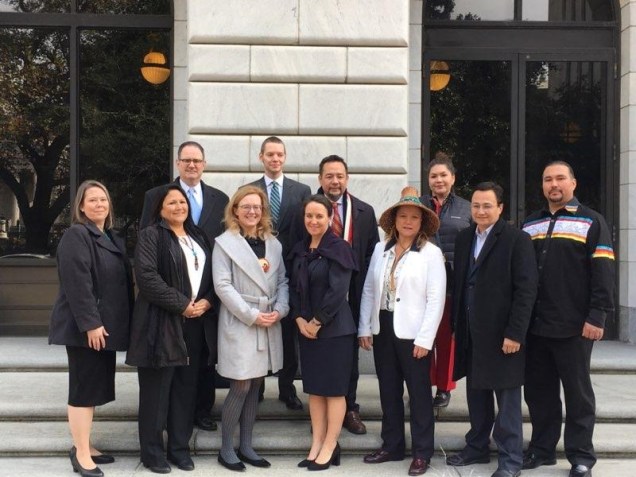
On Wednesday, an en banc panel of 16 judges in the Fifth Circuit heard oral arguments in Brackeen v. Bernhardt. Judges Davis and Ho were not a part of the panel. The other judges, from the left side of the bench around to the right were:
Oldham
Duncan
Willett
Higginson
Haynes
Elrod
Stewart
Smith
Owen
Jones
Wiener
Dennis
Southwick
Graves Jr.
Costa
Englehart
The rest of the information is from my notes during the hearing, and I’m sure contain some mistakes that we will see when a transcript is released.
Of the 16 judges, 5 of them asked a vast majority of the questions–more than 5 questions each. Duncan asked 19, Dennis and Jones asked 11, Smith asked 7 and Costa asked 5. The federal government received 11 questions, Navajo Nation 7, and the Four Intervening Tribes 7. Texas received 19, and the Individual Plaintiffs 16. The Four Intervening Tribes received 4 additional questions on rebuttal (totals are 25 for the pro-ICWA side before rebuttal and 36 for the anti-ICWA side).
If you are trying to follow along to the audio recording, Duncan was most concerned with commandeering and recent Supreme Court commandeering questions. He also pressed Navajo Nation closely on blood quantum. Smith was the one particularly trying to understand the “exclusive” part of plenary power, and later expressed the belief that Texas dedicates scores of social workers to each child in care. And Jones asked the questions on rebuttal that has led to the most number of texts from attorneys asking me “what the [heck]?!” (which I personally thought Adam Charnes handled admirably, given all the oxygen was completely sucked out of the courtroom in that minute by a collective intake of breath).
Dennis, the judge who wrote the lower panel opinion, was the one the plaintiffs had most difficulty hearing, and was the most supportive of the law. Costa also asked skeptical questions of the plaintiffs, and wanted to know more about redressability.
Given the silence or relative silence of so many judges, it is impossible to make any predictions about the eventual opinion. We heard very little from judges who voted against en banc review in Dollar General (the pro-tribe vote), except Dennis. Elrod and Higginson both asked one question each.
Finally, in a very unscientific scroll through Westlaw, the Fifth Circuit has taken anywhere from 3 months (Moore v. Quarterman) from the granting of en banc review to the opinion to 10 months (Alvarez v. Brownsville). The granting of en banc review of Brackeen was in 11/19, so feel free to speculate amongst yourselves when you think the opinion will come out.
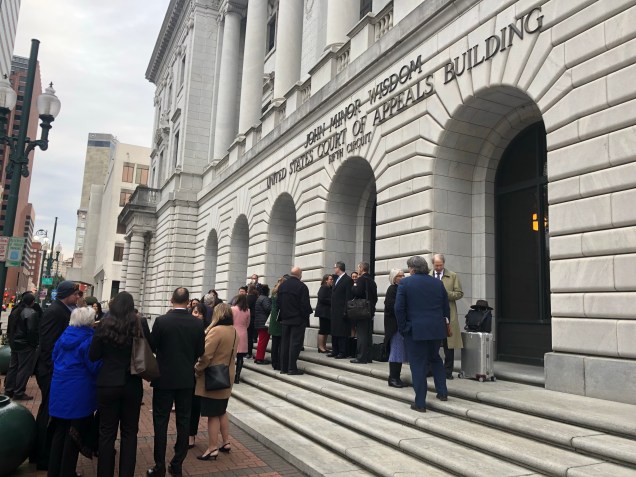
All documents here. Oral arguments are on Wednesday. The Court releases a recording of the arguments which we will publish when available.
Principle Supplemental Briefs:
Appellant Tribes En Banc Brief
2019-12-13 Intervenor Navajo En Banc Brief
Individual Plaintiffs_Supplemental Brief
Amicus Briefs pro-ICWA:
Amicus Briefs anti-ICWA
All briefs are here.
Intervening Tribes Press Release (released before the Tribal brief with over 400 tribal signatories):
WASHINGTON, D.C. – Today, 26 states and the District of Columbia, 75 members of Congress and more than 30 organizations filed friend-of-the-court briefs before the Fifth Circuit Court of Appeals in support of the Indian Child Welfare Act (ICWA) in Brackeen v. Bernhardt. Cherokee Nation Principal Chief Chuck Hoskin, Jr., Morongo Band of Mission Indians Chairman Robert Martin, Oneida Nation Chairman Tehassi Hill and Quinault Indian Nation President Fawn Sharp issued the following statement regarding the amicus briefs:
“We are thrilled to see that more than half of all states across the country, 75 members of Congress and dozens of leading organizations are taking a stand for the best interests of Indian children and families. This continuous support from across the political spectrum is a testament to the critical role that ICWA plays in promoting the stability and security of Indian tribes and families. Together, we are fighting back against the meritless attacks on ICWA. We are confident that the Fifth Circuit will again stand on the side of families and children by upholding the law.”
The Cherokee Nation, Morongo Band of Mission Indians, Oneida Nation and Quinault Nation are co-defendants in the case, defending the Indian Child Welfare Act (ICWA) against unwarranted attacks on the law’s constitutionality.
For more than 40 years, ICWA has provided a process for determining the best interests of Indian children in the adoption and foster care systems. The tribes are arguing to defend ICWA alongside the Trump administration, the U.S. Department of Justice, and the U.S. Department of Interior. The case will be reheard on January 22, 2020.
The amicus briefs filed by the following States – Alaska, Arizona, California, Colorado, Connecticut, Idaho, Illinois, Iowa, Maine, Massachusetts, Michigan, Minnesota, Mississippi, Montana, Nevada, New Jersey, New Mexico, New York, Oklahoma, Oregon, Pennsylvania, Rhode Island, Utah, Virginia, Washington and Wisconsin – as well as the District of Columbia, can be found here.
The amicus briefs from members of Congress can be found here, and the amicus briefs from leading organizations here.
Amici include organizations and political leaders from across the country spanning the political spectrum, and the U.S. states are represented by attorneys general from both the Republican and Democratic parties. They also include law professors and Native women writing in support of ICWA.
In 2017, individual plaintiffs Chad and Jennifer Brackeen, a couple from Texas, along with the state attorneys general in Texas, Louisiana, and Indiana, sued the U.S. Department of the Interior and its now-former Secretary Ryan Zinke to challenge ICWA. The Morongo, Quinault, Oneida and Cherokee tribes intervened as defendants in the case, and their recent brief can be found here.
On August 9, 2019, the Fifth Circuit Court of Appeals reaffirmed that the Indian Child Welfare Act is constitutional and serves the best interests of children and families. On October 1, 2019, plaintiffs in Brackeen v. Bernhardt chose to continue their attacks on Indian children and tribal families and requested an en banc rehearing before the Fifth Circuit, which the court granted.
There is broad, bipartisan support against this misguided attack on a law that is crucial for protecting the well-being of Indian children and Indian sovereignty. In addition to states and members of Congress, the Trump administration has strongly defended ICWA and its protections for Indian children, explaining that ICWA is an appropriate exercise of Congress’s authority to legislate in the field of Indian affairs and does not violate the Tenth Amendment or equal protection laws.
For additional information on this case and the Indian Child Welfare Act please visit: www.ProtectIndianKids.com
Here.
The number one request we get at the ICWA Appellate Project is for local counsel for either the tribe or an individual (Grandma, 98% of the time). These cases happen all over the country, and finding attorneys in, say, Massachusetts or Tennessee or West Virginia, can be difficult. In 2014-2015, Addie Smith at NICWA and I did one of these surveys that really needs updating and expansion (we collected fewer than 100 names), so here it is. I will compile the lists together and delete any duplicates.
So if you are someone who can help, fill this out. If you are someone who has come up to me at a conference asking HOW to help, fill it out. If you are a tribe that has regularly identified local counsel, see if they will fill this out to help other tribes. If you’re at a big firm, see if some of your non-Indian law colleagues in the states without federally recognized tribes would be willing to fill it out. If you read this and think, “oh, Kate knows I would help,” fill it out anyway, because I have limited brainspace! If you have old friends from law school who now practice in random places like, say, northern Ohio, ask THEM to fill it out. If you work at a family law clinic and have never taken ICWA cases, here is your chance to teach your students something new–fill it out! And related, If you took my ICWA class at MSU Law, FILL IT OUT.
The information we are collecting isn’t confidential, but we will only distribute it as needed for those who ask.
Here.
Caveat: yes, tribal representatives are supposed to be able to participate in ICWA cases regardless of jurisdiction. However, that can be highly dependent on local judges, and if they are denied, we often need an attorney to explain why that’s wrong. In addition, whenever possible, tribes should be represented by attorneys in state courts, and especially when the case is not going well. And if there is an appeal–well, then we really need attorneys.
Thank you all very much.
Here.
Here.
A frustrating case–apparently the fact that ICWA is “complicated” and has been subject to Supreme Court litigation is reason for a social worker to not understand active efforts.
The American Professional Society on the Abuse of Children published an issue on ICWA.
Here.
Articles include:
Vandervort, The Indian Child Welfare Act: A Brief Overview to Contextualize Current Controversies
Fletcher & Fort: The Indian Child Welfare Act as the “Gold Standard”
Piper: The Indian Child Welfare Act: In the Best Interest of Children?
Piper: Response to Fletcher and Fort
Fletcher & Fort: Response to Piper
Here.
In the 40 years since Congress enacted the Indian Child Welfare Act, the law has been criticized in legal challenges that have climbed all the way to the U.S. Supreme Court. But the ICWA, as the act is known, has always prevailed.
Now its constitutionality is being questioned again. On Thursday, the U.S. Court of Appeals for the 5th Circuit agreed to rehear a lawsuit filed by a non-Native American couple in Texas claiming the ICWA discriminates on the basis of race and infringes on states’ rights.
***
Kathryn Fort, a Michigan State law professor and one of the nation’s foremost ICWA experts, told The Washington Post she thinks there are more important battles to wage on behalf of children.
“Given that a federal judge this week fined Texas $50,000 a day until they fix their broken child welfare system,” Fort said, “it seems beyond the pale for them to try to continue to strike down a law that is designed to help children and families in that very system heal and reunify.”
 Turtle Talk
You must be logged in to post a comment.