Here:

Here:
Here.
An excerpt:
Alaska, we have a rape problem. Apparently that’s acceptable to most of us or we’d be storming the castle for change.
My blood pressure is still in the stratosphere after reading a recent fundraising letter from our governor. As part of his pitch for money, Sean Parnell listed his “accomplishments.” Most of them were your garden-variety political credit-snatching and posturing, but one had me apopletic.
“… Our Choose Respect initiative has freed Alaskans from domestic violence and sexual assault.”
I’ll wait while you re-read that sentence. …
As the cliche goes, “I may have been born in the morning but not this morning.”
I’m tempted to take off on a name-calling tear, but let’s look at the facts instead.
Alaska was recently rated as the third most violent of the 50 states. (The FBI apparently didn’t get Parnell’s letter, so it continues to work with these things called “crime statistics,” a practice I would recommend to the governor’s office.)
Here.
Here.

| 1. Establish permanent and recurring federal funding system for Indian country criminal justice activities (Condorcet winner: wins contests with all other choices) |
| 2. Congressional overturning of Venetie on Alaska Indian country loses to Establish permanent and recurring federal funding system for Indian country criminal justice activities by 21–13 |
| 3. Allow tribes to opt-out of ICRA sentencing limitations loses to Establish permanent and recurring federal funding system for Indian country criminal justice activities by 20–15 |
| 4. Fund criminal jurisdiction activities of tribes in PL280 states loses to Establish permanent and recurring federal funding system for Indian country criminal justice activities by 21–12, loses to Allow tribes to opt-out of ICRA sentencing limitations by 19–16 |
| 5. Establish U.S. Court of Indian Appeals loses to Establish permanent and recurring federal funding system for Indian country criminal justice activities by 24–12, loses to Fund criminal jurisdiction activities of tribes in PL280 states by 19–17 |
| 6. Affirm inherent criminal jurisdiction of Alaska Native tribal governments loses to Establish permanent and recurring federal funding system for Indian country criminal justice activities by 23–11, loses to Establish U.S. Court of Indian Appeals by 19–14 |
| 7. Allow Alaska Native communities to participate in VAWA tribal jurisdiction loses to Establish permanent and recurring federal funding system for Indian country criminal justice activities by 24–11, loses to Establish U.S. Court of Indian Appeals by 19–14 |
| 8. Encourage public safety cooperative agreements between states and tribes loses to Establish permanent and recurring federal funding system for Indian country criminal justice activities by 26–10, loses to Allow Alaska Native communities to participate in VAWA tribal jurisdiction by 20–16 |
| 9. Equal federal funding for tribal jails loses to Establish permanent and recurring federal funding system for Indian country criminal justice activities by 25–9, loses to Encourage public safety cooperative agreements between states and tribes by 20–14 |
| 10. Amend ICWA to require tribal notice in juvenile delinquency cases loses to Establish permanent and recurring federal funding system for Indian country criminal justice activities by 26–7, loses to Equal federal funding for tribal jails by 20–13 |
| 11. Fix Indian country data deficits loses to Establish permanent and recurring federal funding system for Indian country criminal justice activities by 26–10, loses to Amend ICWA to require tribal notice in juvenile delinquency cases by 20–13 |
| 12. Establish single Indian country component in Dept. of Justice loses to Establish permanent and recurring federal funding system for Indian country criminal justice activities by 25–8, loses to Fix Indian country data deficits by 19–16 |
| 13. Enhance authority of tribal judges to subpoena federal law enforcement officers loses to Establish permanent and recurring federal funding system for Indian country criminal justice activities by 27–9, loses to Amend ICWA to require tribal notice in juvenile delinquency cases by 21–14 |
| 14. Alter “Indian country” definition to include Alaska Native allotments and townsites loses to Establish permanent and recurring federal funding system for Indian country criminal justice activities by 25–11, loses to Enhance authority of tribal judges to subpoena federal law enforcement officers by 18–16 |
| 15. Tied: Amend ANSCA to allow transfer of lands to tribal governments loses to Establish permanent and recurring federal funding system for Indian country criminal justice activities by 26–11, loses to Alter “Indian country” definition to include Alaska Native allotments and townsites by 18–10 Encourage federal public defenders to establish special Indian country defender program loses to Establish permanent and recurring federal funding system for Indian country criminal justice activities by 23–14, loses to Alter “Indian country” definition to include Alaska Native allotments and townsites by 19–14 |
| 17. Equal federal funding to tribal juvenile justice programs loses to Establish permanent and recurring federal funding system for Indian country criminal justice activities by 24–9, loses to Amend ANSCA to allow transfer of lands to tribal governments by 19–14 |
| 18. Equal federal funding and assistance for tribal reentry and alternatives to incarceration programs loses to Establish permanent and recurring federal funding system for Indian country criminal justice activities by 24–8, loses to Amend ANSCA to allow transfer of lands to tribal governments by 20–14 |
| 19. Require federal and state law enforcement to notify tribes when arresting tribal citizens in Indian country loses to Establish permanent and recurring federal funding system for Indian country criminal justice activities by 27–7, loses to Equal federal funding and assistance for tribal reentry and alternatives to incarceration programs by 16–13 |
| 20. Allow tribes to opt-out of federal criminal jurisdiction loses to Establish permanent and recurring federal funding system for Indian country criminal justice activities by 27–9, loses to Require federal and state law enforcement to notify tribes when arresting tribal citizens in Indian country by 15–13 |
| 21. Require tribal consent to federal prosecution of tribal member juveniles loses to Establish permanent and recurring federal funding system for Indian country criminal justice activities by 26–7, loses to Require federal and state law enforcement to notify tribes when arresting tribal citizens in Indian country by 14–13 |
| 22. Establish preference for community based solutions to juvenile justice problems loses to Establish permanent and recurring federal funding system for Indian country criminal justice activities by 28–6, loses to Require federal and state law enforcement to notify tribes when arresting tribal citizens in Indian country by 15–14 |
| 23. Enhance authority of special Indian country AUSAs loses to Establish permanent and recurring federal funding system for Indian country criminal justice activities by 27–8, loses to Establish preference for community based solutions to juvenile justice problems by 19–12 |
| 24. Encourage federal judges to increasing Indian country presence loses to Establish permanent and recurring federal funding system for Indian country criminal justice activities by 29–6, loses to Enhance authority of special Indian country AUSAs by 17–12 |
| 25. Require state and federal juvenile justice systems to maintain proper records and allow tracking of tribal youth loses to Establish permanent and recurring federal funding system for Indian country criminal justice activities by 28–6, loses to Encourage federal judges to increasing Indian country presence by 17–12 |
| 26. Condition Byrnes and COPS grants on state and local cooperation with tribes loses to Establish permanent and recurring federal funding system for Indian country criminal justice activities by 29–3, loses to Encourage federal judges to increasing Indian country presence by 14–13 |
| 27. Authorize tribal opt-out of federal Indian country juvenile jurisdiction loses to Establish permanent and recurring federal funding system for Indian country criminal justice activities by 25–7, loses to Condition Byrnes and COPS grants on state and local cooperation with tribes by 16–11 |
| 28. Amend Major Crimes Act, General Crimes Act, and PL280 to require tribal participation in federal and state prosecutions of tribal citizens loses to Establish permanent and recurring federal funding system for Indian country criminal justice activities by 25–7, loses to Authorize tribal opt-out of federal Indian country juvenile jurisdiction by 13–10 |
| 29. Enhance intergovernmental cooperation for native youth loses to Establish permanent and recurring federal funding system for Indian country criminal justice activities by 29–5, loses to Amend Major Crimes Act, General Crimes Act, and PL280 to require tribal participation in federal and state prosecutions of tribal citizens by 15–12 |
| 30. Allow tribal participation in federal or state prosecutions of tribal citizens loses to Establish permanent and recurring federal funding system for Indian country criminal justice activities by 29–5, loses to Enhance intergovernmental cooperation for native youth by 15–13 |
| 31. Require federal, state, and tribal notice on offender reentry loses to Establish permanent and recurring federal funding system for Indian country criminal justice activities by 29–4, loses to Allow tribal participation in federal or state prosecutions of tribal citizens by 14–12 |
| 32. Commission a study on creating a special federal magistrate program loses to Establish permanent and recurring federal funding system for Indian country criminal justice activities by 28–6, loses to Require federal, state, and tribal notice on offender reentry by 16–11 |
Here.
So the ILOC report is out today. Please take a few minutes to use this Condorcet poll to 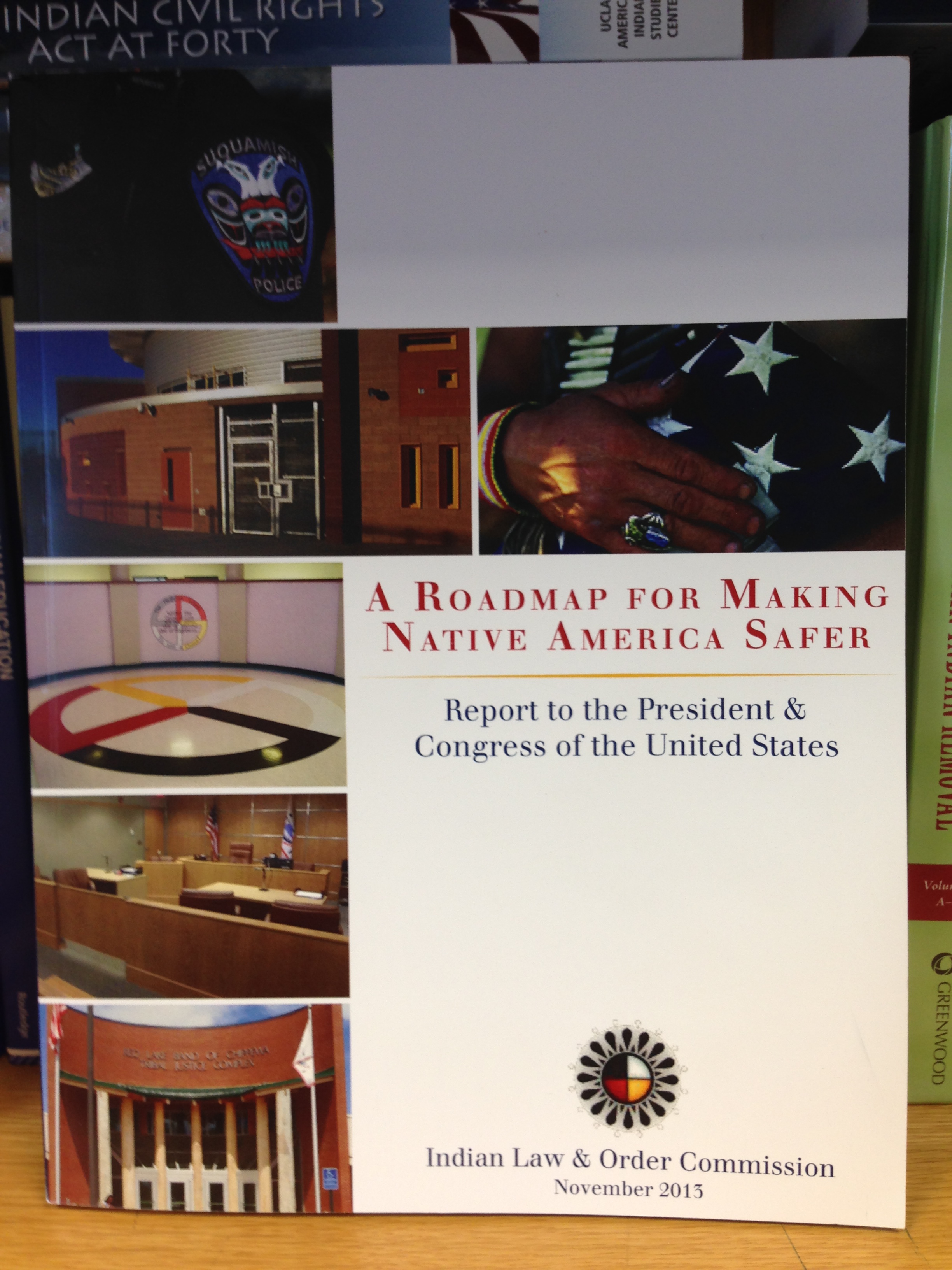 rank the various recommendations in order of importance. I’m sure it’ll be an interesting exercise — perhaps useful, if not entirely scientific.
Couple things. This is a ranking poll, not a winner take all poll. So rank your choices, and don’t worry about who the single winner might be,
Results Thursday morning.
News coverage here.

NCAI Press Events During Week Of White House Tribal Nations Conference
Indian Law and Order Commission Press Conference
WASHINGTON, DC: The National Congress of American Indians (NCAI) is pleased to announce a series of events surrounding the November 13, 2013 White House Tribal Nations Conference. The Conference gives the White House the opportunity to interact with tribal leaders from across Indian Country and the concentration of tribal leaders in Washington, DC allows Native and non-Native allies to discuss a wide variety of policies facing Native peoples.
Many inches and much airtime have been given to the debate over the name of the Washington, DC football team. The White House meeting and the preceding events on November 12th are an opportunity for members of the media and the general public to become more acquainted with the diverse scope of issues currently under debate and review in Indian Country.
NCAI will hold a Tribal Leaders Preparatory Meeting prior to the Conference on November 12th. The meetings are not open to press. However, there will be a press conference at 12:30pm and additional time set aside for connecting with tribal leaders.
The Indian Law and Order Commission, the national advisory board to the President and Congress on criminal justice issues created by the Tribal Law and Order Act, will hold a lunchtime press conference to release a new report, “Strengthening Justice for Native America: A Roadmap.” The report, one of the most comprehensive such studies ever undertaken, details the public safety crisis in Indian Country and recommends specific legal and policy reforms. “American Indian and Alaska Native communities and lands are often more dangerous than the rest of our country, and outmoded federal laws and policies are largely to blame,” stated Commission Chairman Troy Eid. “The Commission’s recommendations seek to eliminate the public safety gap that threatens so much of Native America.” The report will be made available to press during the event.
 Turtle Talk
You must be logged in to post a comment.