Here is the statement on the denial of cert in Rogers County Board of Tax Roll Corrections v. Video Gaming Technologies, Inc.:
Justice Thomas Statement on Denial of Cert
Here are the cert stage materials in Rogers.
Here is the statement on the denial of cert in Rogers County Board of Tax Roll Corrections v. Video Gaming Technologies, Inc.:
Justice Thomas Statement on Denial of Cert
Here are the cert stage materials in Rogers.
Here are the materials in Bosse v. State of Oklahoma (McClain Dist. Ct.):
9-23-2020 Chickasaw Nation Amicus Brief
This case is on remand from the appellate court, materials here.
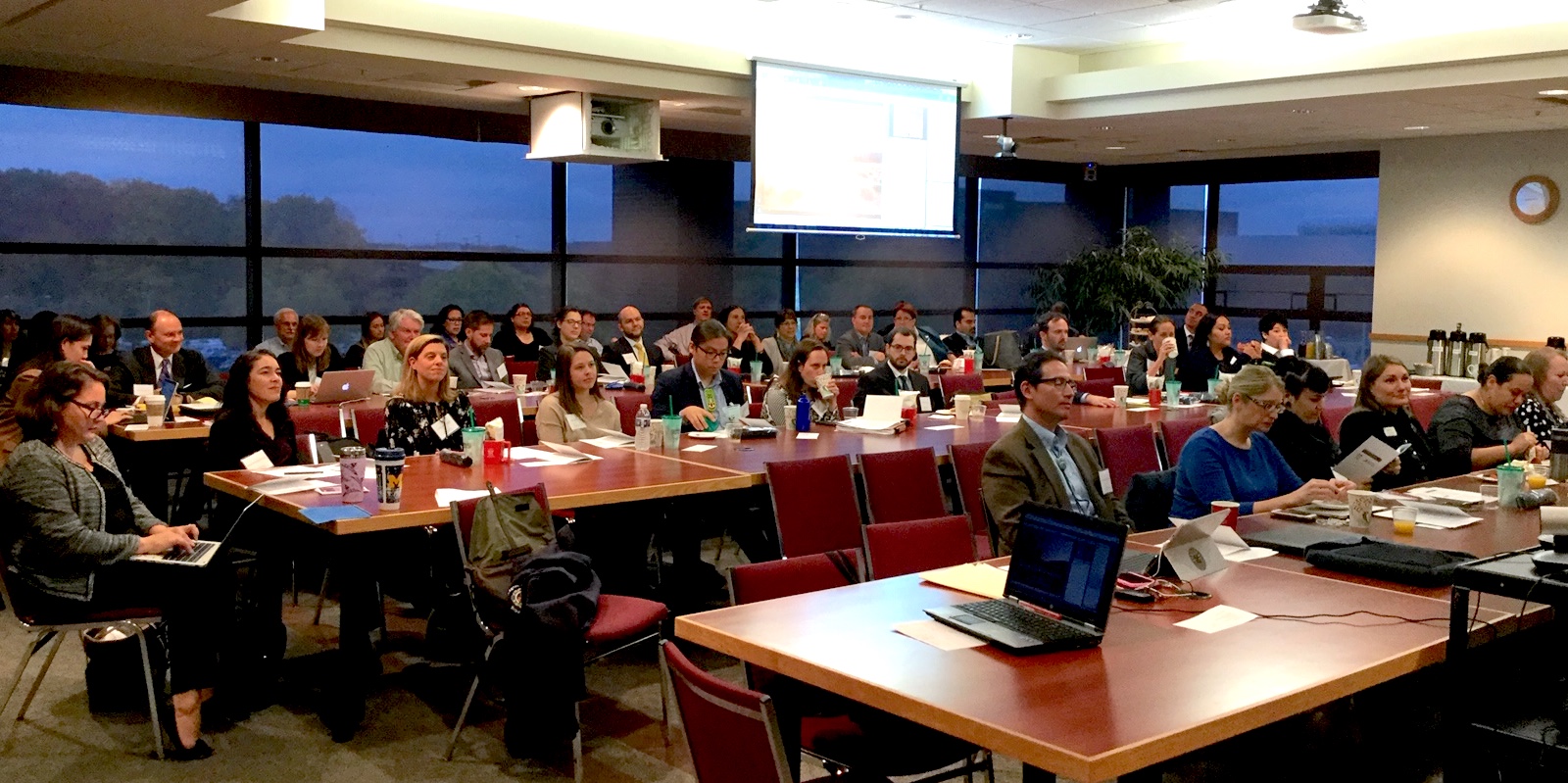
Anishinaabewaki, East Lansing, MI—When COVID-19 created an atmosphere of uncertainty for conference and training programs in 2020, the Tribal In-House Counsel Association and the Indigenous Law and Policy Center responded. The pressures of many new conditions placed on tribal in-house counsel attorneys prompted us to host the webinar series known as QuaranTICA. QuaranTICA covered issues such as tribal court closures and child welfare concerns while also bringing insight, updates, and as always, good humor to issues affecting tribal attorneys. Now, we are back for more!
The 2020 Indigenous Law Conference will be hosted as a webinar for the first time ever. The date has also changed to accommodate this new format.
The important message here is: it is TICA time!
With some familiar faces and other speakers who are new to our virtual stage, join us November 10, 12, and 13, 2020 to hear follow-up discussions about child welfare and social services, COVID-19 related litigation, quarantine issues and their enforcement, and remote oral arguments. Stay tuned for new panels on voting rights and the McGirt decision. Plus, it isn’t TICA without a reception! We are delighted to host live music from across Turtle Island on the evening of the opening day of the conference—November 10th.
You can find all conference details including registration, the agenda at a glance, and sponsorship tiers at www.indigenouslawconference.com. Just like every year, the Indigenous Law Conference is the time to renew your TICA membership, which is included in the registration fee. The conference is free for law students who register with their current law school email.
Check the website to register. Prior to the event, you will receive a password to the Indigenous Law Conference Participant Portal where the Zoom links will be available.
The conference consists of 6 panels, each 1.5 hours long, and is approved for 9 CLE credits through the Minnesota State Board of Continuing Legal Education.
Here is the EPA letter to the governor:
Get ready to stay up late or set your recorder. Nightline page here.
ABC News Turning Point Series – Looking into What America Owes Native Americans.
Monday, October 12 | 4 PM | ZOOM
McGirt V. Oklahoma: Understanding the Implications of the Recent Supreme Court Decision Across Native America
In celebration of Indigenous Peoples’ Day, Emory University Professor of English Craig Womack (Creek) chairs a panel discussion titled McGirt V. Oklahoma: Understanding the Implications of the Recent Supreme Court Decision Across Native America.
Sarah Deer (Creek), University of Kansas Department of Women’s, Gender, and Sexuality Studies; Barbara Creel (Jemez Pueblo), University of New Mexico School of Law; and Andrew Adams III (Creek), Muscogee Creek Nation Supreme Court; and Professor Womack will explore the implications of the decision regarding the Creek Nation for Oklahoma tribal nations and other parts of Indian Country.
ZOOM registration link for this webinar: https://emory.zoom.us/webinar/register/WN_fY3DxgwFTw-SDJDB_owEbA
This lecture is made possible through the generous financial support of the Hightower Lecture Fund and is co-sponsored by the Native American and Indigenous Students Initiative, the Michael C. Carlos Museum, and the School of Law Health Law, Policy & Ethics Project.
Elizabeth Ann Kronk Warner and Heather Tanana have posted “Indian Country Post McGirt: Implications for Traditional Energy Development and Beyond” on SSRN.
The abstract:
The decision in McGirt v. Oklahoma is being heralded as the most important Indian law decision of the last 100 years, as it affirmed the reservation boundaries of the Muscogee (Creek) Reservation – an area long considered by many to be under Oklahoma’s jurisdiction. Yet, following release of the Court’s decision, the outcry from the oil and gas industry was almost instantaneous, as roughly twenty five percent of Oklahoma’s oil and gas well and sixty percent of its oil refineries are impacted by the Court’s decision. Additionally, the territory affected by the Court’s decision also includes pipelines crucial to the successful operation of the nationwide Keystone XL pipeline. While the Court was clear that its holding was limited to criminal jurisdiction under the Major Crimes Act, the decision nonetheless has broader implications for Indian country, including natural resource development and regulatory framework. Because the oil and gas industry will now have to work with tribes and the federal government instead of favorable state officials, industry officials decry the Court’s decision as being detrimental to the industry. But what exactly will be the impact of the Court’s McGirt decision on the oil and gas industry, and the natural resources development in Indian country more broadly? While the full impacts of the Court’s decision are only beginning to unfold, this Article seeks to answer the questions left hanging by the Court’s decision as they relate to traditional energy development. This Article explores the future impacts of the McGirt decision on traditional energy development. The second Part of the article summarizes the legal background that governs oil and gas development in Indian country. Part three provides an in-depth analysis of McGirt—first, describing its predecessor, Sharp v. Murphy, followed by an explanation of McGirt and its holding. The article concludes by discussing future implications of McGirt, including what it means for oil and gas development going forward as well as collateral effects. The article constitutes an important scholarly contribution as it answers important questions left open after the Court’s decision and explains how the Court’s decision has broader implications for Indian country and natural resource development generally.
Ann Tweedy has posted “Has Federal Indian Law Finally Arrived at ‘The Far End of the Trail of Tears’?”, forthcoming in the Georgia State University Law Review, on SSRN.
Here is the abstract:
This essay examines the United States Supreme Court’s July 9, 2020 decision in McGirt v. Oklahoma, which held that the historic boundaries of the Creek reservation remain intact, and argues that the decision likely signals a sea change in the course of federal Indian law of the magnitude of Obergefell v. Hodges in the LGBT rights arena. The essay shows how the opinion lays a very strong foundation for a much-needed return to traditional federal Indian law principles, respectful treatment of tribal governments as a third sovereign in the American system, and an understanding of fairness from the perspective of tribes and Native individuals. The essay concludes with the hope that Justice Gorsuch’s majority opinion will foster predictability in the wildly unstable area of disestablishment and diminishment jurisprudence, as well as in other facets of federal Indian law.
Here.
Here are the materials in State v. Barker (Dist. Ct. Seminole County):


You must be logged in to post a comment.