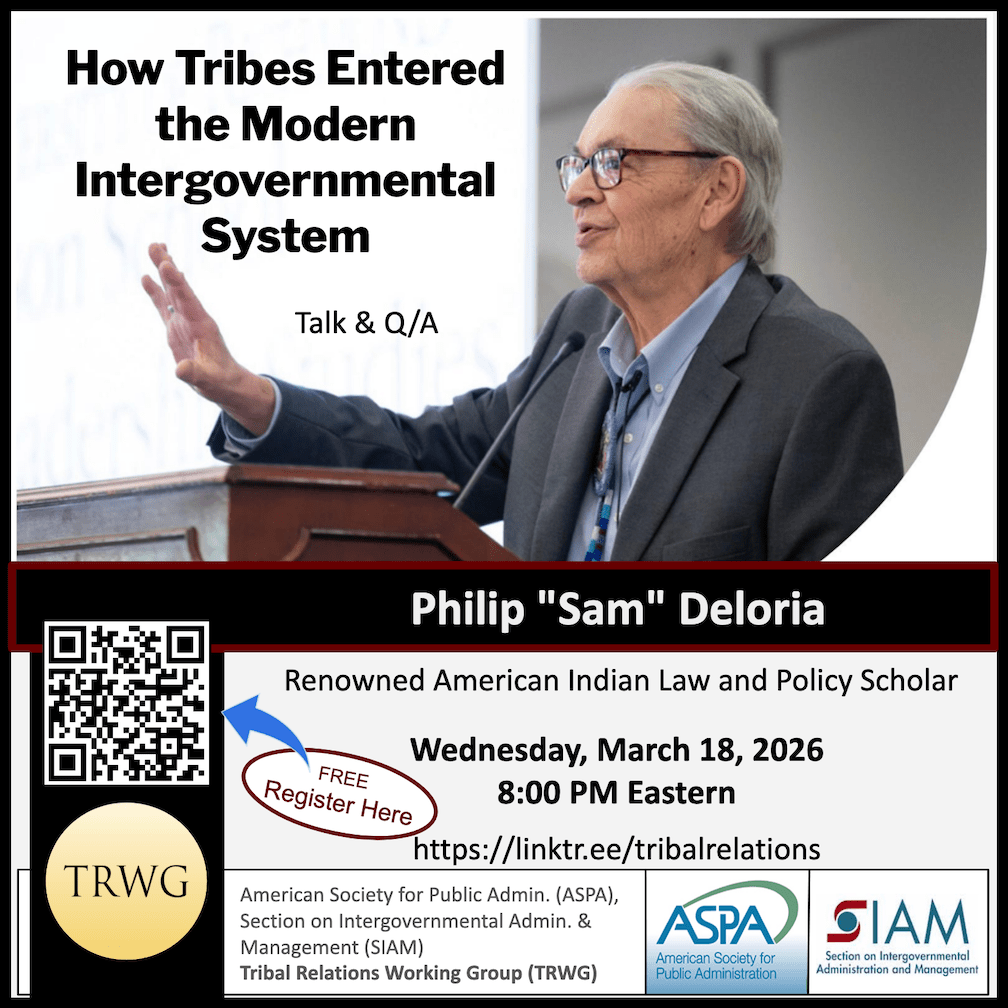
Please join us!

Please join us!

Here (PDF):
Here. The first part of this article is coverage of the American Indian Law Center’s “First Thirteen” event. Sam’s commentary is below:
But the judges are not so clearly divided pro and con Indian cases either, as is seen in the recent Jicarilla 8-1 vote, which resulted in protection of privileged communications between trust administrators and the government, so it could be a long wait. And long-time Indian policy analyst Sam Deloria (Standing Rock Sioux), is not content to wait, and argues for a new approach.
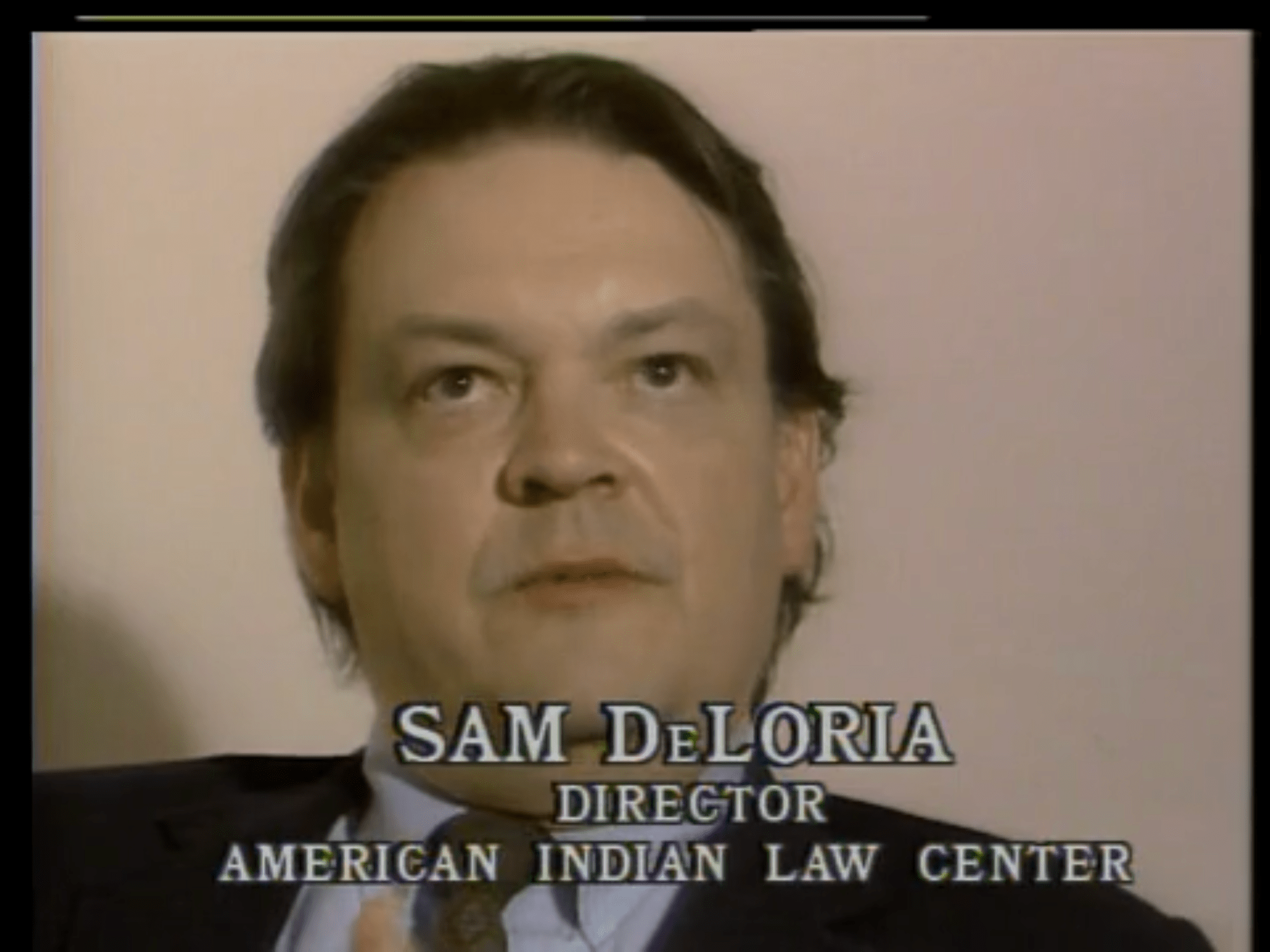
Deloria, who currently heads the American Indian Graduate Center and served as director of the American Indian Law Center since the 1970s, shepherding many future attorneys through the Pre-Law Summer Institute, declared, “It’s not going to do us any good to keep constantly complaining that they’re not accepting our arguments. And, I think it would make much better sense to think very deeply about what it is that seems to be troubling them, and I think what troubles them is, what we want.
“It’s not that they don’t understand Indian law, it’s that the version of Indian law that we keep urging on them unsuccessfully, they don’t buy it. And one of the reasons they don’t buy it is they don’t see clearly what the outlines are of tribal powers that we’re talking about and because they’re afraid of what lawyers call ‘the slippery slope’– that if they let these guys do this, then what’s next?
“They’re very skeptical about going along with tribal claims because they just don’t understand what it is we’re talking about – I’d think we’d be much better off trying to depict to the court a workable set of governmental relationships that include tribal, state and federal and how that actually would work in practice—they don’t know the situation of tribal governments on the ground and so, they have misgivings. Well, let’s find out what their misgivings are, and address those, instead of just coming back every time quoting cases from the 1830s, or cases from the 1950’s and early 60’s, let’s go back and see what their problem is and try to address their problem.”
As usual, Sam Deloria is ahead of the curve in thinking about broad issues of Indian law and policy.
From Sam Deloria:
[Are there] any plans to raise this [San Francisco Peaks and the Arizona Snowbowl] as the first situation in which the Obama administration can demonstrate its understanding of the UN declaration it just embraced?
[Is] anyone … taking a stab at formulating a way for the executive branch of USG to give principled accommodation to Indian religious concerns without running afoul of the Establishment Clause?
[I] think we need to write the formula ourselves instead of waiting for them to do it, and I think we need to understand their bewilderment and their need to understand the scope of any accommodation we ask for.
***
In general, I think at this point in most processes, we go limp and expect the government to do the hard work, which is to try to draw the line between ok and not-ok. And then we criticize them for not doing it, although we haven’t done much to help them. By dismissing their questions as being merely insensitivity, we forfeit the chance to influence the outcome.
Comments are welcome.
From ICT:
The American Indian Graduate Center, a nonprofit organization dedicated to improving cultural and economic well-being for individuals and tribes through undergraduate and graduate education, recently announced that it has awarded its first fellowship scholarship to a Shinnecock Indian Nation member.
Members of the Shinnecock Nation, which became the 565th Native American tribe recognized by the United States government earlier this year, were formerly ineligible for the fellowship program because the tribe lacked federal recognition.
Kelly Dennis, a law student at the University of New Mexico School of Law in Albuquerque, N.M., received the $3,000 fellowship award. A member of the Shinnecock Nation, graduate of the Pre-Law Summer Institute at the American Indian Law Center, and participant in the American Indian Law Certificate Program, Dennis hopes to represent her tribe and other underrepresented American Indian tribes upon her graduation.
“Kelly would like to use her expertise to assist tribes striving to find creative paths that will strengthen and rebuild their nations,” said Sam Deloria, AIGC director. “AIGC recognizes the potential of these dreams and considers it a privilege to lessen the financial burden of paying for a law degree in order to achieve such aspirations. And we like to hope that her award marks the first federal assistance to the Shinnecock Nation.”
From the Yale Alumni Magazine:
Yale seems reluctant to dig into the controversy over whether Skull and Bones has Geronimo’s skull and bones. But the university’s most prominent Native American alumnus wants his alma mater to take a stand.
A federal lawsuit by Geronimo’s great-grandson is on hold for now against the university and the secret society. Nonetheless, “I would like to see Yale say to Skull and Bones, ‘Give them back whatever you have or you’re finished at Yale,'” says Sam Deloria ’64, recipient of the university’s first Native Alumni Achievement Award in 2005.
Deloria, a member of the Standing Rock Sioux Tribe and director of the American Indian Graduate Center in New Mexico, recognizes that “that’s not going to happen,” thanks to what he calls “institutional cowardice” and the “powerful, powerful people” — including both Bush presidents — who belong to Skull and Bones.
Still, he would like to see Yale take a public stand on the efforts of Geronimo’s descendants to find out whether Skull and Bones really has any of the Apache warrior’s remains. “An acknowledgment that the tribes and the families have some concern would be a start.”
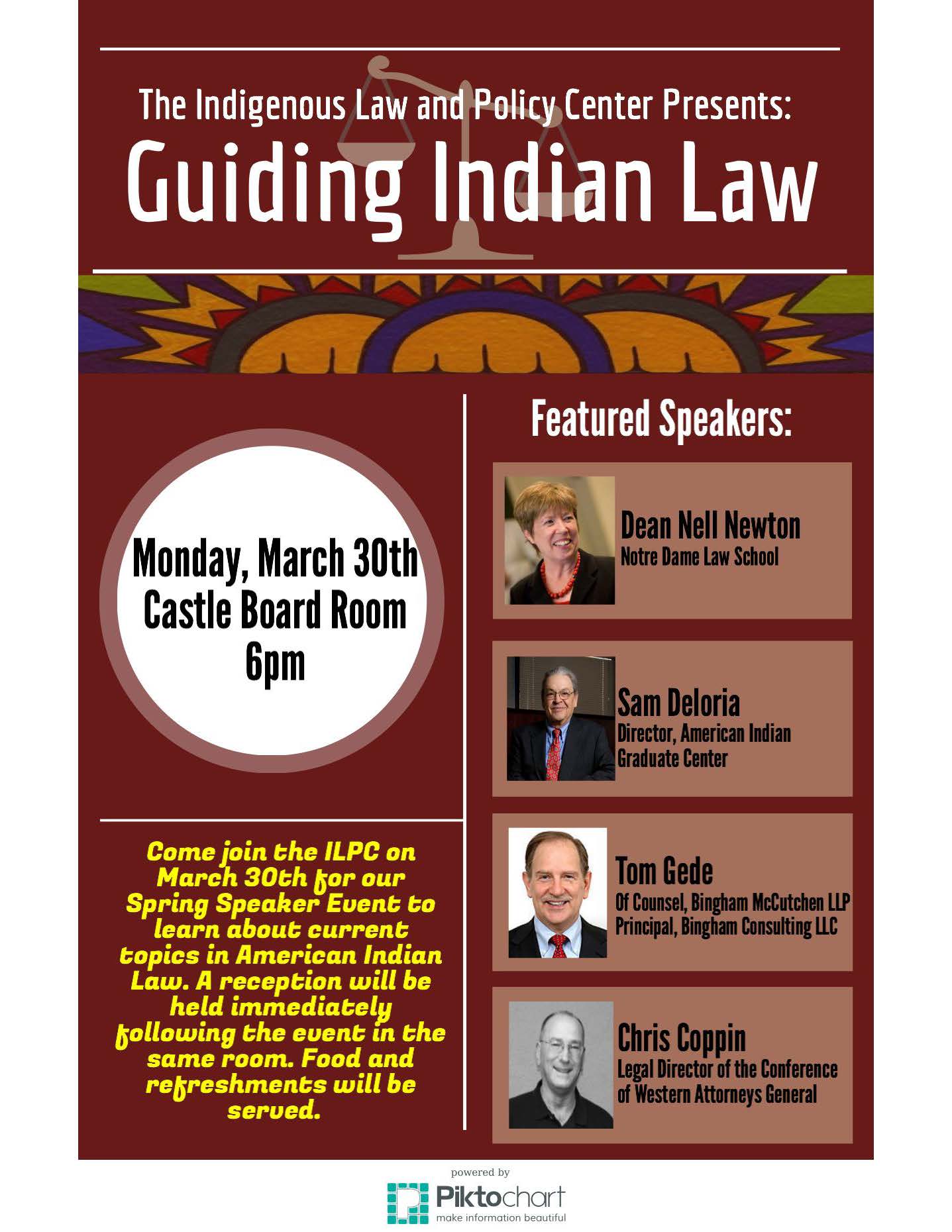
Tomorrow, we host “Felix Cohen’s Indian Law Legacy.” Speakers include Bethany Berger, Sam Deloria, Sam Hirsch, Riyaz Kanji, and Christian McMillen.
Here’s the poster.
Our mini-symposium on “Felix Cohen’s Indian Law Legacy” will be held next Friday, March 28, 2008, starting at 11AM in the Castle Boardroom at the law college. Our speakers include Sam Deloria, Christian McMillen, Riyaz Kanji, Sam Hirsch, and Bethany Berger.
We will be celebrating the recent publication of three books: (1) Cohen’s Handbook of Federal Indian Law; (2) Christian McMillen’s “Making Indian Law: The Hualapai Land Case and the Birth of Ethnohistory“; and (3) Dalia Tsuk Mitchell‘s “Architect of Justice: Felix S. Cohen and the Founding of American Legal Pluralism.” Unfortunately, Prof. Tsuk Mitchell can’t make the conference.
A fourth book, edited by David E. Wilkins, “On the Drafting of Tribal Constitutions,” was recently published by the University of Oklahoma Press — a little too late for our planning.
This panel is funded in part by the Michigan Humanities Council, an affiliate of the National Endowment for the Humanities.
From Legal History Blog:
The
Littleton-Griswold Prize for the best book in American law and society will be awarded to Dalia Tsuk Mitchell for Architect of Justice: Felix S. Cohen and the Founding of American Legal Pluralism (Cornell Univ. Press, 2006) at the annual meeting of the American Historical Association in January.
We will be hosting Prof. Tsuk Mitchell at the Center this spring to discuss her book, along with Sam Hirsch of Jenner & Block, Riyaz Kanji of Kanji & Katzen, Christian McMillen of the University of Virginia, and Sam Deloria of the American Indian Graduate Center. That day’s panels will be discussing the legacy of Felix S. Cohen.
You must be logged in to post a comment.