Downloads(PDF):
water quality standards
Catherine O’Neill on Washington Dept. of Ecology’s Draft Water Quality Standards and the District Court’s Order Enjoining EPA to Act
Here. Professor O’Neill provides a detailed and understandable summary of the many problems with Ecology’s draft standards and also explains EPA’s role and the District Court for the Western District of Washington’s recent decision.
The District Court’s decision in Puget Soundkeeper Alliance v. EPA is here: Puget Soundkeeper v EPA Order on Summary Judgment 8-3-16.
Maine’s Second Amended Complaint in State v. McCarthy
Doc. 30- Second Amended Complaint
Previous Turtle Talk coverage here.
Maine is suing the EPA over agency action concerning the State’s surface water quality standards.
EPA Announces Proposed Interpretive Rule for Tribal Treatment as State (TAS) status under the Clean Water Act
The proposed rule would streamline the TAS process for many tribes seeking eligibility to administer water quality standards and other Clean Water Act programs.
See the Federal Register announcement here. The deadline for comments is October 6, 2015.
From the announcement:
The effect of this proposal would be to relieve tribes of the need to demonstrate their inherent authority when they apply for TAS to administer CWA regulatory programs. In particular, this proposal would eliminate any need to demonstrate that the applicant tribe retains inherent authority to regulate the conduct of nonmembers of the tribe on fee lands under the test established by the Supreme Court in Montana. Instead, applicant tribes would be able to rely on the congressional delegation of authority in section 518 as the source of their authority to regulate their entire reservations under the CWA, without distinguishing among various categories of on-reservation land. As EPA explained in connection with the CAA, such a territorial approach that treats Indian reservations uniformly promotes rational, sound management of environmental resources that might be subjected to mobile pollutants that disperse over wide areas without regard to land ownership. See 59 FR at 43959. As specifically recognized by the district court in Montana v. EPA, the same holds true for regulation under the CWA. Montana, 941 F. Supp. at 952.
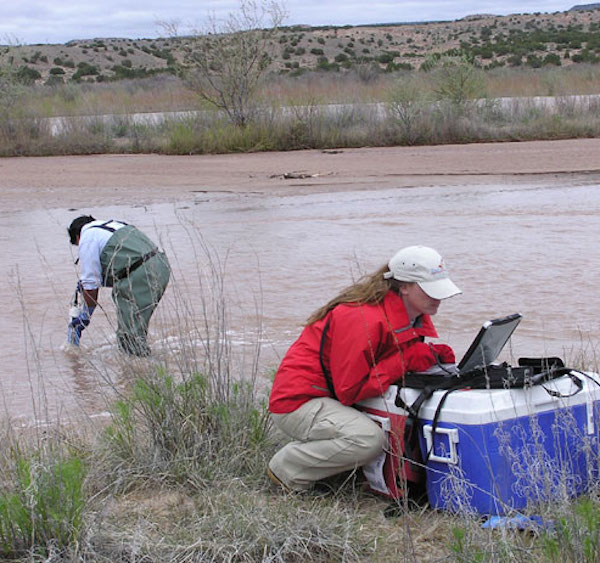
Read more at http://indiancountrytodaymedianetwork.com/2015/07/22/santa-ana-pueblo-get-epa-certified-administer-clean-water-act-tribal-land-161159
 Turtle Talk
You must be logged in to post a comment.