ILPC Presentation at the Jackson, MI Community Forum on Land Treaties

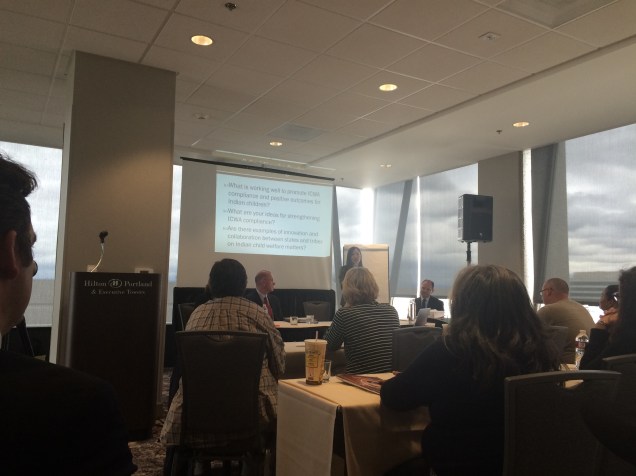
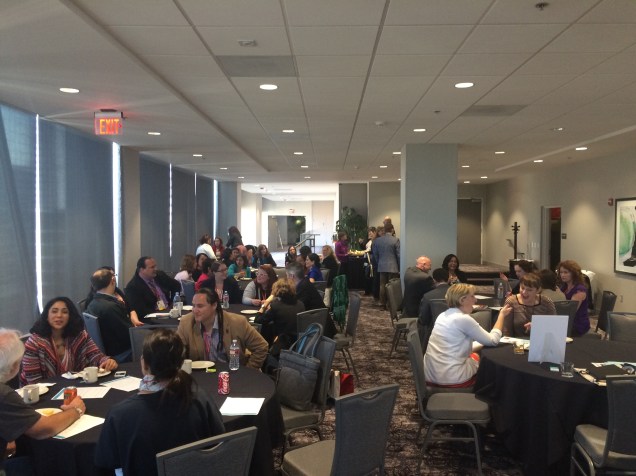
MSU ILPC & Indian Law Clinic students presented at the Jackson Community Forum: Impact of Land Treaties.

IMG_7051

As a side note–this event, hosted at the Jackson District Library and open to the public, was very well attended. The questions we received were all thoughtful, curious, and kind. Our students did well and felt welcomed. This event came out of a project volunteers in the city did around the 200 anniversary of 1815 survey of Michigan–which happened because of the Treaty of Detroit. Instead of ending there, the organizers decided they needed to know more about treaties and how they work today. Because the event went so well, the librarians are planning to have more events on other issues involving Native communities in Michigan.

Law Professor Comments Submitted on EPA Proposed Rule

Law Professor Comments regarding the Environmental Protection Agency’s (EPA) proposed Revision of Certain Water Quality Criteria Applicable to the State of Washington, Docket ID No. EPA-HQ-OW-2015-0174, published at 80 Fed. Reg. 55063 (Sept. 14, 2015):

Water quality standards (WQS) for Washington2 impact the rights, resources, and health and well-being of numerous tribes in the region. In fact, when the waters that support fish are allowed to be contaminated, tribes’ interests are profoundly affected and tribal people disproportionately among the most exposed. This context is significant, because it constrains rulemaking in important ways. Among other things, the adequacy of WQS for Washington must be considered in view of legal protections for tribes’ fishing rights, including treaties and other instruments.

Tribal and U.S. Response Briefs in Alaska Land into Trust Case

Response briefs filed in State of Alaska v. Akiachak Native Community;

Tribal Appellees Response Brief

USA Response Brief

Previous coverage here.

Michigan Tribal ICWA Attorneys Meeting

The second annual! A great opportunity for all of the attorneys who represent tribes in ICWA cases to get together and share information and develop relationships.

IMG_6467

The 1491s Are At NICWA

We are posting this picture very seriously, because Bobby says Turtle Talk is very serious. 

  
L-R: Sheldon Spotted Elk (Casey), Erin Dougherty (NARF), Bobby Wilson (1491s), Victoria Sweet (NCJFCJ), Addie Smith (NICWA), Christina Snider (NCAI), Kate Fort (ILPC). 

NICWA Federal Listening Session on ICWA Compliance

Sarah Kastelic (NICWA), Sam Hirsch (DOJ), JooYeun Chang (Children’s Bureau), and Kevin Washburn (Interior).


NICWA Presentation on Transitions for Foster Youth

Adrea Korthase (ILPC Alum, Oregon DHS) and the incomparable Nadja Jones (Oregon DHS) on ways to provide seamless transitions to youth aging out of foster care. 


NICWA Conference Presentation and Legal Professionals Reception 

Kate Fort and Victoria Sweet (ILPC Alum, NCJFCJ) on tribal strategies in state ICWA cases.  

The Legal Professionals Reception co-hosted by ILPC, TICA, and Tilden McCoy & Dilweg. 


Florida Law Review: Prof. Atwood’s Response to Prof. Berger’s Adoptive Couple Article

Prof. Berger’s article here.

Prof. Atwood’s response here.

Professor Berger, however, does not address another danger inherent in the Court’s § 1915 holding. If applied to involuntary child welfare proceedings, the holding threatens to seriously undermine the effectiveness of ICWA. In a recent decision from the Alaska Supreme Court, the risks inherent in Adoptive Couple’s broad § 1915 holding were demonstrated. In Native Village of Tununak v. State Department of Health & Social Services, the court applied Justice Alito’s reasoning to a case that arose not as a private adoption but within the child welfare system. 13 The court held that the proposed adoption of a Native child by his Anglo foster parents could go forward without the necessary finding of good cause under ICWA because no other formal adoption petition had been filed.14 In that case the child’s maternal grandmother had taken only informal steps to request that she be allowed to adopt but had not filed a formal petition.15 As noted by the dissent, in rural Alaska where villages are remote and legal representation is nonexistent, the requirement that a formal adoption petition be filed may mean that potential ICWA placements will go undiscovered.16

Other articles and cases related to Adoptive Couple are available here.