Job Posting: Tribal Attorney for Keweenaw Bay Indian Community

Details here (pdf).

To serve as general in-house counsel for the Keweenaw Bay Tribal Council.
Provides legal advice and assistance to the Keweenaw Bay Tribal Council, tribal administrators, program and enterprise directors/managers.
Prepares legal documents. Acts as agent of the Tribal Council in various transactions.
Provides counsel and representation on treaty right issues: hunting, fishing, trapping and gathering, taxation, environment, and civil regulations.
Represents Tribal Council in court and before quasi-judicial or administrative agencies. Provides legal counsel and representation on Indian Child Welfare matters.
Maintains and revises the Tribal Code. Drafts, reviews, revises and acts as consultant in regard to tribal legal codes and legislation.
Reviews and assists in revision of personnel manuals, policies and procedures to ensure compliance with tribal and applicable federal laws.
Supervises Legal Department clerical staff, and may act as Tribal Prosecutor (if appointed by Tribal Council).
Reviews all tribal contracts for legal sufficiency in conjunction with the tribes’ Chief Financial Officer. Represents the tribe in regard to land acquisition, including fee to trust applications.
Serves on advisory committees relative to economic and financial development, environmental concerns, employee benefits and employment policies.
Performs other related duties as directed by the Tribal Council and assigned by the Tribal President.
Dean Washburn Confirmation Hearing Friday, September 14th

Information on Kevin Washburn’s confirmation hearing to be Assistant Secretary-Indian Affairs here.

Brothertown Indian Nation Petition for Federal Recognition Denied

Press release here.

WASHINGTON, D.C. – Acting Assistant Secretary – Indian Affairs Donald E. “Del” Laverdure today issued a final determination on a petition for federal acknowledgment, declining to acknowledge the Brothertown Indian Nation (Brothertown) as an Indian tribe under federal law. Brothertown is located in Wisconsin and first submitted its petition in 1980.
In the final determination on the Brothertown petition, the acting Assistant Secretary determined that the group previously had a relationship with the United States, but had its tribal status terminated by an 1839 Act of Congress. The Department’s regulations prohibit the Assistant Secretary from acknowledging a petitioning group where Congress previously terminated the tribal status of that group. Only Congress may restore the tribal status of Brothertown and its government-to-government relationship with the United States.

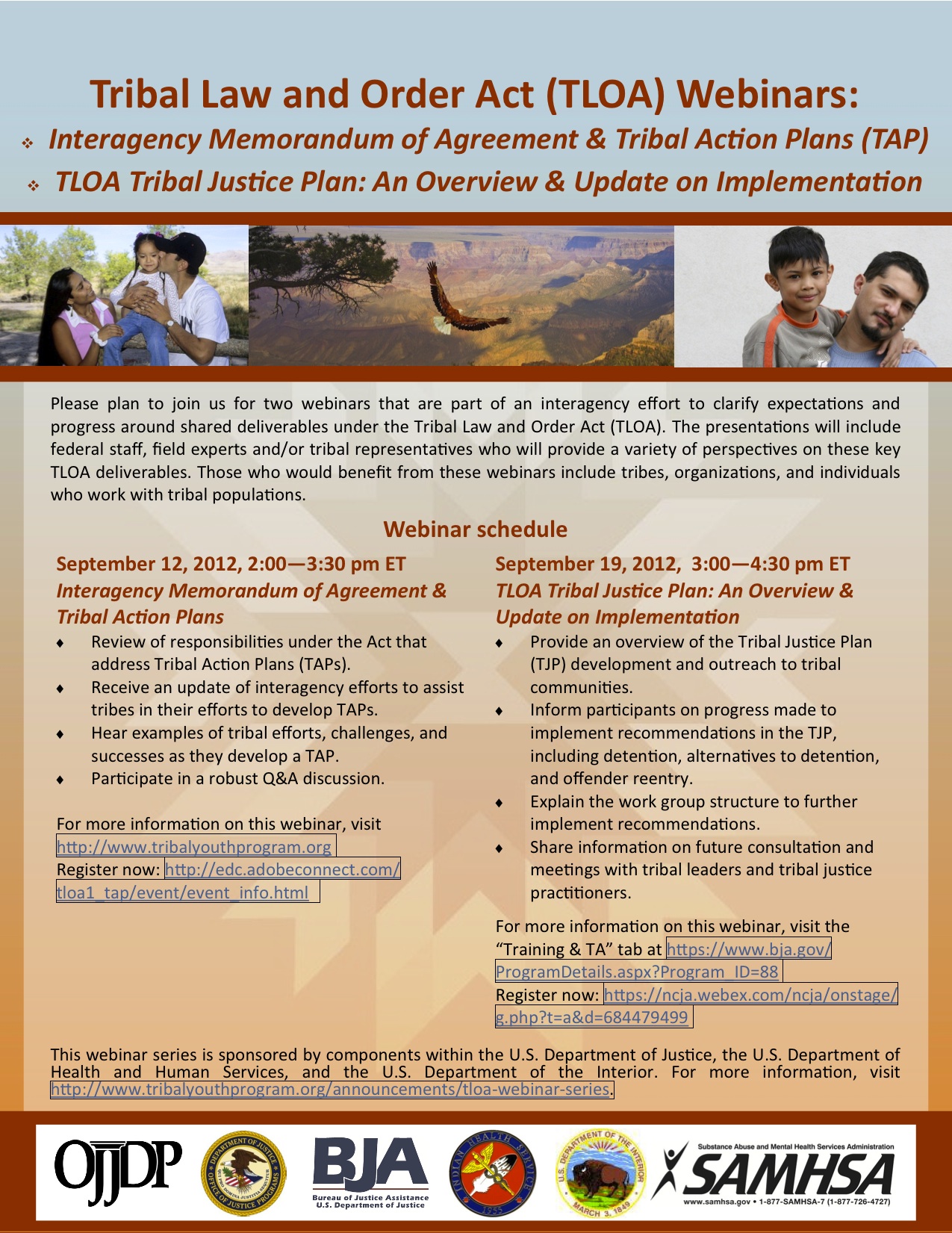
TLOA On Line Presentations Held by DOJ, DHS & DOI

Here is the information:


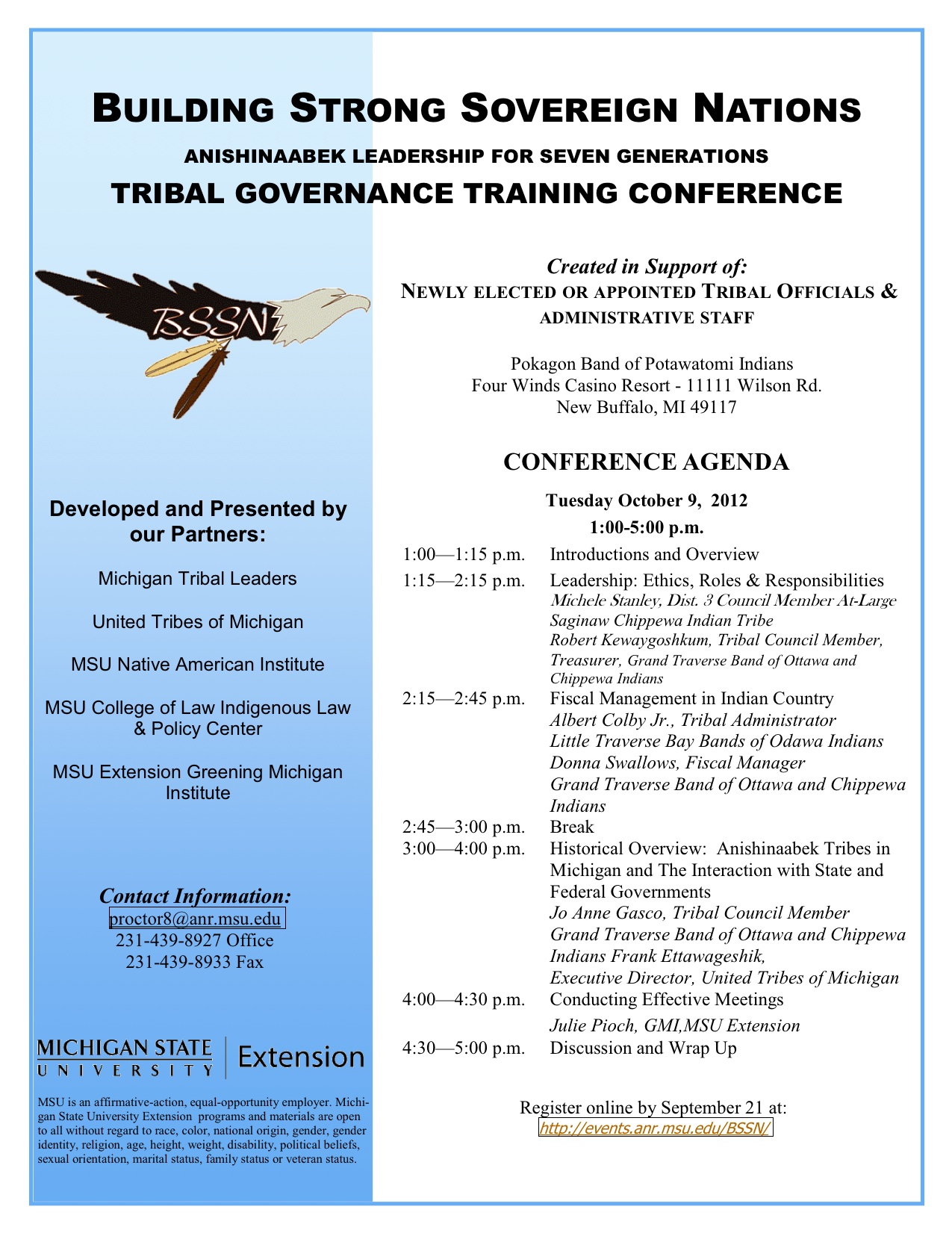
Save the Date — “The Secret Life of Tribal Courts: How to Run a Successful Community-Based Court”

Hosted by the Michigan Indian Judicial Association and Little Traverse Bay Bands of Odawa Indians, October 11-12.

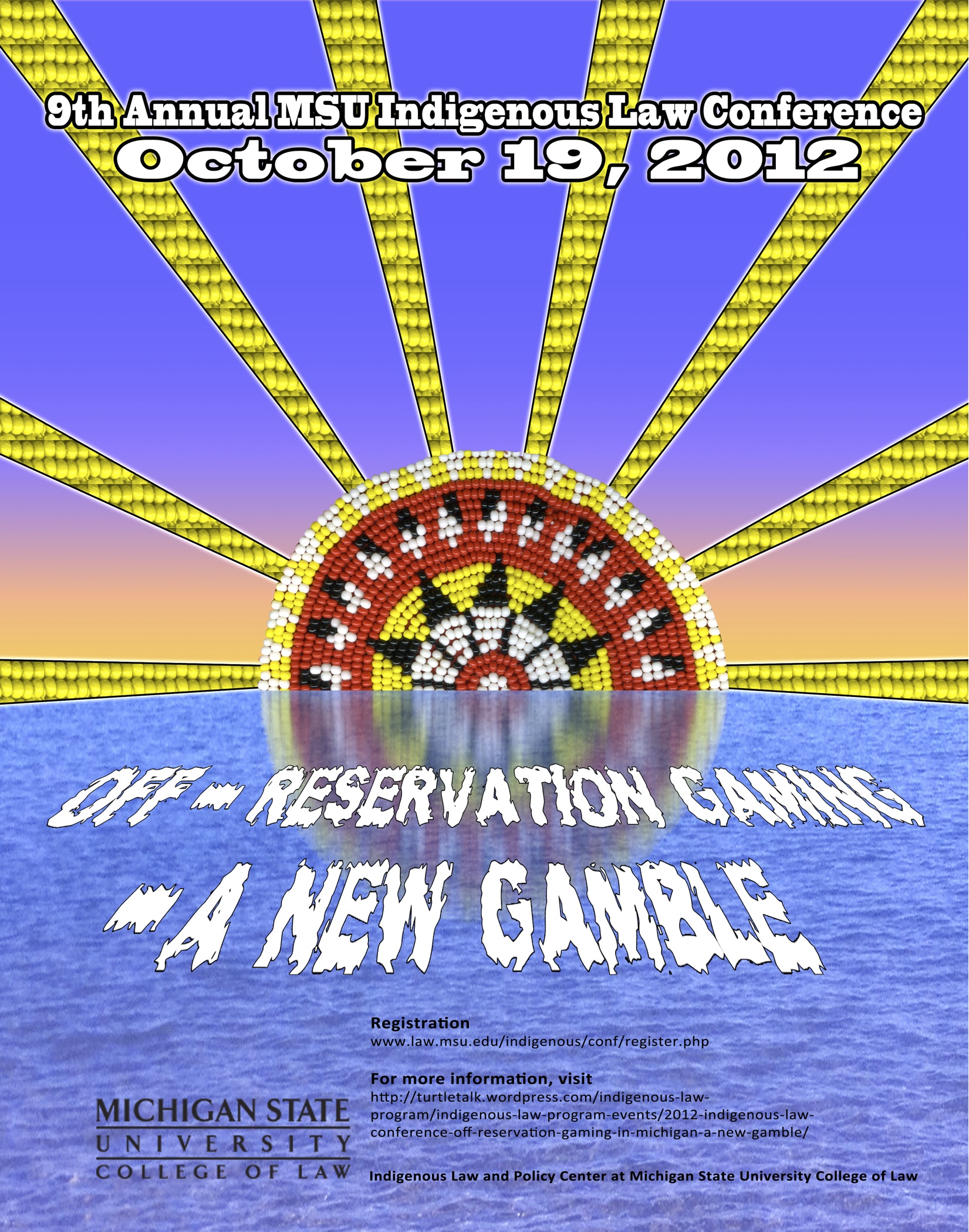
2012 ILPC Annual Conference–Off Reservation Gaming in Michigan

October 19th, at the Law College in East Lansing.

Registration here.

Schedule & additional details here.


Poster by Ken Akini, ILPC Fellow.

Beadwork by Mary Hemenway, Little Traverse Bay Bands of Odawa Indians

Article on Pokagon Band’s Development in Northern Indiana

Here.

The plan submitted to the federal Bureau of Indian Affairs also proposes a casino, hotel, meeting space and parking garage, although Pokagon Band chairman Matt Wesaw said the tribe’s focus was on providing services for about 500 members living in the area.

“There’s no time frame for the casino yet. It’s not really on the burner,” Wesaw told the South Bend Tribune for a story Wednesday.

The tribe opened its Four Winds Casino in New Buffalo, Mich., about 30 miles from South Bend, five years ago. It has since opened a smaller satellite casino in Hartford, Mich., and is preparing to open another in Dowagiac, Mich.

“We’ve accomplished a fair amount of stuff for our citizens who live in the state of Michigan,” Wesaw told WNDU-TV. “It is now time to be in a position to provide those services for our citizens who live in the service area in Indiana.”

GTB Press Release on 2% Payments

Here (pdf).

Michigan Public Radio Environment Report on LRB’s Role in Preserving the Pine Marten

Here (with photos).

Nearly a hundred years ago a small animal that most people have never heard of was wiped out of the northern forest. In the mid-1980’s, wildlife biologists reintroduced the pine marten in two locations in the Lower Peninsula. They thought the population would take off and spread but it hasn’t. And now researchers are trying to find out why.

The pine marten is the smallest predator in the northern forest. It’s a member of the weasel family… related to otters and ferrets. It weighs roughly two to two-and-a half pounds, has big furry ears, a pointed nose, a bright orange patch on its chest and a bit of a temper.

“I don’t know how big of an animal they would take on but they do have a reputation for being quite fierce.”

Jill Witt is a wildlife biologist with the Little River Band of Ottawa Indians. She has a marten caught in a wire cage tucked next to a fallen log, half buried in twigs and leaf litter.

More than 80 years ago, martens lived in big pine trees before logging, wildfire and trapping wiped them out.

“And I think marten really is a good example of a species that can do well if the forest is allowed to recover and return to and continue on towards a more mature, possible even old growth state.”