Marcia Ann Zug has posted “‘In My Defense, I Have None:’ Taylor Swift, Indian Law, And A Re-Examination Of Custom’s Inapplicability In The United States,” forthcoming in the Harvard Journal of Environmental Law, on SSRN. Here is the abstract:
Traditions matter. They connect people with their past and provide a sense of identity and community in the present. When they disappear, the opposite occurs; individuals are left isolated and detached. The common law doctrine of custom was crafted to protect community customs and traditions, yet for centuries, American courts have repeatedly declared this doctrine inapplicable and irrelevant. This Article demonstrates that the inapplicability of customary law in the United States has been greatly exaggerated. More specifically, this Article shows it was a deliberate fabrication created to justify both the seizure of native lands and the commencement of the American Revolution. Acknowledging this shameful history, which includes the centuries-long erasure of native nations and the modern-day denial of tribal rights, demands the reexamination of the doctrine of custom, and its alleged inapplicability. This Article explores how and why custom was declared dead in America while also advocating for its revival. Custom defines who we are, and the doctrine of custom provides an essential framework for protecting the cultural practices that shape our collective identity. Safeguarding our customs-from what we eat, to where we play-is vitally important. Unfortunately, current methods of protection are limited and largely ineffective. Reviving customary law offers a potential solution that will benefit all Americans while also addressing the particular injustice of declaring native customs, and by extension, native people, irrelevant.

Grand Christensen has posted “Indian Deference” forthcoming in the University of Chicago Law Review, on SSRN. Here is the abstract:
The Supreme Court’s decision in Loper-Bright Enterprises v. Raimondo, 144 S. Ct. 2244 (2024), formally retired Chevron deference. By rejecting the long-standing presumption that courts should defer to an agency’s reasonable interpretation of ambiguous statutes, Loper-Bright reshapes the relationship between the judiciary and the executive branch. Yet this shift poses unique challenges in the field of federal Indian law, where agency decisions have long been essential to the implementation of the federal government’s trust responsibility to Indian tribes. This Article argues that despite Loper-Bright’s general rejection of Chevron, federal courts are obligated to defer to federal agency decisions involving Indian tribes. This deference is a distinct, sui generis doctrine grounded in constitutional structure, history, and the unique status of tribal nations.
Federal Indian law has always occupied a special place in the constitutional order, one shaped by the trust relationship between the United States and tribal nations. When federal agencies act pursuant to statutes and treaties embodying that trust, their decisions do not merely interpret general administrative policy, they execute sovereign obligations owed to another Nation. Judicial deference in this context therefore protects not just agency expertise but also the political accountability of the elected branches, which are constitutionally charged with managing relations between the United States and tribes. The elimination of Chevron’s framework should not be read to eliminate this constitutionally anchored respect for the federal government’s political and moral commitments to tribal self-determination.
The implications are profound for federalism and for Indian law. Judicial deference to agency decisions in Indian affairs aligns with both Article III’s limits on judicial power and the federal government’s trust obligations. Judicial modesty in this arena reinforces the proper constitutional balance among the branches, ensuring that the courts do not displace the executive’s policy judgments or the legislature’s political commitments toward tribal nations. Recognizing the Indian deference doctrine honors the jurisprudential history of tribal-federal relations, safeguards tribal sovereignty, and preserves the integrity of federal Indian law.
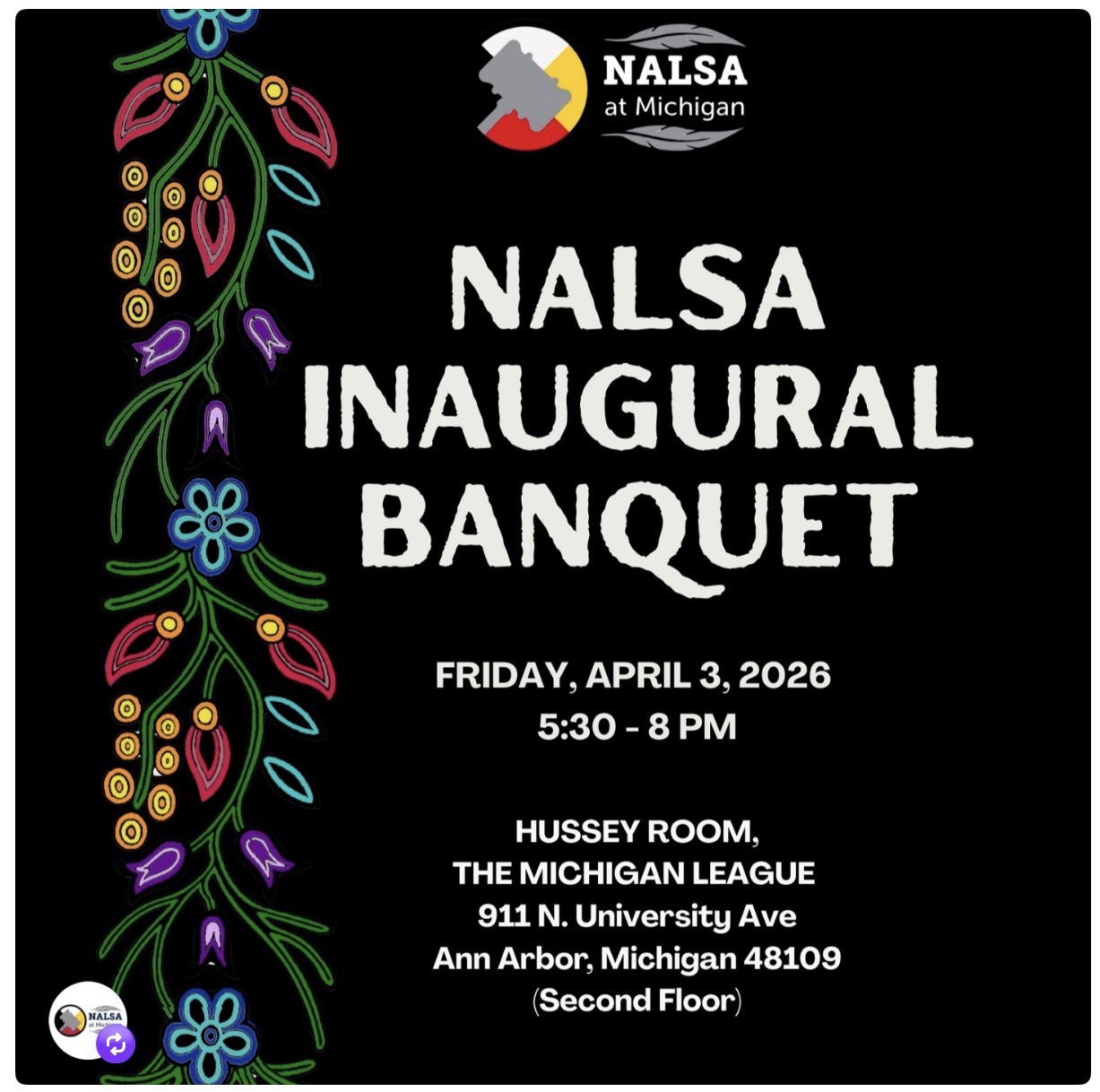
Hainipi, Boozhoo, Aaniin, Chokma, Yá’át’ééh, Imaynallan, Mohtompan wunne, Posoh, ᎣᏏᏲ, Lios em chaniavu, Ske:g taş: Greetings from the Native American Law Students Association (NALSA) at Michigan Law! Please join us for our inaugural NALSA Banquet to celebrate Indigeneity and be in community.
Tickets available through the Michigan Union ticket office here.
Even if you cannot attend, please consider buying tickets as a donation.
Shunhe Wang has published “Oh Deer: The Elk Court’s Misunderstanding of the Citizenship Clause” in the University of Richmond Law Review.
Here is the abstract:
This Article examines the enduring legacy of Elk v. Wilkins, 112 U.S. 94 (1884), a Supreme Court decision that interpreted the Fourteenth Amendment’s Citizenship Clause to exclude Native Americans from birthright citizenship. By relegating Native citizenship status to a statutory privilege rather than a constitutional right, Elk created a framework that has since been weaponized to challenge birthright citizenship for the children of undocumented immigrants. This Article demonstrates how Elk’s flawed reasoning—particularly its narrow reading of “subject to the jurisdiction thereof”—continues to shape legal and political efforts to erode the Fourteenth Amendment’s guarantees.
Drawing on Justice Harlan’s dissent in Elk, the legislative history of the Fourteenth Amendment, and the text of the Citizenship Clause, this Article argues that Elk was wrongly decided and that the jurisdictional requirement was never intended as a tool for exclusion. The Reconstruction Framers designed the Citizenship Clause to ensure equal citizenship for all persons born on U.S. soil, regardless of ancestry or parental status. Justice Harlan’s dissent provides a blueprint for this inclusive reading, rejecting the notion that allegiance at birth determines jurisdiction.
This Article calls for the explicit repudiation of Elk and its continued misuse in modern birthright citizenship debates. The Fourteenth Amendment’s promise is clear: for anyone born in the United States who subjects themselves to its jurisdiction, birthright citizenship is a constitutional right, not a congressional privilege.
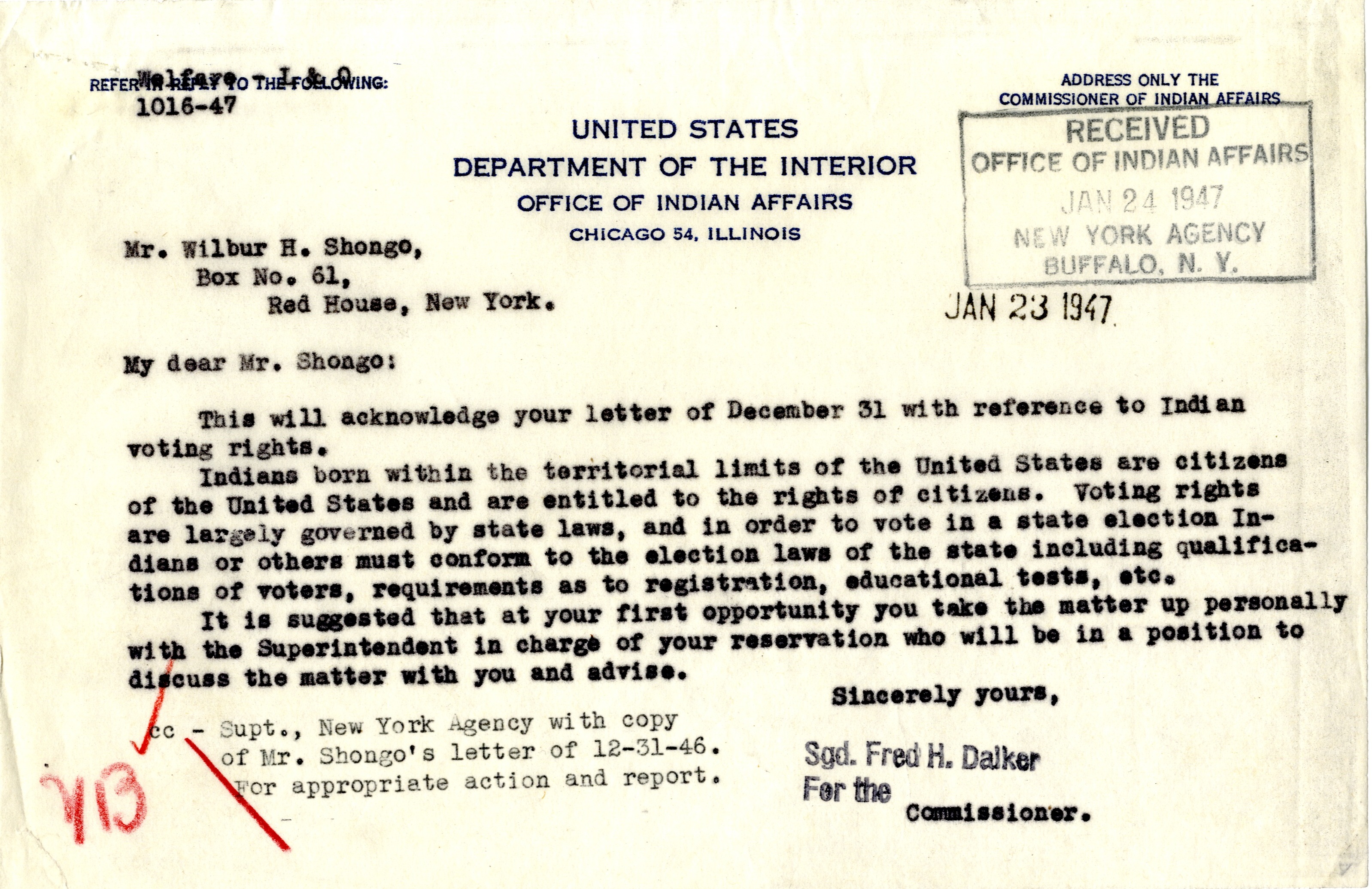
Recommended. I agree that Elk v. Wilkins wrongly decided. The opinion is filthy with rank bigotry and deserves no serious consideration, the reality of which is proven in the horrific, bigoted manner in which the Department of Justice is defending Trump’s birthright citizenship order by relying on Elk‘s application of a racial caste system. And wouldn’t it be nice if Indigenous Peoples, like all people, have the right to consent to or reject American citizenship?
Here is the opinion in Kewadin Casinos Gaming v. Patterson Earnhart Real Bird & Wilson LLP:
Here are new materials in Ute Indian Tribe v. State of Utah (D. Utah):
Here are the materials in Villebrun v. Nienaber (D. Minn.):

 Turtle Talk
You must be logged in to post a comment.