
Author: Matthew L.M. Fletcher
Alex Skibine Memorial Today @ Utah Law School
Here.

Join the University of Utah S.J. Quinney College of Law to celebrate the life of Alex Tallchief Skibine, who was S.J. Quinney Professor of Law at the college. Alex was a much loved member of our community and a renowned scholar in Indian Law.
Fellow Indian Law scholars from around the country will share their reflections on Alex and his impact in the field. There will also be space for attendees to share their memories of Alex.
The speakers will include:
Matthew Fletcher, University of Michigan Law
Carole Goldberg, University of California Los Angeles Law
Robert Miller, Arizona State University Sandra Day O’Connor College of Law
Nell Newton, Wake Forest University Law
Elizabeth Kronk Warner, University of Utah S.J. Quinney College of Law
Sadly I could not attend and recorded a short statement. Alex will always be one of my favorites. This field will be less fun without him around.
37th Coming Together of Peoples Conference @ Wisconsin Law — March 31-April 1, 2023
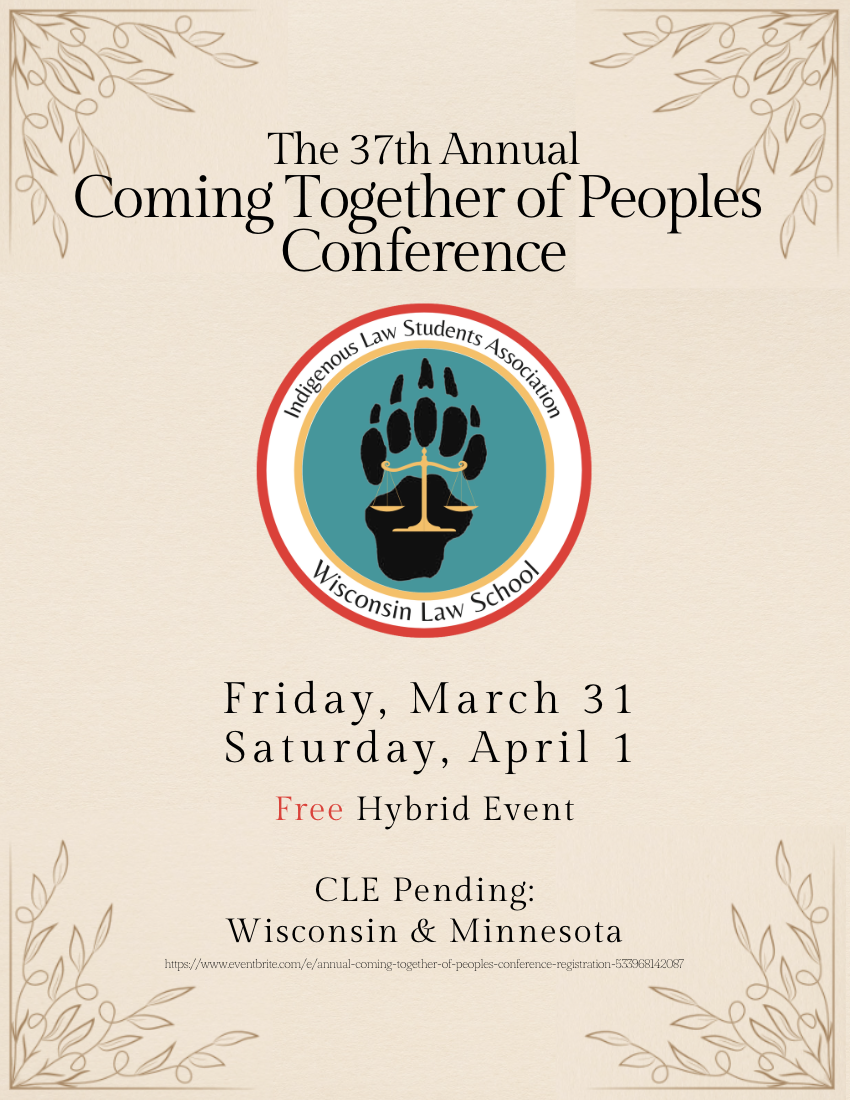
Grant Christensen on Article III Courts’ Power to Adjudicate Tribal Inherent Powers
Grant Christensen has posted “Article III and Indian Tribes,” forthcoming in the Minnesota Law Review, on SSRN.
Here is the abstract:
Among the most basic principles of our federal courts is that they are courts of limited jurisdiction, exercising only those powers delegated to them in Article III. In 1985 the Supreme Court inexplicably created an exception to this constitutional tenant, and unilaterally declared a plenary judicial power to review the exercise of an Indian tribe’s inherent sovereign authority. This exception is unmoored from all other Supreme Court precedent outside Indian law, and unjustifiably assumes the judicial power in direct contrast to the Court’s ordinarily thoughtful jurisprudence on Article III and deference to the separation of powers.
This article concludes that the Supreme Court was wrong in 1985 when it assumed a plenary judicial power over Indian affairs. The consequences are profound, and suggest a reconceptualization of the entire field of Indian law. Canon creating cases like Oliphant, Montana, and Cabazon should never have been decided because the exercise of a tribe’s inherent authority does not create a federal question conferring subject matter jurisdiction on the federal courts. The inherent power of Indian tribes to criminally prosecute or civilly regulate non-Indians in Indian country should not subject them to the judicially imposed limits set by the Supreme Court, because the Court lacks subject matter jurisdiction to decide those cases. Until a treaty or statute creates an affirmative basis for federal court review, an Indian tribe’s inherent powers are subject to the checks and balances imposed by tribal government and no others.

SCOTUSBlog Recap of Arizona v. Navajo Nation Oral Argument
Here is “Justices appear divided over Navajo Nation’s water rights.”
Background materials on the case are here.

Montana Federal Court Allows Crow Nation Member’s Allotment Partition Suit to Proceed
Here are the materials so far in Halverson v. Haaland (D. Mont.):
UCLA Debrief of Oral Argument in Arizona v. Navajo Nation

SCOTUS Denies Cert in Challenge to Spokane Tribe Water Agreement
Here is today’s order list.
The denied petition is Sulgrove v. Spokane Indian Tribe.
Lower court materials here.

Amy Cordalis Water Law Lecture @ Montana Law
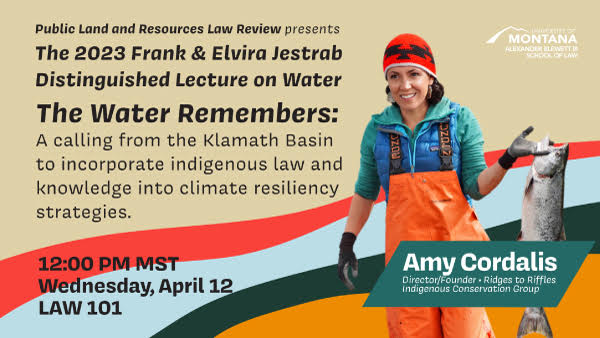
Join us Wednesday, April 12th at noon in LAW 101, or on Zoom.
Amy Cordalis, Director/Founder of Ridges to Riffles Indigenous Conservation Group, will give the lecture The Water Remembers: A calling from the Klamath Basin to incorporate indigenous law and knowledge into climate resiliency strategies.
1 CLE credit is pending.

 Turtle Talk
You must be logged in to post a comment.