Second Circuit Affirms Conviction of Conspirator in Wakpamni Frauds

Here are the available materials in United States v. Archer:

We’ve posted on the Wakpamni Lake Community Corporation frauds (plus a bunch of other cases involving this litigious entity) at great length, tag here. For materials on this specific character, Archer, see here.

Grand Traverse Band v. Burnett Foods Clean Water Act Complaint

Here is the complaint in Grand Traverse Band of Ottawa and Chippewa Indians v. Burnett Foods Inc. (W.D. Mich.):

Florida COA Orders State Trial Court to Dismiss Tort Claim against Seminole Tribe

Here is the opinion in Seminole Tribe of Florida v. Manzini (Fla. Ct. App. 4th Dist.):

Split Eighth Circuit Panel Shields Communications between North Dakota Legislators and Constituents that Probably Shows Racial Animus against Native Voters

Here are the materials in In re: North Dakota Legislative Assembly:

Opinion

Petition for Writ of Mandamus

Turtle Mountain Opposition

The underlying case is here.

Richard Pomp on Dilworth and Indian Taxation

Richard Pomp has published “Overturning Dilworth and the Impact on Tribes” in the May 29, 2023 edition of Tax Notes:

An excerpt: “The tribes in states with vendor-based sales taxes should be alert to this impending problem should the Court deny a review of the case. To be forewarned is to be forearmed.”

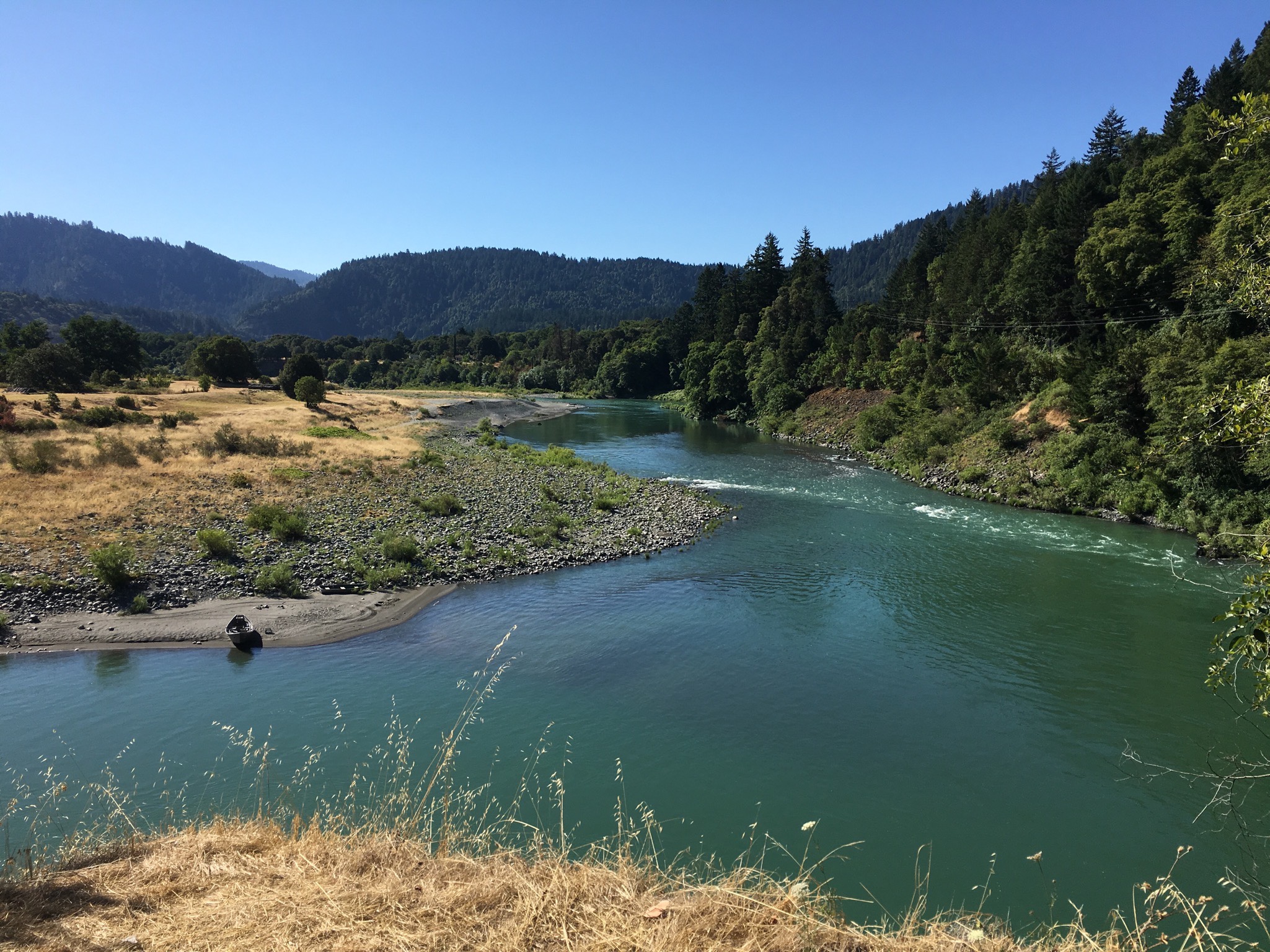
Split Ninth Circuit Panel Rejects Klamath Irrigation District’s Forum Shopping Efforts Designed to Thwart Bureau of Reclamation’s Release of Water for Tribal Purposes

Here are the materials in In re Klamath Irrigation District:

Opinion

Kronk Warner and Lillquist on Tribes and Rights of Nature

Elizabeth Ann Kronk Warner and Jensen Lillquist have posted “Laboratories of the Future: Tribes and Rights of Nature,” published in California Law Review, on SSRN. Here is the abstract:

From global challenges such as climate change and mass extinction, to local challenges such as toxic spills and undrinkable water, environmental degradation and the impairment of Earth systems are well documented. Yet, despite this reality, the U.S. federal government has done little in the last thirty years to provide a comprehensive solution to these profound environmental challenges; likewise, significant state action is lacking. In this vacuum, environmental legal advocates are looking for innovative environmental solutions to these challenges. Against this backdrop, rights of nature have increasingly gained traction as a possible legal tool to help protect the natural environment from the harms perpetrated by humans. Rights of nature laws generally have two elements: (1) legal personhood for natural entities, such that nature has standing in court, and (2) substantive rights for natural entities. This Article explores the scope and origins of rights of nature and examines how they are being implemented both within the United States and abroad. It highlights the work being done by Tribes and Indigenous Peoples in this space and argues that, particularly in the United States, state and local governments should learn from this work. Specifically, the work of Tribes in this space can serve as alternative ethical paradigms and laws for non-Native communities looking for an alternative to the status quo. In the United States, Tribes can serve as “laboratories” for environmental change given their tribal sovereignty and environmental ethics. In addition, Tribes exist within a different legal framework from U.S. states and municipalities. By comparing rights of nature-related litigation in Florida and in the White Earth Nation of Ojibwe, it becomes clear that rights of nature provisions adopted by Tribes stand a greater chance of withstanding legal challenge than provisions adopted by municipalities. Accordingly, environmental reform can benefit from the collaboration and experimentation of Tribes.

Jaune Smith

Oklahoma v. Hill Materials [the guy in the NYTs article]

Here:

Article here.

Michael Rusco on Castro-Huerta

Michael D. O. Rusco has posted “Oklahoma v. Castro-Huerta, Jurisdictional Overlap, Competitive Sovereign Erosion, and The Fundamental Freedom of Native Nations,” recently published in the Marquette Law Review, on SSRN.

Here is the abstract:

In addition to its stunning internal flaws, the United States Supreme Court’s opinion in Oklahoma v. Castro-Huerta exemplifies Indian law’s broader flaws as a jurisprudence. Castro-Huerta holds that states have concurrent criminal jurisdiction with federal and tribal governments over crimes by non-Indians against Indians on reservation lands. Justice Gorsuch deftly addresses many of the glaring internal flaws in Kavanaugh’s majority opinion, but not all. He does not dissect the hollow assertion that reservations are part of the surrounding state both geographically and politically. This cannot go unaddressed, particularly given its weak analysis, misguided use of precedent, and broader consequences.

Castro-Huerta’s holding affects the precise kind of “jurisdictional overlap” at the root of the slow erosion of tribal sovereignty over time, as first explained in a prior article. The Founders believed two governments generally cannot co-exist, i.e. overlap. They had a firm idea of what happens when jurisdictional overlap occurs: one government slowly subsumes the other over time until nothing meaningful is left, here labeled “competitive sovereign erosion.” The Founding Fathers believed this proposition so much and feared it so deeply that it played a central role in how the Constitution was written, specifically the categorical division of authority between the federal and state governments. Tribal sovereignty will continue to be vulnerable to competitive sovereign erosion until a solution is reached that results in either a respect for tribal borders, or a qualitative division of governmental authority between tribal governments, the federal government, and the states. Anything less will continue the long-term war of sovereign attrition historically experienced by tribes.

Analyzing Indian law as a competitive sovereign erosion problem of the sort contemplated by the Framers and discussing it in terms of United States federalism has additional jurisprudential and advocacy advantages. Doing so disconnects Indian law from the tortured logic exemplified by Castro used to reach anti-Indian results, and reconnects it to the intuitively fair, commonly accepted, and historically effective answers used when White cultures have had the same kinds of problems. From an advocacy perspective, competitive erosion adopts a conceptual framework and lexicon that resonates with conservatives commonly opposed to tribal sovereignty. Using competitive erosion can present tribal sovereignty in a way that persuadable conservatives can embrace.

Tribes wanting to maintain their separate existence need to overturn the assertion that reservations are part of the state, oppose practices that give the appearance of being part of state government, and push congress for legislation that will eliminate jurisdictional overlap between tribes, states, and the federal government.