Here:
Sharon Nunn has published “Correcting Nevada v. Hicks: Recognizing Tribal Courts as Courts of General Subject-Matter Jurisdiction” in the Yale Law Journal.
Here is the abstract:
This Note challenges the Supreme Court’s conclusion in Nevada v. Hicks that tribal courts are not courts of general subject-matter jurisdiction. Tribal courts satisfy the definition of general subject-matter jurisdiction courts: they are primary courts created by nonfederal sovereigns to hear a broad range of cases under their laws. Unlike previous scholarship, this analysis does not premise jurisdiction on near-perfect parity between tribal and state sovereignty, but focuses instead on tribal courts’ function in our federalist system. Recognizing tribal courts as general-jurisdiction courts would affirm tribal sovereignty and enable tribes to hear federal claims critical to self-governance.
Here are the materials in United States v. Brice:
Here are the materials in Mathias v. Baldwin (D. Mont.):

Neoshia Roemer has posted “Reproducing Citizenship” on SSRN.
Highly recommended.
Here is the abstract:
Almost immediately after taking office on January 20, 2025, President Donald Trump signed the Protecting the Meaning and Value of American Citizenship Executive Order. This Order limits birthright citizenship based on the immigration status of a child’s parents. This Article posits this is an Executive attempt to limit which families reproduce in ways that are beyond state power. If the government can limit birthright citizenship on the grounds it proposes, it effectively controls citizen making—which is to take control of the family. If we are to believe any myth about our constitutional republic, a long held truth is that the family maintains the right to reproduce on its own terms, not the government’s. The people choose their government, not the other way around.
Through barely coded language that reproduces racist and nativist attitudes, the Order attempts to control the reproduction of citizenship by imagining and excluding the mythical “illegal” immigrant to handpick who becomes a citizen. With this understanding, this Article situates this issue on the axes of constitutional law and reproductive justice, discussing efforts to limit birthright citizenship as a matter targeting select families. This Article proposes a “constitutional rights plus” framework that demonstrates the reproductive rights of the parent and the child’s right to citizenship are linked and inseparable. This is an attack on the entire family to control which families produce citizens. Utilizing the reproductive justice framework, this Article argues that the Executive Order reproduces citizenship in four ways. First, by reifying the bounds of who constitutes a family, the Order reproduces family discrimination. Second, the Order reconstructs the noncitizen regime of Dred Scott that would effectively render some children stateless and open to exploitation. Third, the Order reproduces family punishment and subordination by ensuring some families are punished for existing and remain subordinated through labor regimes. Fourth, the Order reproduces poverty as it locks families and children into a regime of cyclical poverty that they cannot escape.
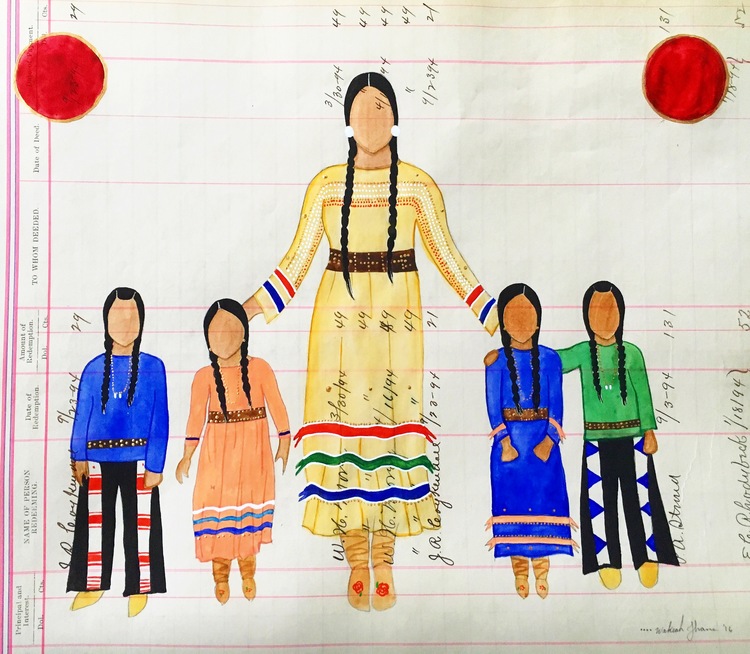
Here are the materials so far in Kings Mountain Land Development Partners LLC v. Catawba Indian Nation:

Here is the complaint in Guidiville Rancheria of California v. Bluerock Real Estate Holdings LLC (N.D. Cal.):

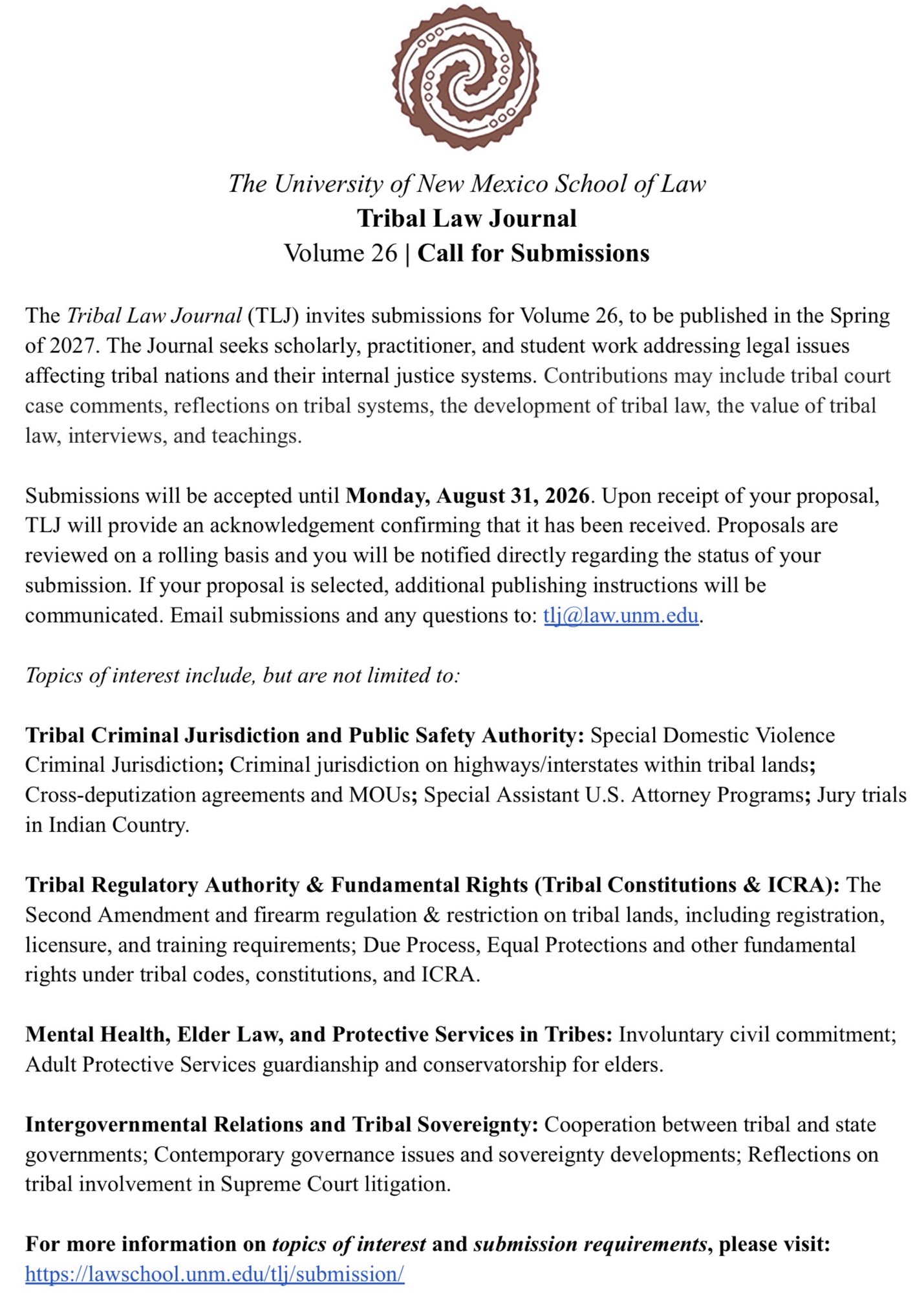
TLJ is inviting scholarly, practitioner, and student submissions addressing legal issues affecting tribal nations and their internal justice systems. Contributions may include tribal court case comments, reflections on tribal systems, the development of tribal law, the value of tribal law, interviews, and teachings. Submissions are due by August 31, 2026, and chosen work will be published by Spring 2027

 Turtle Talk
You must be logged in to post a comment.