CFP: 5th Annual UCLA Critical Race Studies Symposium

SAVE THE DATE: MARCH 31 – APRIL 2, 2011

The Fifth Annual Critical Race Studies Symposium will explore the relationship between race and sovereignty. Sovereignty, like race, has been invoked, understood, and deployed in contradictory ways. Historically, sovereignty has been an important vehicle through which hegemonic power has been enforced, for example, by articulating citizenship as a racial project rooted in the power to exclude. Sovereignty has also been an important tool of anti-colonial resistance crucial to liberatory struggles of people of color in the U.S. and worldwide. Race shares this complex dimension, serving as both a technology of oppression and a vehicle for resistance to that oppression.

Despite these parallels, race and sovereignty have, for the most part, been engaged as separate and mutually exclusive projects: sovereignty has primarily been linked to the struggles of Native Americans and other indigenous peoples, while the struggles of other people of color have largely been cast through a standard anti-racist narrative of citizenship and inclusion. The symposium proposes, instead, to examine how race and sovereignty intersect and are mutually constitutive, even as important distinctions remain. We propose to examine how race enters into concepts of sovereignty and how sovereignty enters into concepts of race.

Information regarding call for proposals, the program schedule and registration information can be found here:http://www.law.ucla.edu/home/index.asp?page=3542

If you have any questions, please email crs@law.ucla.edu
Continue reading

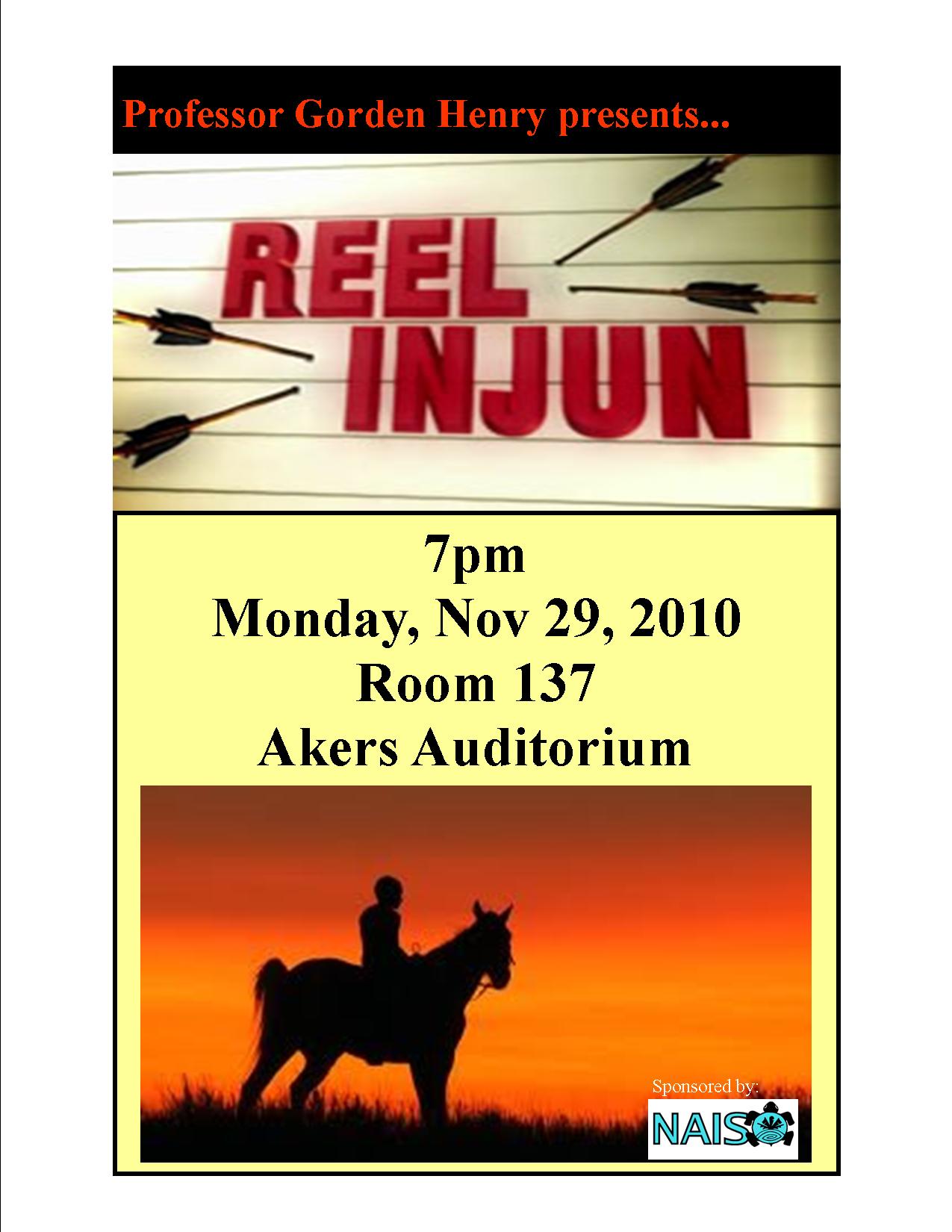
Gordon Henry Presentation — “Reel Injun” — TONIGHT!!!!

CFP: American University Law School Symposium on “Gender and Traditional Cultural Expressions”

Apr 1: IP/Gender: Gender and Traditional Cultural Expressions

IP/Gender:  Mapping the Connections

Eighth Annual Symposium, April 1, 2011

Special Theme:

Gender and Traditional Cultural Expressions


Michigan Indian Legal Services Staff Attorney Announcement

Michigan Indian Legal Services (MILS), a statewide provider of free legal services to low income Indians and Indian tribes, seeks a staff attorney for our office in scenic Traverse City, located along the beautiful shores of Lake Michigan.

MILS represents Indian individuals, families, tribes and organizations in cases involving federal Indian law, tribal court
representation and related matters.

MILS seeks an attorney with above average academic achievement, excellent oral and written communication skills and a commitment to providing high quality legal services for Indian people. The successful candidate must be licensed to practice law in the State of Michigan, be willing and able to travel, capable of assuming responsibility over a sophisticated, fascinating and rewarding caseload. Preferred applicants will have experience in the practice of Indian law and working in or with native or tribal communities.

Compensation will be commensurate with experience and includes a generous leave/benefit package. Information is available on public interest loan forgiveness programs.

MILS is an equal opportunity employer.

Send resume, writing sample and cover letter to:

James A. Keedy
Executive Director

814 S. Garfield Ave., Suite A
Traverse City, MI 49686

MSU NAISO Talk — Prof. Fletcher on Michigan Indian Treaty Rights — TONIGHT 7:00 PM

MSU NAISO will host a talk on Michigan Anishinaabek treaty rights tonight at 7 PM. The talk will be held at the MSU College of Law in Room 325.

AALS Indian Nations and Indigenous Peoples Section Call for Papers

CALL FOR PAPERS

EMERGING MODELS OF TRIBAL AND STATE COOPERATIVE AGREEMENTS

The AALS Indian Nations and Indigenous Peoples Section is seeking submissions for its 2011 publication of selected papers.  The Section will meet during the American Association of Law School’s Annual Conference on January 7, 2011.  The Indian Nations and Indigenous Peoples Section Meeting will focus on “Emerging Models of Tribal and State Cooperative Agreements.”  The University of Tulsa Law Review will publish the accepted papers.

Many Tribes have entered an era in which they recognize the importance of working with states in areas of common concern to their respective citizens.  As a result, Tribes are considering an increasing number of judicial agreements and other cooperative arrangements with states.  The AALS Indian Nations and Indigenous Peoples Section seeks papers that analyze these emerging models and agreements.  Papers should address current issues in Tribal-State relationships and how those cooperative arrangements affect tribal sovereignty.   A broad range of topics in this subject area will be considered.  These may include areas such as economic development, education, health and public safety, the environment, Tribal and State court agreements, and others.

Continue reading

Marginally Changed Turtle Talk

There are some minor changes to Turtle Talk–here’s a quick overview:

The search function is now at the top of the sidebar on the right, along with the top posts (these are the most visited posts in the past 24-48 hours). Under that we’ve moved to a two column sidebar to try to reduce clutter. If you are looking for the RSS feed for posts or comments, that is now down at the very bottom of the page under “Meta.” To the left of “Meta” is a thumbnail picture of the art we use here at Turtle Talk. That thumbnail now takes you to a page with all of the information about the art and artists who worked with us at the Indigenous Law and Policy Center.

Finally, we’ve rearranged the pages at the top of Turtle Talk slightly. Instead of “Resources” we now have “ILPC Research Areas.” Under that tab we’ve put a link to our Occasional Paper Series along with all of the links that had been there (including a full list of all the Supreme Court Indian Law cases we can find since Williams v. Lee). The new artwork page is under “Indigenous Law Program” along with all of our events we put on here at MSU College of Law.

I think we’re set now on our end with the changes.  Thanks for your patience today.

Under Construction

WordPress.com is discontinuing the theme we use here at TurtleTalk.  This means that we are forced to shift the way TurtleTalk looks a little bit.  However, please ignore temporary weird changes to our layout today as I figure out how to adapt to the new theme–I’m not technical enough to figure out how to do the changes in the background before uploading it to the internet.  If anything changes permanently, I’ll do a second post explaining where everything is.

In other words, if anyone saw the very strange/disturbing red background that was up for 30 seconds, I promise it will never happen again.

Nottawseppi Huron Band Potawatomi Chief Judge Announcement

TRIBAL COUNCIL SEEKS LETTERS OF INTEREST FROM PERSONS TO SERVE ON AS CHIEF JUDGE OF THE NHBP TRIBAL COURT (TRIAL COURT).  The Tribal Council is soliciting letters of interest from qualified individuals interested in being appointed to serve as Chief Judge of the NHBP Tribal Court.  The individual appointed to this position would be appointed to a term of office which expiring on December 31, 2014.  Letters of interest must be submitted no later than December 15, 2010 to be considered.  Interested applicants should send a letter of interest and statement of qualifications (or resume) to:  Homer A. Mandoka, Tribal Council Chairperson, 2221 1 ½ Mile Road, Fulton, Michigan 49052.

Qualifications for Appointment:  In accordance with the NHBP Constitution, persons interested in being appointed to the Tribal Judiciary must agree to undergo an extensive background investigation.  The qualifications of prospective appointees are determined by the Tribal Council in accordance with the qualifications for office contained in Article X of the NHBP Constitution which include the following:

Continue reading

FBA Indian Law Conference SAVE THE DATE Postcard

Here: indianlaw-PC11

36th Annual Federal Bar Association Indian Law Conference

Best Practices & Continuing Challenges in Federal Indian Law

American Indian nations have long been innovators in tribal governance, economic empowerment, and cultural revitalization. Accordingly, this year’s conference takes a deliberate look at some of the “best practices” in federal Indian law as a means of approaching our most intractable problems. Panel discussions will cover topics including Indian finance, criminal justice, civil jurisdiction, land re-acquisition, gaming, taxation, and the environment— looking, in each instance, at a continuing Indian law challenge and the ways that tribes, agencies, legislators, courts, and others are responding to it. Other sessions will address domestic and international advocacy, along with ethical considerations in Indian law. Break-out sessions will provide “nuts and bolts” information and strategies on water rights, tribal code development (on probate, family, and child welfare issues), religious freedoms, and tribal in-house attorney issues. A special program will honor the Native American Rights Fund’s 40th Anniversary and its leadership role in best Indian law practices. We hope you will join us for a forward-thinking, practically-oriented, and inspiring conference!