L-R: Steven Light, Kathryn Rand, Bill Rice, and moderator Emily Smith
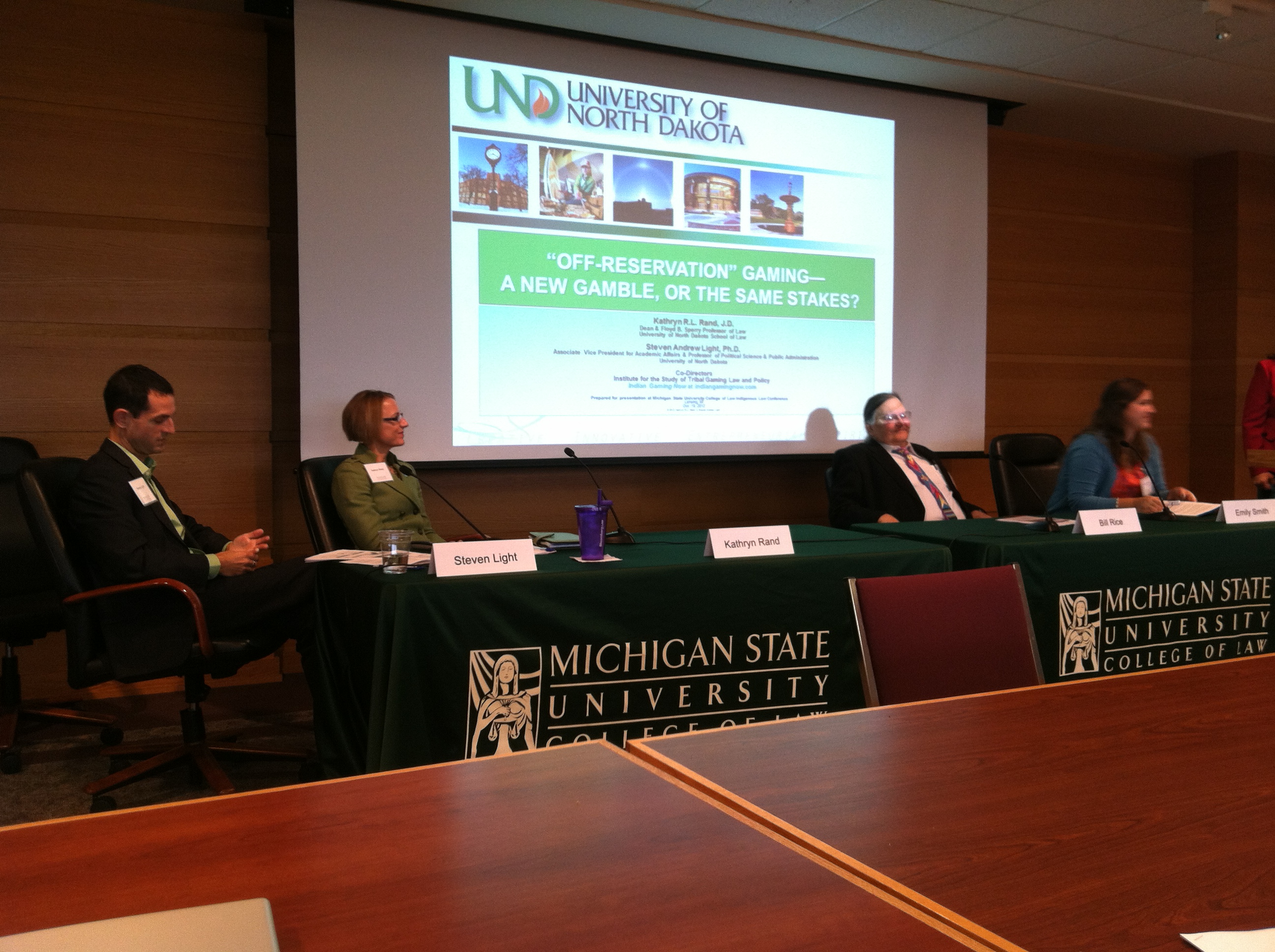
L-R: Steven Light, Kathryn Rand, Bill Rice, and moderator Emily Smith
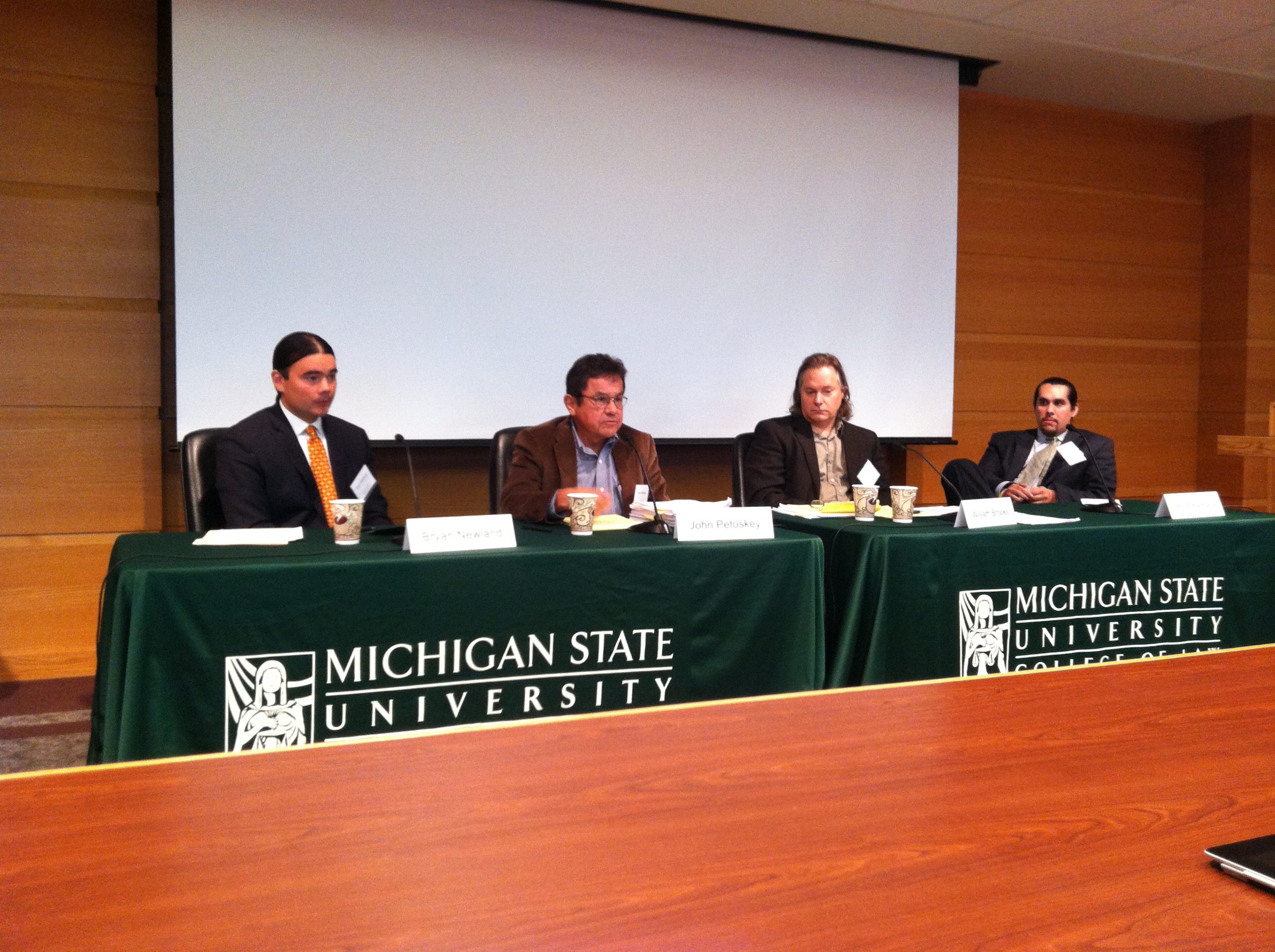
L-R, Brian Newland, John Petoskey, Bill Brooks, and moderator John Simermeyer
This appeal is decided on the basis of the equitable bar on recovery of ancestral land in City of Sherrill v. Oneida Indian Nation, 544 U.S. 197 (2005) (“Sherrill”), and this Court’s cases of Cayuga Indian Nation v. Pataki, 413 17 F.3d 266 (2d Cir. 2005) (“Cayuga”) and Oneida Indian Nation v. County of Oneida, 617 F.3d 114 (2010) (“Oneida”). Three specific factors determine when ancestral land claims are 20 foreclosed on equitable grounds: (1) “the length of time at issue between an historical injustice and the present day”; (2) “the disruptive nature of claims long delayed”; and (3) “the degree to which these claims upset the justifiable expectations of individuals and entities far removed from the events giving rise to the plaintiffs’ injury.” Oneida, 26 617 F.3d at 127; see also Sherrill, 544 U.S. at 214, 221 (summarizing that the equitable considerations in this area are similar to “doctrines of laches, acquiescence, and impossibility,” and grew from “standards of federal Indian law and federal equity practice”) (internal quotation marks omitted). All three factors support dismissal.
Keynote speaker this morning:

Come by to hear about off-reservation gaming with a Michigan focus. Details here.
Another story from Michigan Radio this morning. We hope the January meeting will include invitations to tribes as well.
A new project is going to try to predict the future of the Great Lakes.
It’s called… wait for it… the Great Lakes Futures Project. It’s a collaboration of 21 universities from the U.S. and Canada.
Don Scavia is the director of the Graham Sustainability Institute at the University of Michigan. He’s one of four project leaders. He says students will team up with a counterpart from the other country, along with a faculty mentor. The teams will develop white papers outlining the biggest things driving change in the Great Lakes region.
“They’ll be looking at things like climate, economics, demographics, chemical and biological pollution, invasive species. Looking back, what have the trends been in the past 50 years and what do we expect trends to look like in the next 50 years?”
Apropos of our conference tomorrow.
Here.
The proposed $245 million casino project involves a complicated business and land deal between the city of Lansing, private developers and an indian tribe from the Upper Peninsula.
So complicated those involved were not able to reach an agreement on the various aspects of the project by an August deadline. So they gave themselves an extension until November 1st.
But with two weeks before the extended deadline there’s still no final agreement.
John Wernet is an attorney for the Sault Ste Marie Tribe of Chippewa Indians. He says they are “on track to close on the purchase by November 1, though the amount of work….is a bit daunting.”
Decision here.
The Cheyenne River Sioux Tribe filed a writ of mandamus to the South Dakota Supreme Court, trying to stop the practice of the lower courts using 25 USC 1922 to justify ignoring ICWA’s requirements for weeks after a removal of a child. The Supreme Court dismissed the writ.
In this case, the original removal was on July 6. At a hearing on July 23, the judge stated that the hearing was a “continuation of the emergency hearing, and that ICWA placement preferences were not yet applicable.” The Supreme Court upheld this decision, and the inapplicability of ICWA to emergency or temporary custody proceedings.
After the court justified ignoring the plain language of the section (applying it to all Indian children, and ignoring the “imminent physical damage or harm” requirement of a 1922 action), the court went on to state:
Tribe also asserts a violation of state law in the temporary custody hearing based upon an alleged lack of evidence of a need for temporary custody as required by SDCL 26-7A-18. Tribe ignores, however, that the temporary custody hearing proceeded on the State’s petition for temporary custody and the accompanying police report and ICWA affidavit from a DSS specialist . . . While these documents might not constitute evidence within the normal bounds of the Rules of Evidence, those rules are not applicable at a temporary custody hearing.
It would be interesting to know what rules do apply to temporary custody hearings in South Dakota.
By Adrienne K., here.
Disheartening.
To us this post echos the recent decision by EMU to reinstate their mascot. It shows the pernicious after-effects (40 YEARS after Stanford changed their mascot, this is the result) of Indian mascots. This is the kind of thing that leads to the backwards changes in official mascot decisions.
 Turtle Talk
You must be logged in to post a comment.