Here is the information:
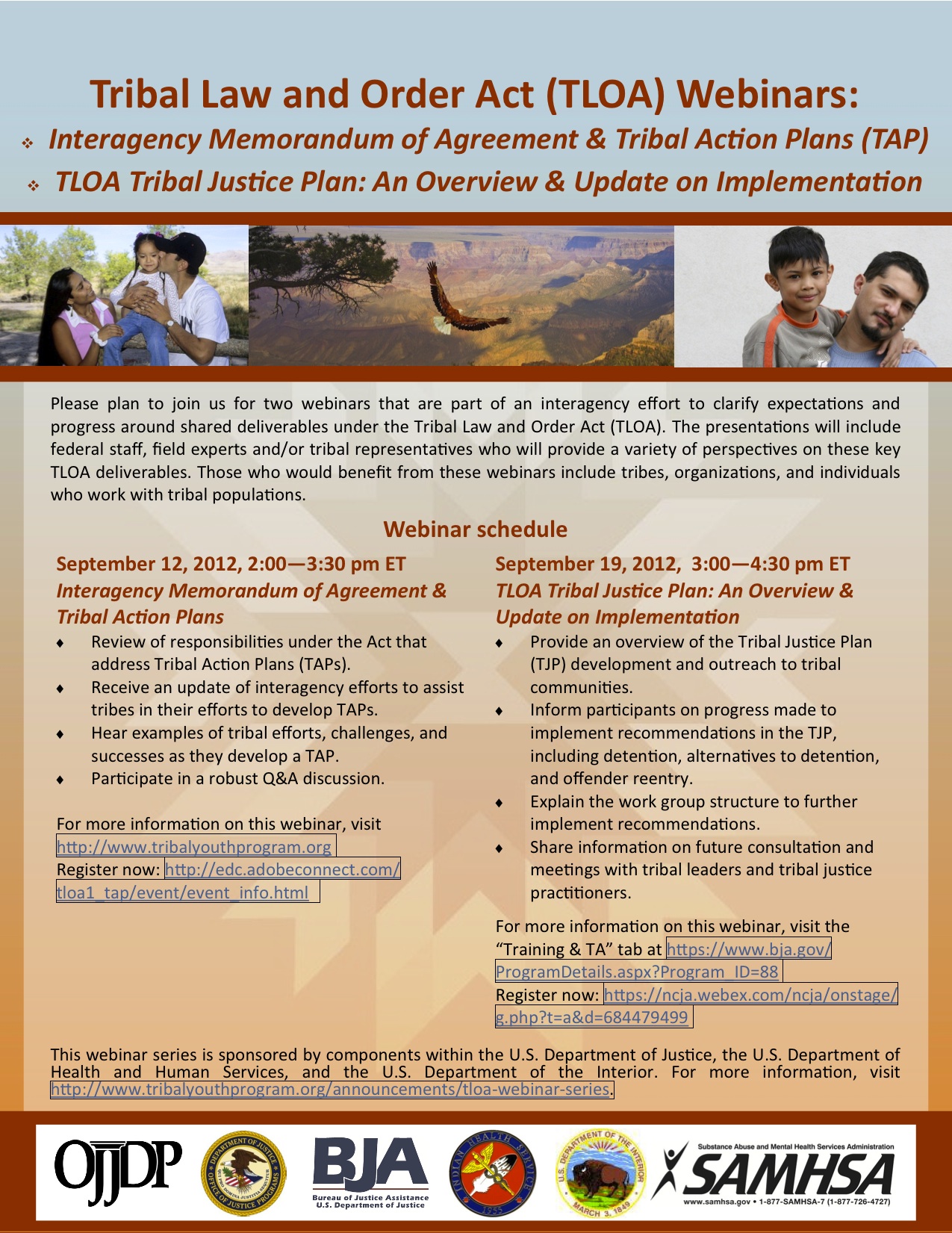
Here is the information:
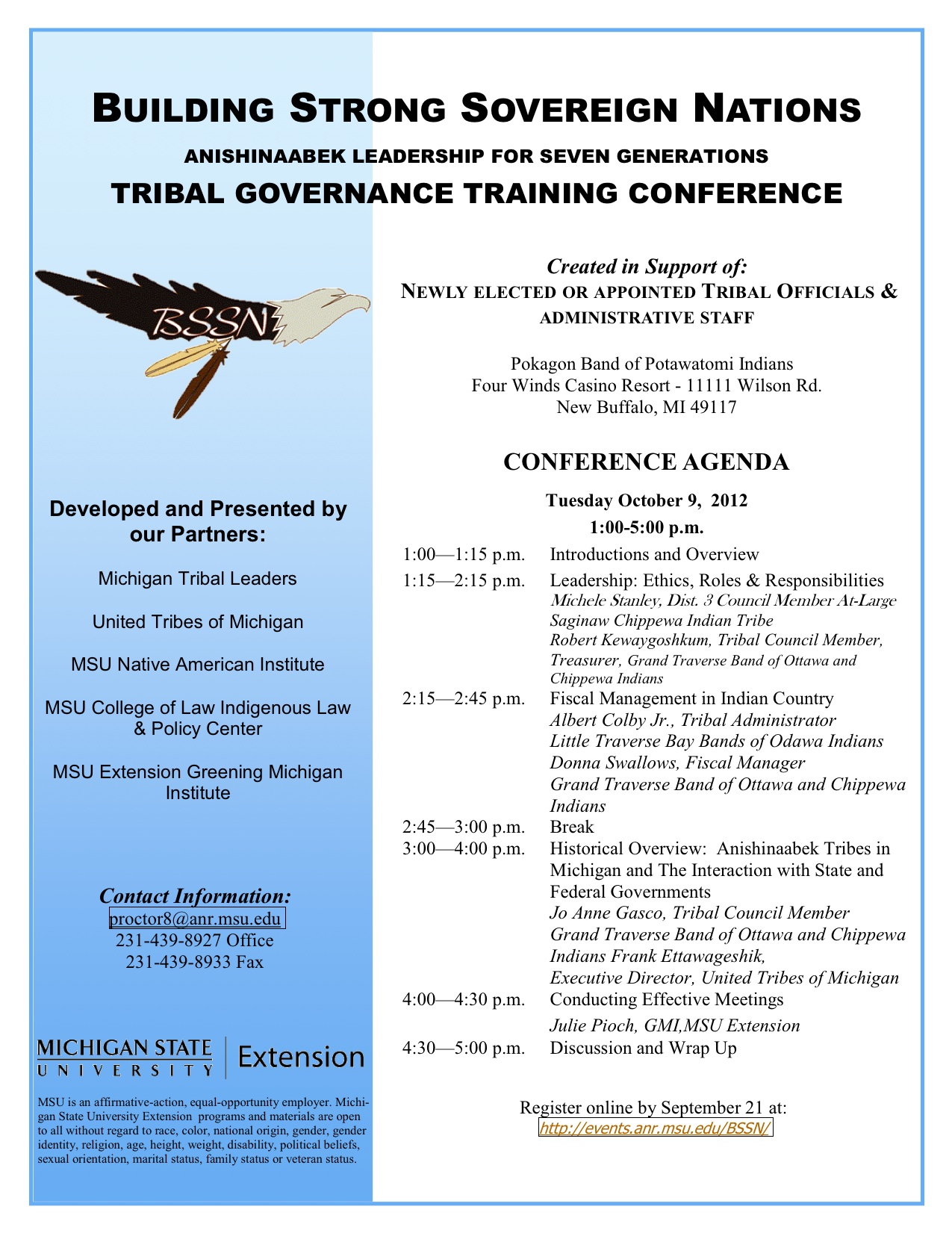
Hosted by the Michigan Indian Judicial Association and Little Traverse Bay Bands of Odawa Indians, October 11-12.

Here.
The plan submitted to the federal Bureau of Indian Affairs also proposes a casino, hotel, meeting space and parking garage, although Pokagon Band chairman Matt Wesaw said the tribe’s focus was on providing services for about 500 members living in the area.
“There’s no time frame for the casino yet. It’s not really on the burner,” Wesaw told the South Bend Tribune for a story Wednesday.
The tribe opened its Four Winds Casino in New Buffalo, Mich., about 30 miles from South Bend, five years ago. It has since opened a smaller satellite casino in Hartford, Mich., and is preparing to open another in Dowagiac, Mich.
“We’ve accomplished a fair amount of stuff for our citizens who live in the state of Michigan,” Wesaw told WNDU-TV. “It is now time to be in a position to provide those services for our citizens who live in the service area in Indiana.”
Here (pdf).
Here (with photos).
Nearly a hundred years ago a small animal that most people have never heard of was wiped out of the northern forest. In the mid-1980’s, wildlife biologists reintroduced the pine marten in two locations in the Lower Peninsula. They thought the population would take off and spread but it hasn’t. And now researchers are trying to find out why.
The pine marten is the smallest predator in the northern forest. It’s a member of the weasel family… related to otters and ferrets. It weighs roughly two to two-and-a half pounds, has big furry ears, a pointed nose, a bright orange patch on its chest and a bit of a temper.
“I don’t know how big of an animal they would take on but they do have a reputation for being quite fierce.”
Jill Witt is a wildlife biologist with the Little River Band of Ottawa Indians. She has a marten caught in a wire cage tucked next to a fallen log, half buried in twigs and leaf litter.
More than 80 years ago, martens lived in big pine trees before logging, wildfire and trapping wiped them out.
“And I think marten really is a good example of a species that can do well if the forest is allowed to recover and return to and continue on towards a more mature, possible even old growth state.”
In the Trib, which requires a free (but annoying) registration. Here.
There’s an interesting discussion on identity and the census:
Thirty years ago, there were more than 20 American Indian organizations in the city, said Dorene Wiese, president of the American Indian Association of Illinois. Now there are three. Since the recession began, their budgets have been slashed by the city and the federal government, leaving most day-to-day functions to volunteers.
At the same time, community activists said, American Indians have struggled disproportionately with poverty, unemployment and a staggering high school dropout rate. More than 27 percent of American Indians in Chicago have incomes below the poverty level, slightly less than African-Americans but more than other minority groups.
Wiese said the economic condition of American Indians is more dire than the 2010 census indicates, largely because she believes the figures are skewed. The census form allows anyone to identify themselves as American Indian, whether they have official tribal papers or not, she said. Without those who identified themselves as mixed race, the number of American Indians in Chicago would be cut in half, to just over 13,337, the census shows.
Congrats, Gerald!
Here.
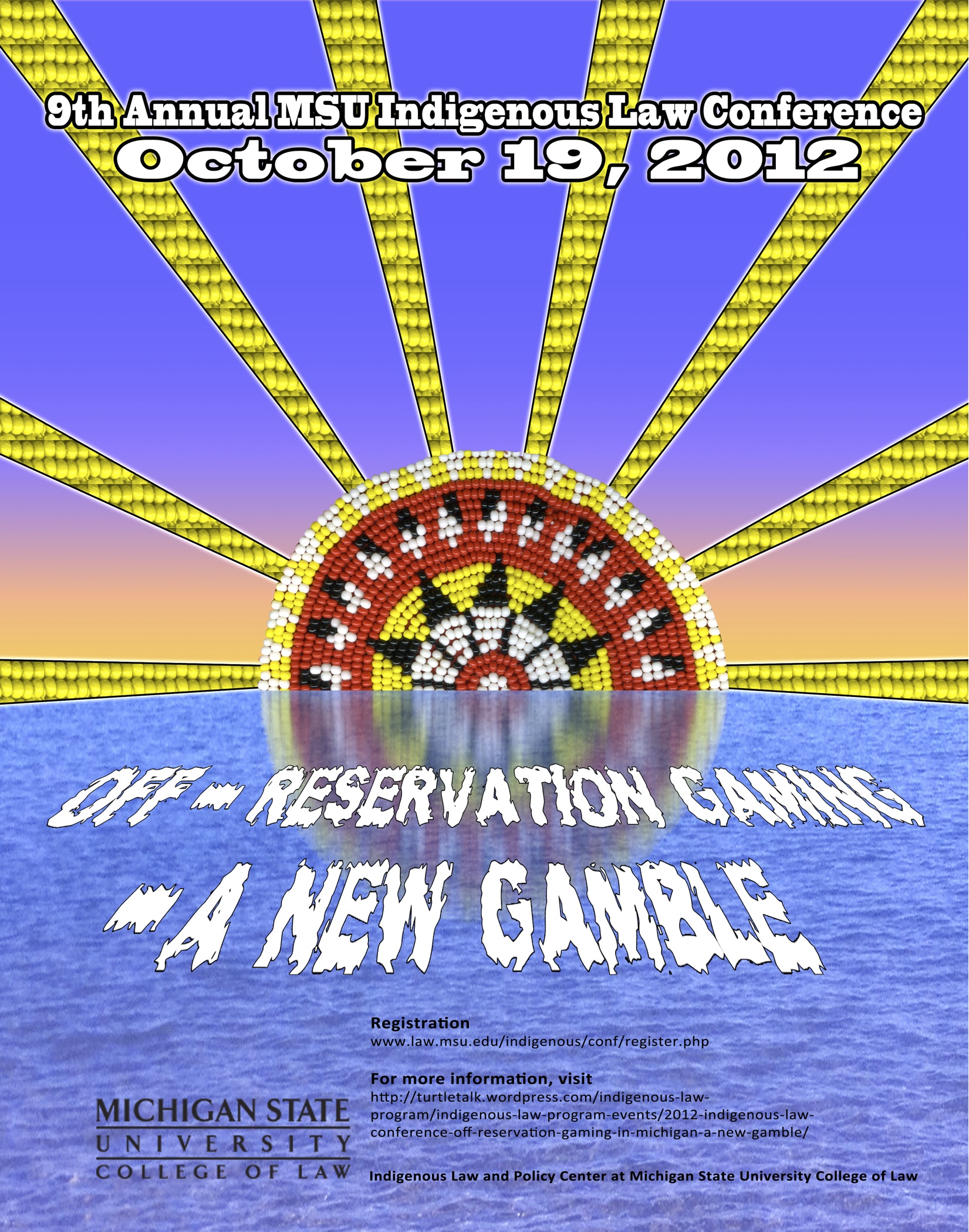
Before the Sault Tribe receives federal approval, the following questions need answers: Does MILCSA mandate that the secretary take into trust lands purchased with interest or other income from the Fund? If the land is purchased with principal from the Fund, will it be held in restricted fee by operation of law? Is the purchase of the Lansing property a consolidation or enhancement of landholdings, or other permissible use of the Fund? Finally, the Sault Tribe will have to demonstrate that they will exercise governmental authority over the Lansing casino site. Given these complex issues, the Sault Tribe’s proposal is poised to set significant precedent in the evolving field of off-reservation gaming.
Gerald Carr is a third-year student in the Indigenous Law Program at Michigan State University College of Law. He holds a Ph.D. in Cultural Anthropology, specializing in the languages and cultures of Native North America.
 Turtle Talk
You must be logged in to post a comment.