The 1491s Are At NICWA

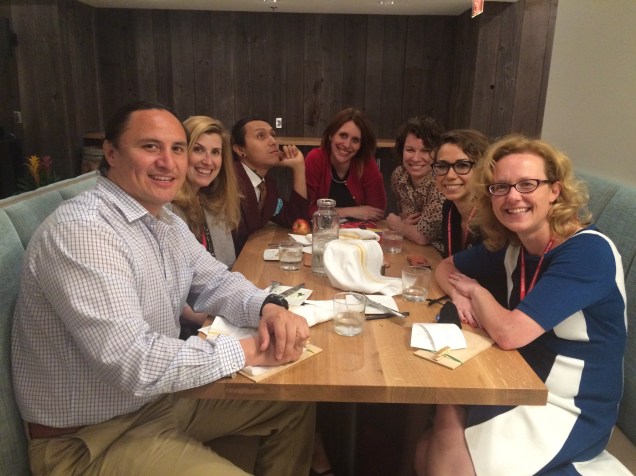
We are posting this picture very seriously, because Bobby says Turtle Talk is very serious. 

  
L-R: Sheldon Spotted Elk (Casey), Erin Dougherty (NARF), Bobby Wilson (1491s), Victoria Sweet (NCJFCJ), Addie Smith (NICWA), Christina Snider (NCAI), Kate Fort (ILPC). 

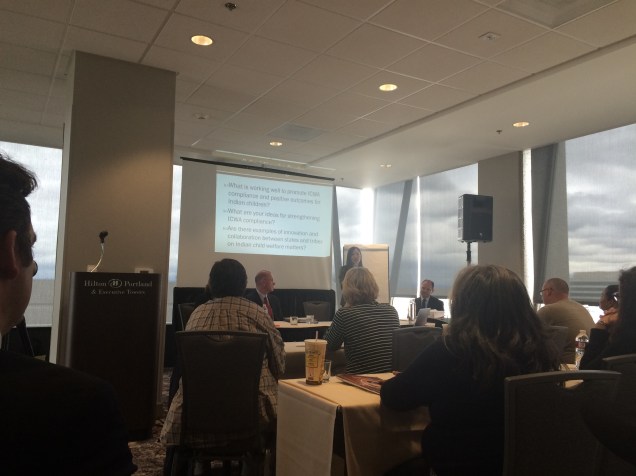
NICWA Federal Listening Session on ICWA Compliance

Sarah Kastelic (NICWA), Sam Hirsch (DOJ), JooYeun Chang (Children’s Bureau), and Kevin Washburn (Interior).


NICWA Presentation on Transitions for Foster Youth

Adrea Korthase (ILPC Alum, Oregon DHS) and the incomparable Nadja Jones (Oregon DHS) on ways to provide seamless transitions to youth aging out of foster care. 


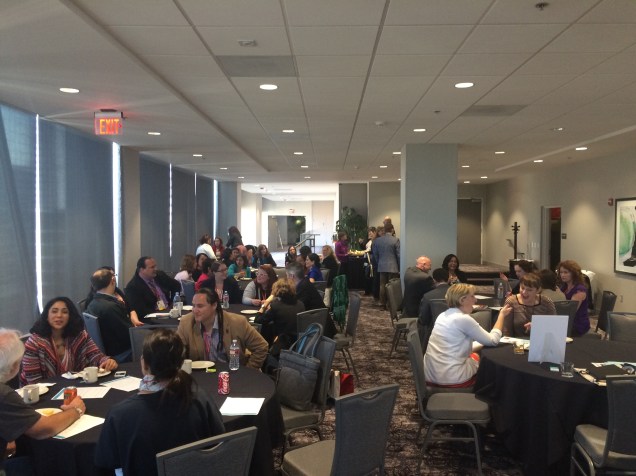
NICWA Conference Presentation and Legal Professionals Reception 

Kate Fort and Victoria Sweet (ILPC Alum, NCJFCJ) on tribal strategies in state ICWA cases.  

The Legal Professionals Reception co-hosted by ILPC, TICA, and Tilden McCoy & Dilweg. 


NICWA Opening Session & Keynote Speaker

Maria Yellow Horse Brave Heart (UNM Department of Psychiatry and Behavioral Sciences), morning keynote speaker.

IMG_5647


Florida Law Review: Prof. Atwood’s Response to Prof. Berger’s Adoptive Couple Article

Prof. Berger’s article here.

Prof. Atwood’s response here.

Professor Berger, however, does not address another danger inherent in the Court’s § 1915 holding. If applied to involuntary child welfare proceedings, the holding threatens to seriously undermine the effectiveness of ICWA. In a recent decision from the Alaska Supreme Court, the risks inherent in Adoptive Couple’s broad § 1915 holding were demonstrated. In Native Village of Tununak v. State Department of Health & Social Services, the court applied Justice Alito’s reasoning to a case that arose not as a private adoption but within the child welfare system. 13 The court held that the proposed adoption of a Native child by his Anglo foster parents could go forward without the necessary finding of good cause under ICWA because no other formal adoption petition had been filed.14 In that case the child’s maternal grandmother had taken only informal steps to request that she be allowed to adopt but had not filed a formal petition.15 As noted by the dissent, in rural Alaska where villages are remote and legal representation is nonexistent, the requirement that a formal adoption petition be filed may mean that potential ICWA placements will go undiscovered.16

Other articles and cases related to Adoptive Couple are available here.
Decision in Tulalip Tribes v. Washington

Opinion here.

Previous coverage here.

Our conclusion is consonant with our instruction in Shoshone-Bannock Tribes that courts should hold compacting parties to the ordinary meaning of terms in their agreements. Id. at 1098–100. The plain language of the Spokane Compact shows that the Inter-Tribal Fund mechanism available to the Spokane Tribe carries with it interdependent conditions and consequences. Tulalip’s amendment would not match those terms. We take no view on whether the terms of Appendix Spokane are in fact more favorable than those included in the Tulalip Compact. We hold simply that Tulalip is not entitled as a matter of law to the more selective set of terms in its proposed amendment.2 The most-favored tribe clause does not allow a “pick and choose” arrangement. The district court correctly entered judgment for the State. Simply put, Tulalip’s proposal does not mirror the restrictions of Appendix Spokane, and those are the terms to which the State agreed.

Job Posting, General Counsel for Pechanga Band

Here.

Under the direction of the Tribal Council to the Pechanga Band of Luiseño Indians, the General Counsel provides legal services, representation and advice on legal issues confronting the Tribal Government and its entities and enterprises. Legal matters include a broad variety such as contract law, employment law, administrative law, real estate matters, Indian gaming regulation, taxation, tribal jurisdiction, environmental law, cultural resource preservation, child welfare, and legislation. In addition, the General Counsel researches and writes complex legal opinions, prepares drafts of contracts, notices, ordinances, resolutions, and other legal documents.